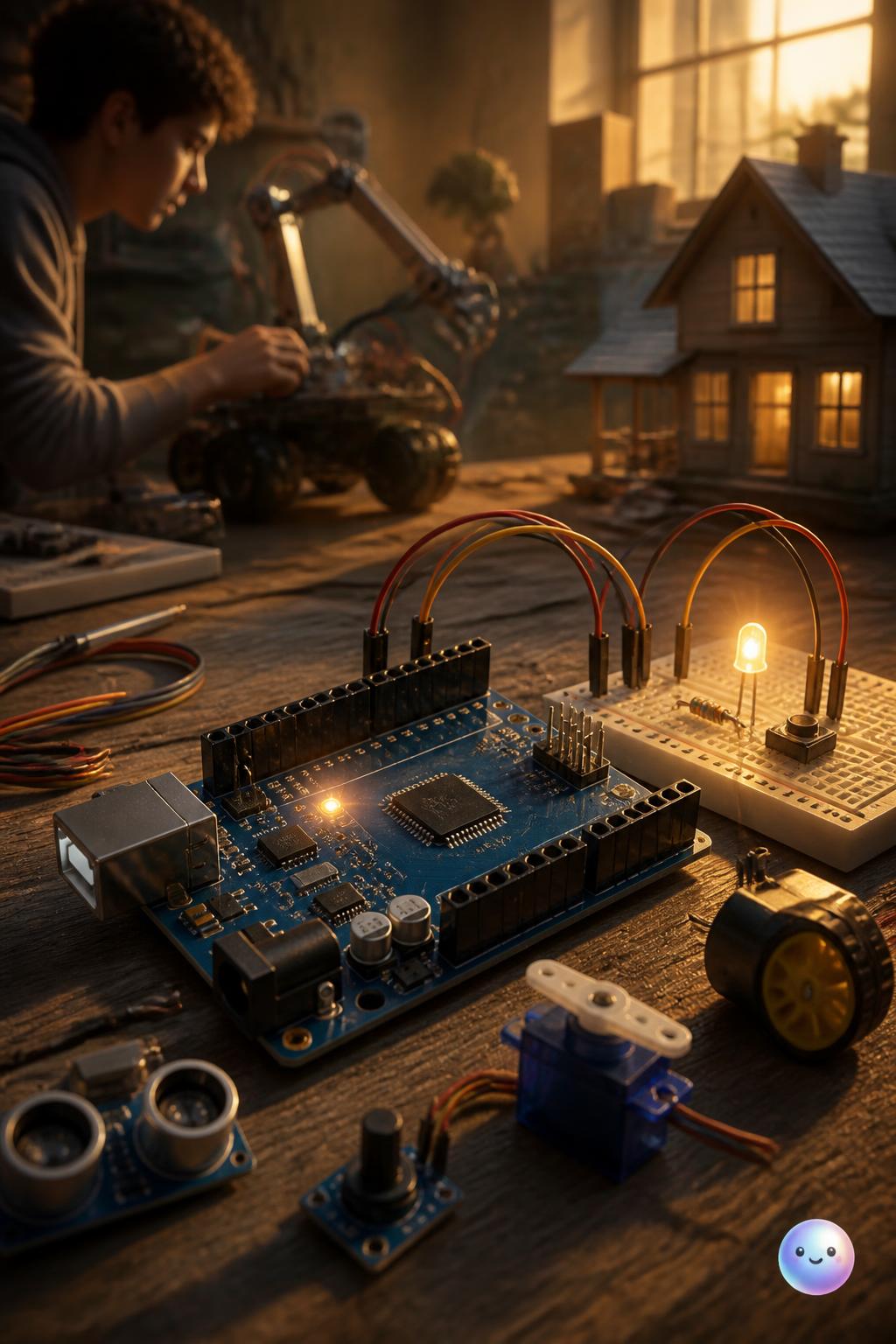
Arduino Pins Explained: How the Board Connects
Arduino pins act as the board's senses and muscles to read data and control devices.
The bar in Ivrea where it all began
Inside the brain of a microcontroller
Speaking the language of machines
From blinking lights to building robots

artiteacher Microcontrollers measure the difference between digital and analog electrical signals.
artiteacher General Purpose Input/Output pins connect microchips to external electronics.
artiteacher The hardware differences between a laptop microprocessor and an Arduino microcontroller
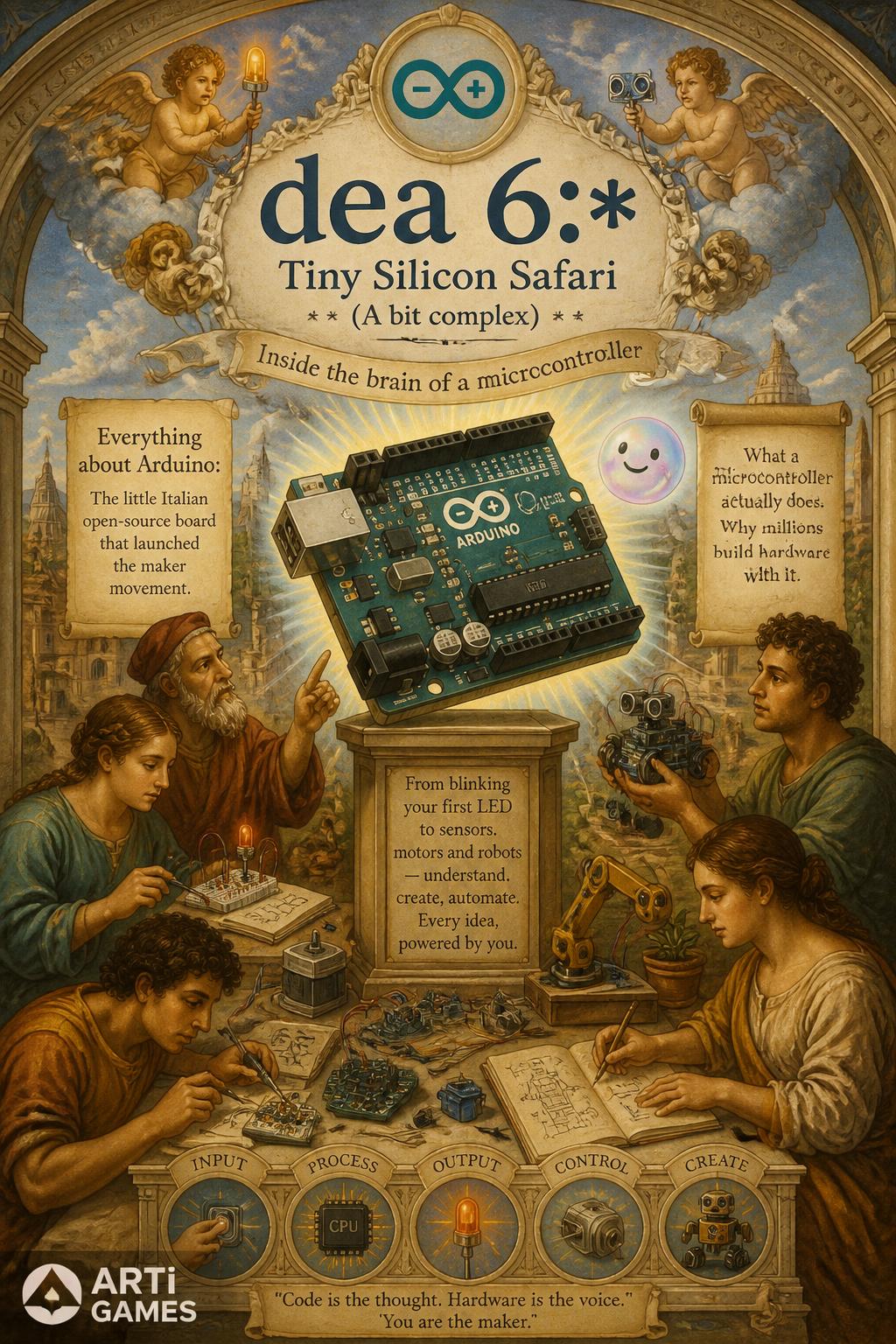
artiteacher Trace electrical paths through the silicon chip to discover how microcontrollers make decisions.
artiteacher Microcontrollers simulate smooth analog waves using Pulse Width Modulation.
artiteacher Microcontroller Brain
Sixteen million pulses from a quartz crystal guide, Every single voltage shift that happens deep inside.
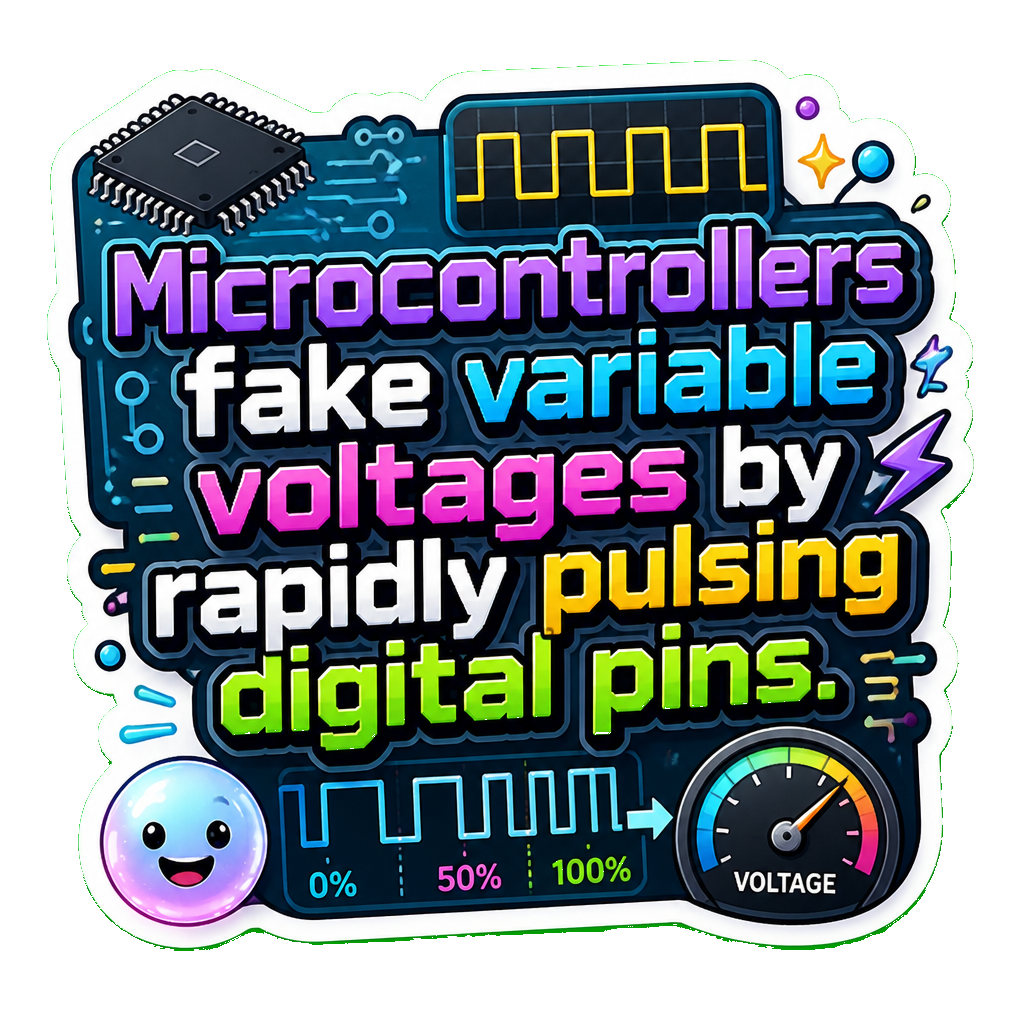
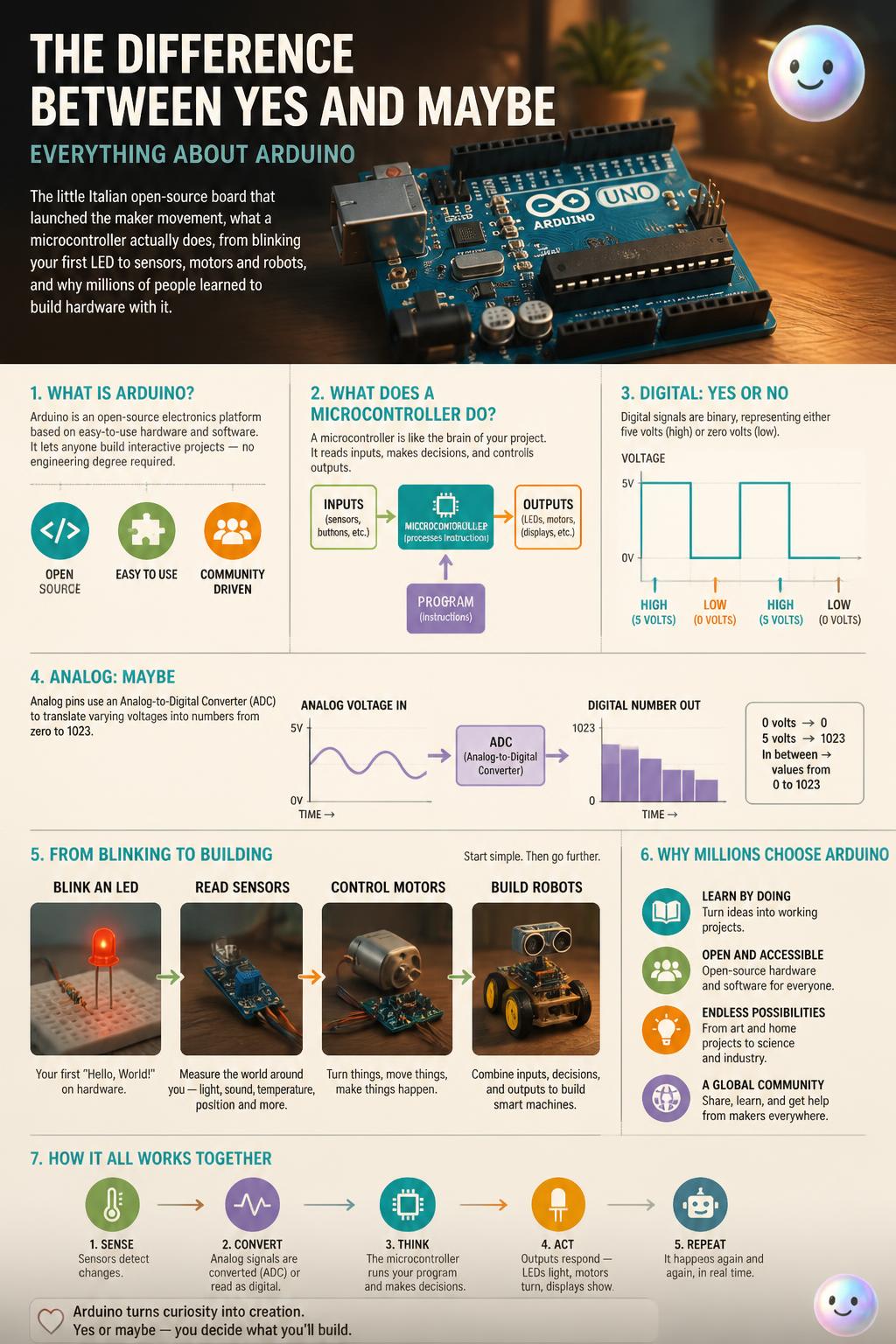
artiteacher Arduino uses digital pins for simple switches and analog pins for smooth gradients like temperature.
Processor speed: The Arduino Uno's processor runs at 16 megahertz, which is about 200 times slower than a modern smartphone, yet plenty fast for physical computing.
artiteacher Arduino pins act as the board's senses and muscles to read data and control devices.
A compact integrated circuit designed to govern a specific operation in an embedded system. The ATmega328P chip inside the Arduino Uno integrates a processor, memory, and peripherals on one silicon die.
What voltage level does a standard Arduino Uno digital pin output when set to HIGH?
Which technique allows a digital pin to simulate an analog output by pulsing electricity?
What is the maximum numerical value returned by an Arduino Uno's 10-bit analog input pin?