

BETA
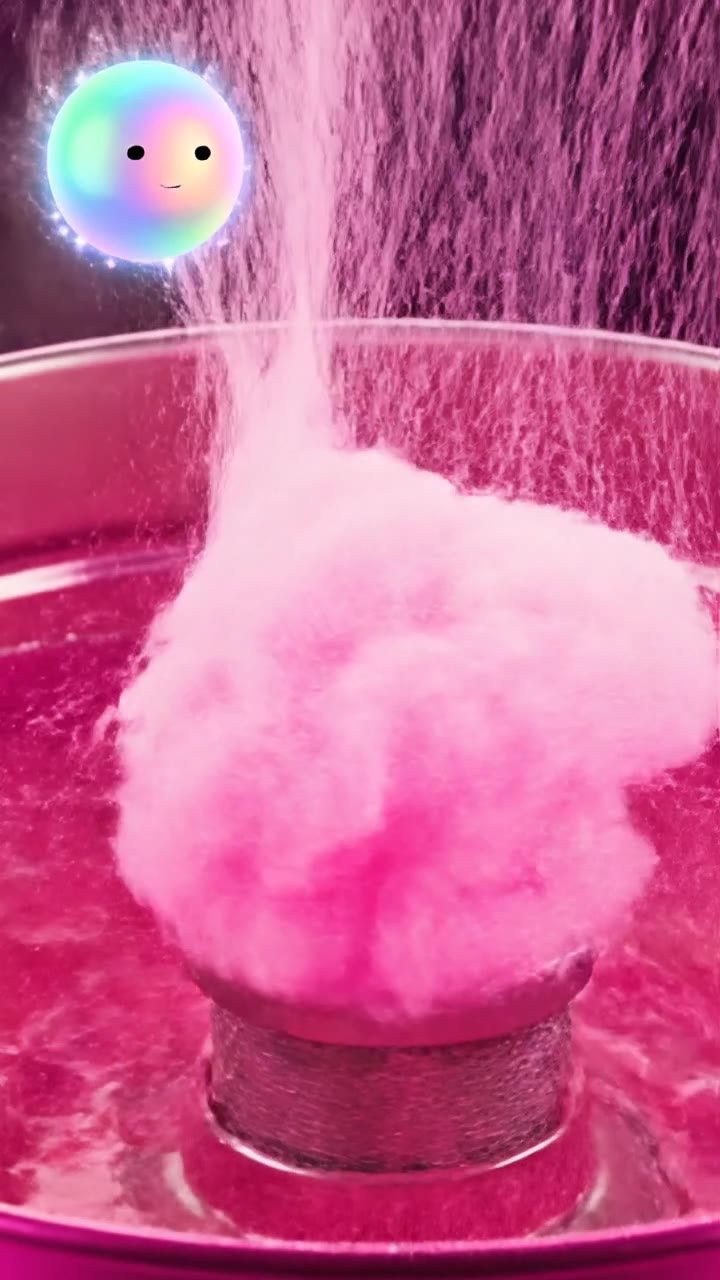
Invented in 1897 by a dentist, the cotton candy machine melts sugar in a central spinning head. Centrifugal force pushes the liquid through 100-micron holes, instantly cooling it into sweet, fluffy threads.
artiteacher Drag the warm candy mixture to learn how stretching taffy traps tiny air bubbles.
artiteacher Candy Stretching and Aerating
With every stretch, the air goes in, Making candy soft and light within!
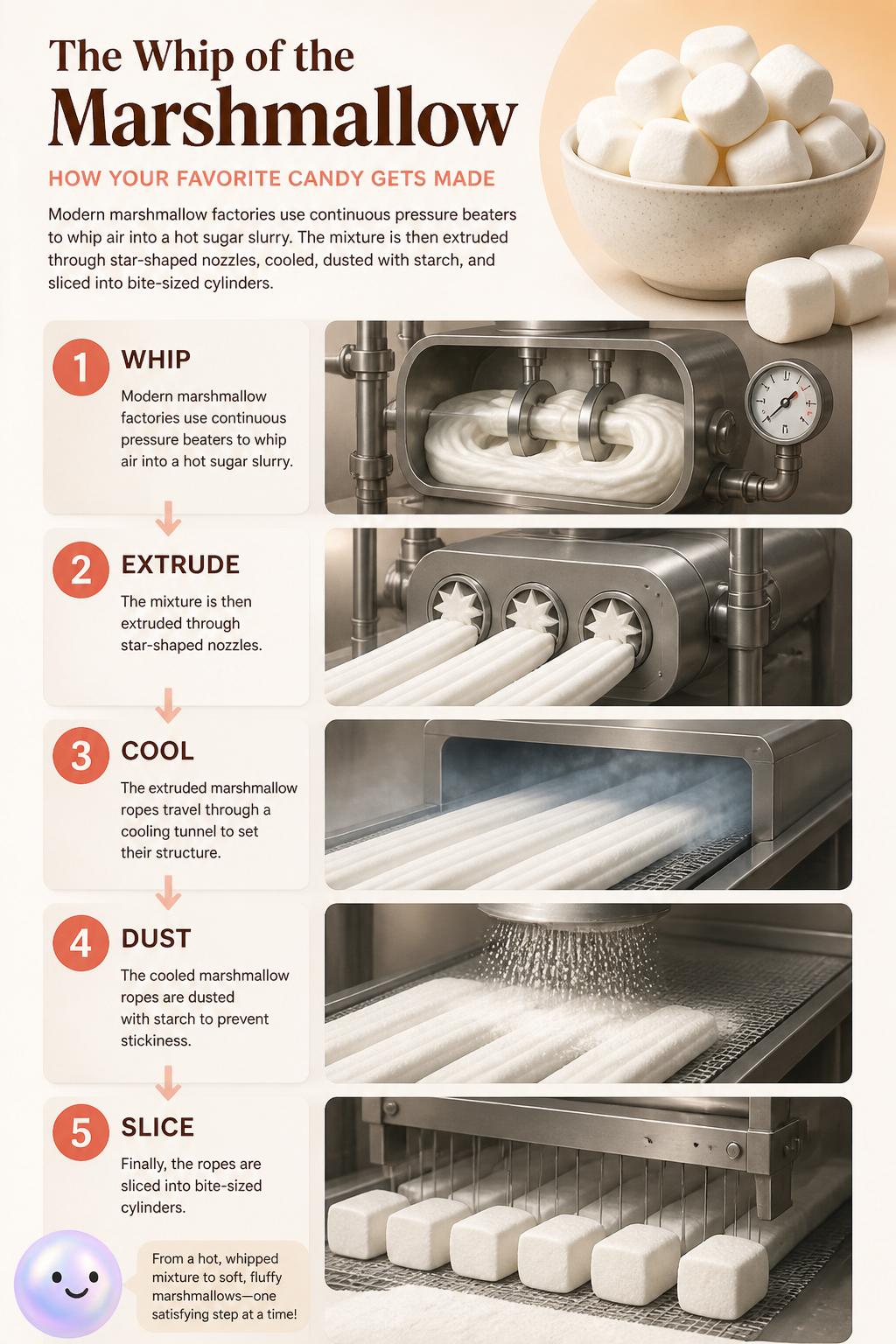
artiteacher Marshmallows get their pillowy texture by whipping air into a mixture of sugar, water, and gelatin.
Cotton candy dentist: The electric cotton candy machine was co-invented in 1897 by William Morrison, a dentist who ironically made a living treating cavities.
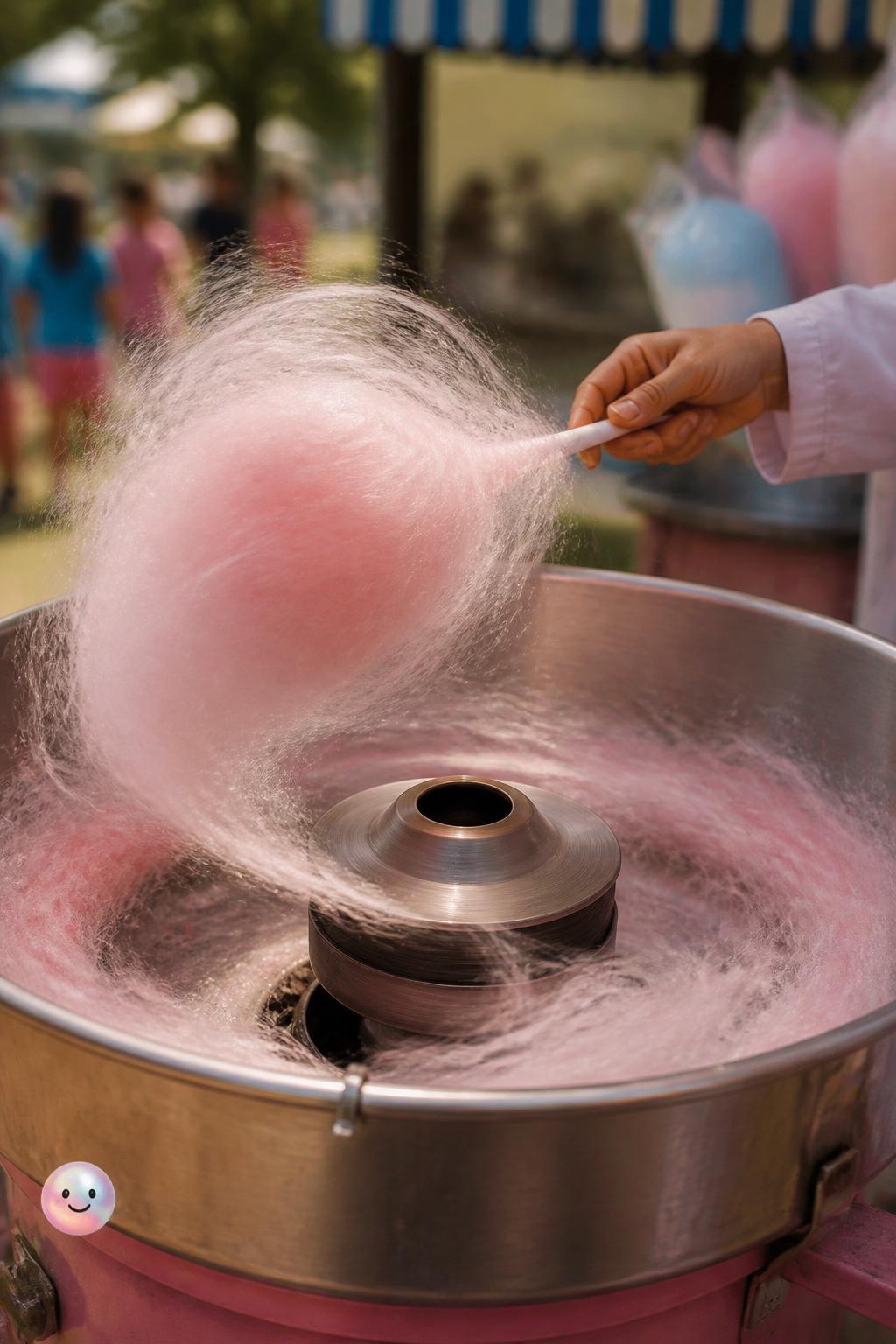
artiteacher Cotton candy machines use centrifugal force to fling liquid sugar through microscopic holes into thin air.
Which popular beachside candy is traditionally pulled on large mechanical hooks to aerate it?
What physical force pushes melted sugar through tiny holes to create cotton candy?
What shape of nozzle is typically used to extrude marshmallow ropes before they are sliced?
What physical process turns dark, hard taffy into a light, chewy, and pastel-colored candy?
What ingredient is dusted onto freshly cut marshmallows to stop them from sticking together?
What gas is whipped into marshmallows to give them their fluffy, pillowy texture?