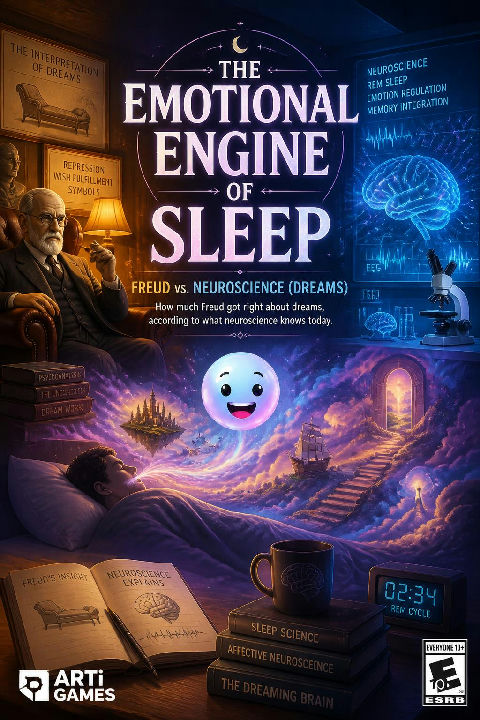
The emotional engine of sleep
The seeking system and dream wishes
Day residue and memory sorting
Nightmares and emotional therapy

streetspirit Activation-Synthesis Theory
A random spark fires in your sleeping brain, Your cortex weaves a story to explain.
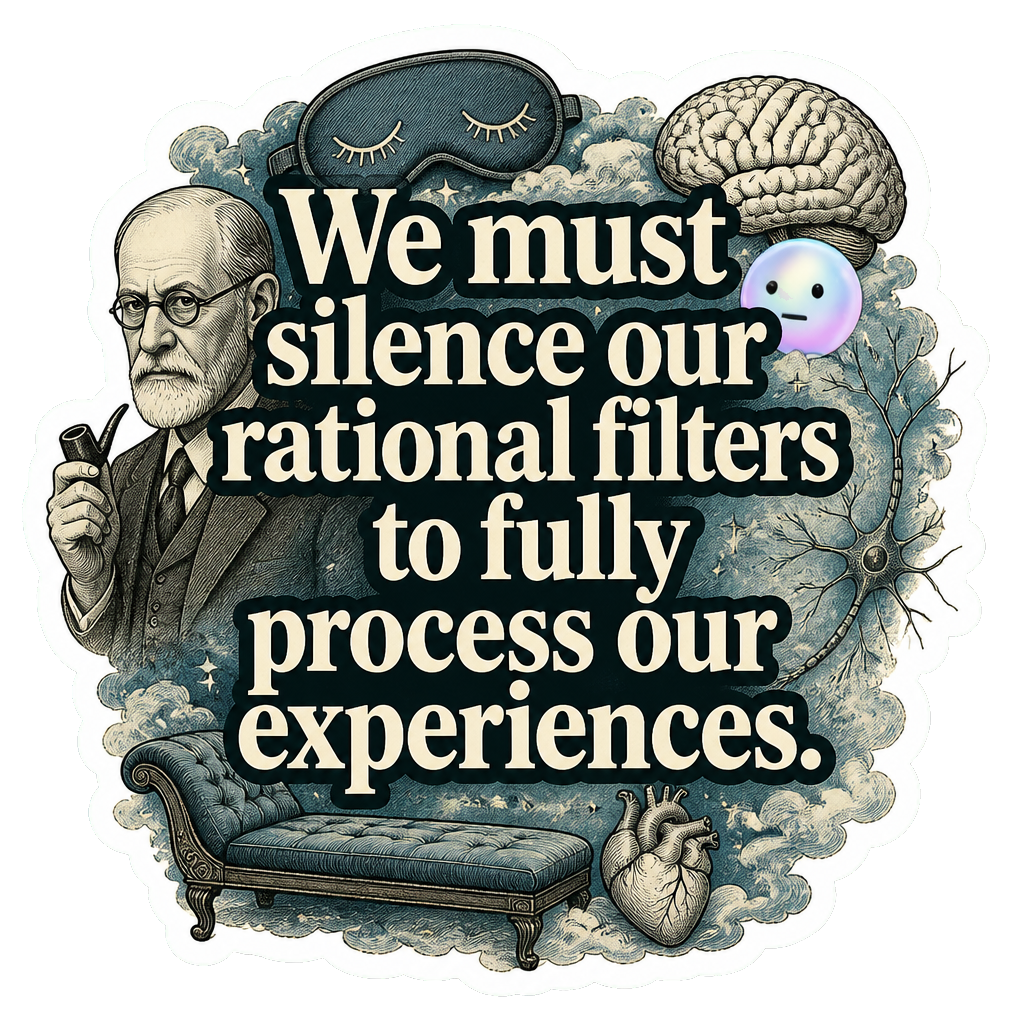
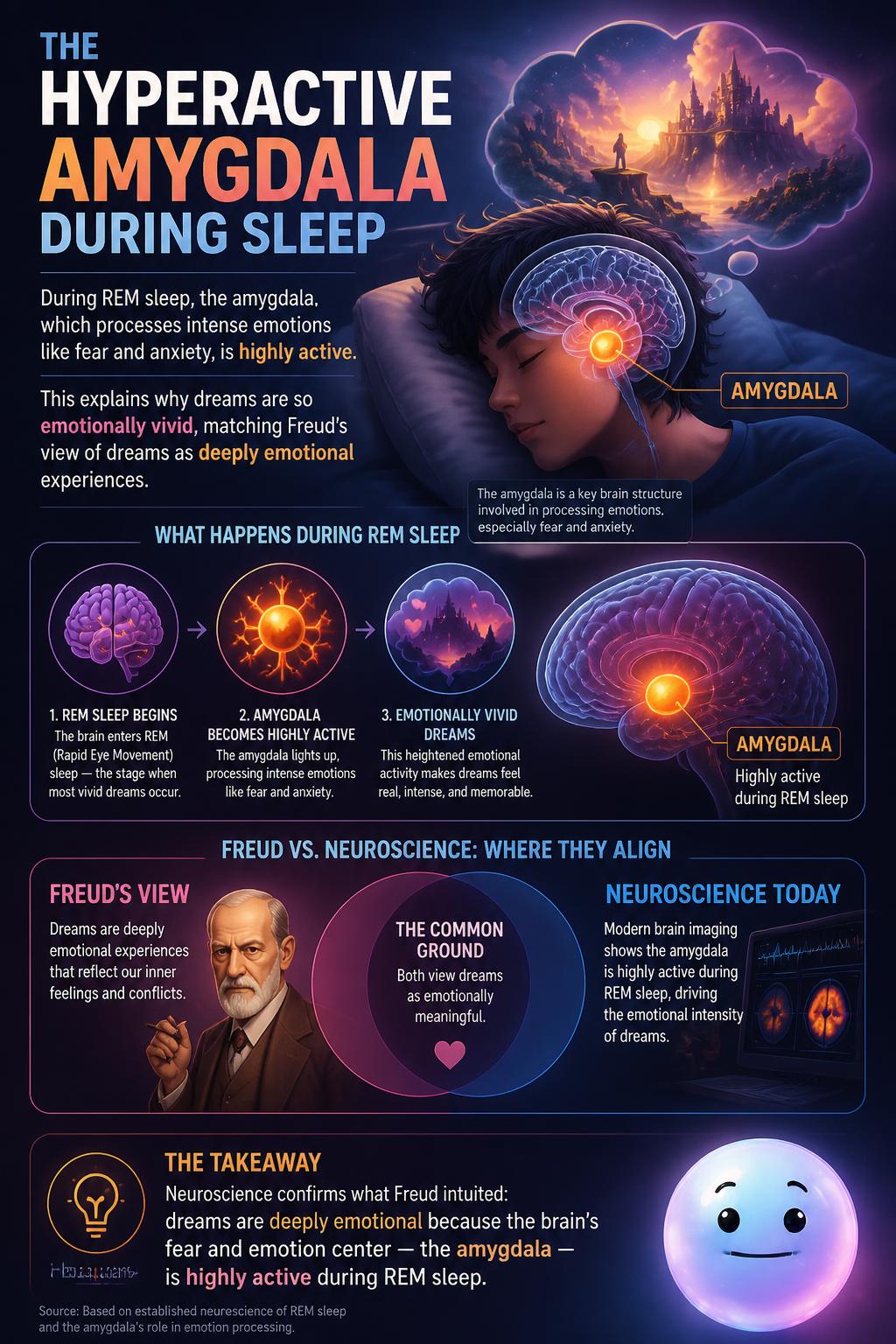
streetspirit During REM sleep, the amygdala actively processes intense emotions like fear and anxiety, making our dreams highly vivid.
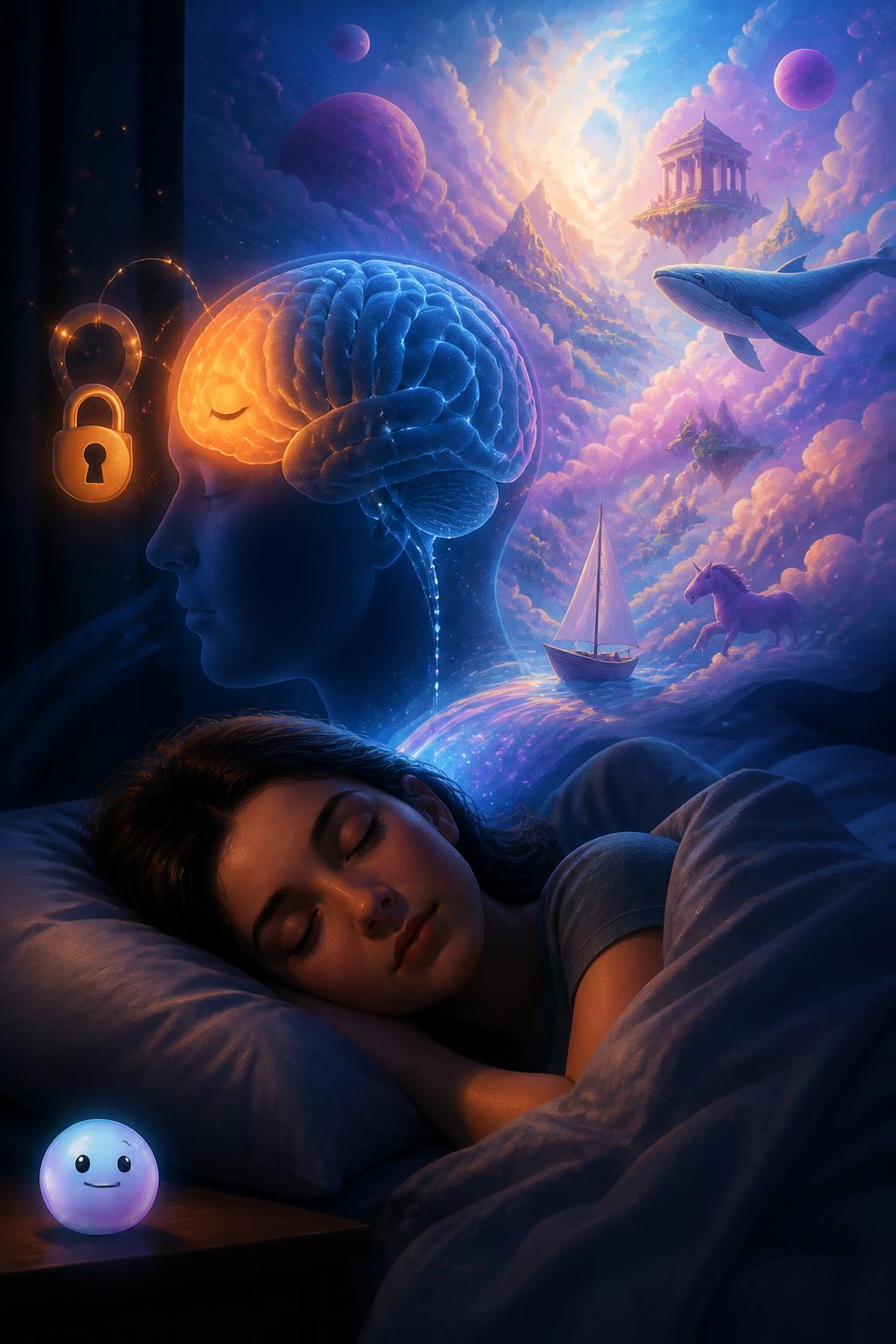
streetspirit Modern neuroscience proves Freud was right about our mental censor relaxing during sleep.
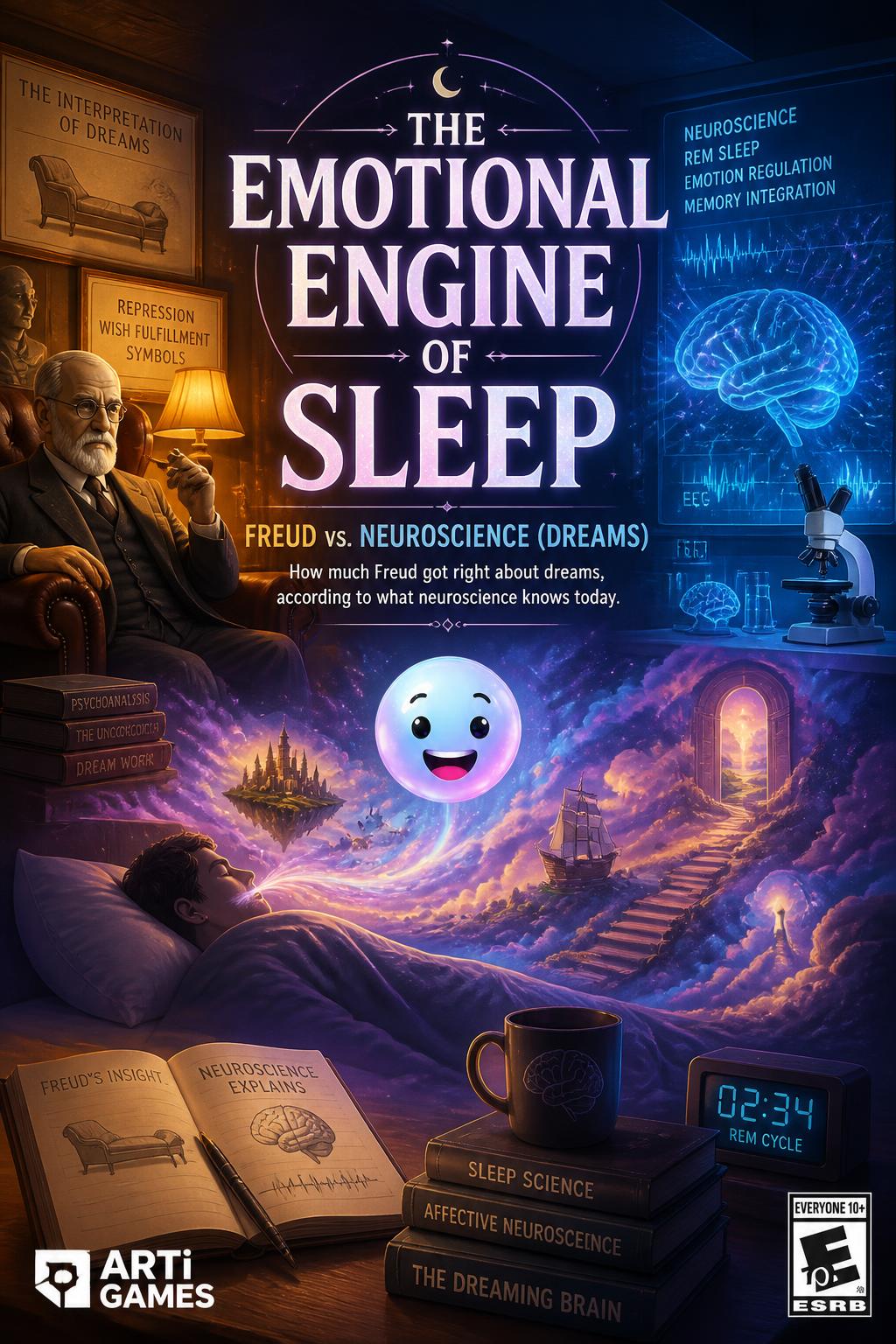
streetspirit Match brain signals during REM sleep to discover what Freud got right about emotional dreams.
Animal dreams: Rats dream about their day, replaying the exact brain patterns of running through mazes while they sleep.
A complex network of brain structures located beneath the cerebral cortex that regulates emotions, memory, and basic physiological drives. In 1997, neuropsychologist Mark Solms proved this network drives dreaming, validating Freud's theories on motivated sleep states.
Which almond-shaped brain region, highly active during REM sleep, is responsible for processing intense emotions like fear?
In what stage of sleep do humans experience the most vivid and emotionally charged dreams?
What is the name of Sigmund Freud's famous 1899 book that introduced his early theories on dream interpretation?
Which brain region, responsible for logical reasoning and self-censorship, shuts down during REM sleep?
Which part of the brain's visual system remains relatively quiet during REM sleep, explaining why we don't see the real room?
What term did Sigmund Freud use to describe the literal, remembered storyline of a dream?
Who was the Harvard neuroscientist who co-created the activation-synthesis hypothesis of dreaming alongside Robert McCarley?
Which scientific theory, proposed in 1977, argued that dreams are merely the brain's attempt to make sense of random neural signals?