
The underground fungal network
Airborne chemical distress signals
Whispers through roots and electricity
The dark side of plant gossip
YOUR GOAL
Master of How plants talk

artiteacher Airborne chemical distress signals
Whisper of ethylene, / Warning down the wind, / Tannins are rising!
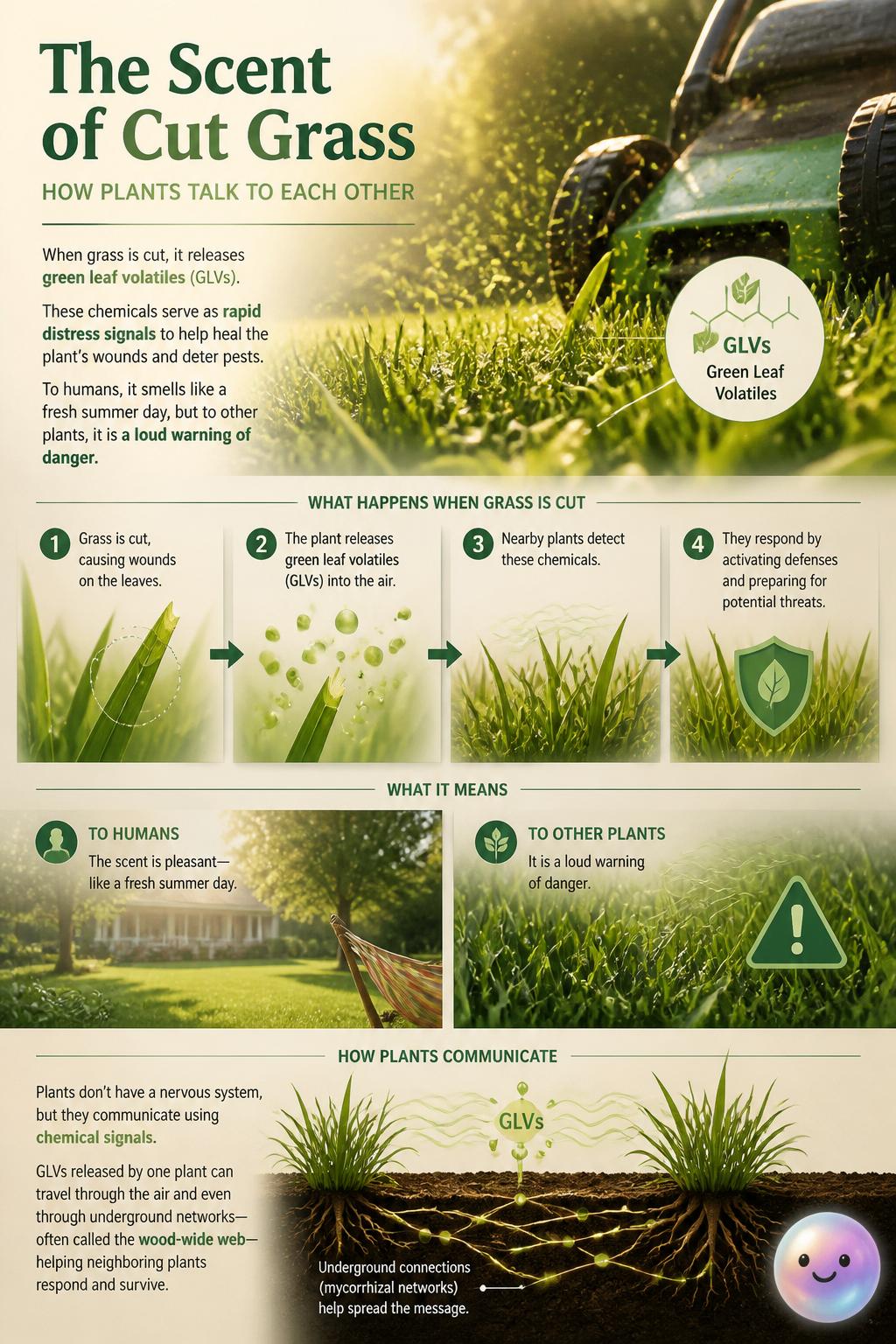
artiteacher The familiar smell of freshly cut lawn grass is actually a chemical warning signal released under stress.

artiteacher Some plants release chemical signals when attacked to attract predatory insects that eat their pests.

artiteacher Decode underground chemical signals to discover how trees share resources and warn of danger.
Antelope defense: Acacia trees can produce enough toxic tannin in response to warning gases to kill grazing antelopes.
Any carbon-based chemical that easily evaporates into the air at room temperature. In 1983, researchers Ian Baldwin and Jack Schultz discovered that plants release these substances during insect attacks.
What toxic substance do acacia trees produce to make their leaves taste bitter to predators?
Which chemical compound family is responsible for the scent of freshly cut grass?
What is the main purpose of volatile organic compounds (VOCs) released by damaged plants?
What gas do African acacia trees release to warn their neighbors of grazing antelopes?
Within how many minutes can a neighboring acacia tree respond to an ethylene warning signal?
How do corn plants determine which specific predatory wasp to attract when attacked?
In which decade did Wouter Van Hoven discover the acacia tree's chemical warning system?