

BETA

Major stablecoin issuers deposit billions of dollars into commercial banks and buy short-term US Treasury bills. This links the decentralized crypto world directly to the traditional Wall Street banking system, making stablecoin companies massive players in global finance.
nic Global Financial Infrastructure
Digital dollars, digital dollars, Powering global trade, 24/7.
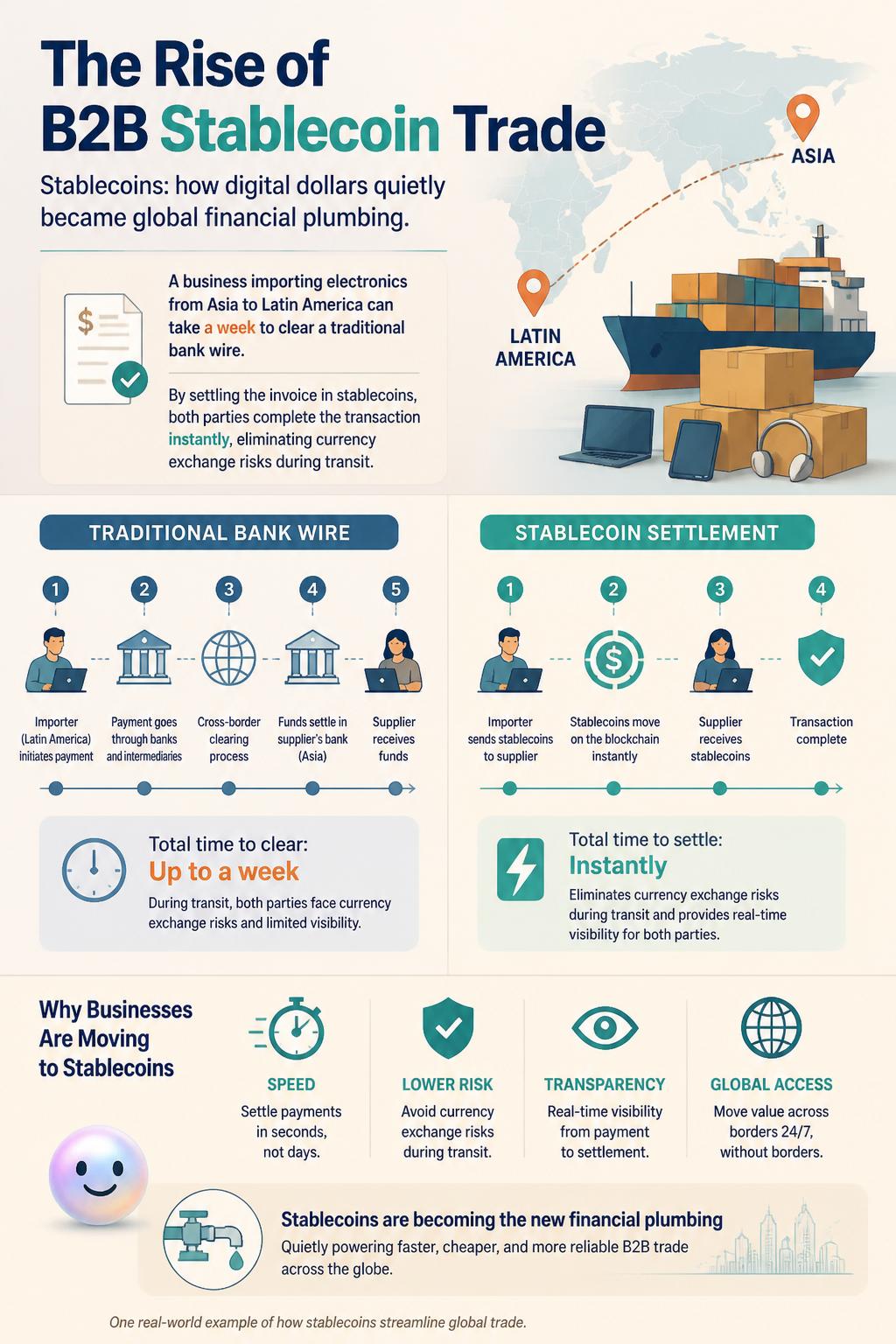
nic International merchants are quietly using stablecoins to settle large-scale import and export bills, bypassing slow legacy banking networks.
Massive remittance savings: Switching the global remittance market entirely to stablecoins could save families worldwide over $30 billion every single year in fees.

nic Stablecoins are disrupting the multi-billion dollar remittance industry by lowering fees for migrant workers sending money home.
What is the average fee percentage saved when using stablecoins instead of traditional remittance services?
Where do stablecoin issuers keep the physical cash and assets backing their digital tokens?
How do international businesses benefit from using stablecoins for import and export transactions?