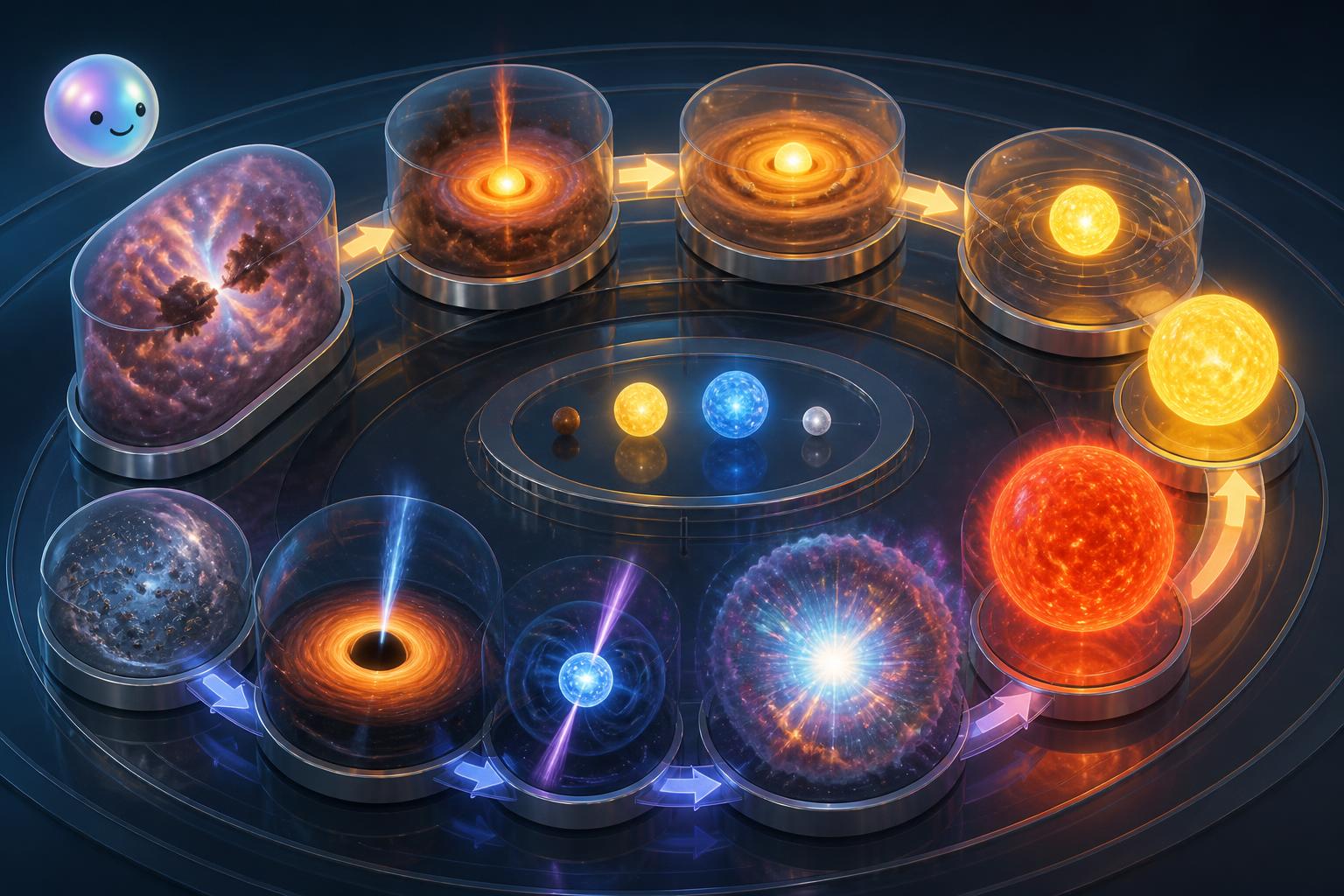
The stellar nurseries
The long adult life of stars
The dramatic deaths of small stars
Supernovas and cosmic leftovers
YOUR GOAL
Master of How stars are born and die

artiteacher Main sequence stars
Fighting off the gravity, we are burning hydrogen to hold our ground and shine!
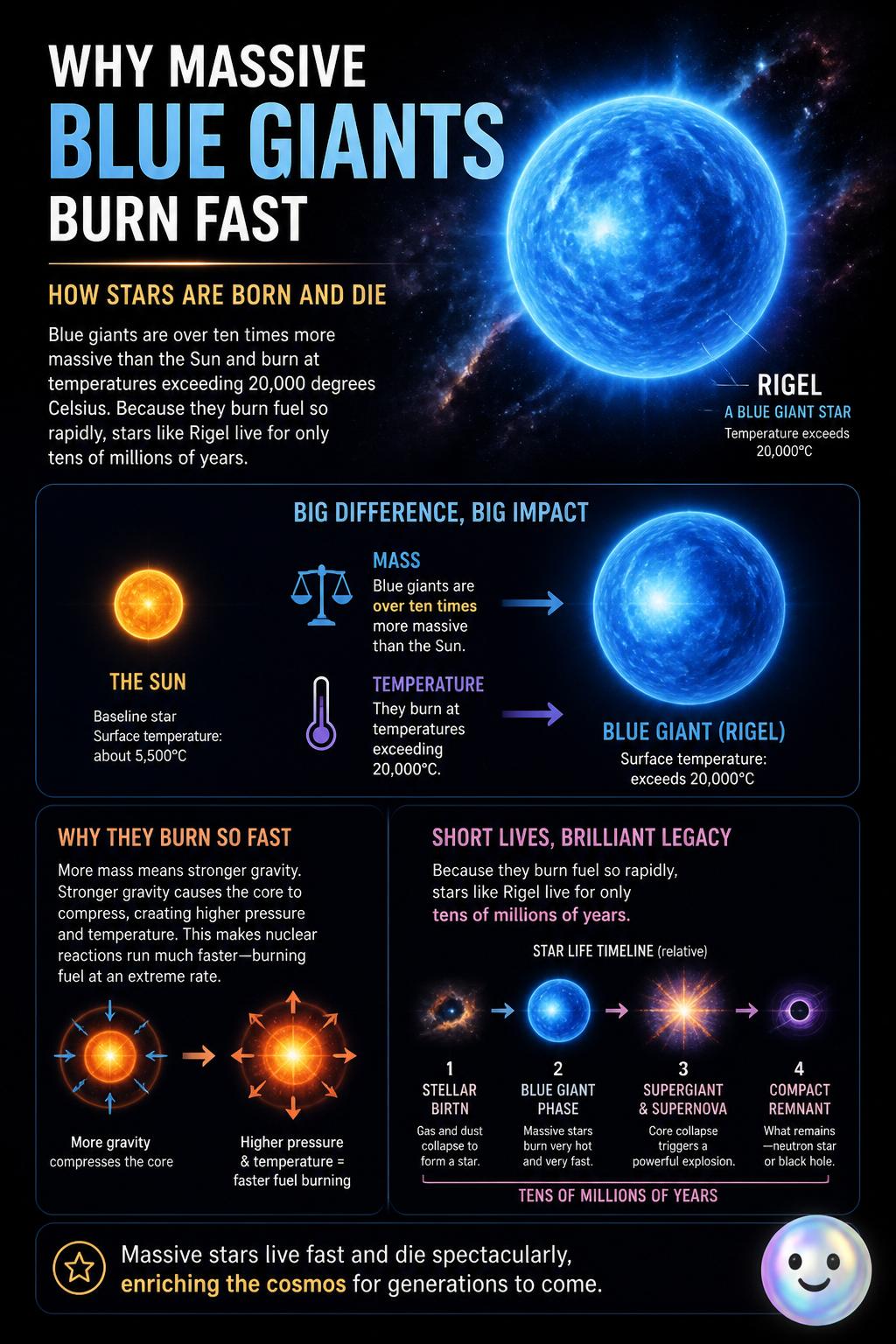
artiteacher Massive blue giants burn through their hydrogen fuel incredibly fast, resulting in lifespans of only millions of years.
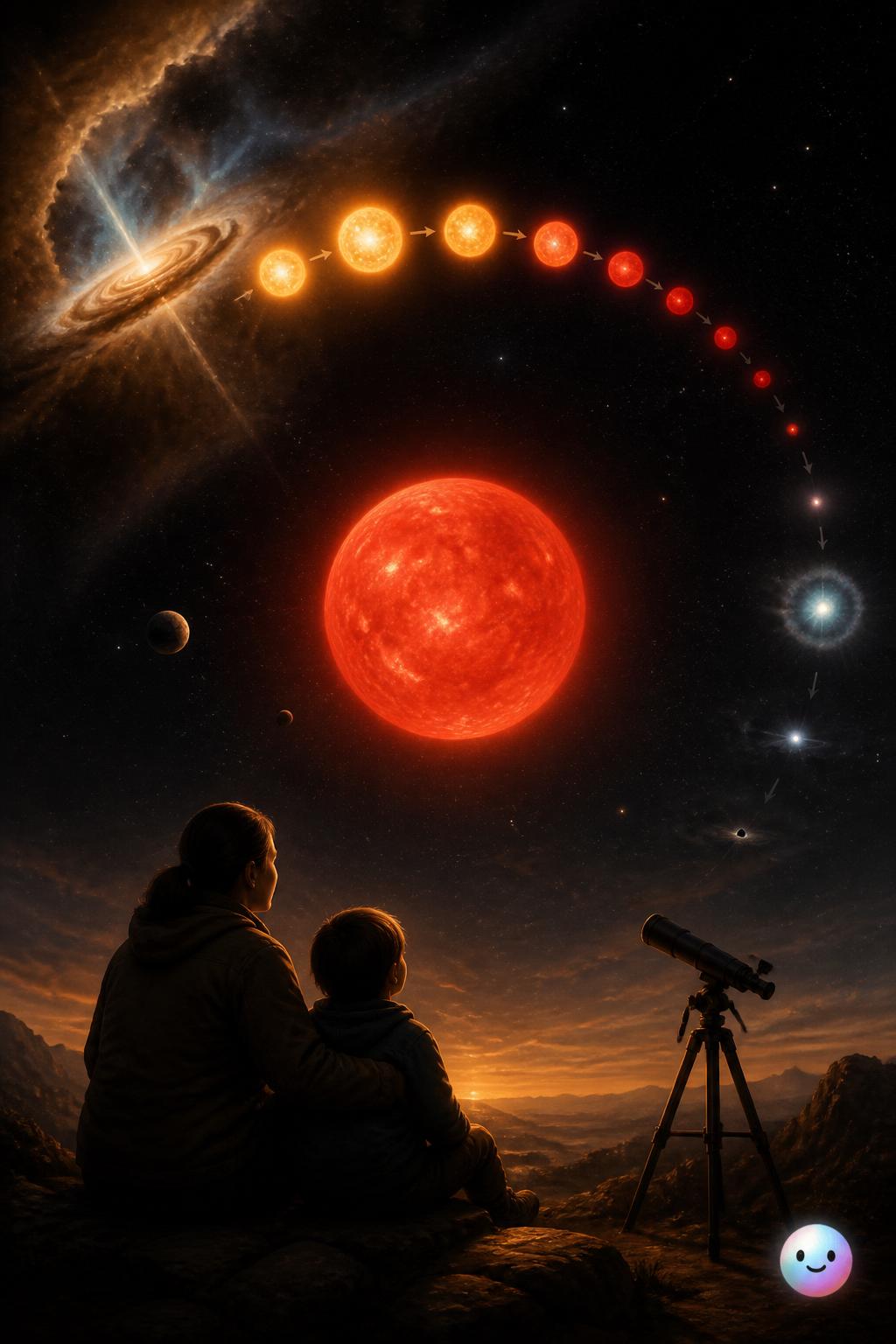
artiteacher Red dwarfs are small, cool stars that burn their fuel so slowly they can live for trillions of years.
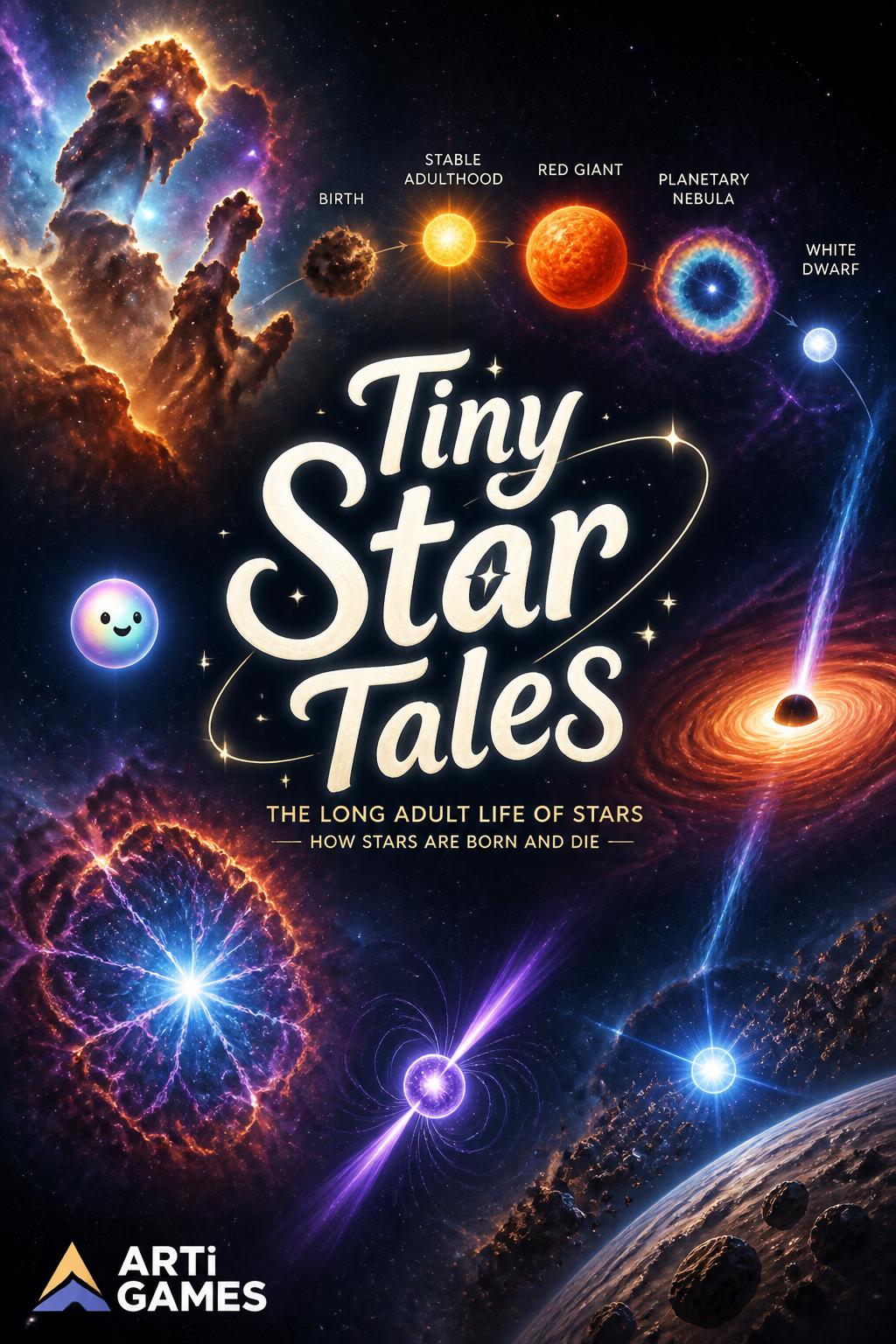
artiteacher Drag cosmic dust into glowing nebulae to discover how stars are born and die.
Sun energy output: The energy produced by the Sun core every second equals about 100 billion hydrogen bombs.
A major grouping of stars on the Hertzsprung-Russell diagram containing most of the known stellar population. Our Sun has resided in this stable, hydrogen-fusing stage for the last 4.6 billion years.
Which type of star has the longest lifespan, potentially living for trillions of years?
What star in the Orion constellation is a famous example of a hot, short-lived blue giant?
What is the scientific term for the balance between gravity pulling inward and gas pressure pushing outward in a star?
What is the stable phase of a star's life called where it spends most of its time?
Why do massive blue giant stars have much shorter lifespans than smaller stars?
What stellar class is our Sun categorized as based on its temperature and size?