Chapter 1
The magic of the microscopic pixel
Chapter 2
The blocky dawn of three dimensions
Chapter 3
Painting with light and shaders
Chapter 4
Cultural tapestries in virtual worlds
Ch 1 · The magic of the microscopic pixel

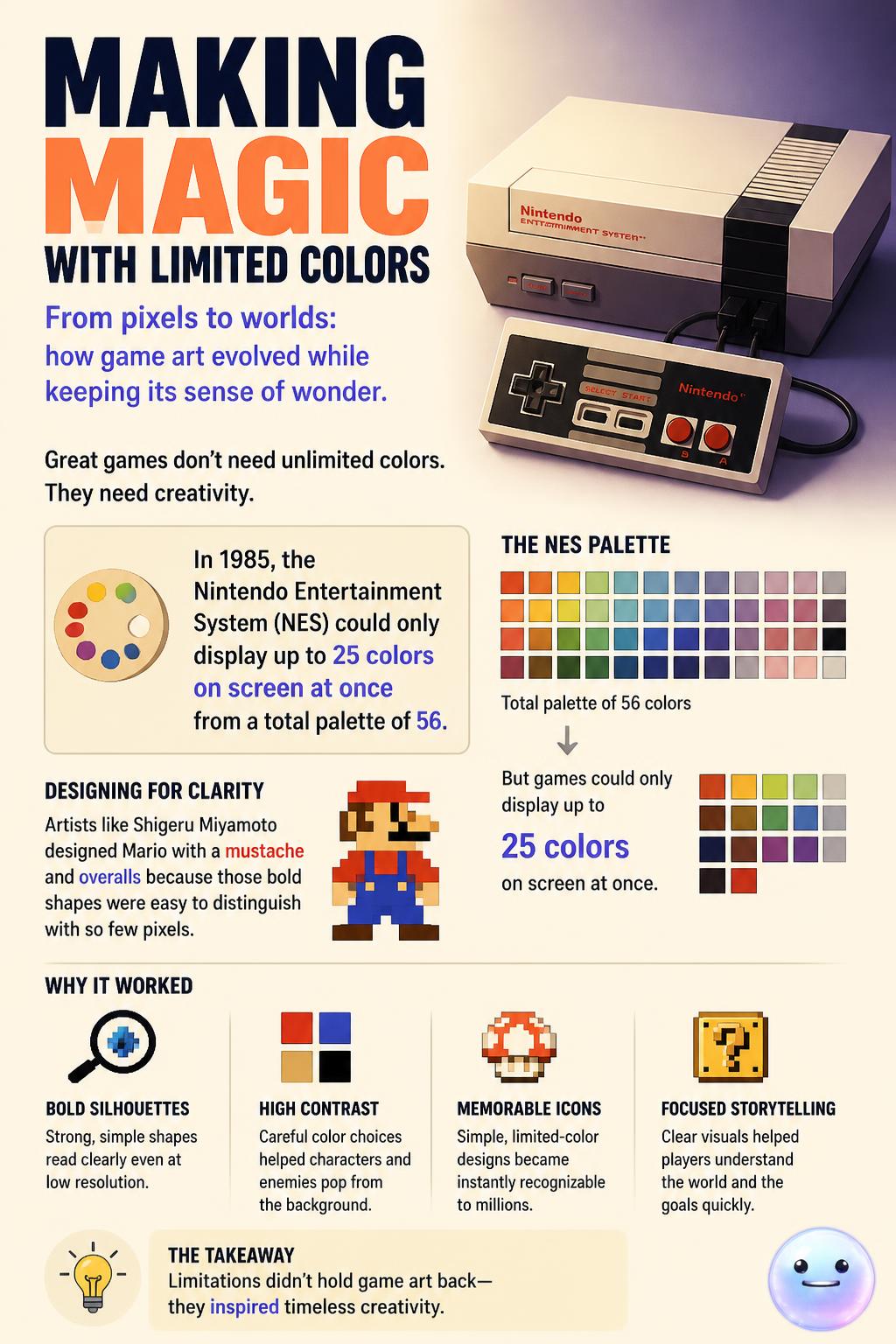
nintendo The NES displayed just 25 colors from a palette of 56, requiring distinct features like mustaches and overalls to define pixelated characters.
Quiz
How many total colors could the Nintendo Entertainment System (NES) choose from to display on screen?
Quiz
Why did Nintendo designer Shigeru Miyamoto give Mario a mustache in the original 1981 Donkey Kong game?
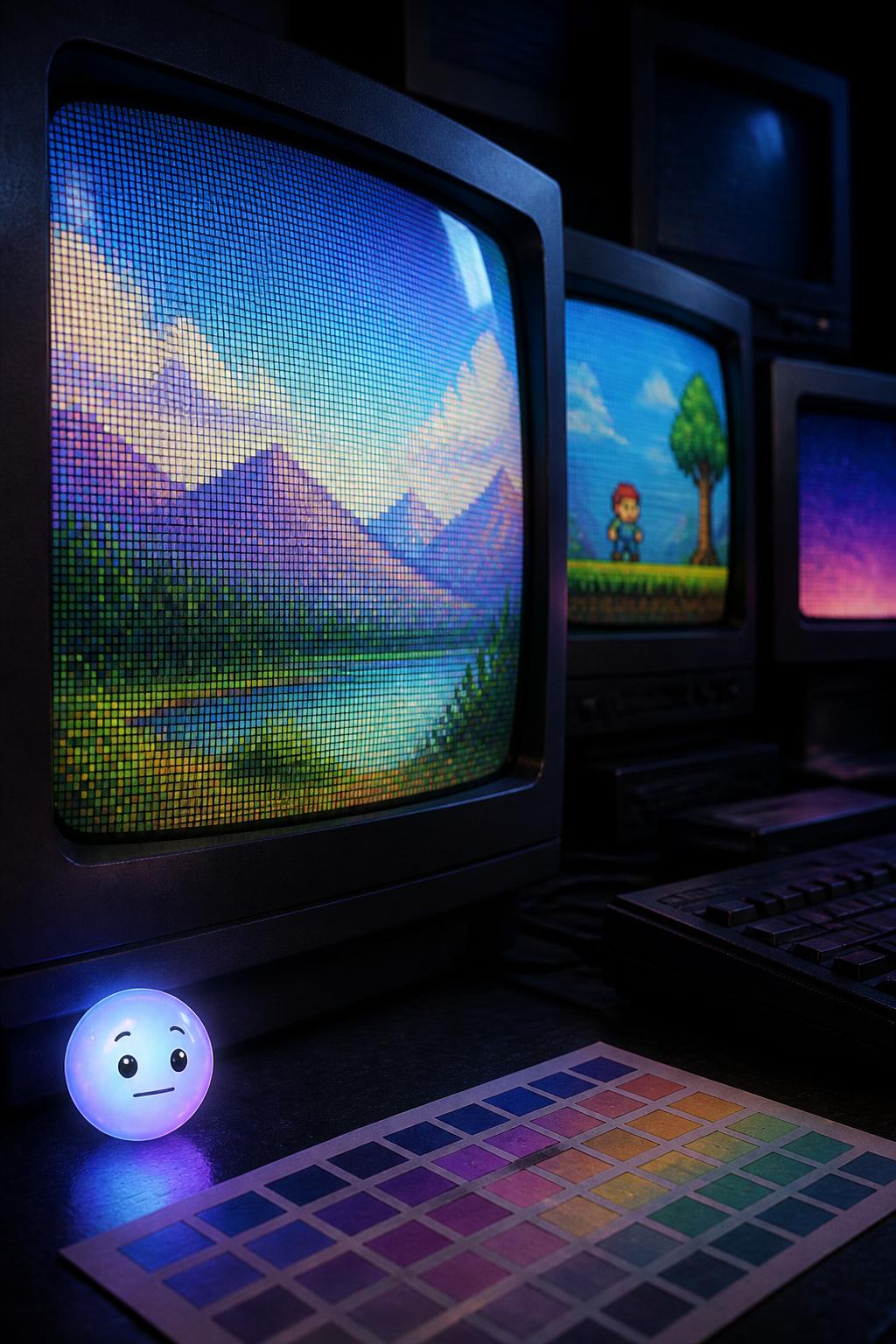
nintendo Artists in the 1990s used checkerboard dithering to create smooth color gradients.
Quiz
What physical property of CRT televisions helped blend sharp pixel edges in retro games?
Quiz
What is the pixel art technique of using checkerboard patterns to simulate extra colors called?
Fun Fact
Pixel art size: The original Super Mario Bros. sprite on the NES was only 12 pixels wide and 16 pixels tall, yet remains globally recognizable.
Quiz
Which visual technique uses layers of background images moving at different speeds to create 3D depth?
Quiz
In what decade did the 16-bit console era popularize highly detailed 2D pixel art?
Glossary
pixel (noun)
Any of the tiny dots or squares that together form an image on a television or computer screen. In 1985, Shigeru Miyamoto designed Mario's iconic character sprite using a 16x16 grid of pixels.
Any of the tiny dots or squares that together form an image on a television or computer screen. In 1985, Shigeru Miyamoto designed Mario's iconic character sprite using a 16x16 grid of pixels.
Quiz
Which classic 1982 arcade game popularized the isometric 3D perspective using a pyramid of cubes?
Quiz
At what angle are the axes drawn in standard isometric game art to simulate 3D depth?