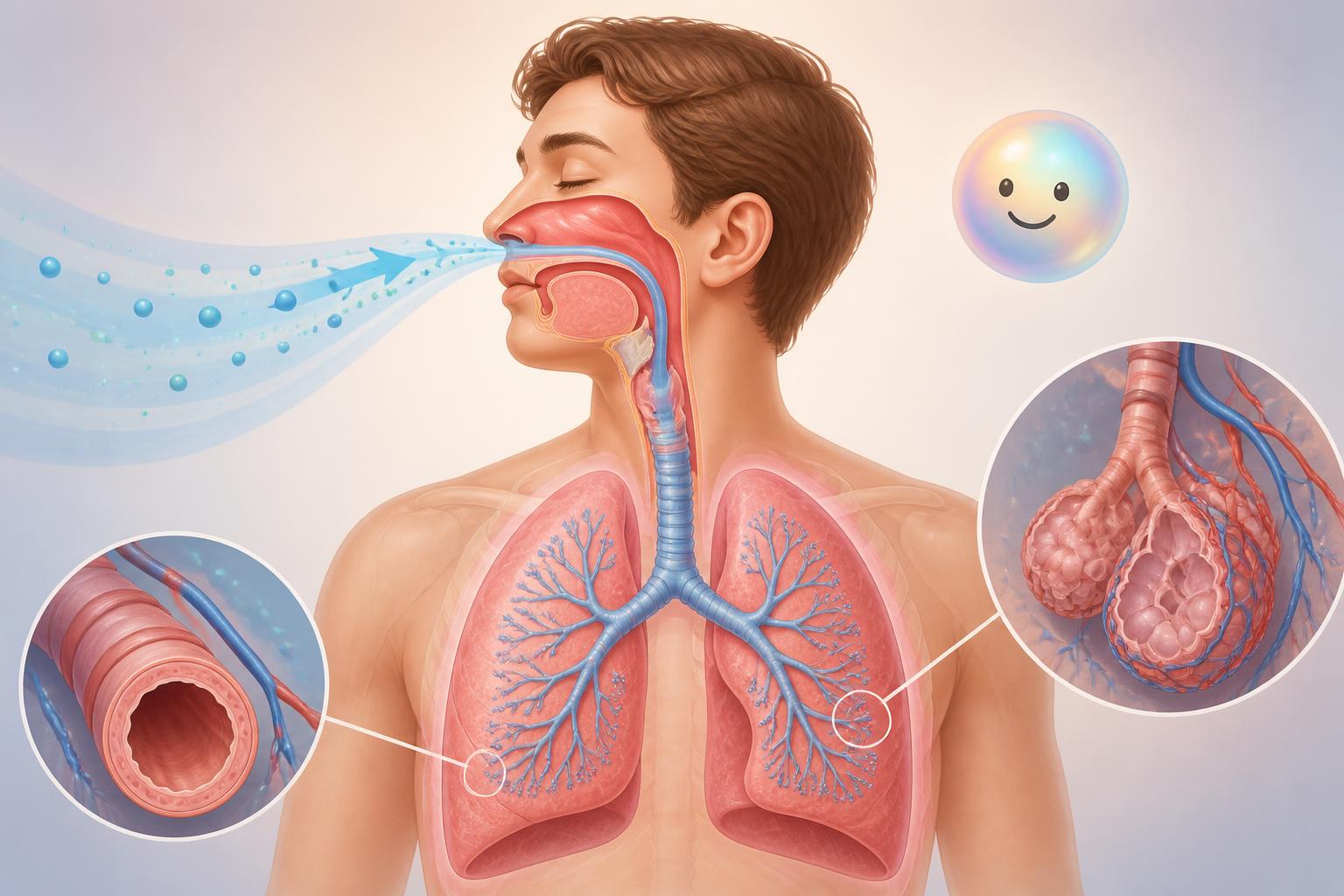
Diaphragm movement: Your diaphragm moves down about 1.5 centimeters during normal breathing, but during deep breathing, it can move down up to 10 centimeters.
The engine of the breath
The gas exchange highway
The ultimate cleaning crew
Breathing at the extremes

artiteacher Although your lungs can hold six liters of air, a normal breath moves only 500 milliliters.
artiteacher The engine of the breath
Diaphragm pulls down, pressure drops low, oxygen rushes in!
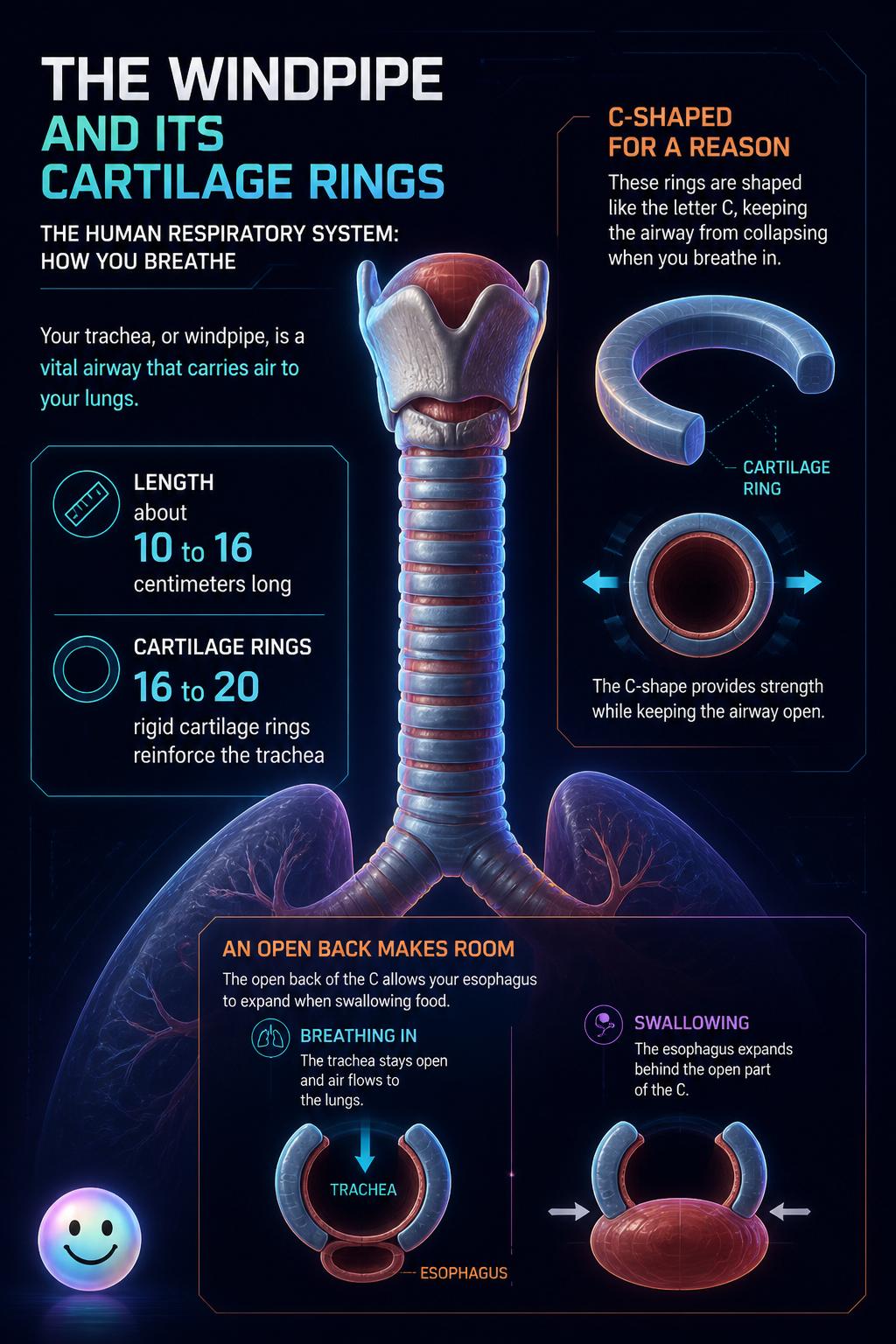
artiteacher The trachea uses sturdy, C-shaped rings of cartilage to stay wide open.
Diaphragm movement: Your diaphragm moves down about 1.5 centimeters during normal breathing, but during deep breathing, it can move down up to 10 centimeters.

artiteacher Your nose warms, humidifies, and filters air before it reaches the delicate lungs.
A dome-shaped muscular partition separating the chest cavity from the abdomen in mammals. This muscle contracts and flattens to draw air into the lungs during inhalation.
How does the nasal cavity prepare cold air before it reaches the delicate human lungs?
Which part of the human brainstem automatically controls the rhythm of breathing?
What is the average volume of a relaxed breath, known as tidal volume, in an adult human?
What physical change actually forces air to rush into the lungs during inhalation?
Why does the human trachea have C-shaped cartilage rings instead of complete circles?

artiteacher Tap the brain's rhythmic signals to discover how it automatically controls your breathing rate.