How Earth Orbits the Sun: Newton's Gravity
In his 1687 masterpiece, the "Principia", Newton formulated the laws of motion and universal gravitation. He proved that the same gravitational force pulling an apple to the ground also keeps the Moon orbiting Earth and Earth orbiting the Sun. Newton's mathematical equations unified earthly and celestial physics under a single set of natural laws.
The illusion of a stationary Earth
The sun takes center stage
The math of a year
Solving the calendar puzzle

futura Earth Orbits the Sun
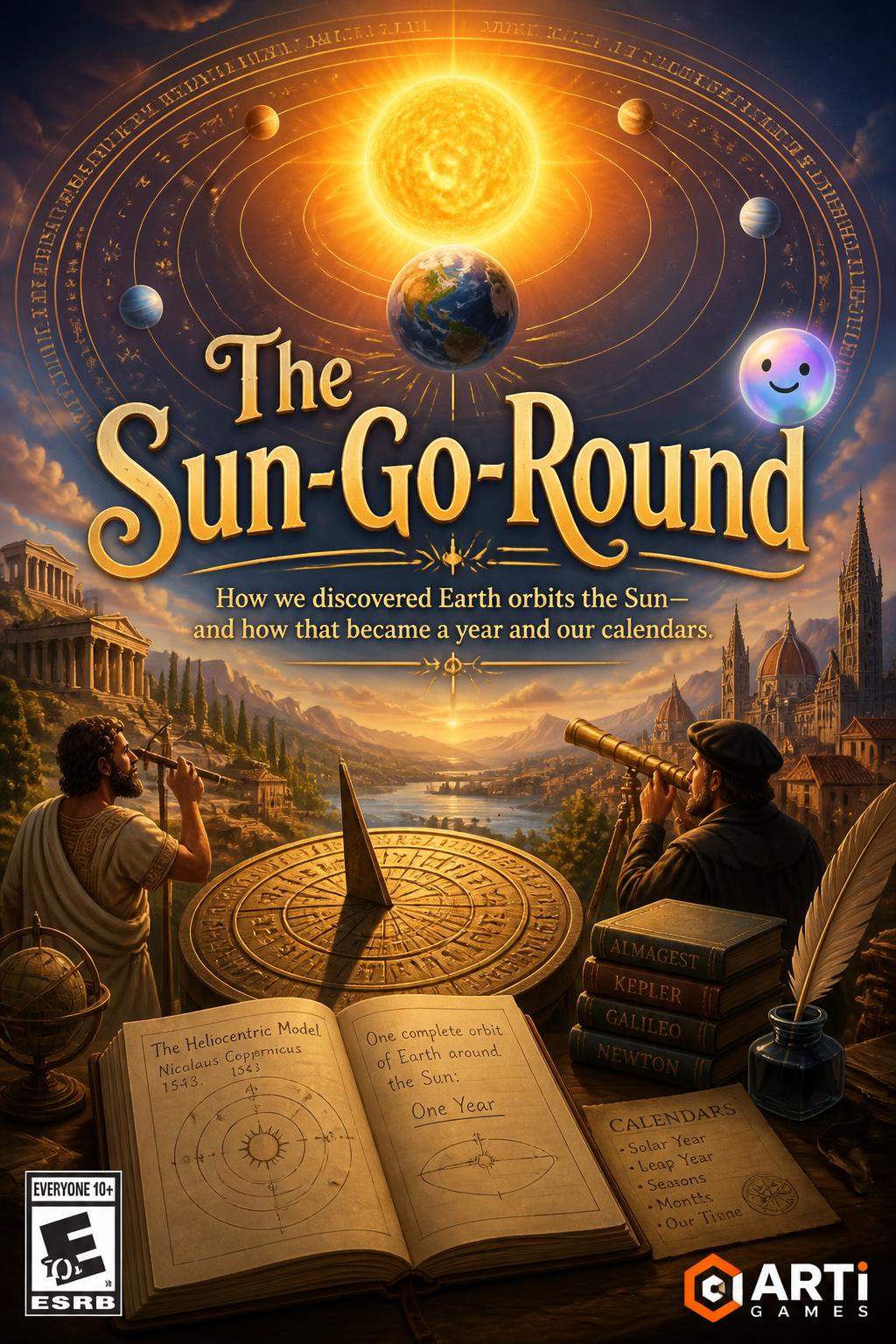
Spinning 'round the Sun, Earth makes a year, a cosmic run. Copernicus knew, a new view for you!
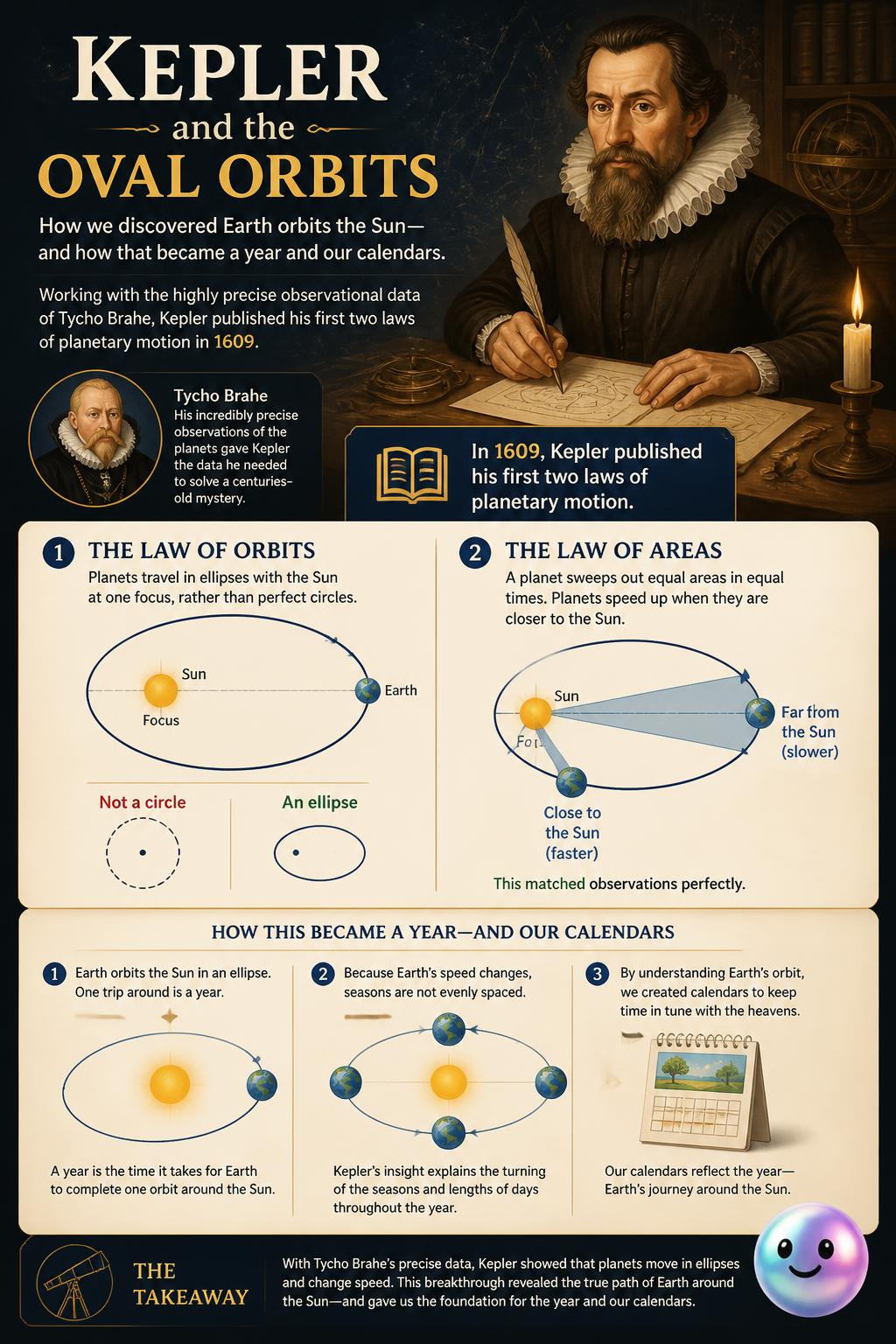
futura Johannes Kepler discovered that planets move in elliptical orbits, correcting Copernicus's assumption of perfect circles.
Galileo's middle finger: Galileo's actual finger is preserved in a Florence museum, pointing toward the sky he spent his life observing.
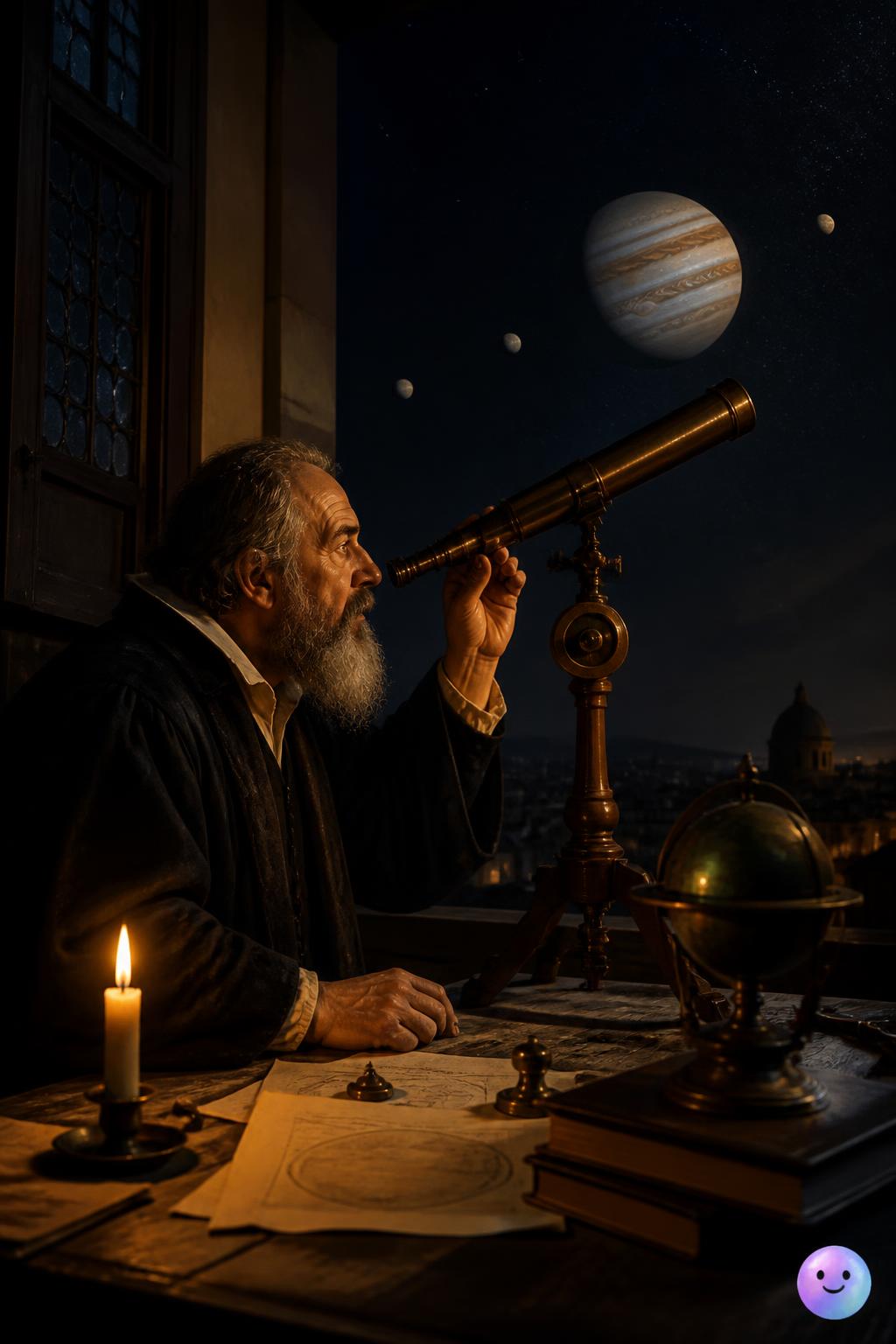
futura Galileo Galilei used the newly invented telescope to find physical evidence supporting the Copernican heliocentric model.
The astronomical model in which the Earth and planets revolve around the Sun. Polish astronomer Nicolaus Copernicus published this model in 1543, mathematically placing the Sun at the center.
Which scientist published the Principia in 1687, explaining gravity as the force holding planets in orbit?
What did Galileo Galilei discover orbiting Jupiter in 1610, proving not everything in space orbits Earth?
What shape did Johannes Kepler discover planetary orbits actually are, correcting Copernicus's circular model?
Whose highly accurate astronomical data did Johannes Kepler analyze to formulate his laws of planetary motion?
Which planet's phases did Galileo Galilei observe that proved it must orbit the Sun rather than the Earth?