The small intestine and its microscopic forests
The chemistry of nutrient capture
The large intestine as the recycling plant
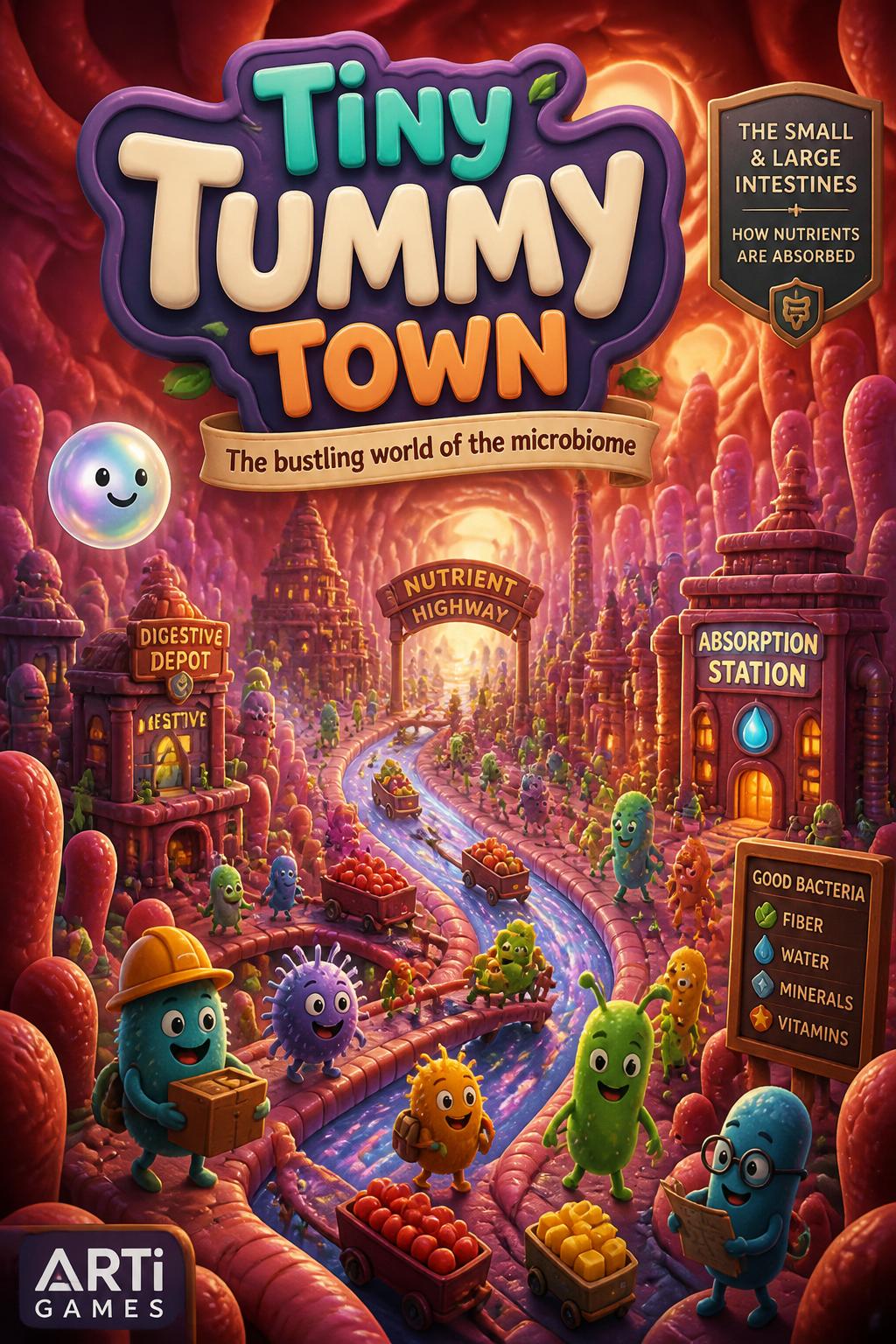
The bustling world of the microbiome

What neurotransmitter, famous for regulating mood, is mostly produced in the human gut?
Which major nerve serves as the primary communication highway between the gut and the brain?
artiteacher Drag nutrients through the intestinal walls to discover how our bodies absorb them.
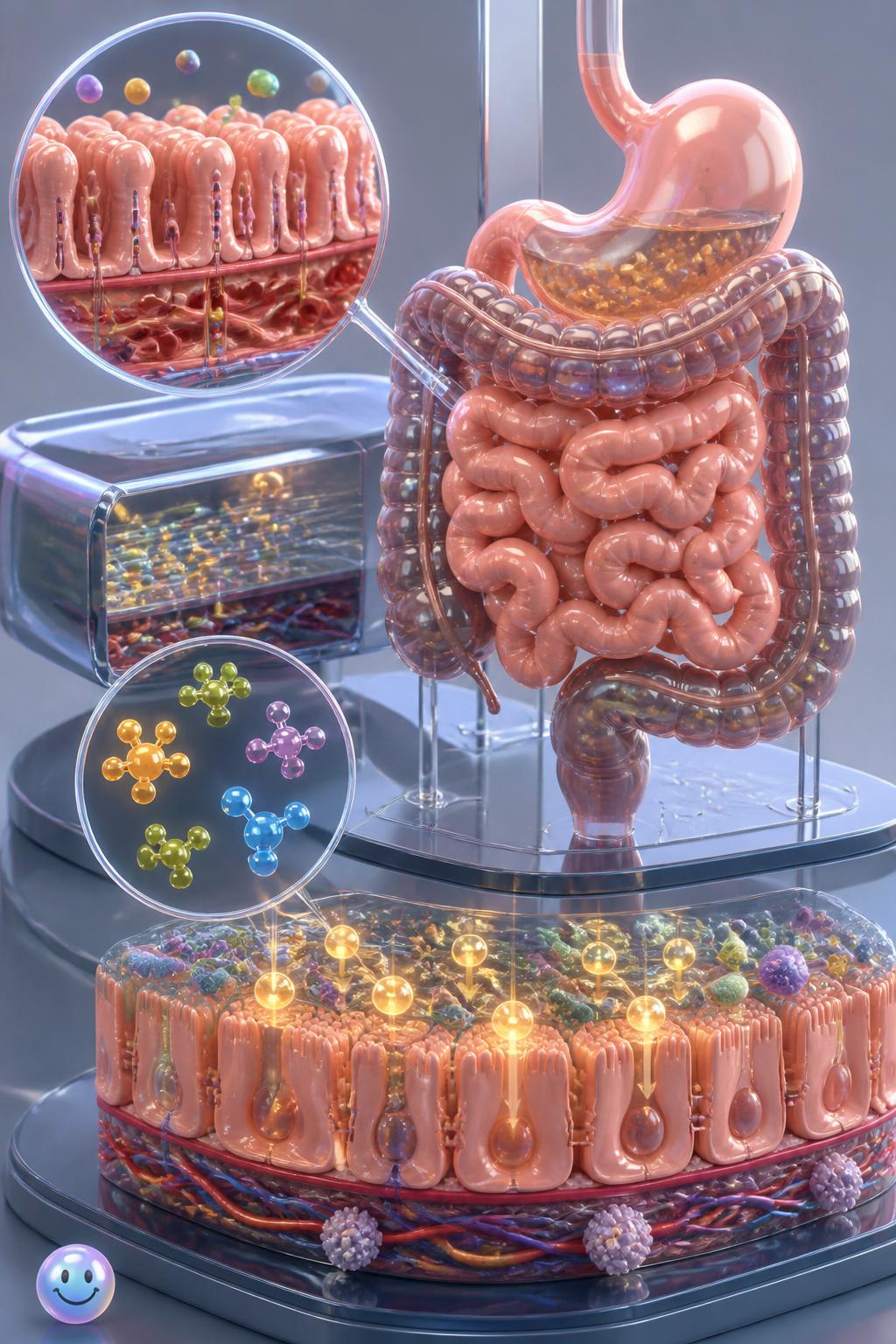
artiteacher Gut bacteria ferment undigested carbohydrates to produce energy molecules that fuel colon cells.
What percentage of the body's immune cells reside within the walls of the intestines?
artiteacher The Microbiome
Villi fold it up, villi fold it up! Drinking it all in, we never stop!
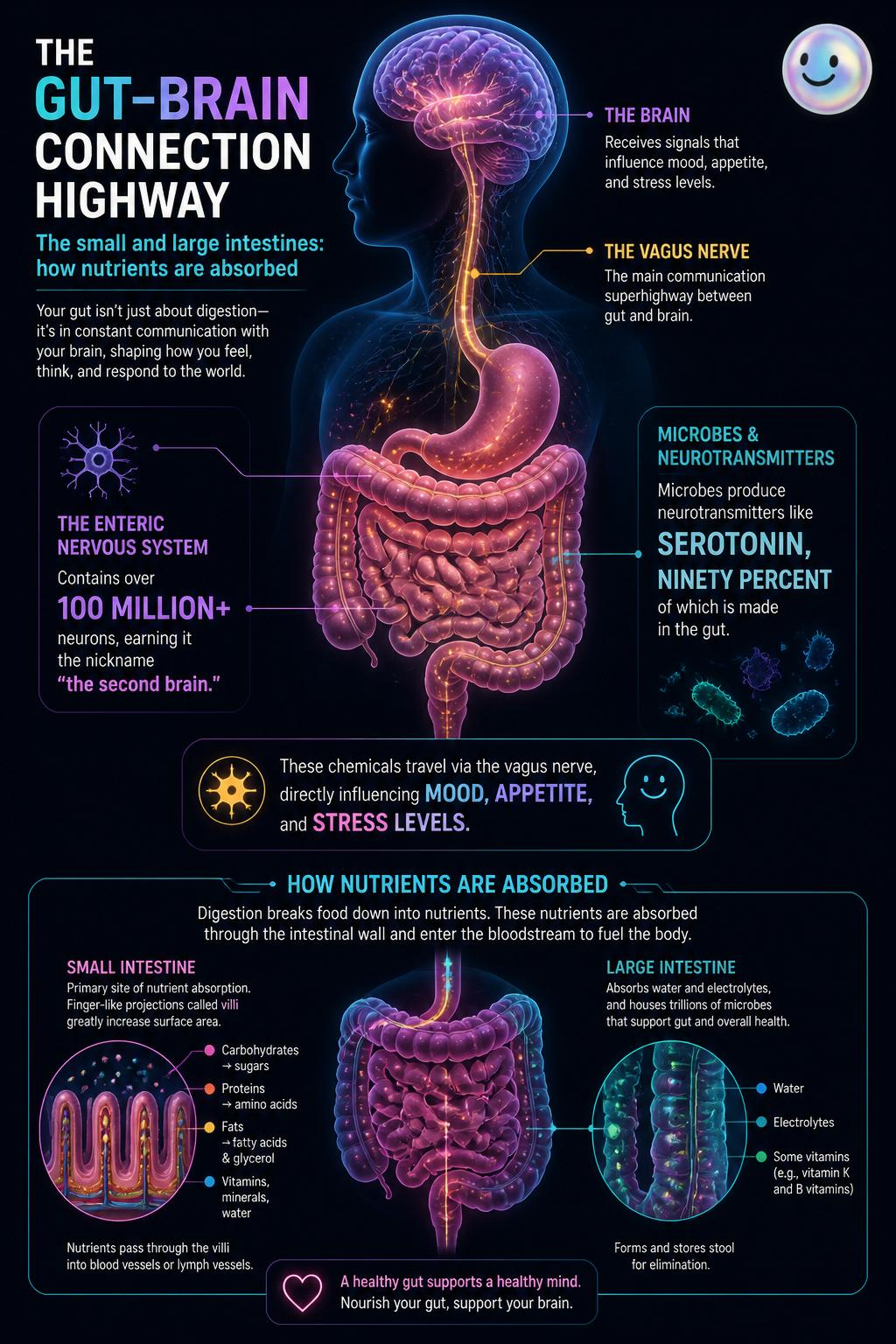
artiteacher The gut and brain communicate constantly through nerves, hormones, and chemical signals.
Why has the enteric nervous system in the gut been nicknamed the "second brain"?
What energetic compounds are produced when gut bacteria ferment undigested plant fibers?
Serotonin central: Although serotonin is famous for regulating mood in your brain, about ninety percent of this chemical is actually manufactured in your gut.
The community of microorganisms, including bacteria, fungi, and viruses, that inhabit a particular environment. These microscopic organisms inhabit the human gut, fermenting indigestible fibers to produce essential vitamins and energy.