
BETA
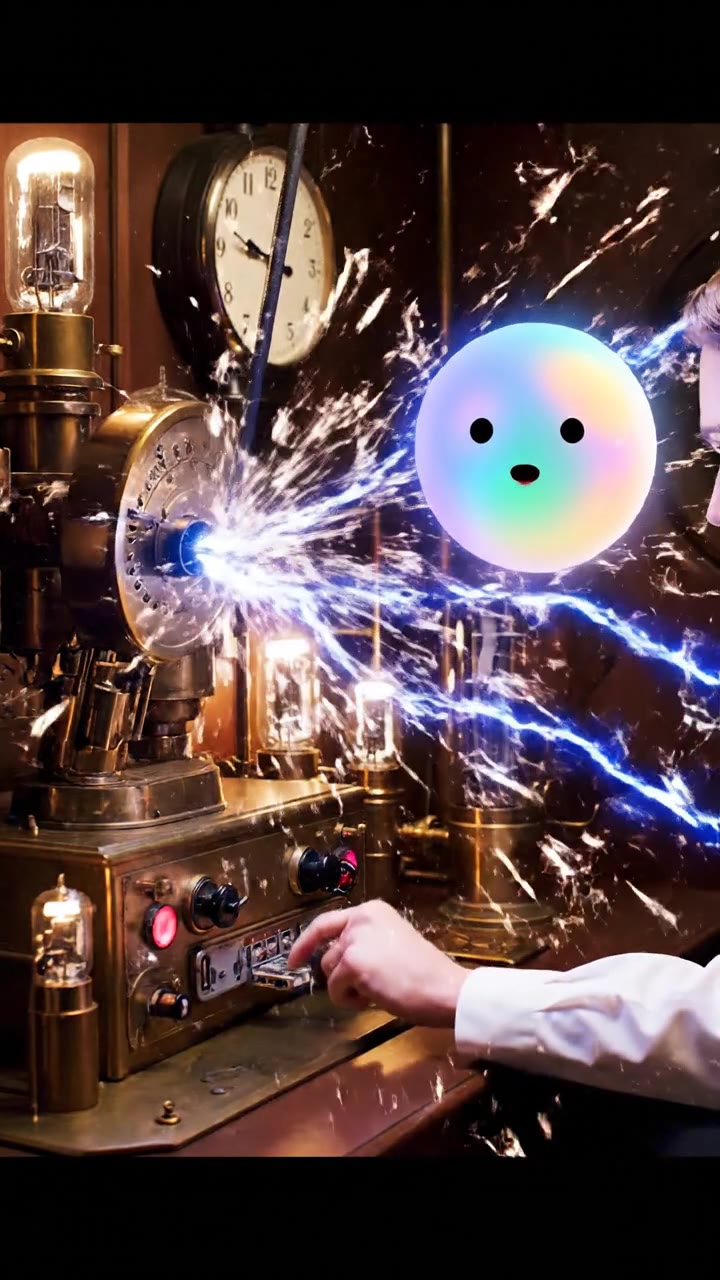
The Radio Act of 1912 was passed in the United States, requiring 24-hour radio watches on all ships. It also mandated that passenger vessels use standardized distress signals, specifically SOS, to prevent communication confusion. This ensured that nearby ships would always hear emergency calls.
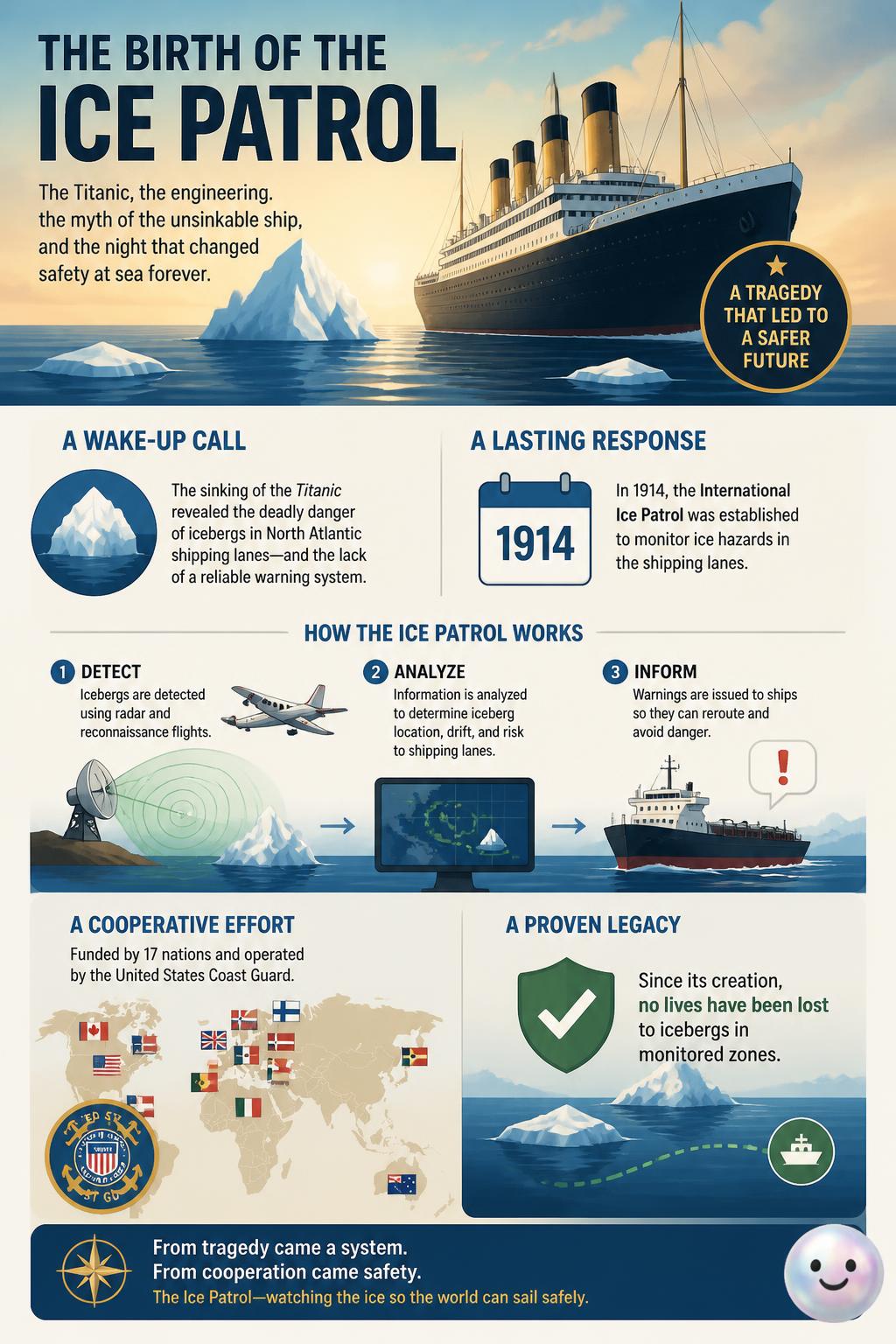
artiteacher An international coalition was formed to track icebergs and protect ships in the North Atlantic.
The red flare mistake: Because the Titanic fired white flares instead of red distress flares, nearby ships thought they were celebrating.
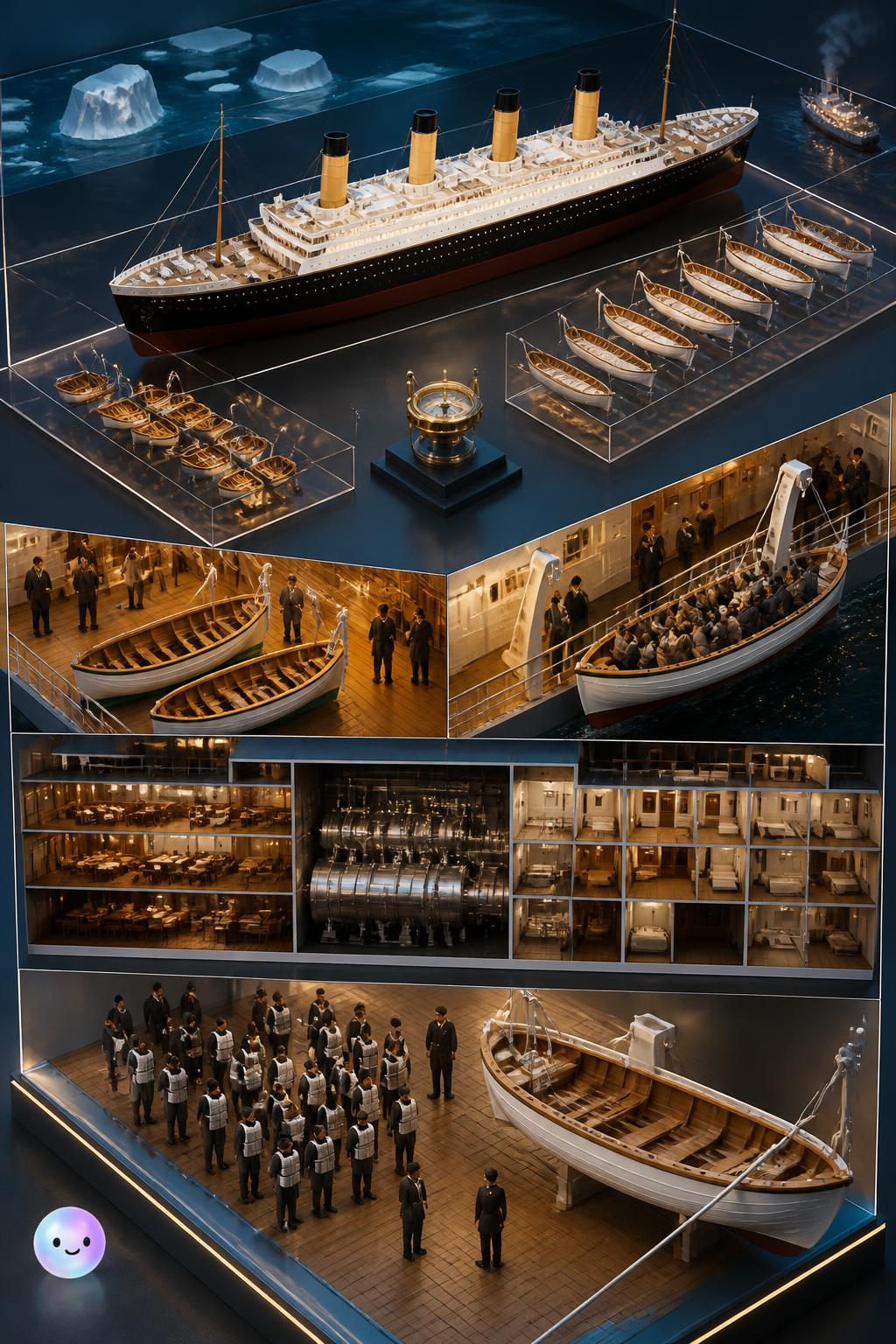
artiteacher New safety regulations mandated that all passenger ships must carry enough lifeboats for everyone.
What distress signal, which eventually replaced CQD, was heavily popularized by the Titanic?
Which organization was established in 1914 to monitor icebergs in the Atlantic?
What radio rule was changed because the nearby Californian slept through distress calls?