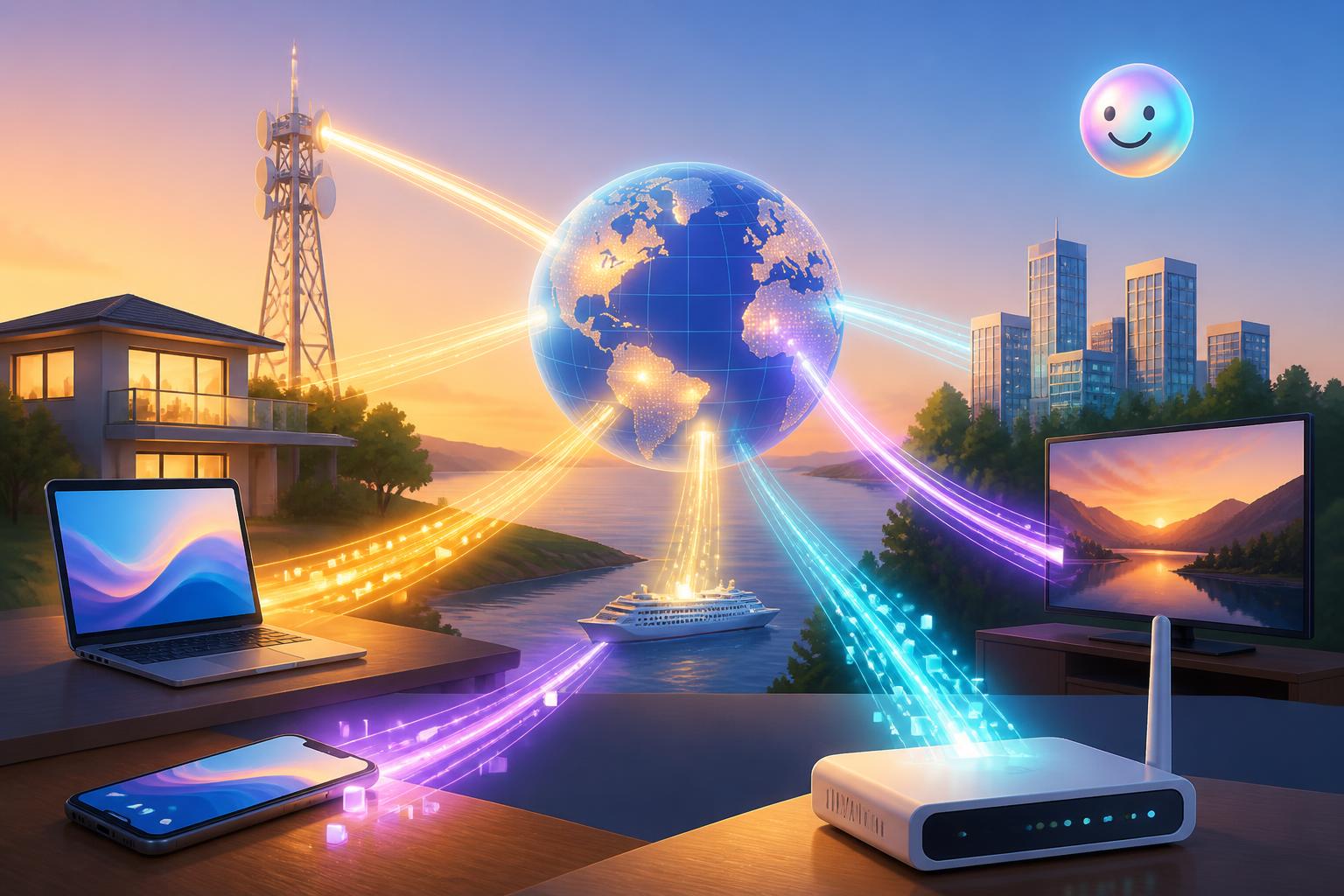
Chapter 1
Bending light inside glass
Chapter 2
The deep sea cable network
Chapter 3
Beaming data through thin air
Chapter 4
Translating data into photons
YOUR GOAL
Master of Internet on beams of light
Ch 2 · The deep sea cable network

play_review Deep sea cables
Beams of light, beams of light, Flying through the ocean night.
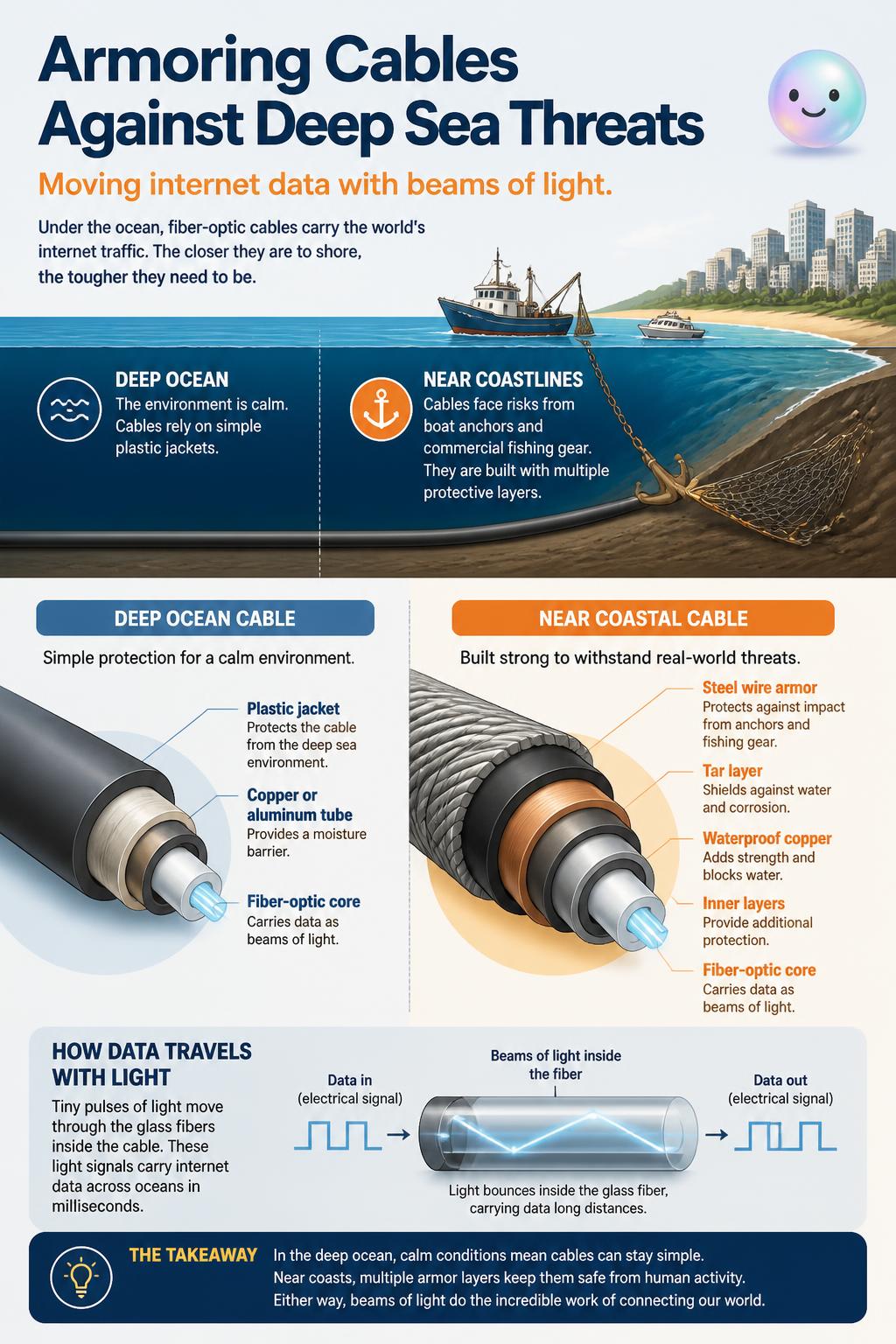
play_review While deep-sea cables can be as thin as a garden hose, near-shore cables are armored with steel to survive anchors, fishing nets, and marine life.
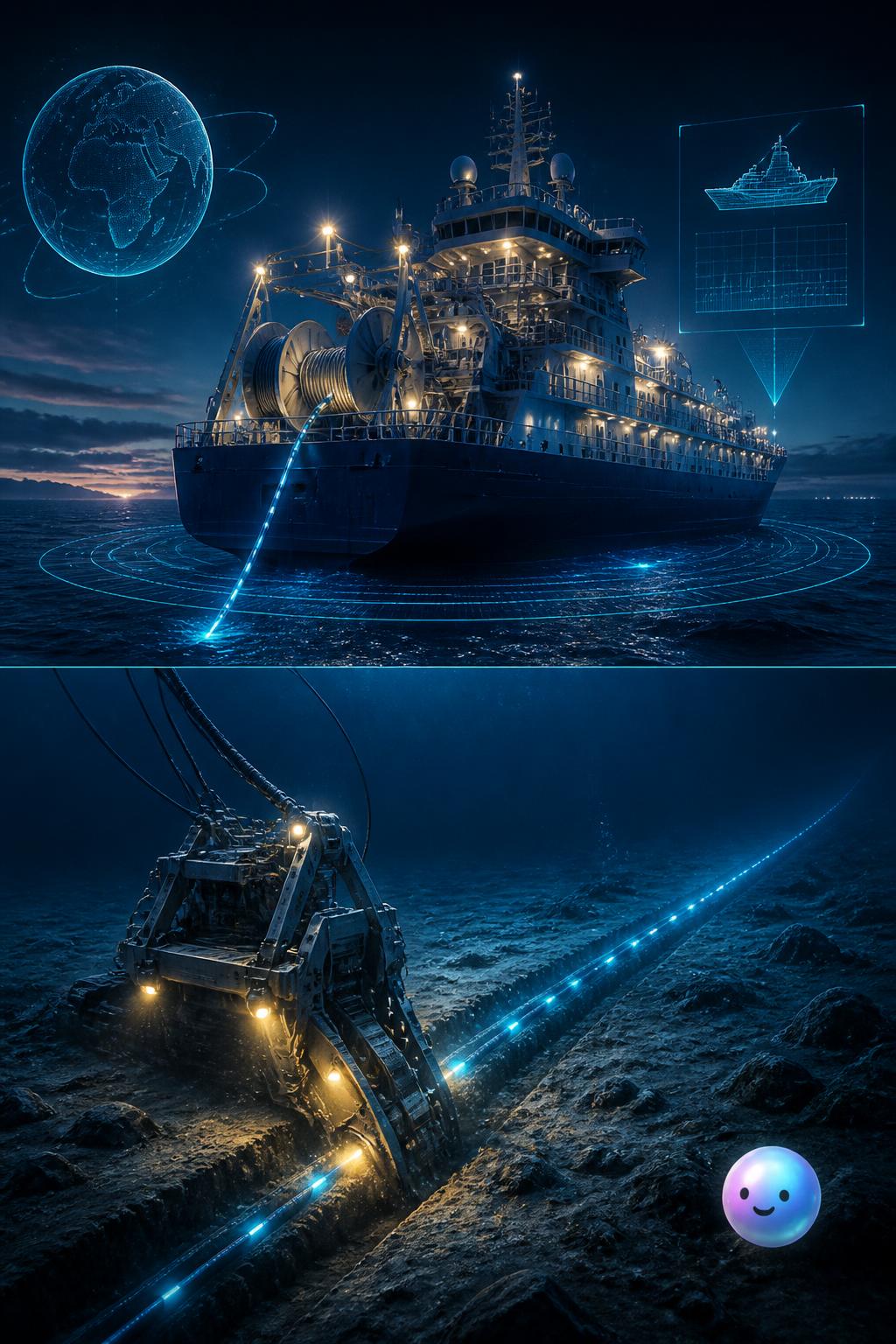
play_review Giant cable-laying ships carry thousands of miles of coiled fiber optic cable, slowly spooling it onto the seabed over months-long voyages.
BETA
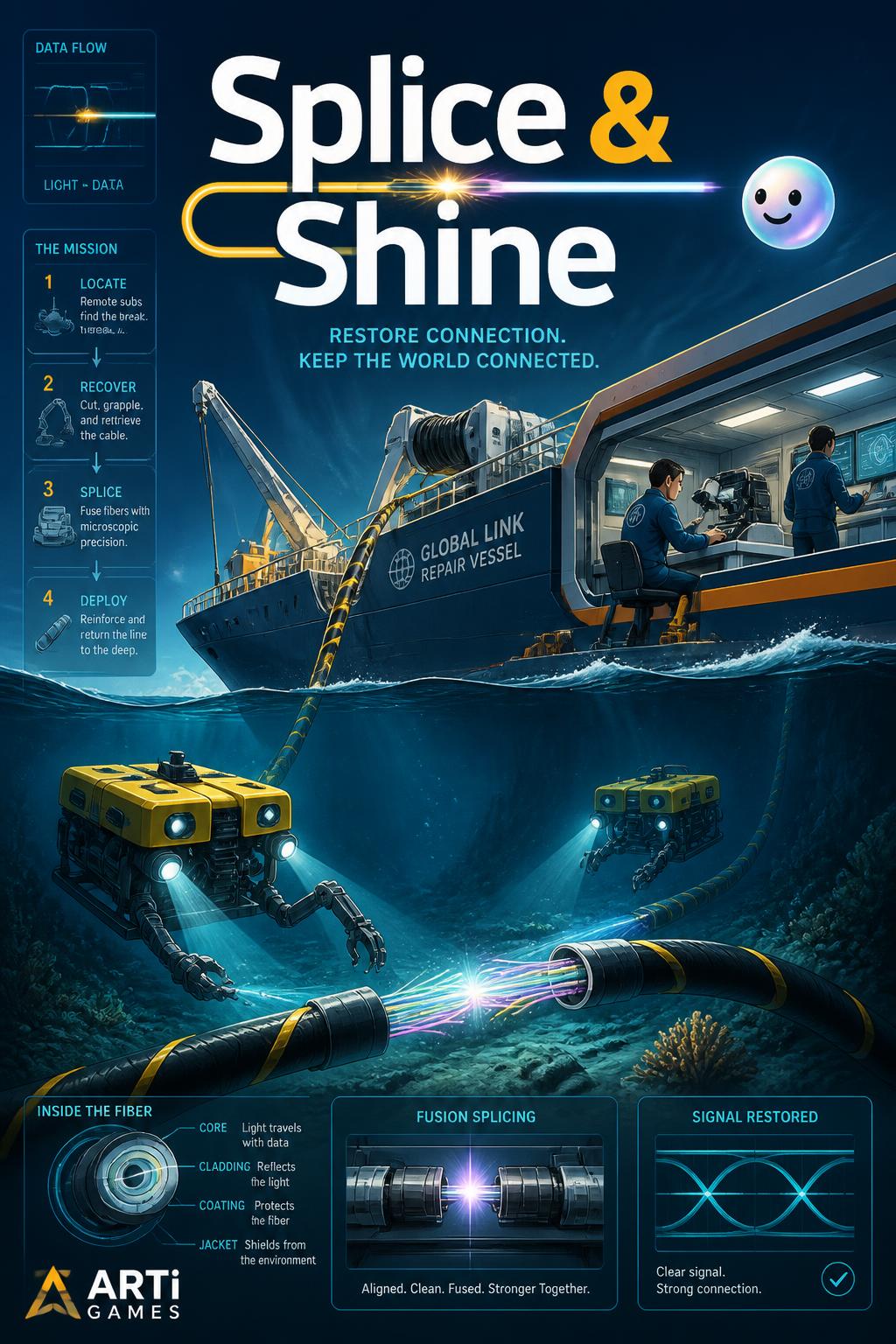
play_review Align and splice the glowing fibers to discover how light beams carry internet data.
Fun Fact
Shark bites: In the 1980s, sharks bit undersea cables because the electrical power lines inside emitted faint electromagnetic fields that mimicked prey.
Glossary
fiber-optic cable (noun)
A high-speed data transmission cable containing glass fibers that carry information as pulses of light. In 1988, the first trans-Atlantic digital line, TAT-8, was laid to link North America and Europe.
A high-speed data transmission cable containing glass fibers that carry information as pulses of light. In 1988, the first trans-Atlantic digital line, TAT-8, was laid to link North America and Europe.
Quiz
Approximately what percentage of international internet traffic travels through undersea fiber optic cables?
Quiz
What device is spliced into undersea cables every few dozen miles to boost the fading light signal?
Quiz
Which historic cable laid in 1988 was the first fiber optic line to cross the Atlantic Ocean?
Quiz
Why are undersea cables wrapped in heavy steel armor near coastlines but left thin in the deep ocean?
Quiz
How do cable-laying ships bury fiber optic lines in the seabed near coastlines?
Quiz
What animal was famous for biting early undersea fiber optic cables in the 1980s?
Quiz
What is the average operational lifespan of a modern undersea fiber optic cable?