Profile

Play_Review
✨0 friends
Masteries

No masteries yet
play_review Technology translates human brain waves into visual images.
play_review The nearby super-Earth planet TOI-561 b orbits in our cosmic neighborhood.
play_review Astronomers search for the missing heat on exoplanet TOI-561 b.
play_review Super-Earth TOI-561 b
Sunscreen of stone, sunscreen of stone / Shields the boiling ground!

play_review Sort the falling mineral crystals to figure out how magma clouds protect the lava planet.
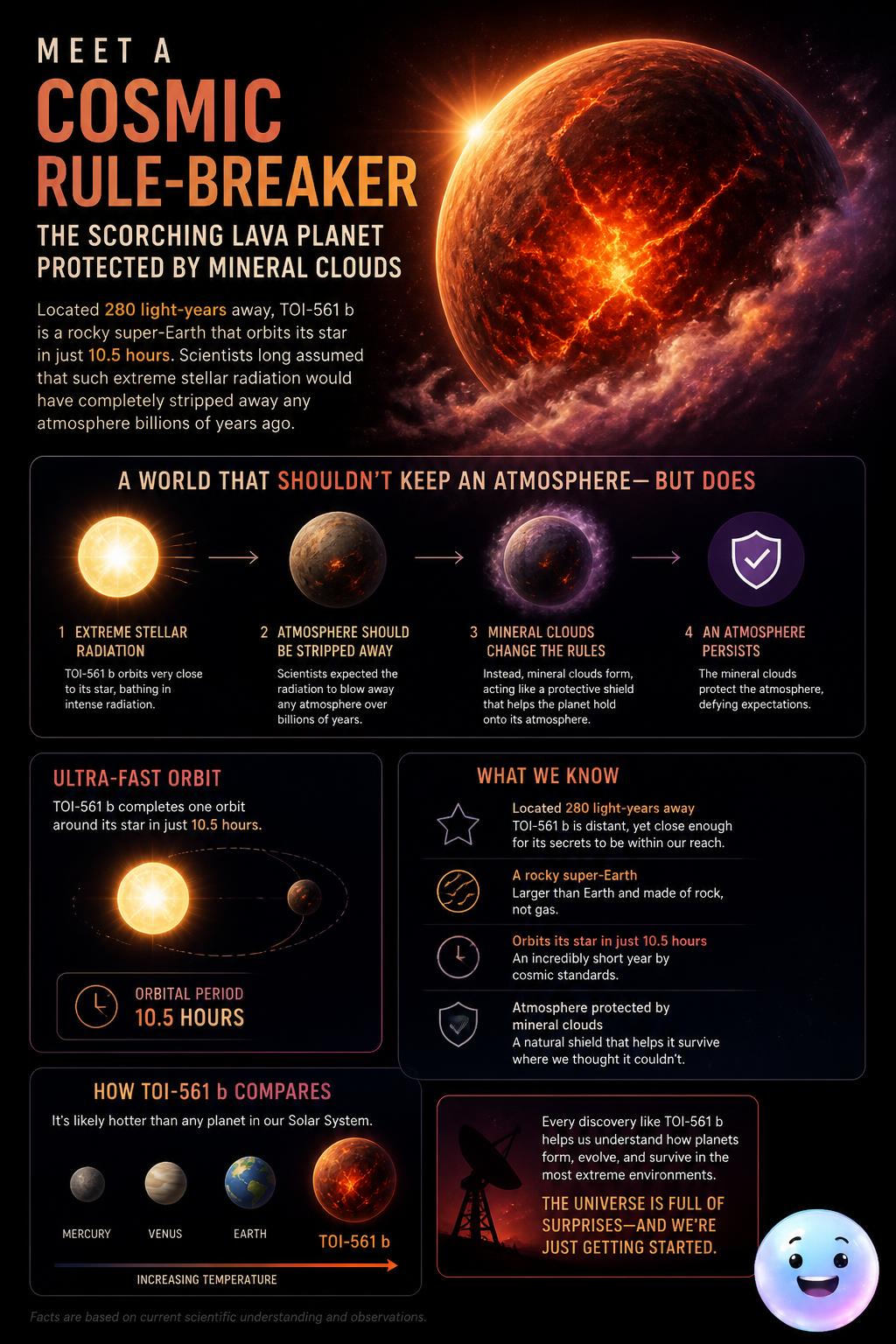
play_review Located 280 light-years away, this rocky super-Earth challenges the belief that extreme stellar radiation strips atmospheres over billions of years.
How long does it take the exoplanet TOI-561 b to complete a full orbit around its host star?
Approximately how far is the exoplanet TOI-561 b from Earth?

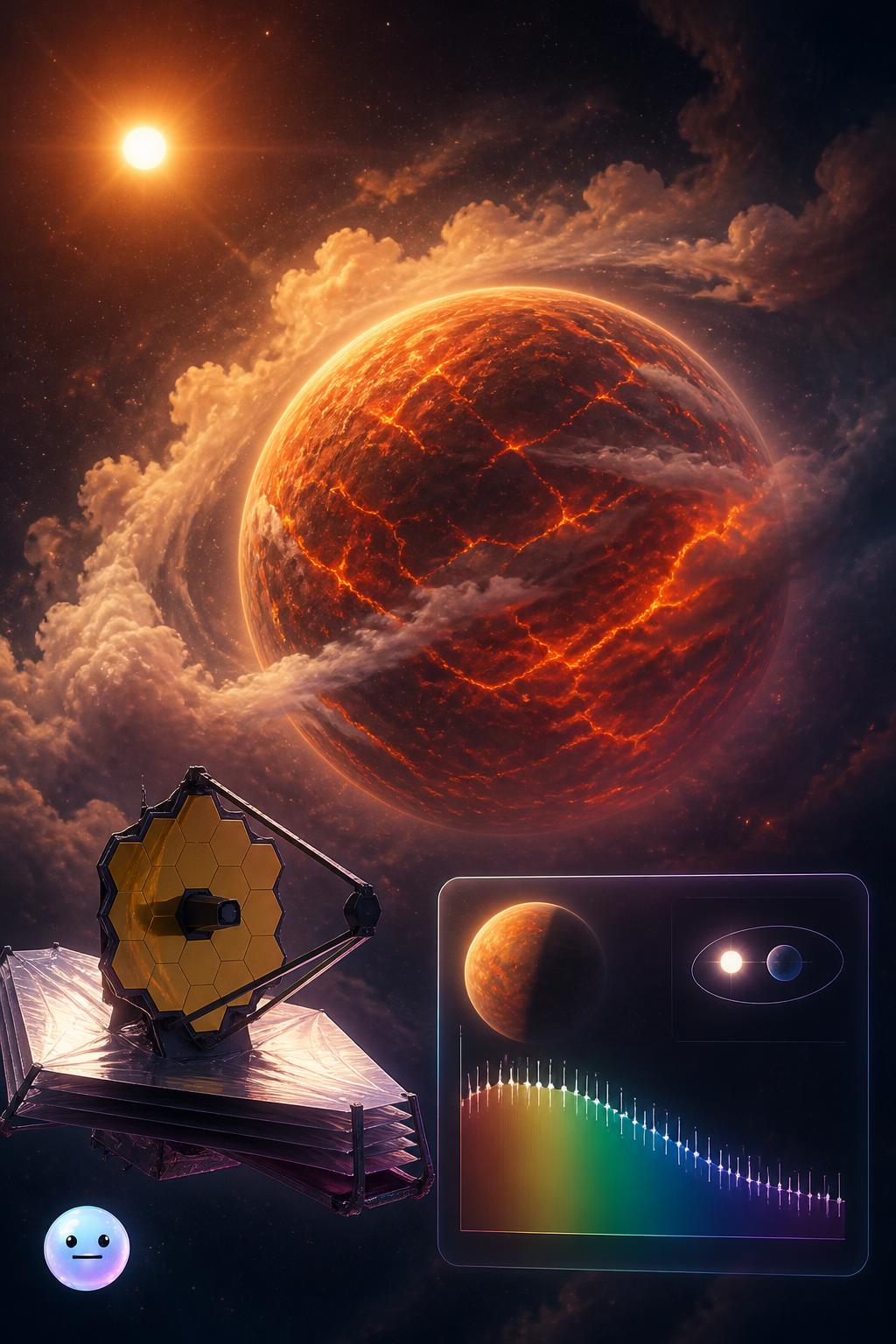
play_review TOI-561 b either reflects its star's energy or moves heat to its nightside
What did astronomers notice about the dayside temperature of TOI-561 b that surprised them?
Which space telescope provided the crucial infrared data showing TOI-561 b's unexpected dayside temperature?
Cosmic speed limits: TOI-561 b completes a full year in just 10.5 hours, meaning you would celebrate over 800 birthdays every single Earth year!
What does the presence of an atmosphere on TOI-561 b suggest to planetary scientists?
According to standard astronomical theories, what should have happened to TOI-561 b's atmosphere over billions of years?
The envelope of gases surrounding a planet or other celestial body. JWST observations revealed that the scorched, fast-orbiting rocky world TOI-561 b unexpectedly retains a thick atmosphere.
What type of surface does the exoplanet TOI-561 b have?
What is a 'super-Earth' in astronomy?
Would you want to live on a planet with a 10-hour year?
play_review Functional magnetic resonance imaging scans map active areas of the brain.
play_review Functional magnetic resonance imaging maps the working human brain.
play_review Functional magnetic resonance imaging maps human brain activity.
play_review Functional magnetic resonance imaging scans map human thoughts.

play_review Decode brain activity into sketches to discover how AI visualizes our thoughts.

play_review Largo di Torre Argentina ruins shelter a protected sanctuary for Rome's stray cats.
play_review New technology reconstructs visual images directly from human brain activity.
play_review The reproductive power of the female pumpkin flower ovary.
play_review Giant pepo berries make up a unique botanical family.
play_review Botanical science defines the structural differences between fruits and vegetables.
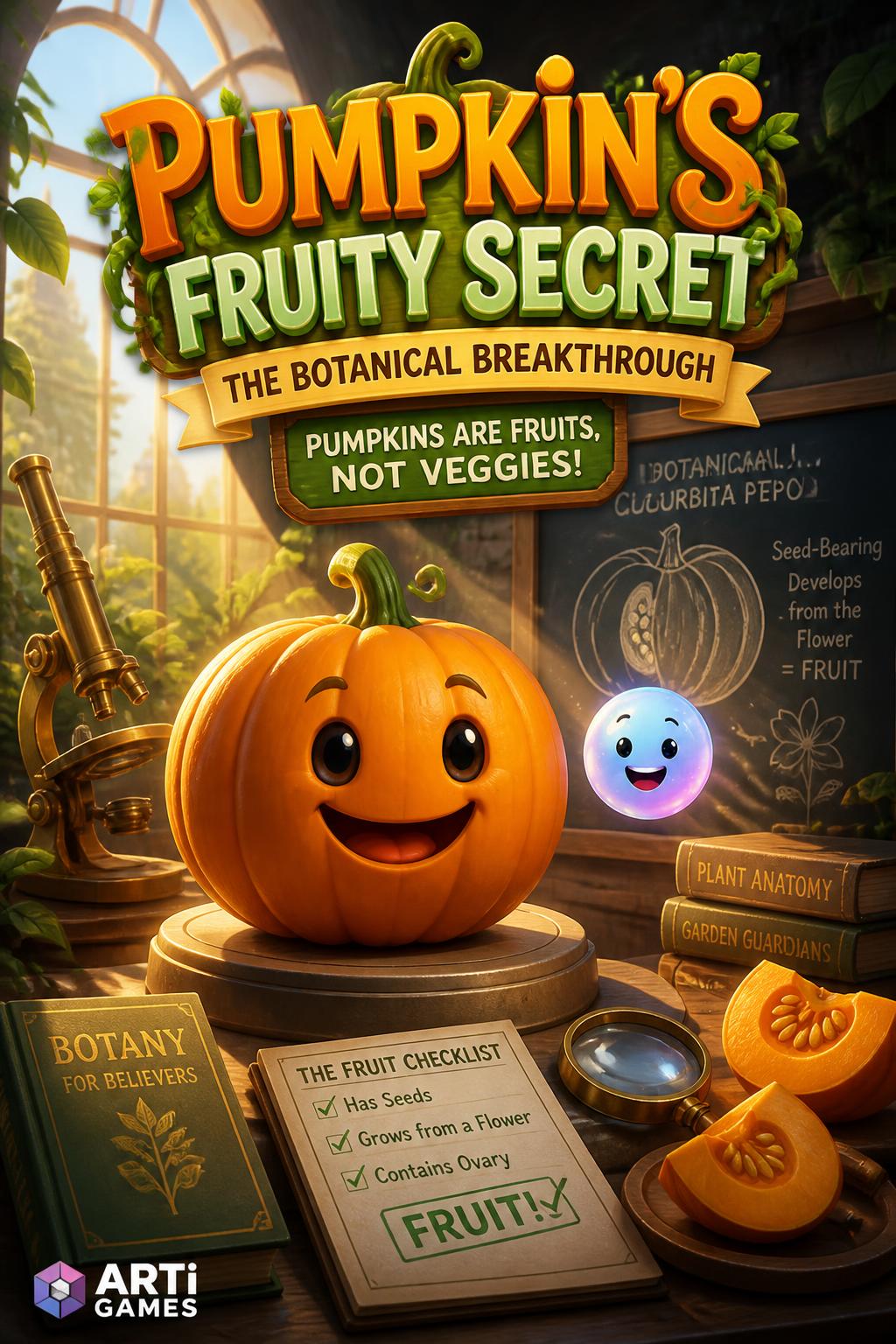
play_review Sort botanical traits to discover why pumpkins are actually fruits instead of vegetables.
play_review The botanical family tree of pumpkins, watermelons, and zucchinis.
play_review The Botanical Breakthrough
Out of a bloom / holding the seeds / a giant berry!
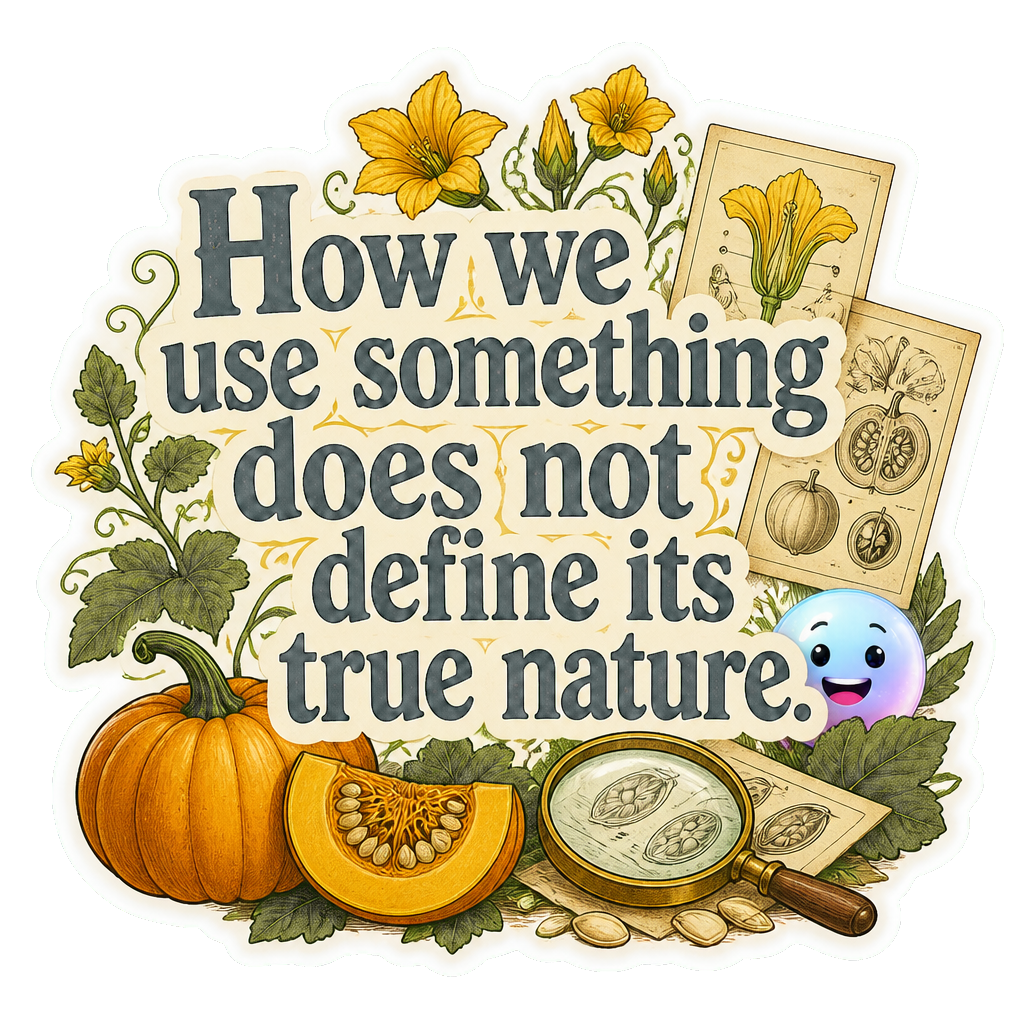
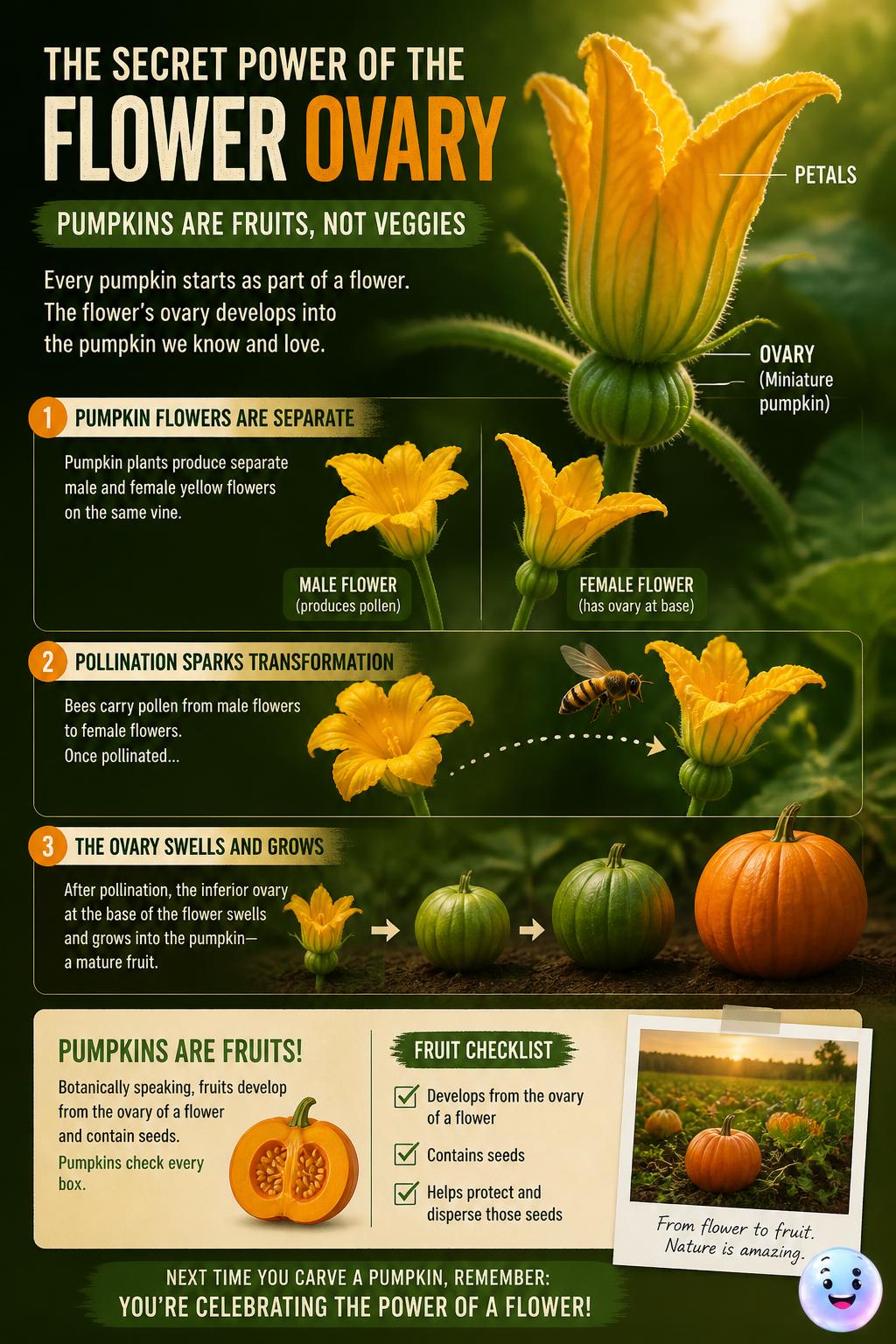
play_review Pumpkin vines produce separate male and female flowers, where bees pollinate the female's miniature green pumpkin ovary to
Giant pepo berries: Pumpkins are botanically classified as pepos, which means every single pumpkin is actually a giant berry with a tough outer rind.
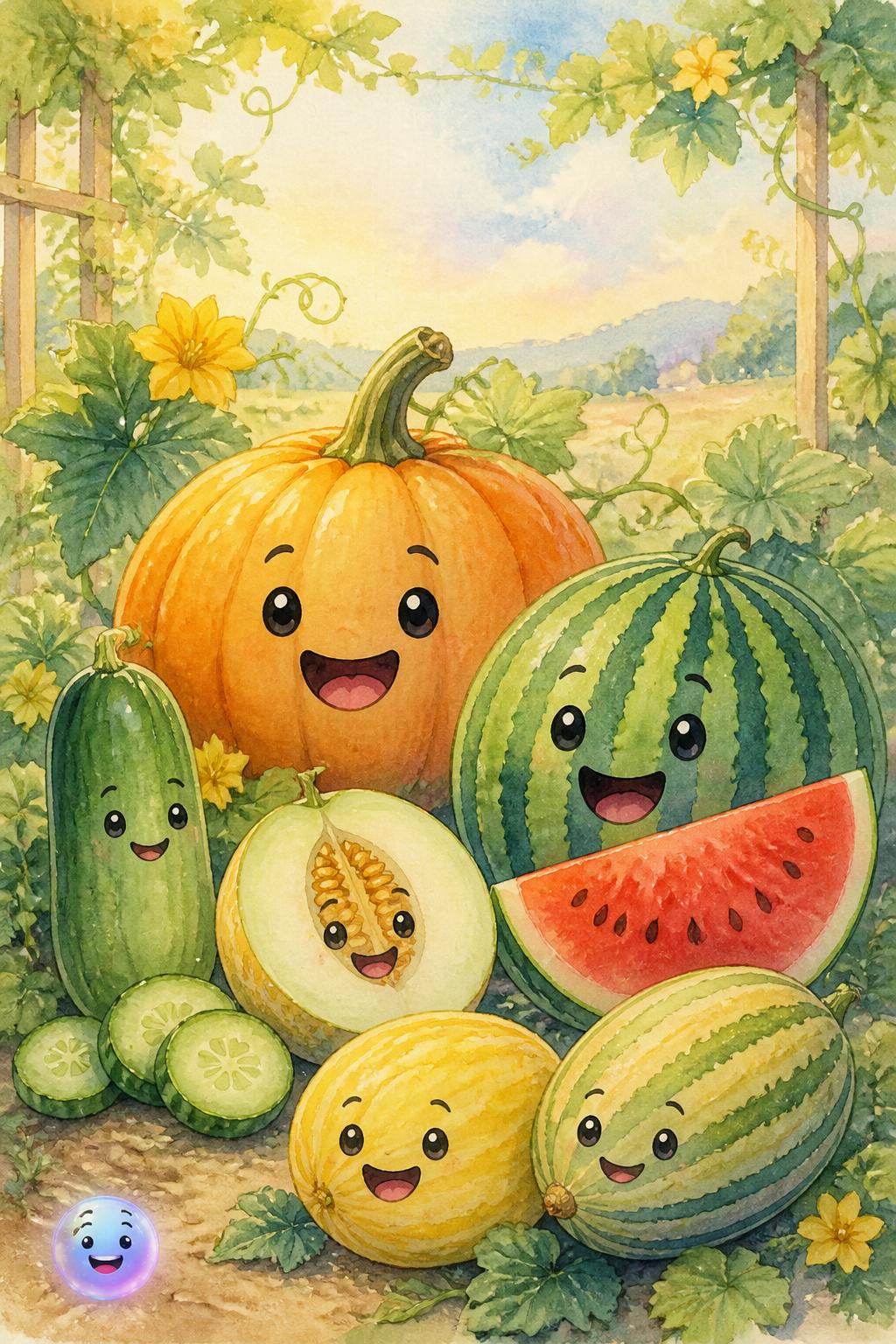
play_review Soft watercolor drawings show a pumpkin, watermelon, and cucumber gathered as a family.
The seed-bearing structure that develops from the ovary of a flowering plant. In 2019, Texas horticulturist Joe Masabni clarified that the pumpkin is scientifically classified as a fruit.
What botanical feature officially classifies a pumpkin as a fruit rather than a vegetable?
Why do male pumpkin flowers never grow into pumpkins?
What is the scientific term for the specialized type of berry that pumpkins are classified as?
Which of these everyday kitchen items is botanically in the same family (Cucurbitaceae) as the pumpkin?
How many distinct sexes of flowers does a single pumpkin vine produce?
What botanical term describes the edible parts of plants like roots, stems, and leaves?
Which part of the pumpkin flower eventually swells and matures into the pumpkin fruit?
What is the main biological purpose of a pumpkin's thick, fleshy pulp?


play_review A newborn neutron star glows at the center of a vast cosmic expanse

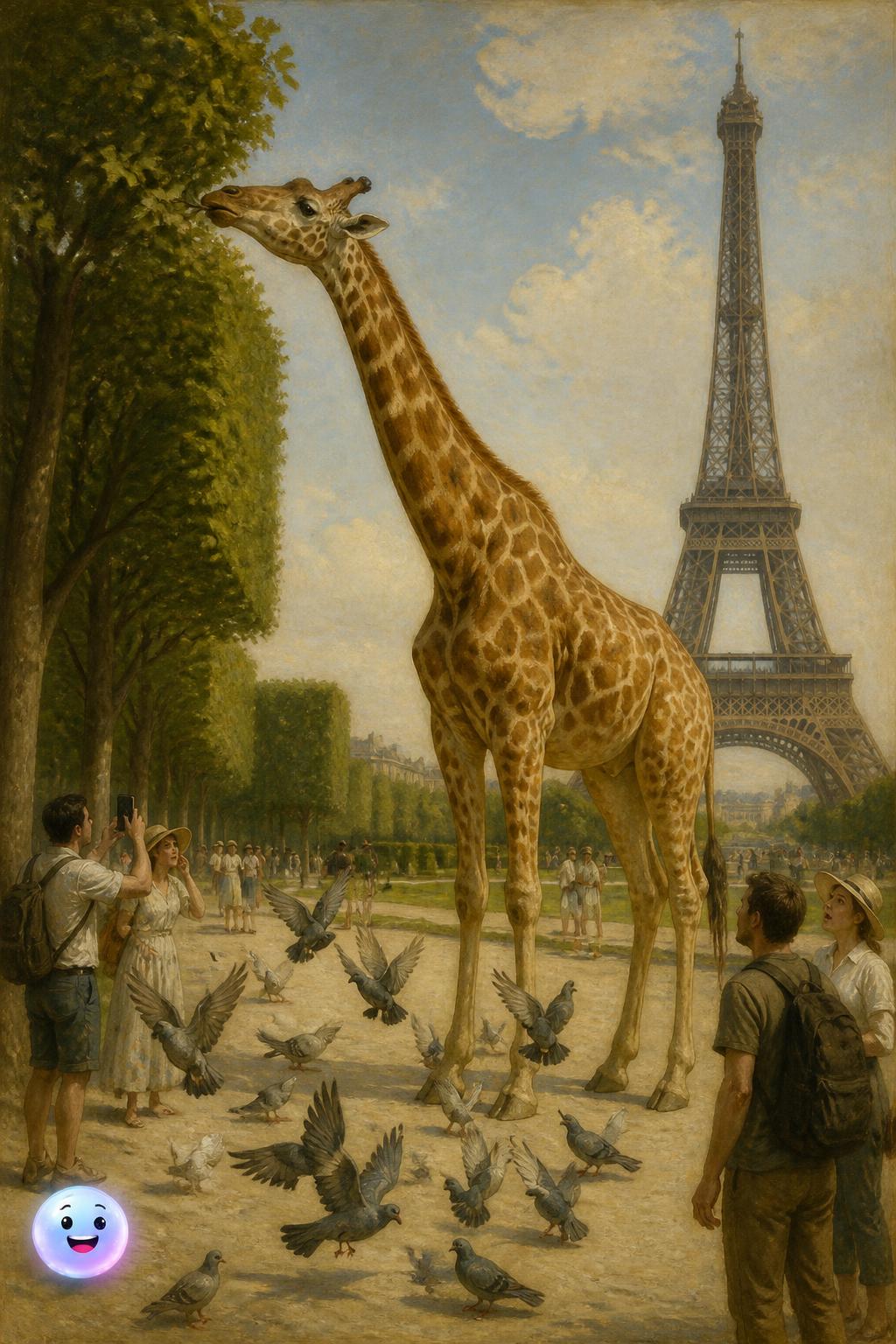
play_review A Masai giraffe nibbles plane tree leaves near the glowing Eiffel Tower.



play_review A giraffe explores the historic cobblestone streets of Paris far from home.
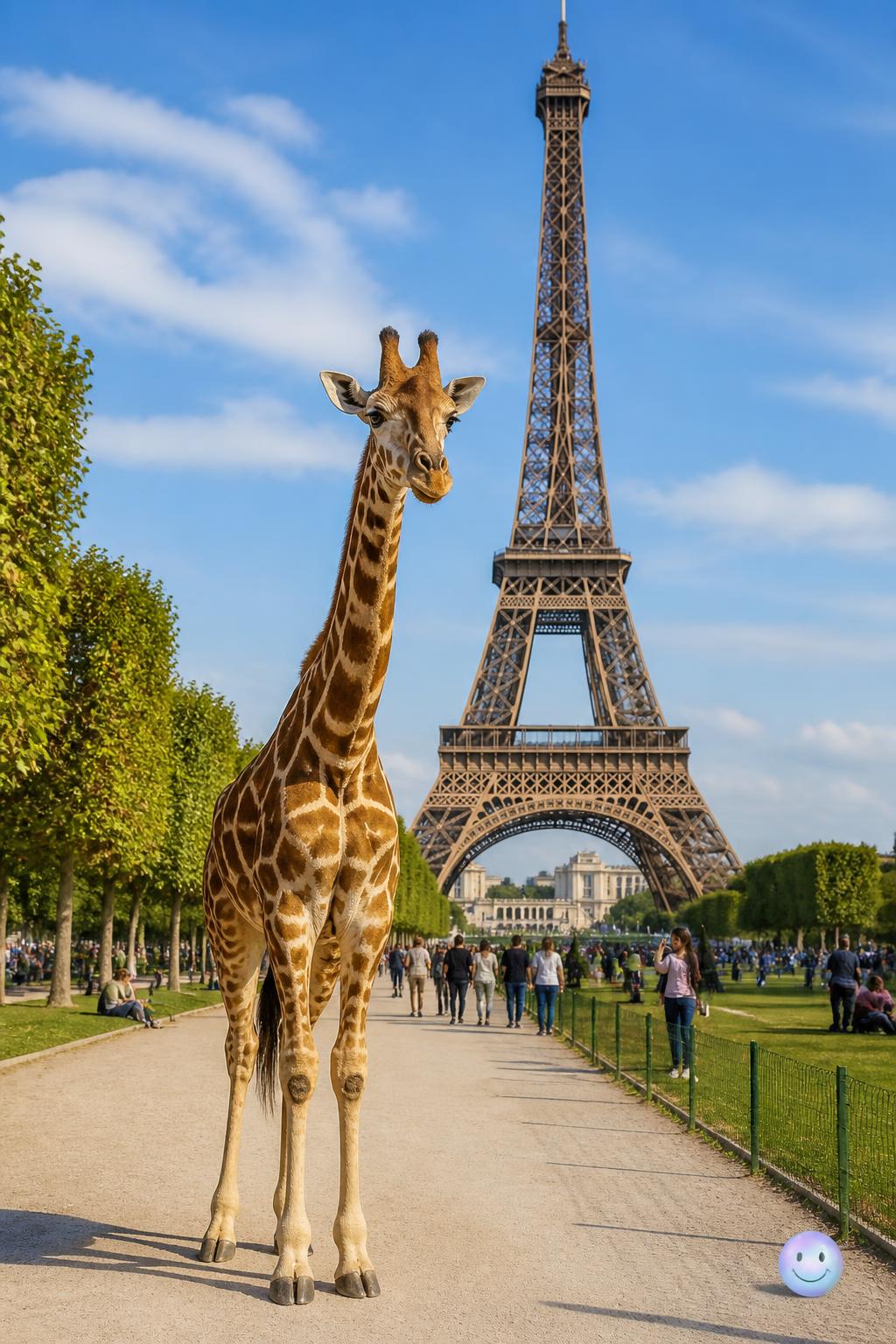
play_review A towering Nubian giraffe strolls through Paris, surprising tourists near the Eiffel Tower.
play_review Atomic Scale Shrinking
Ten atoms wide, ten atoms wide! Our future is ten atoms wide.
play_review Why smaller transistors make faster brains
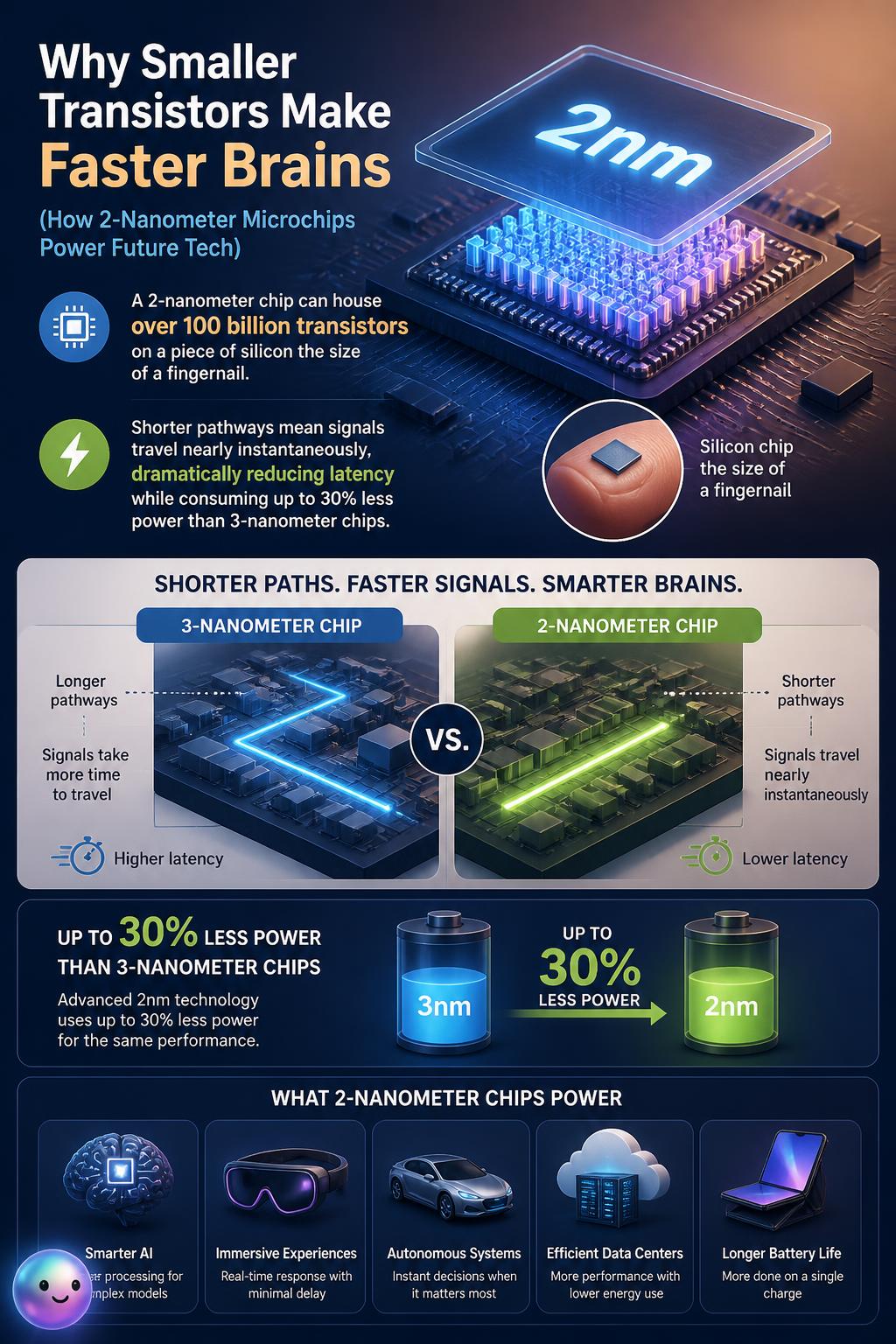
play_review Packing billions more transistors onto a single chip shortens the distance electrical signals must travel, boosting speed.
Microchip scale: A single strand of human DNA is about 2.5 nanometers wide, meaning 2-nanometer transistors are literally smaller than our genetic code.

play_review The gate-all-around design wraps the transistor's control gate around all sides of the channel to prevent electrical leaks.