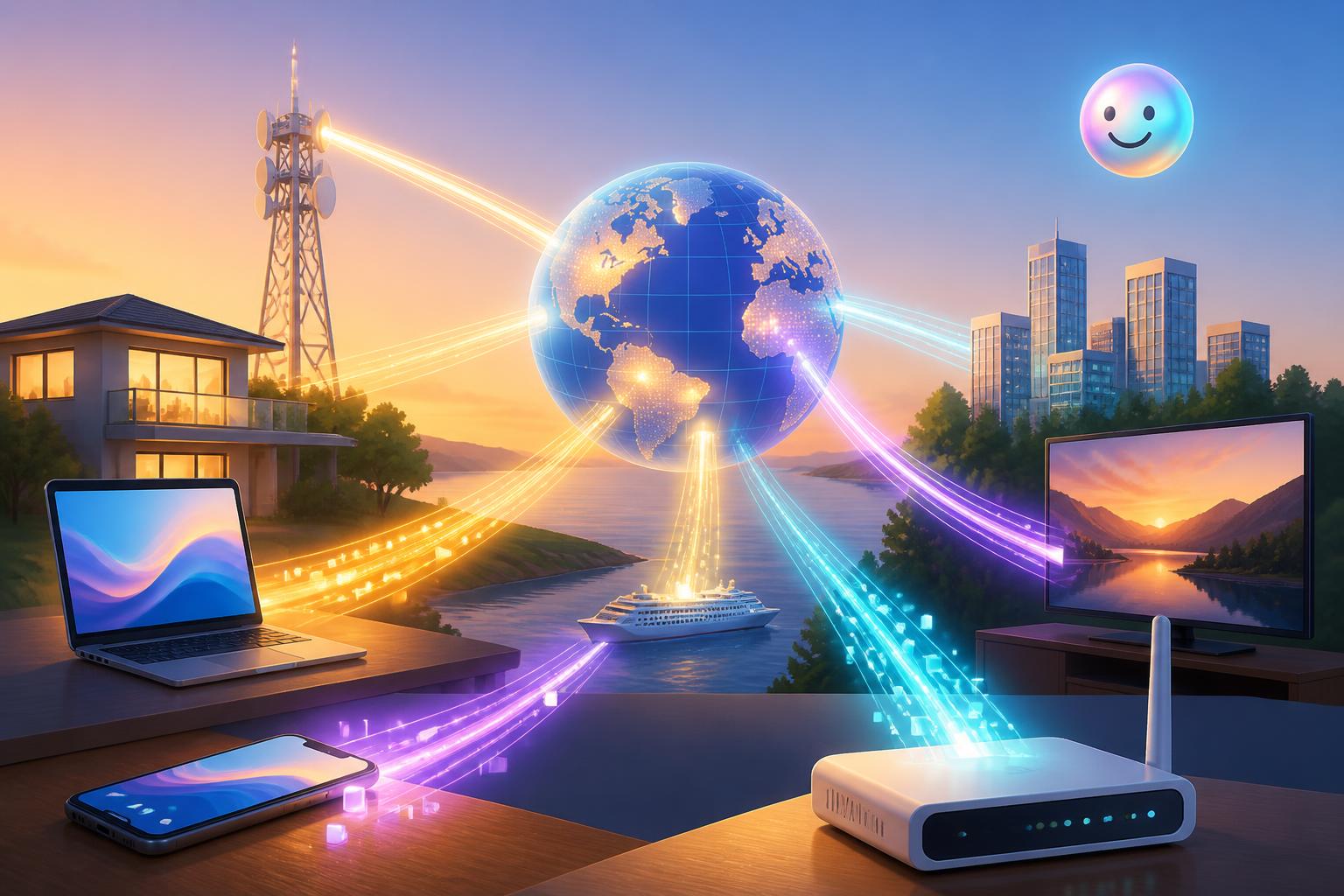
What is the final leg of a telecommunication network?
Test your networking knowledge: do you know the term for the final leg of the telecommunication network that delivers internet to your home?
Bending light inside glass
The deep sea cable network
Beaming data through thin air
Translating data into photons

play_review Discover how erbium-doped fibers amplify light signals, enabling high-speed internet data transmission over long-distance fiber-optic cables.
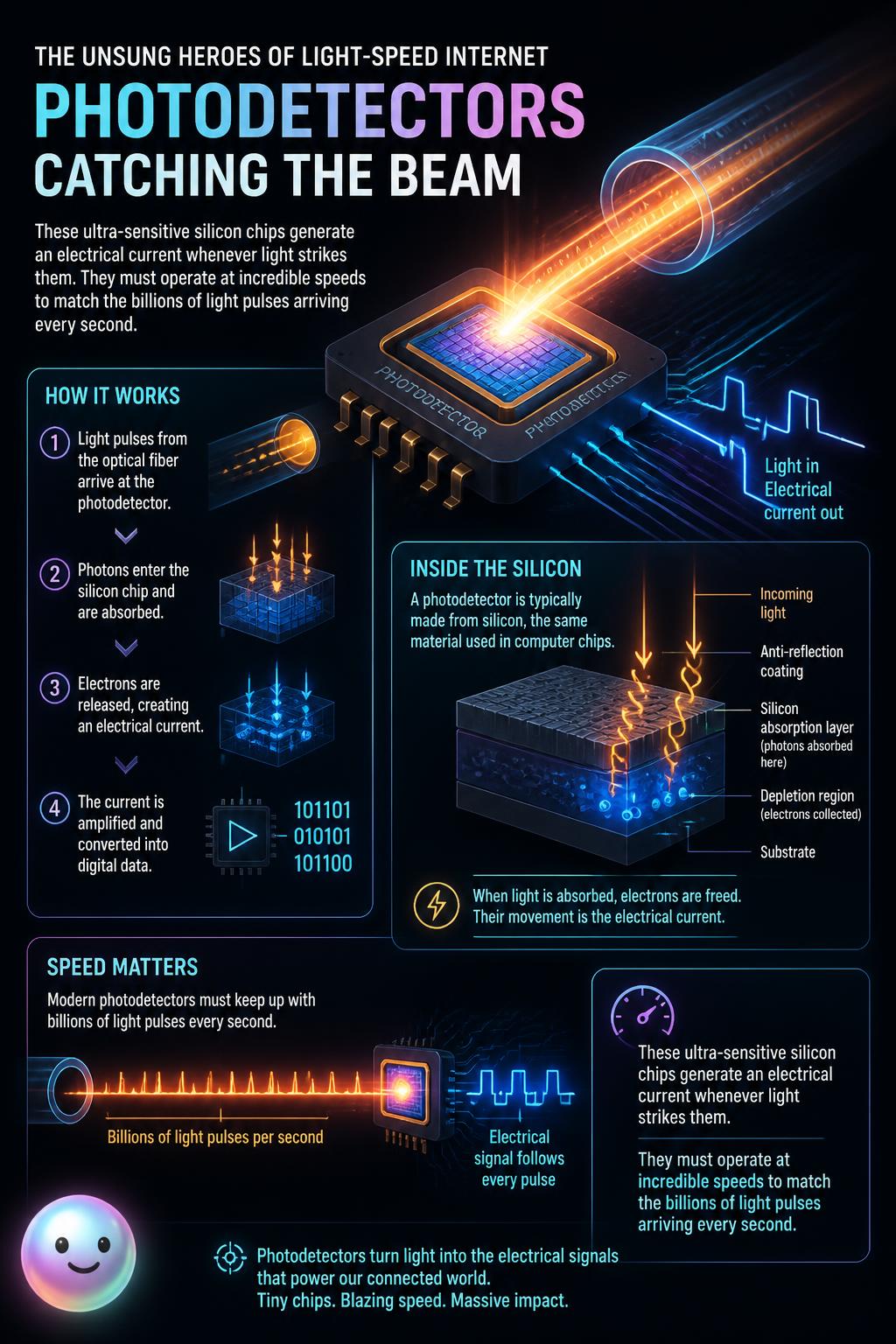
play_review Photodetectors at the end of a fiber optic line capture incoming light pulses and convert them back into electrical signals.
Laser blinking: A modern optical transceiver can blink its laser on and off up to 100 billion times in a single second.
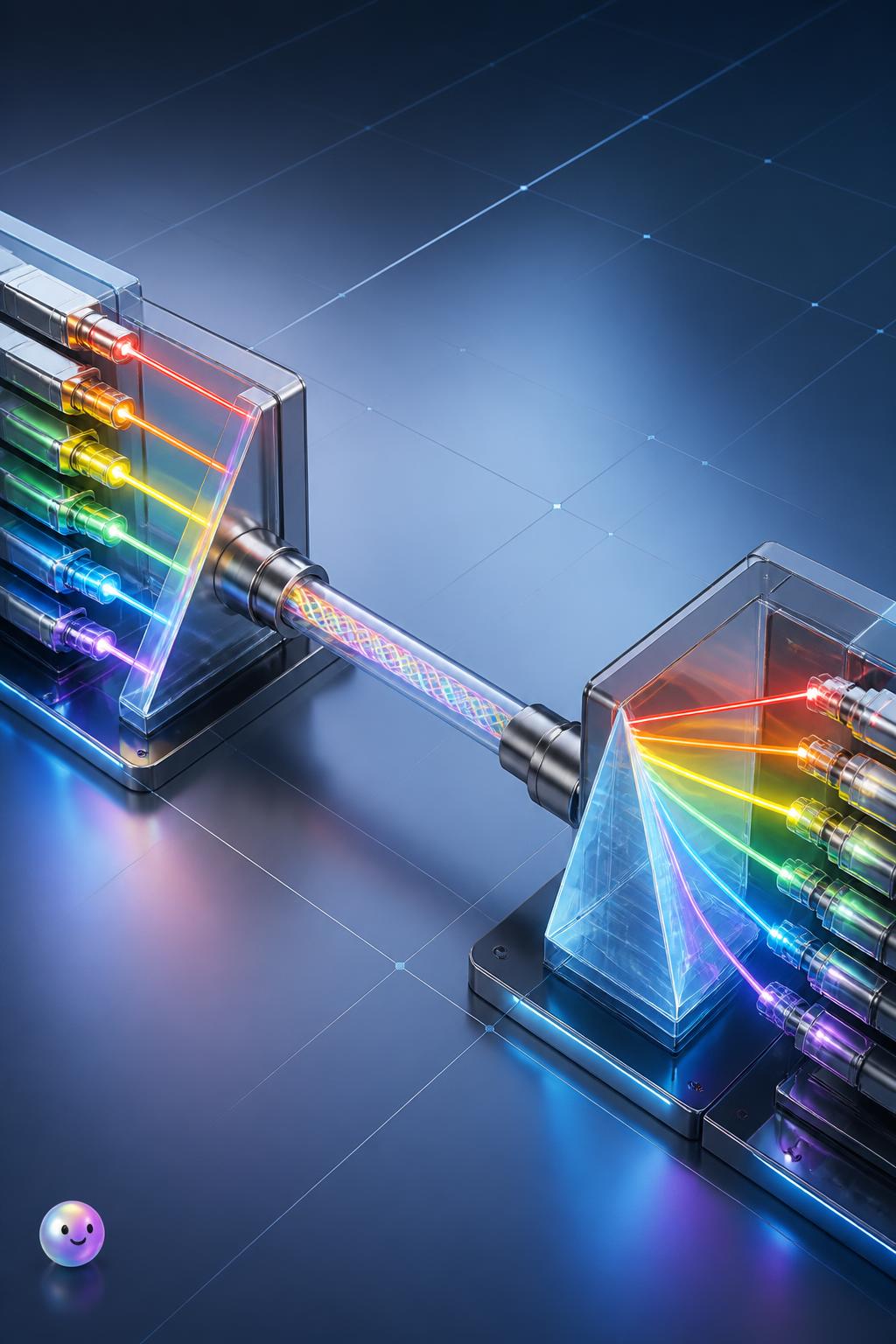
play_review Wavelength-division multiplexing allows engineers to send multiple streams of data down a single fiber by using different colors of light.

play_review Route light beams to homes to discover why the last mile slows down your internet.
play_review Watch this video to learn how optical transceivers convert electrical signals into light beams to transmit internet data across the globe.
What device is responsible for converting electrical signals from a computer into light pulses?
play_review Learn how multiplexing uses beams of light to transmit internet data. Watch this video to see how rainbows of data move across the web.
What technology allows multiple data streams to travel down a single fiber optic strand using different colors of light?
play_review Learn how photodetectors capture beams of light to transmit high-speed internet data in this educational video.
Why does a fiber-to-the-home connection perform better than a connection that finishes with copper coaxial cable?
Which rare-earth element is used to spike fiber optic amplifiers to boost light signals directly?
How are different streams of data separated at the receiving end of a multiplexed fiber optic line?
What is the term for the final leg of the telecommunication network that delivers internet to a home?
In binary computer code transmitted via fiber optics, what does a pulse of light typically represent?