Why does mycoprotein have a smaller water footprint?
Take our quiz to find out why mycoprotein has a lower water footprint than animal proteins and learn about sustainable food technology.
The building blocks of faux fish
The magic of 3D structuring
From the lab to your plate

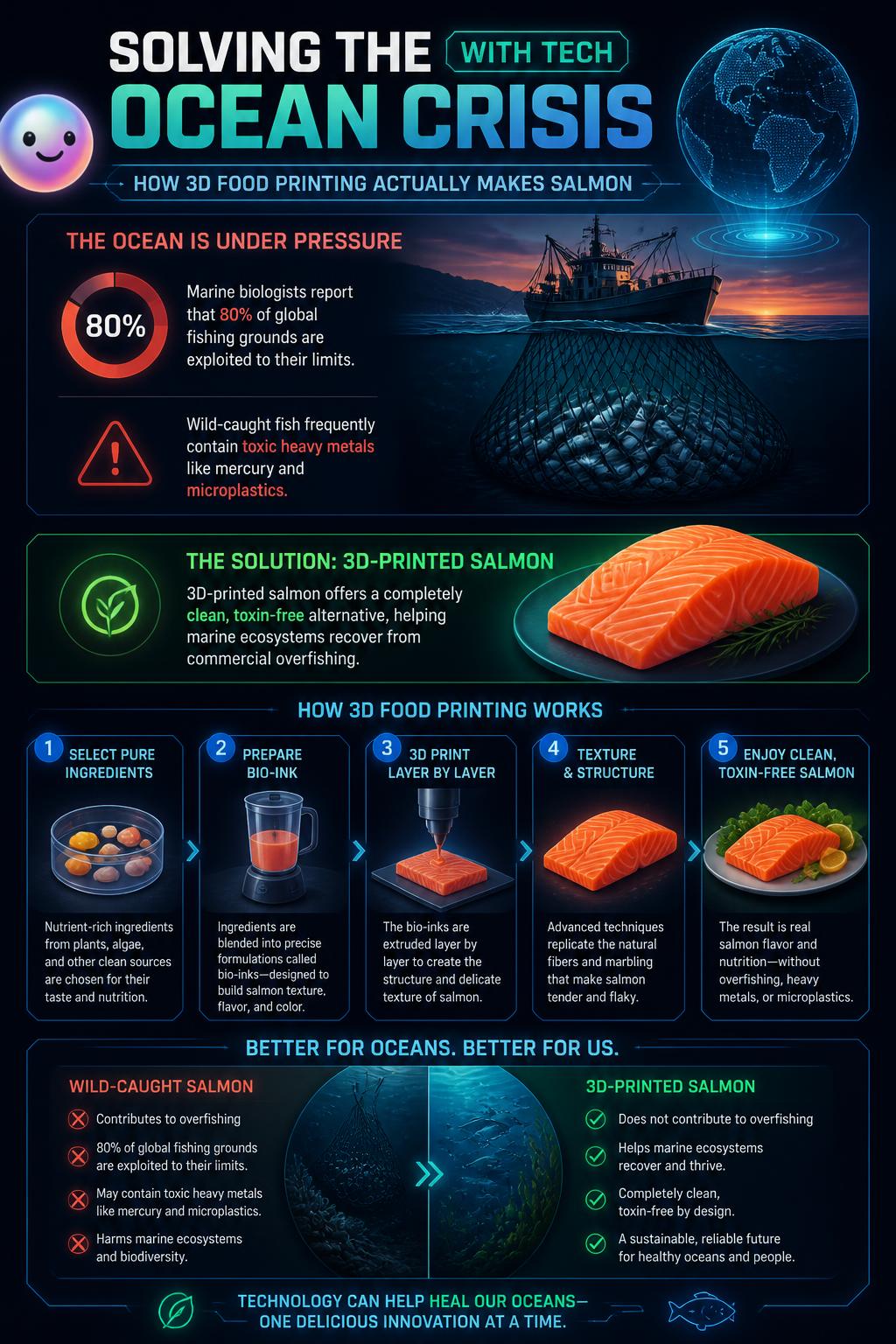
sonia Watch how innovative 3D food printing technology is used to create sustainable salmon, helping to solve the ocean crisis and protect marine life.
sonia Go inside the world's largest food printing factory to see how advanced 3D printing technology actually creates realistic salmon.
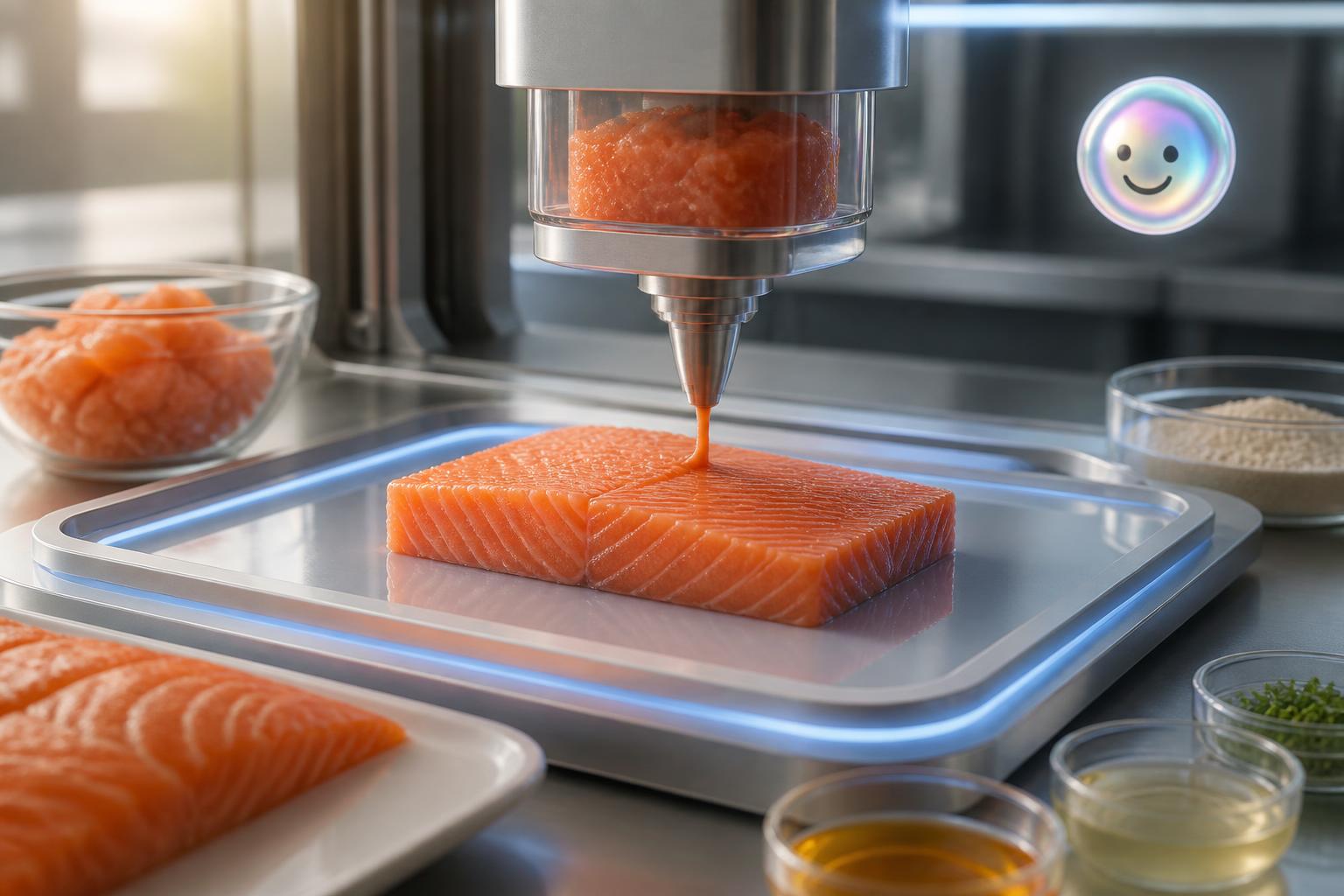
sonia 3D Printed Salmon
We're printing the protein and printing the fat, making a salmon fillet that flakes.
sonia Watch how 3D food printing technology creates salmon with a longer shelf life without using chemical preservatives.
Carbon savings: Producing one kilogram of printed mycelium salmon uses only a fraction of the water needed for animal farming.
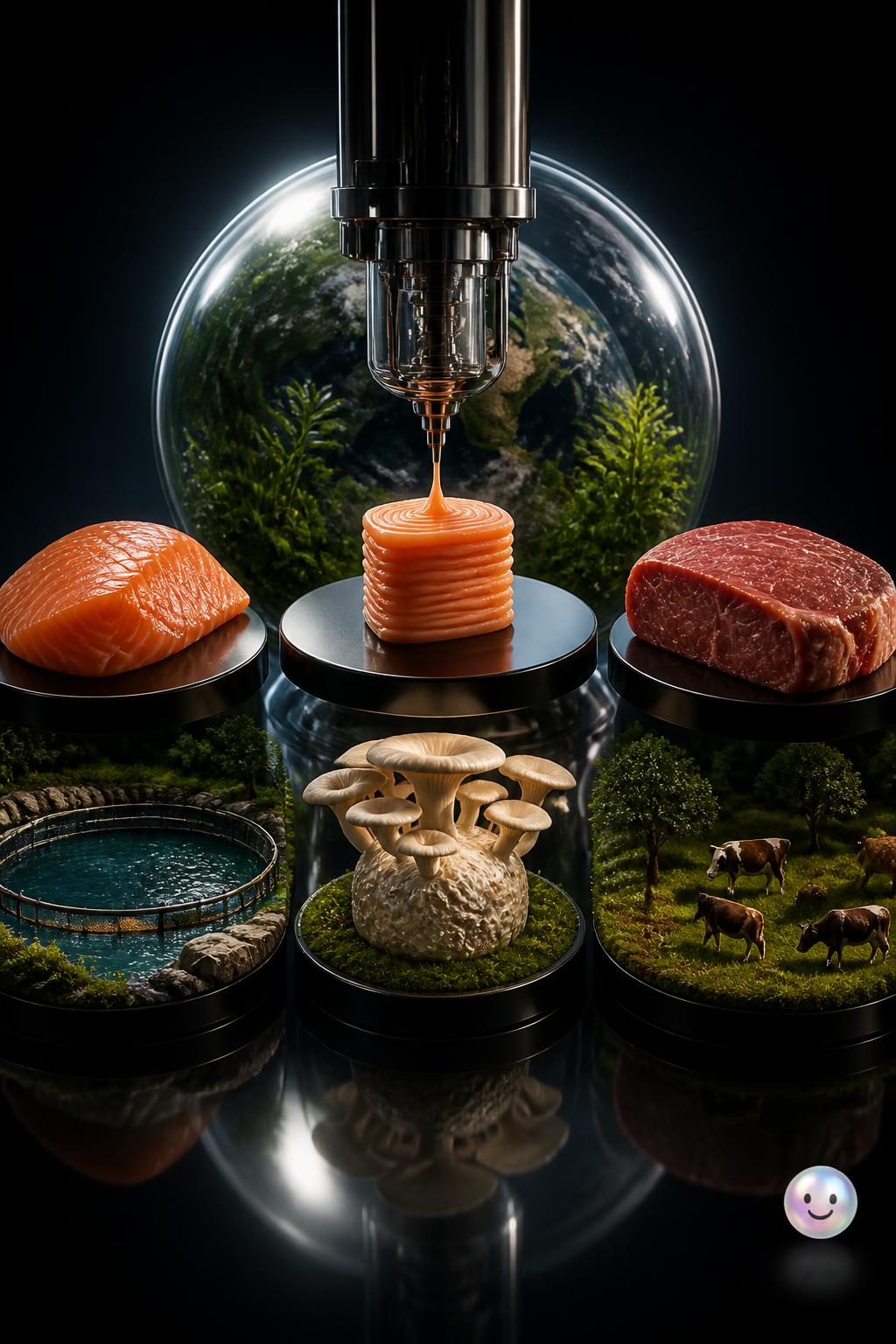
sonia Printed mycelium salmon produces up to 90% less carbon dioxide than conventional beef.
A protein-rich food source derived from fungi that is used as a meat substitute. In September 2023, Revo Foods launched a 3D-printed mycoprotein salmon fillet in Austrian supermarkets.
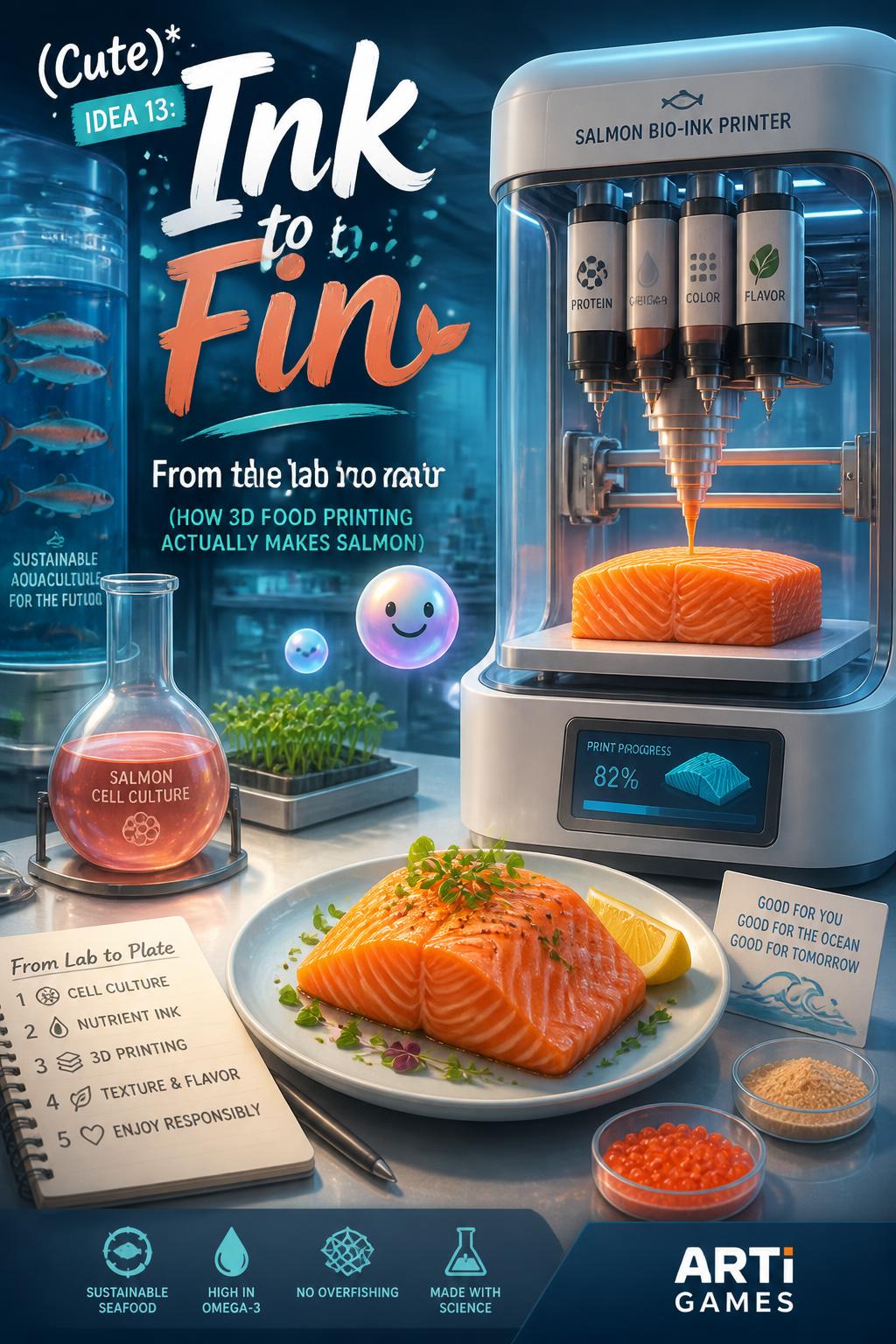
sonia Watch how 3D food printing makes salmon and learn how the carbon footprint of alternative proteins compares to traditional options.
What percentage of the world's fishing grounds are estimated to be overexploited or fully exploited?
Which toxin commonly found in wild-caught fish is completely absent in 3D-printed salmon?
What was the first 3D-printed food product to ever be sold in commercial supermarkets?