
The art of budgeting worldwide
The 50/30/20 rule is a simple yet powerful budgeting guideline that helps young adults allocate their income by dedicating 50% to needs, 30% to wants, and 20% to savings and debt repayment, ensuring financial health and goal achievement.
The art of budgeting worldwide
The mystery of interest and growth
Navigating debt and the credit system
Digital money and global banking
Smart spending and conscious consumerism

nic The art of budgeting worldwide
Fifty for needs, Thirty for wants, Twenty for future, yeah!
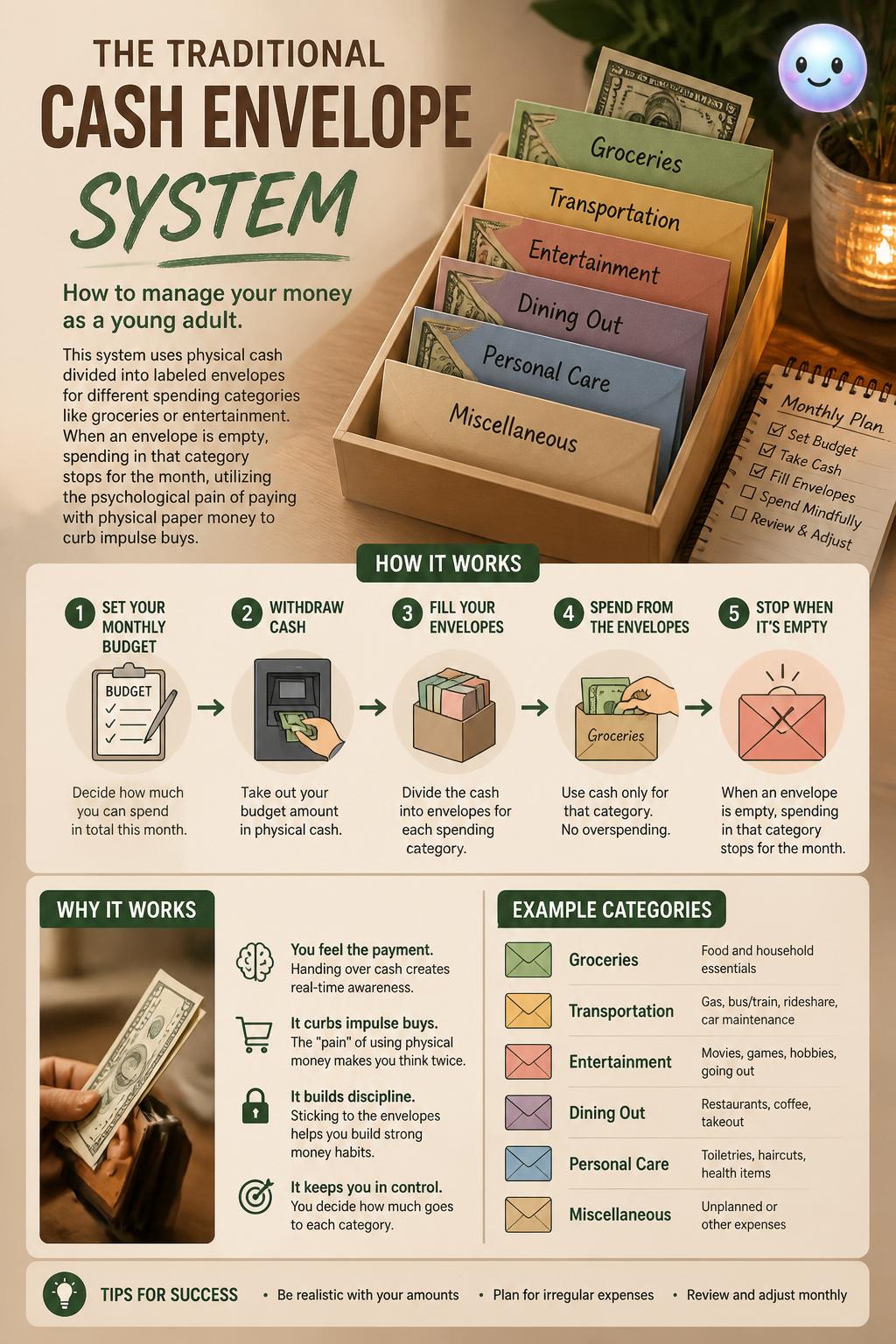
nic Dividing physical cash into labeled envelopes prevents overspending on specific monthly categories.
Piggy bank origins: The term 'piggy bank' comes from 'pygg,' a dense orange clay used in Middle Ages Europe to make cheap household jars for holding spare coins.


nic This popular formula divides your after-tax income into needs, wants, and savings goals.
A Japanese method of household budgeting that involves manually tracking income and expenses in a journal. Journalist Hani Motoko introduced this mindful spending system in Japan in 1904 to empower household financial management.
Why does the physical cash envelope system help reduce spending compared to swiping cards?
What percentage of income can Kakeibo users typically save according to traditional practices?