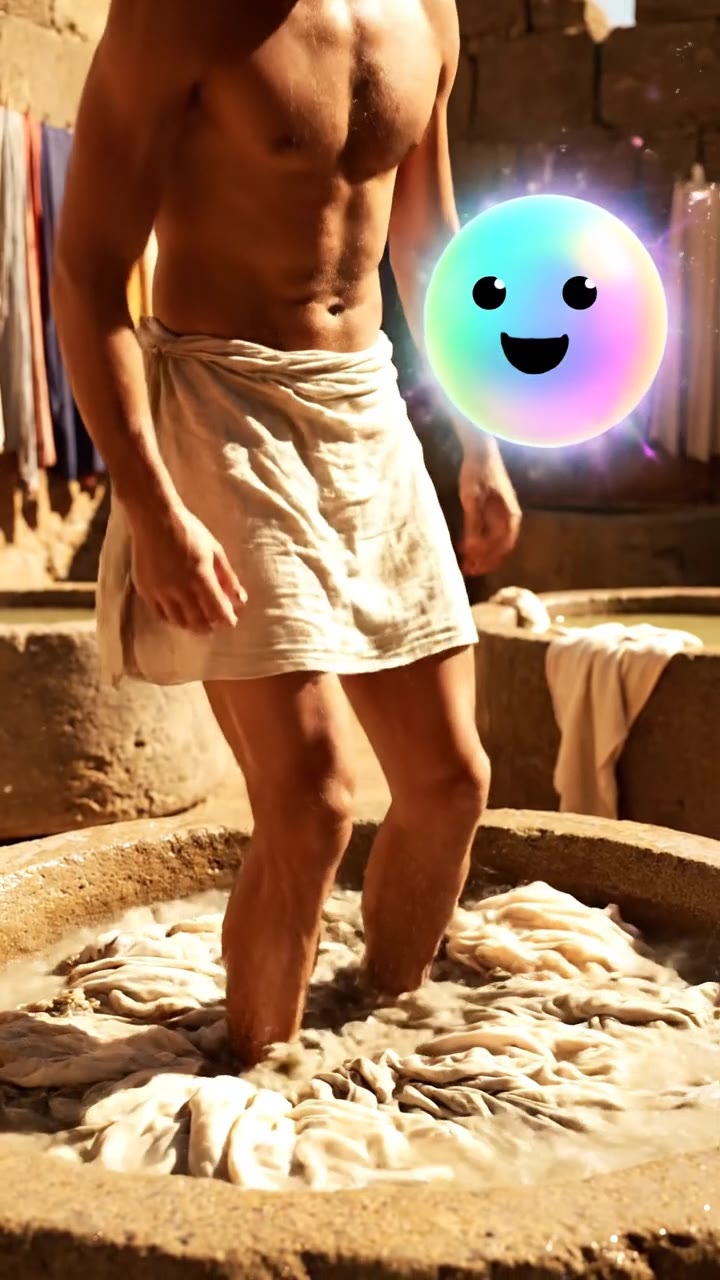
How Romans washed clothes
In ancient Roman laundries, or "fullonicae," workers stood in large vats of stale urine and water. They stomped on woolen clothes to break down grease and dirt. The garments were then rinsed, dried, and treated with sulfur to whiten them.
Chapter 1
The voices on Roman walls
Chapter 2
Gladiators beyond the arena
Chapter 3
The truth about Roman dining
Chapter 4
Hygiene and the Roman bathroom
Ch 4 · Hygiene and the Roman bathroom
misslily Hygiene and the Roman bathroom
No throwing up in secret rooms to keep the banquet sweet, A vomitorium's just a hall that spits you to the street!


misslily Roman emperors taxed public urine, which was highly valued for its ammonia content.
Fun Fact
Urine mouthwash: Some Romans used imported Portuguese urine as mouthwash because they believed the ammonia whitened their teeth.

misslily Roman public latrines utilized a shared sponge on a stick instead of toilet paper.
Glossary
tersorium (noun)
An ancient hygiene utensil consisting of a natural sea sponge fixed to the end of a wooden stick. Visitors to public latrines in Pompeii shared these communal sponges, rinsing them in buckets of vinegar.
An ancient hygiene utensil consisting of a natural sea sponge fixed to the end of a wooden stick. Visitors to public latrines in Pompeii shared these communal sponges, rinsing them in buckets of vinegar.