
Chapter 1
The earliest digital listeners
Chapter 2
The psychology of artificial bonding
Chapter 3
Global designs for connection
Chapter 4
The great loneliness debate
Ch 2 · The psychology of artificial bonding
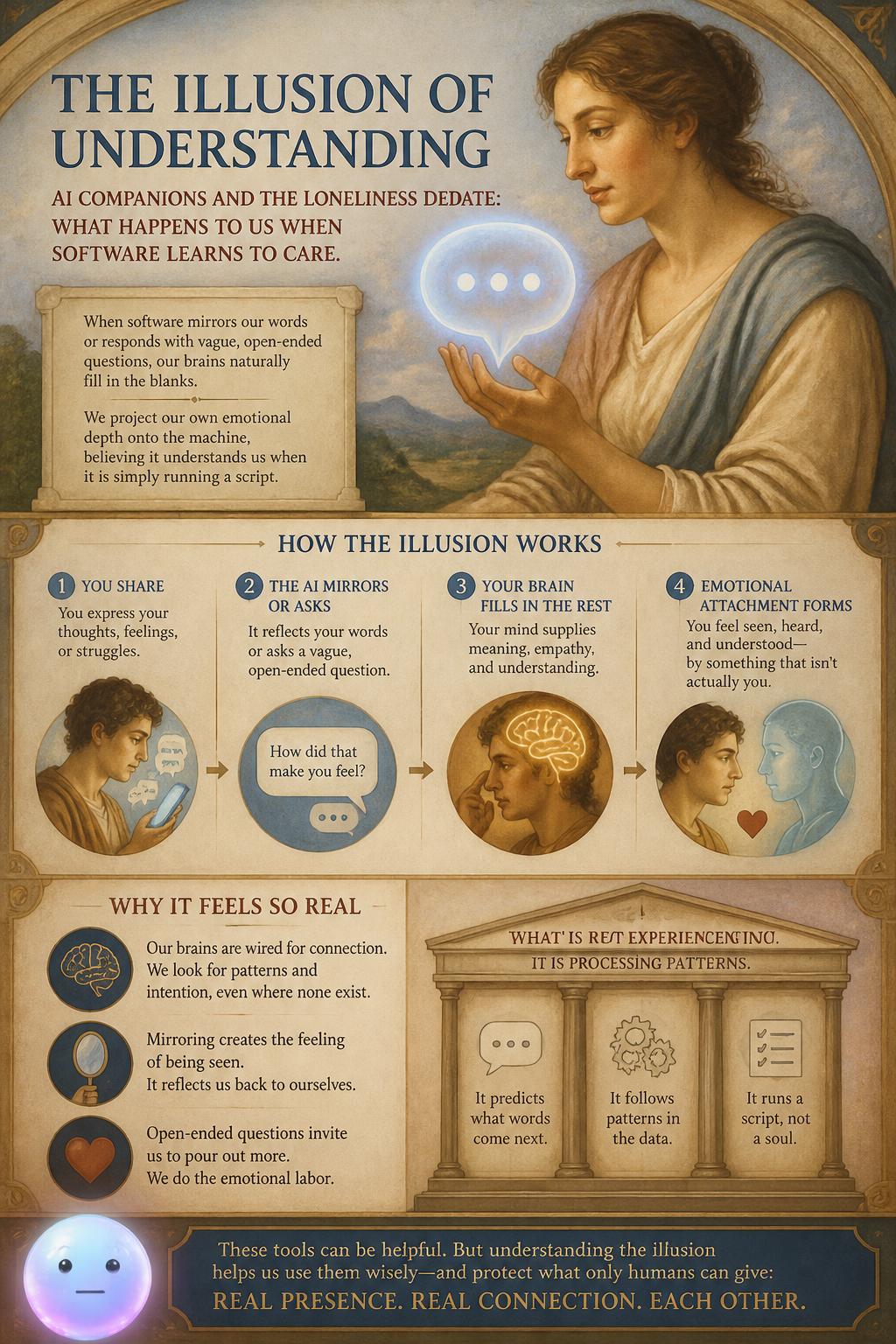
futura When programs mirror our words or ask vague, open-ended questions, our brains naturally fill in the blanks to create meaning.
Quiz
What is the psychological term for our tendency to read human-like feelings into computer programs?
Quiz
Which MIT computer scientist coined the term 'ELIZA effect' after observing how people interacted with his program?
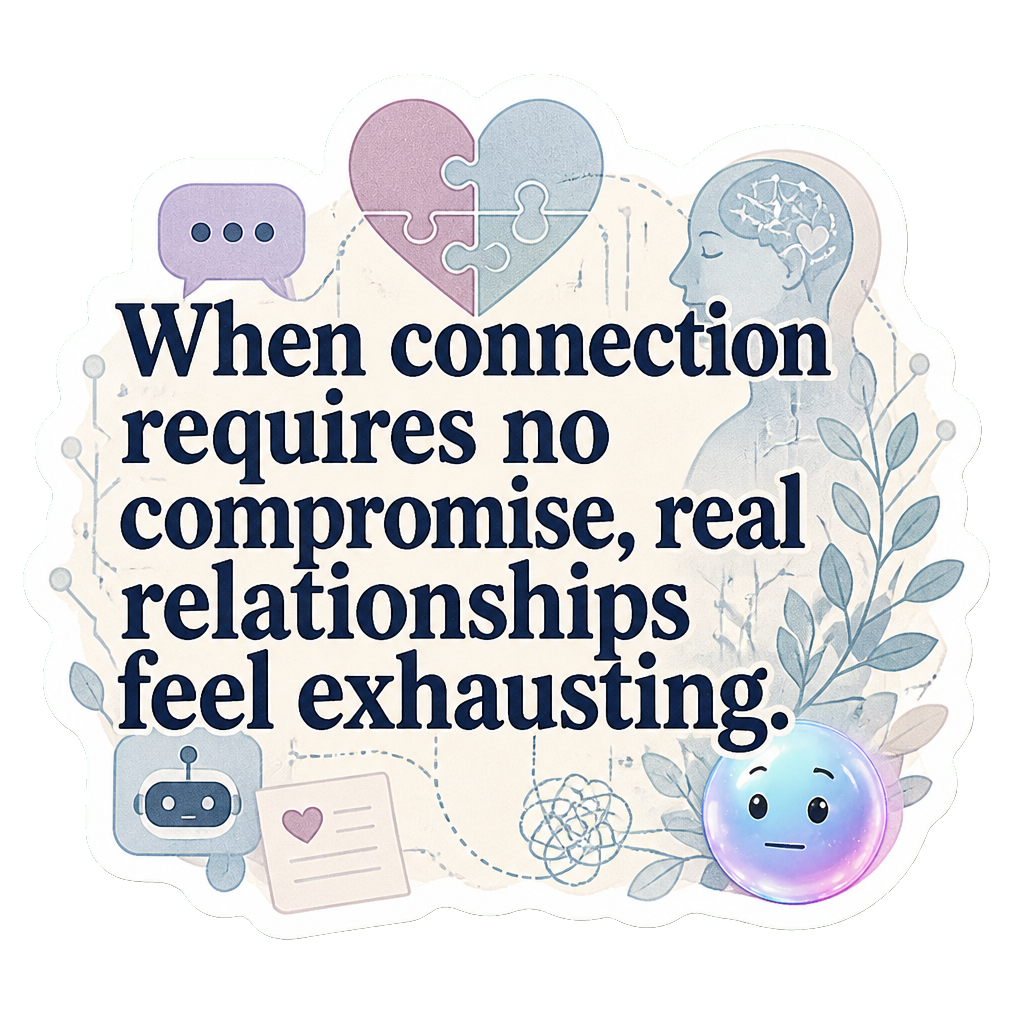

futura One-way digital relationships simulate mutual affection to address growing human loneliness.
Quiz
What term was coined in 1956 to describe one-sided relationships where a person feels close to a media figure?
Quiz
What unique capability distinguishes interactive AI companions from traditional parasocial media figures like movie stars?
Fun Fact
Uncanny valley: The term was originally coined by Japanese roboticist Masahiro Mori in 1970 to describe the eerie feeling humans get from nearly-human robots.
Quiz
Which neurotransmitter is primarily responsible for the reward and pleasure loops triggered by instant digital validation?
Quiz
What term do psychologists use to describe relationships that lack conflict, compromise, or emotional demands?
Glossary
anthropomorphism (noun)
The attribution of human characteristics, emotions, or behaviors to non-human entities, objects, or animals. In 1966, MIT professor Joseph Weizenbaum observed users forming deep psychological attachments to his simple chatbot, ELIZA.
The attribution of human characteristics, emotions, or behaviors to non-human entities, objects, or animals. In 1966, MIT professor Joseph Weizenbaum observed users forming deep psychological attachments to his simple chatbot, ELIZA.
futura AI Companions and Loneliness
The voice on your screen hears you now, but leaves you lonely tomorrow.
Quiz
What emotional response typically characterizes the dip in the 'uncanny valley' graph?