Chapter 1
The ancient roots of broken beauty
Chapter 2
Rebelling against the perfect pixel
Chapter 3
Raw spaces and living homes
Chapter 4
Mending the planet with visible scars
YOUR GOAL
Master of The beauty of imperfect design
Ch 1 · The ancient roots of broken beauty

streetspirit Ancient roots of broken beauty
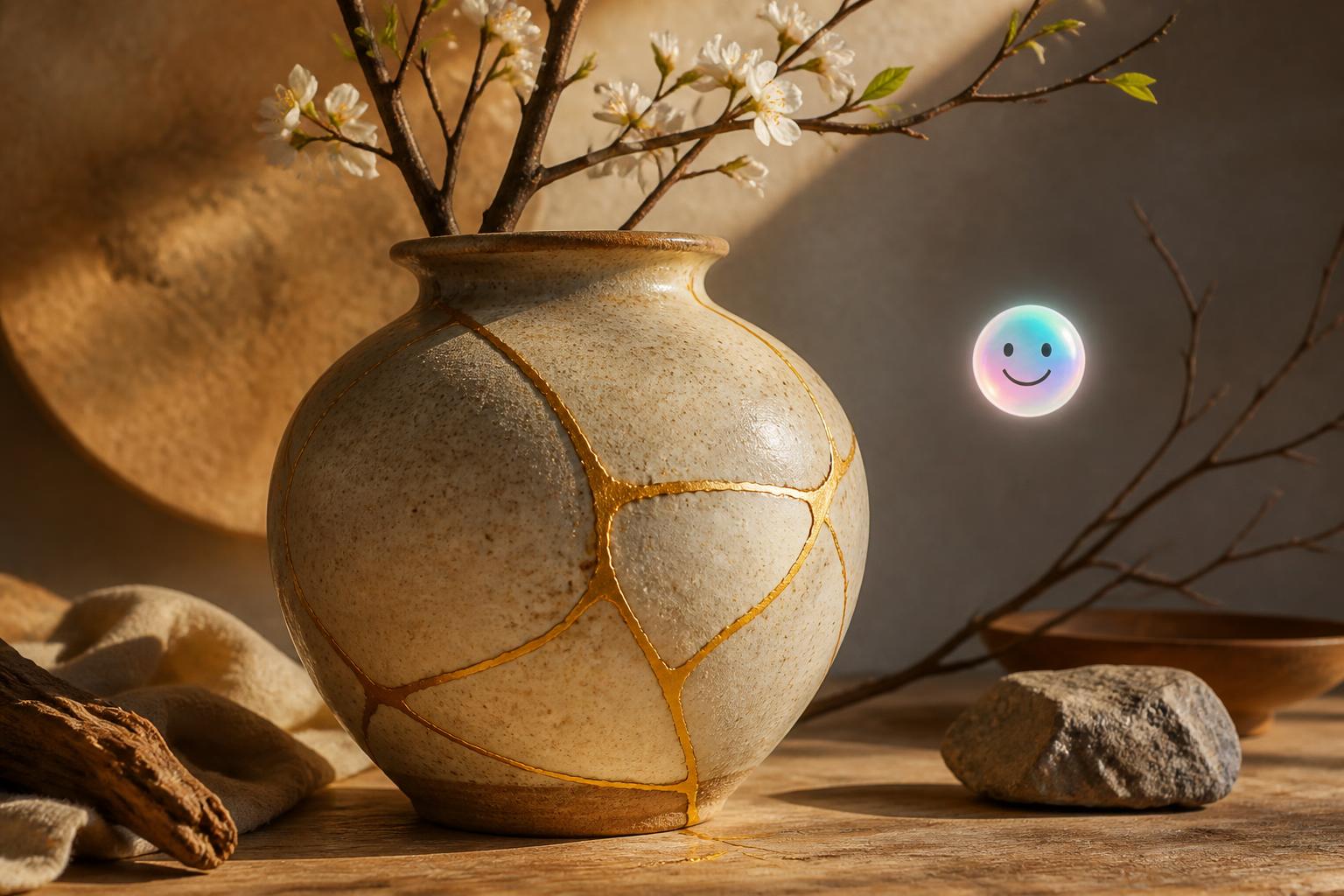
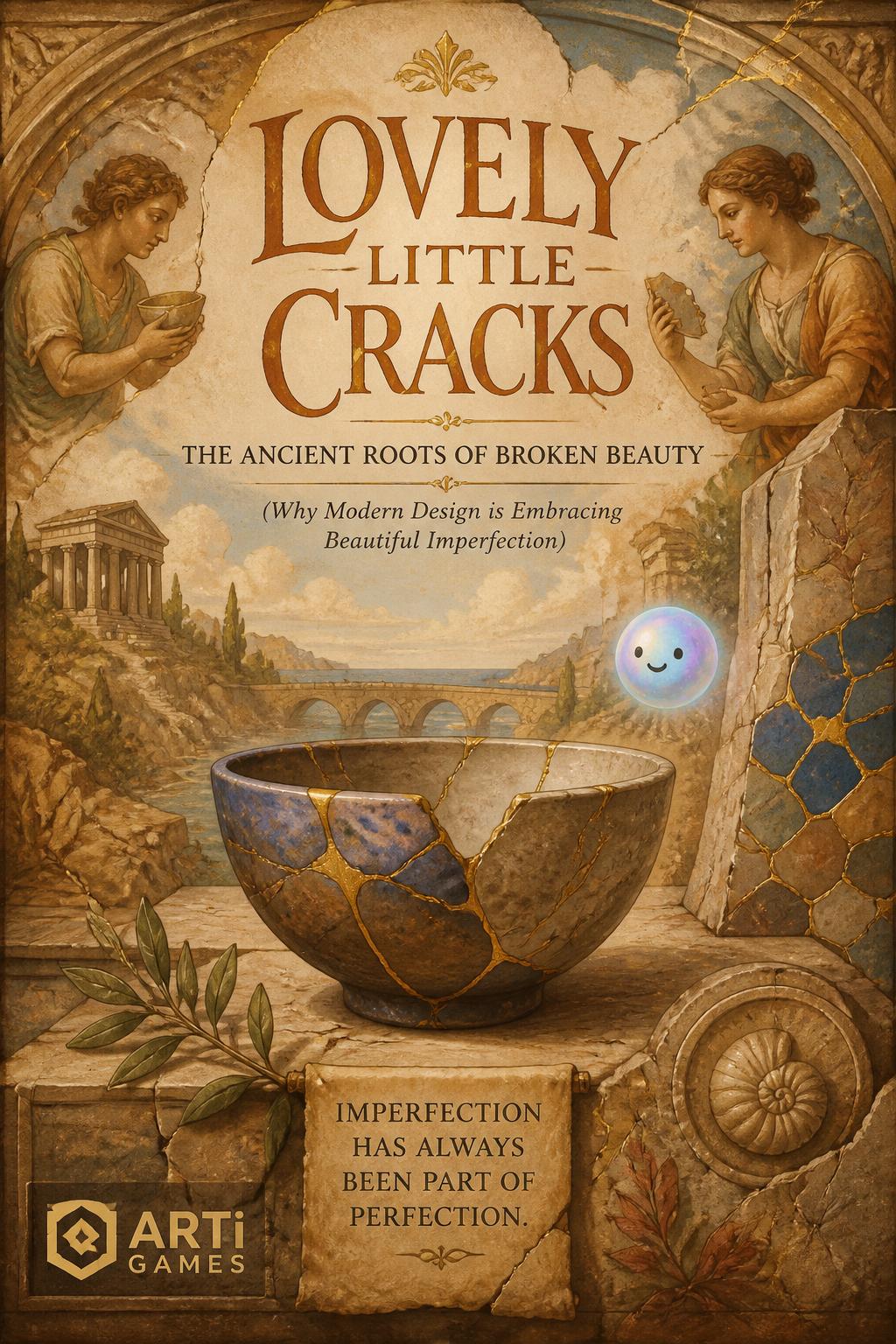
A broken bowl, mended in gold, the scars are beautiful.
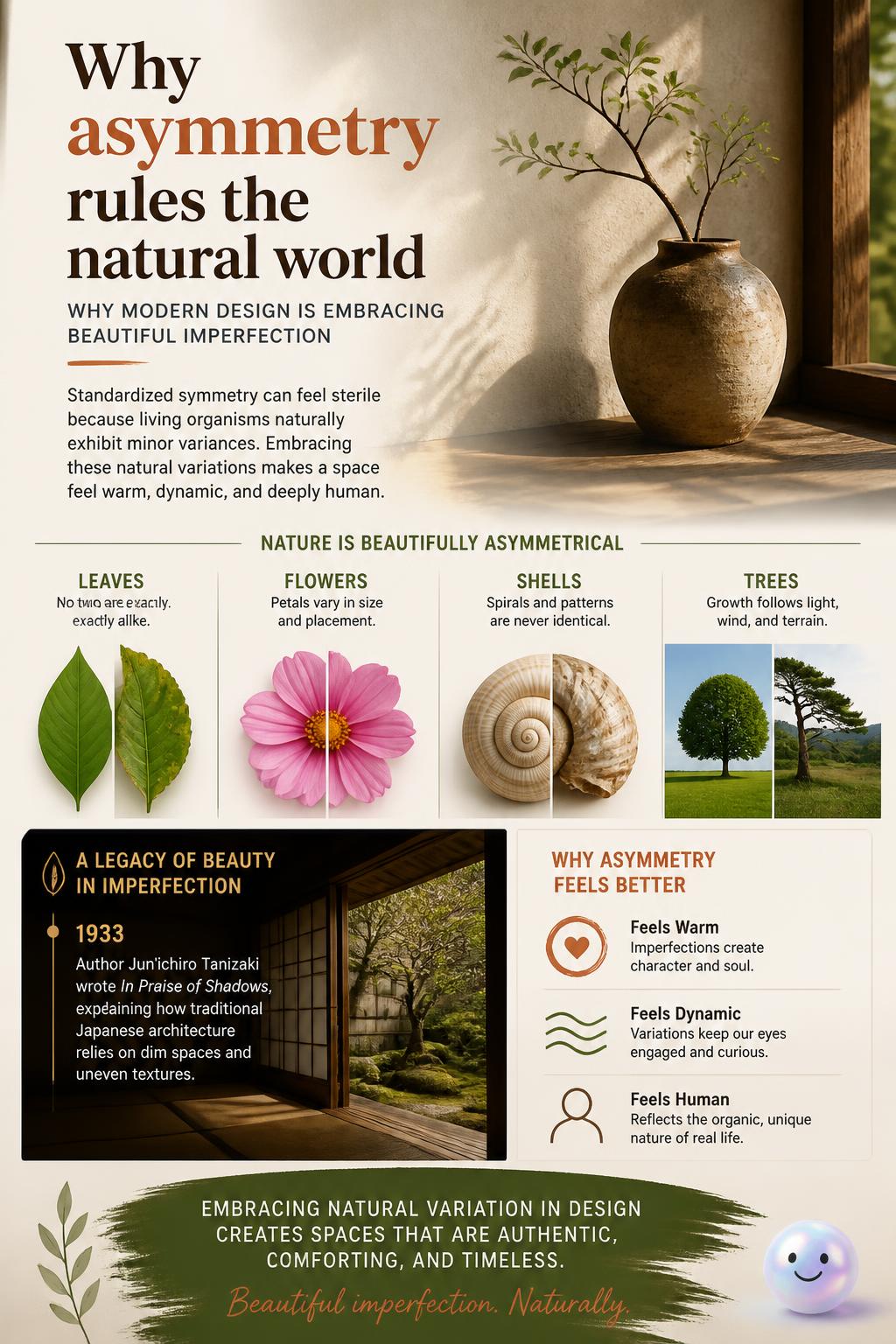
streetspirit Nature avoids perfect symmetry, and traditional design embraces these organic imbalances to create a sense of life.

streetspirit The Japanese practice of kintsugi repairs broken ceramics with gold lacquer to celebrate their history rather than hiding it.
BETA
streetspirit Paint gold into each crack to discover why modern design embraces beautiful imperfections.
Fun Fact
Golden repairs: Kintsugi lacquers can take up to three months to fully dry and cure.
Glossary
kintsugi (noun)
The traditional Japanese art of repairing broken pottery with lacquer dusted with powdered gold. The technique arose in fifteenth-century Japan when shogun Ashikaga Yoshimasa sent a broken bowl for repairs.
The traditional Japanese art of repairing broken pottery with lacquer dusted with powdered gold. The technique arose in fifteenth-century Japan when shogun Ashikaga Yoshimasa sent a broken bowl for repairs.
Quiz
What is the primary adhesive material used in traditional Japanese kintsugi repair?
Quiz
In Zen Buddhism, which concept is most closely linked to the acceptance of impermanence in wabi-sabi?
Quiz
Why did Japanese tea masters reject the initial repairs on Yoshimasa's tea bowl sent to China?
Quiz
Which Japanese military ruler in the 15th century popularized the craft of kintsugi?
Quiz
Which metal is NOT traditionally used in powdered form to decorate kintsugi repairs?
Quiz
In what century did tea master Murata Juko begin advocating for rustic, local Japanese tea utensils?
Quiz
Which 1933 essay by Jun'ichiro Tanizaki discusses the aesthetic value of shadows and aged surfaces?