
A bustling microscopic wilderness
Our skin is a bustling ecosystem hosting trillions of microscopic organisms, including protective bacteria and tiny face mites, that form a personalized living shield.
The architecture of our outer shield
The evolutionary rainbow of human pigment
A bustling microscopic wilderness
The magic of self-repair and healing

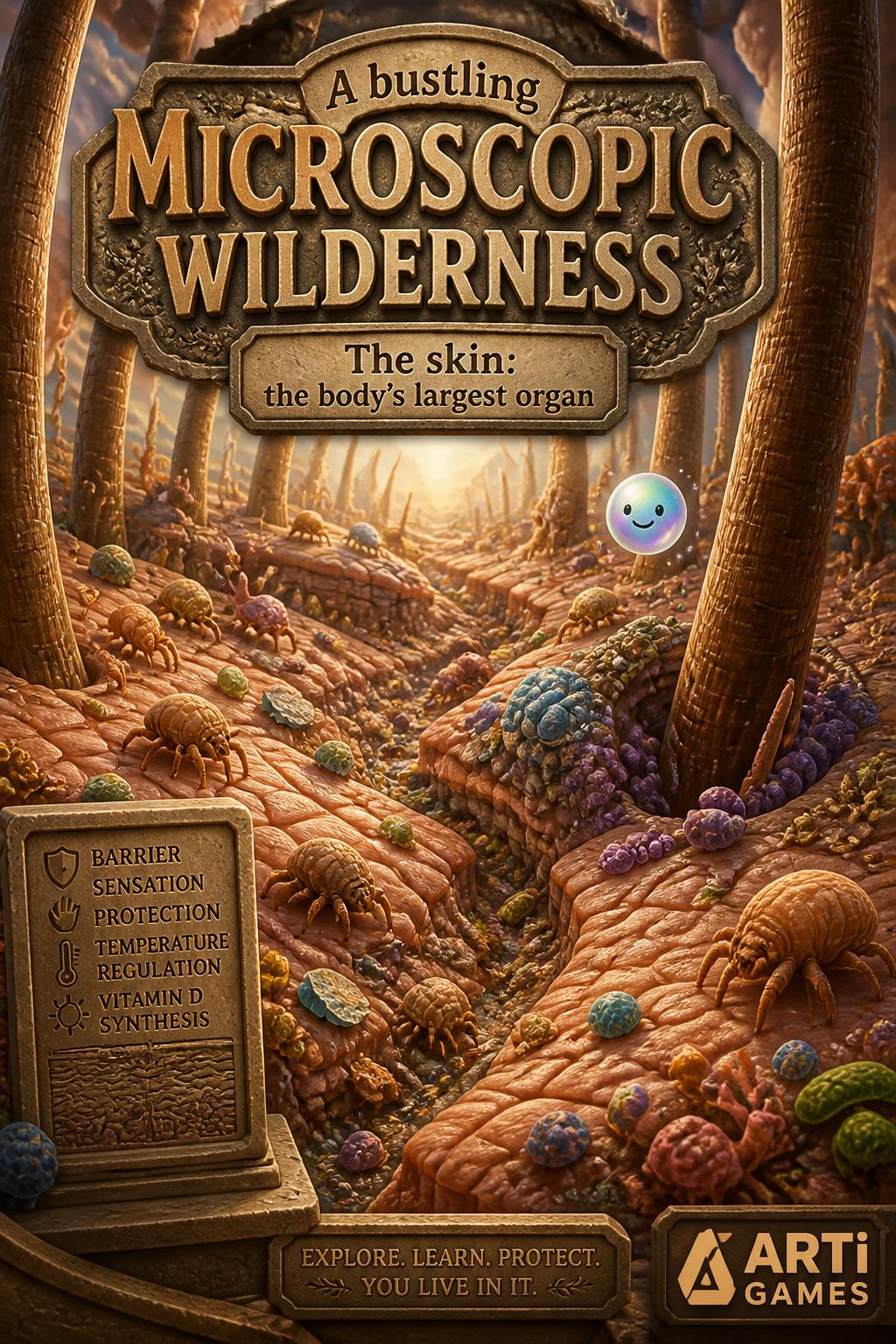
artiteacher Match friendly and harmful microbes to discover the bustling microscopic wilderness on your skin.
artiteacher A bustling microscopic wilderness
My tiny world, my tiny world / Living on my skin!
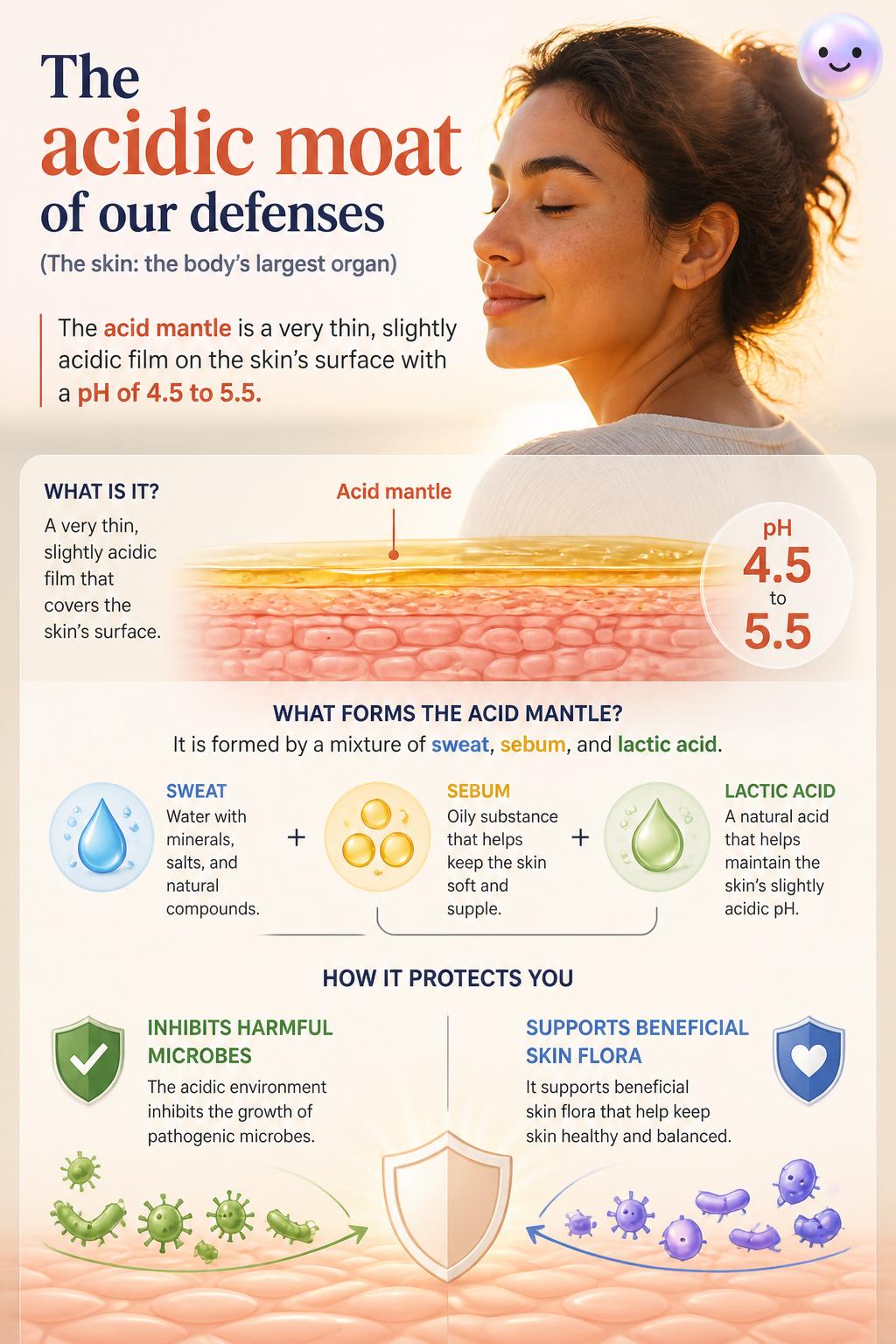
artiteacher The skin maintains an acidic surface to deter harmful bacteria and fungi.
Face mites: Almost every adult human has microscopic, eight-legged Demodex mites living in their eyelash and nose hair follicles.
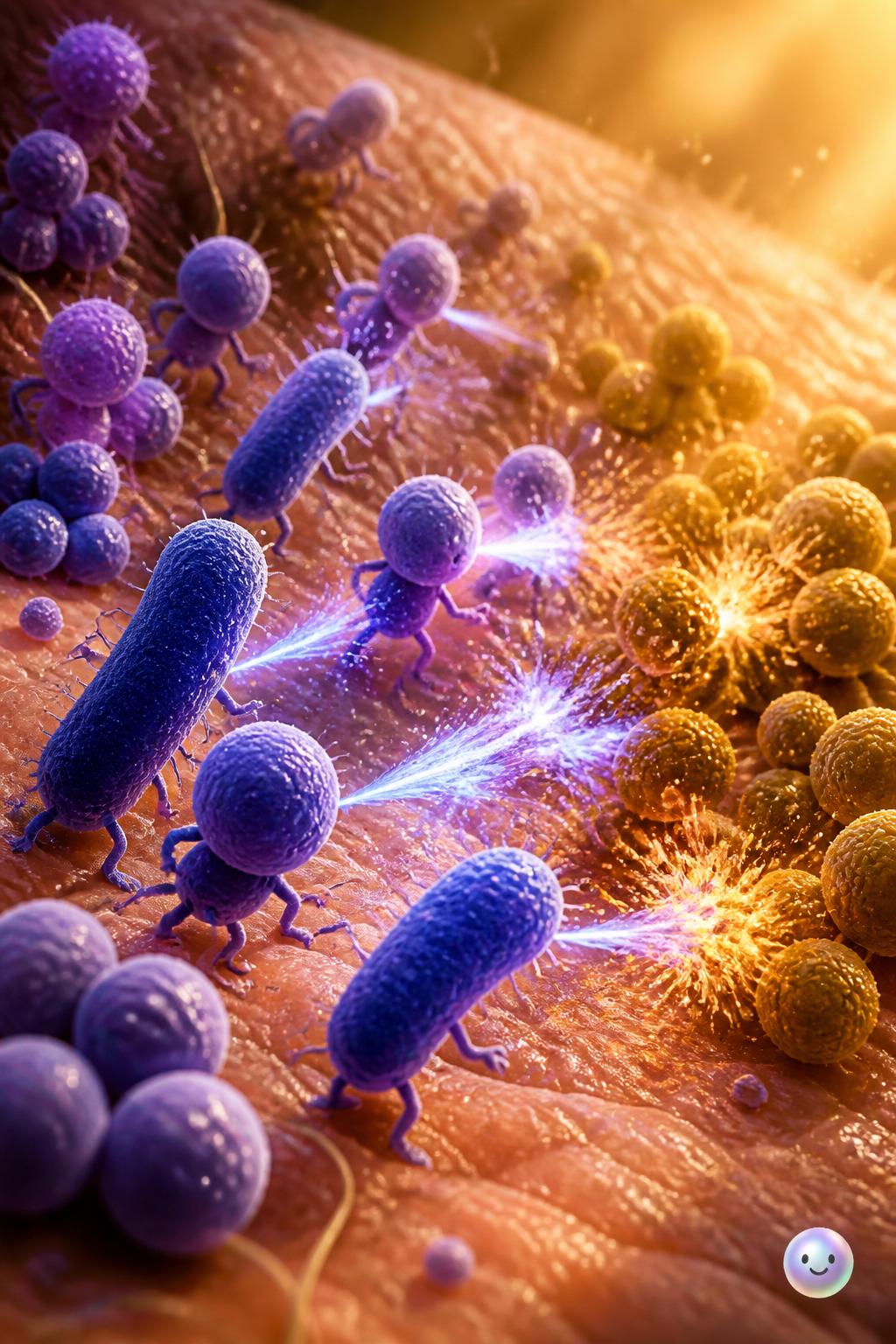
artiteacher Trillions of beneficial microbes on the skin prevent infections by outcompeting pathogens.
The community of microorganisms, including bacteria, fungi, and viruses, that inhabit a particular environment. Human skin hosts roughly one million bacteria per square centimeter to protect the body from external pathogens.
Where on the human body is the density of oil-producing sebaceous glands the highest?
What microscopic, eight-legged arachnids live naturally in human facial hair follicles?
Which oily substance is produced by glands in the skin to waterproof and lubricate it?
What acidic component of sweat helps maintain the protective barrier of human skin?
Which bacterium is a helpful, dominant resident of healthy human skin that fights off pathogens?
How does washing skin with harsh alkaline soaps affect the skin's natural defense barrier?
What is the collective term for the trillions of bacteria, fungi, and viruses living on human skin?