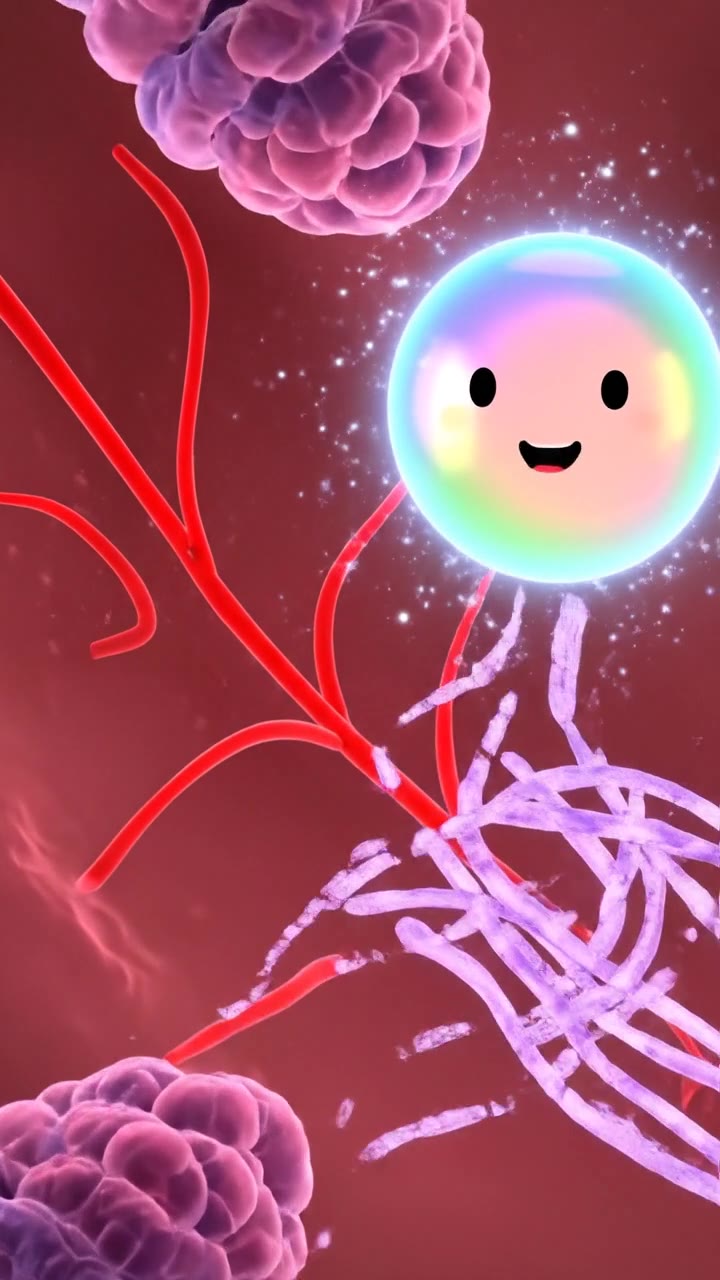
The rebuilding of collagen bridges
Starting around day three, fibroblasts migrate to the wound and begin producing collagen. At the same time, angiogenesis creates new microscopic capillary networks to supply oxygen. Keratinocytes then crawl across the new tissue matrix to completely seal the skin's surface.
The architecture of our outer shield
The evolutionary rainbow of human pigment
A bustling microscopic wilderness
The magic of self-repair and healing


artiteacher Drag treatments onto cuts and scrapes to discover how skin layers heal the body.
artiteacher Skin Regeneration
Brand-new skin is on the way (oh yeah!) / Shedding the old to save the day (save the day!)
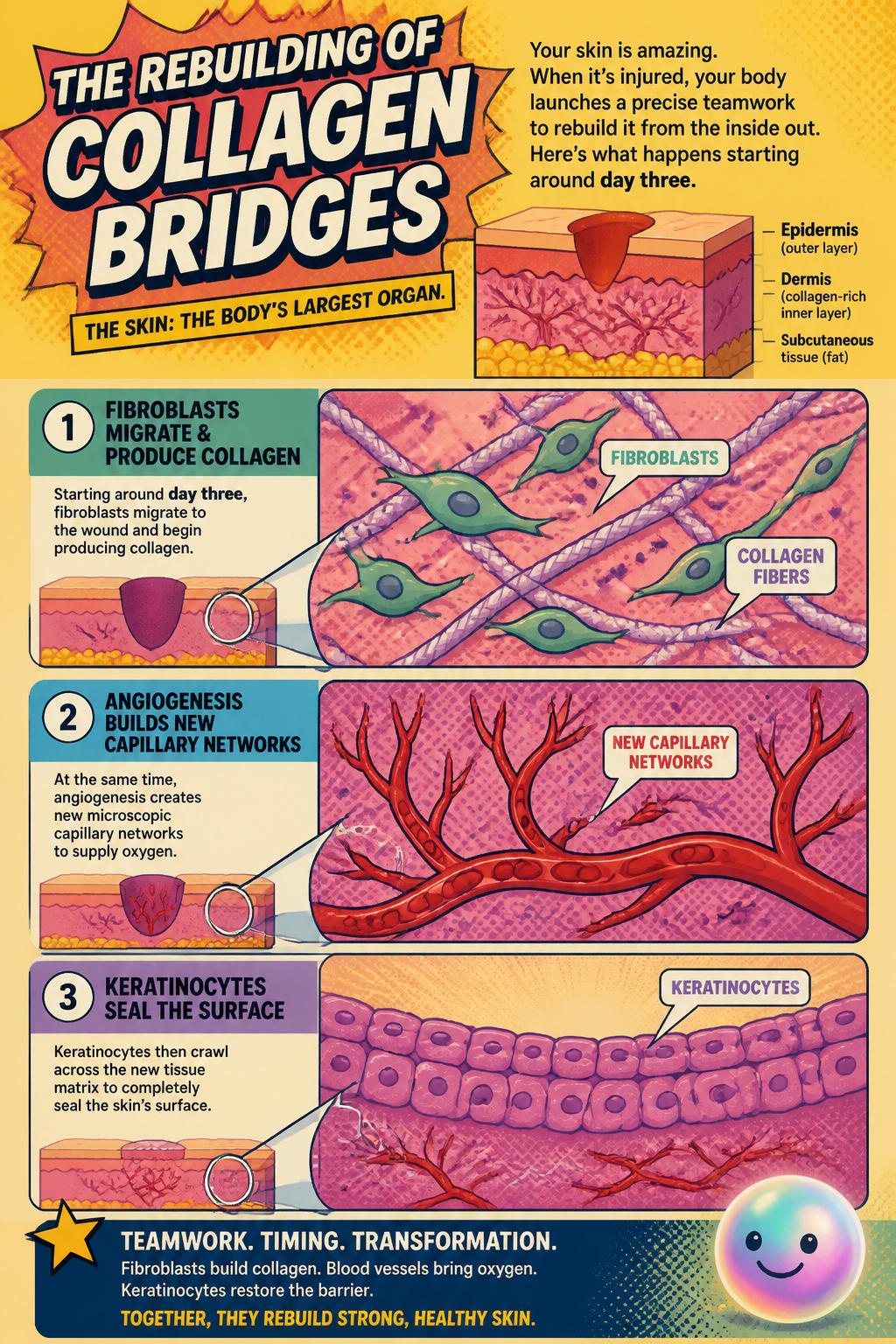
artiteacher Specialized cells construct new tissue and blood vessels to close the gap.
Scar tissue: Scar tissue is weaker than normal skin and completely lacks hair follicles, sweat glands, and elastic proteins.
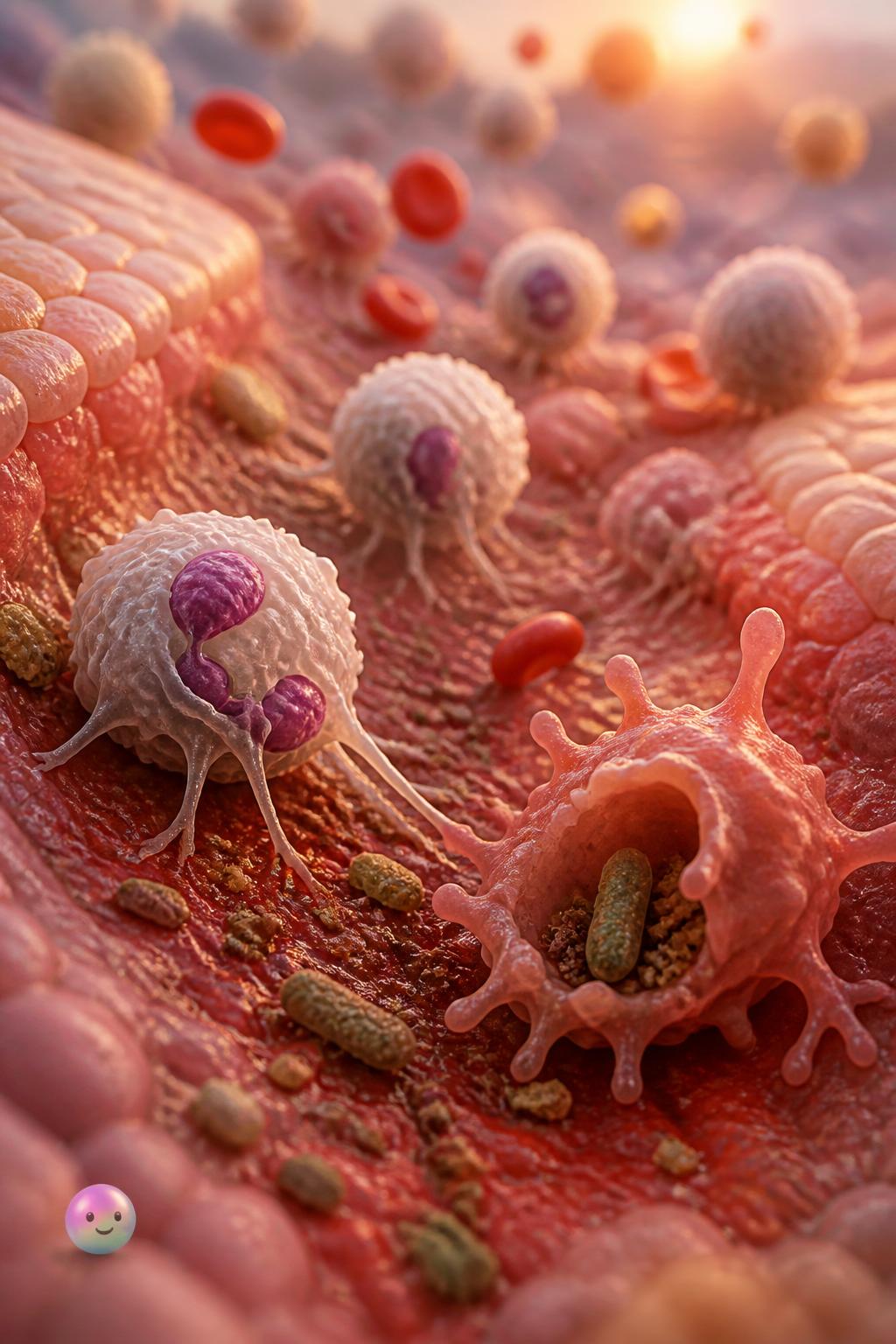
artiteacher Inflammatory cells flood the wound to destroy bacteria and clear damaged tissue.
A cell in connective tissue that produces collagen and other fibers. In 1858, Rudolf Virchow first described these cells, which later proved essential for repairing damaged skin.
Which cells are responsible for laying down new collagen to rebuild damaged skin?
Which blood component forms the initial physical plug to stop bleeding in a cut?
What is the primary role of white blood cells during the inflammatory phase of healing?