
BETA
YOUR GOAL
Master of The body's secret filters
artiteacher Pilot your time machine through the bloodstream to learn how kidneys filter waste.
artiteacher The Kidneys
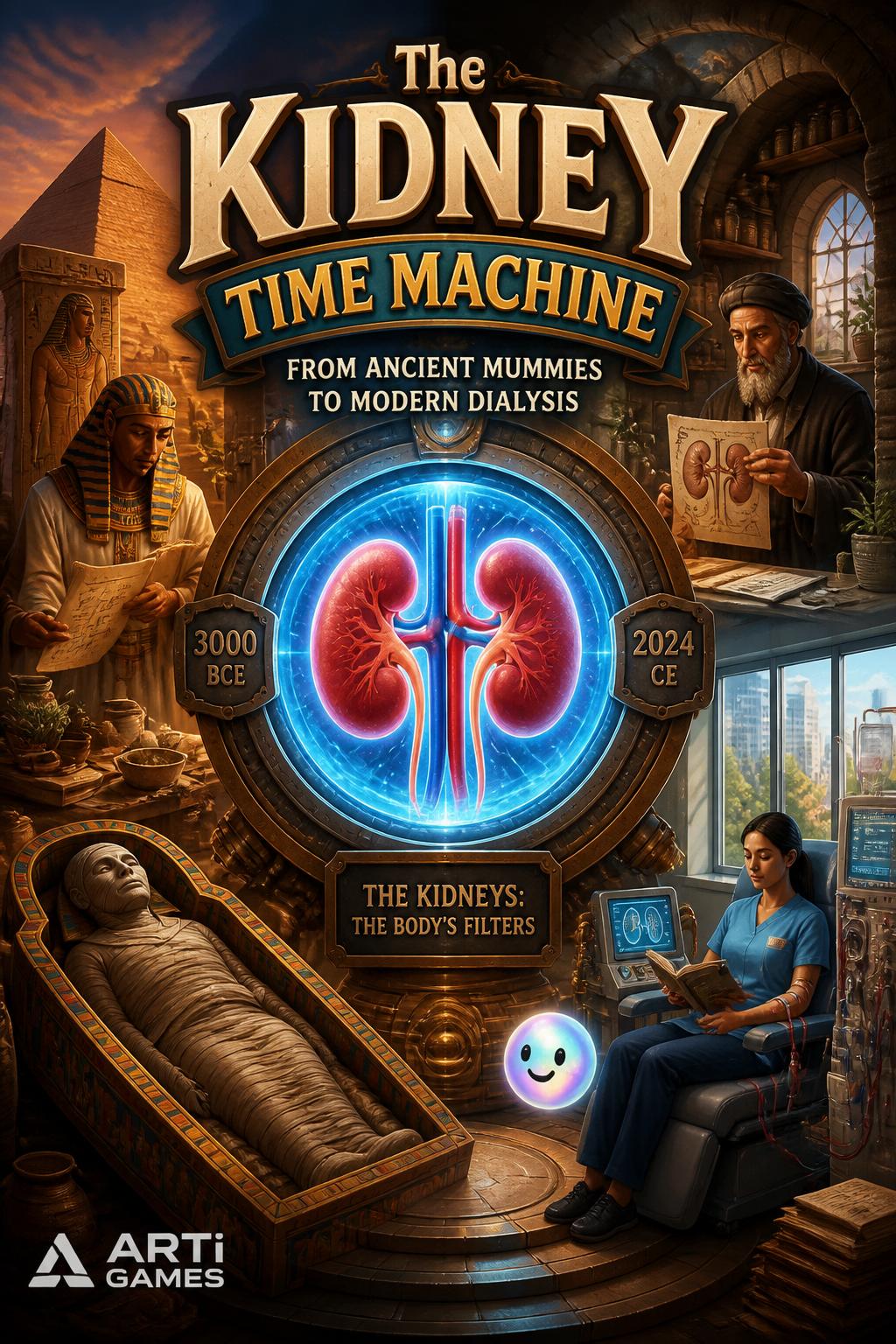
In ancient tombs or modern rooms, those kidneys stay right where they are!
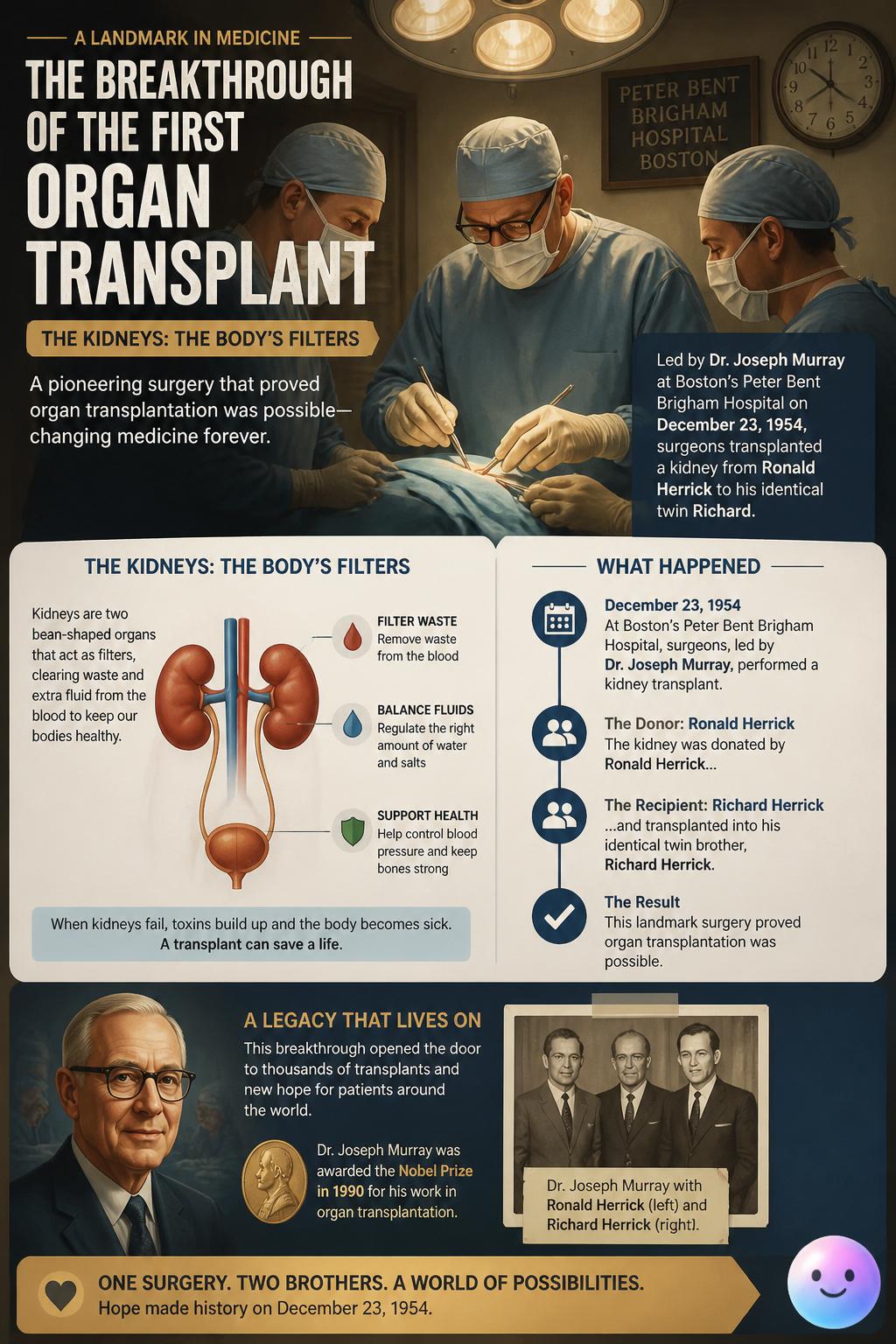
artiteacher In 1954, surgeons performed the first successful human organ transplant in history—a kidney transplant between identical twins.
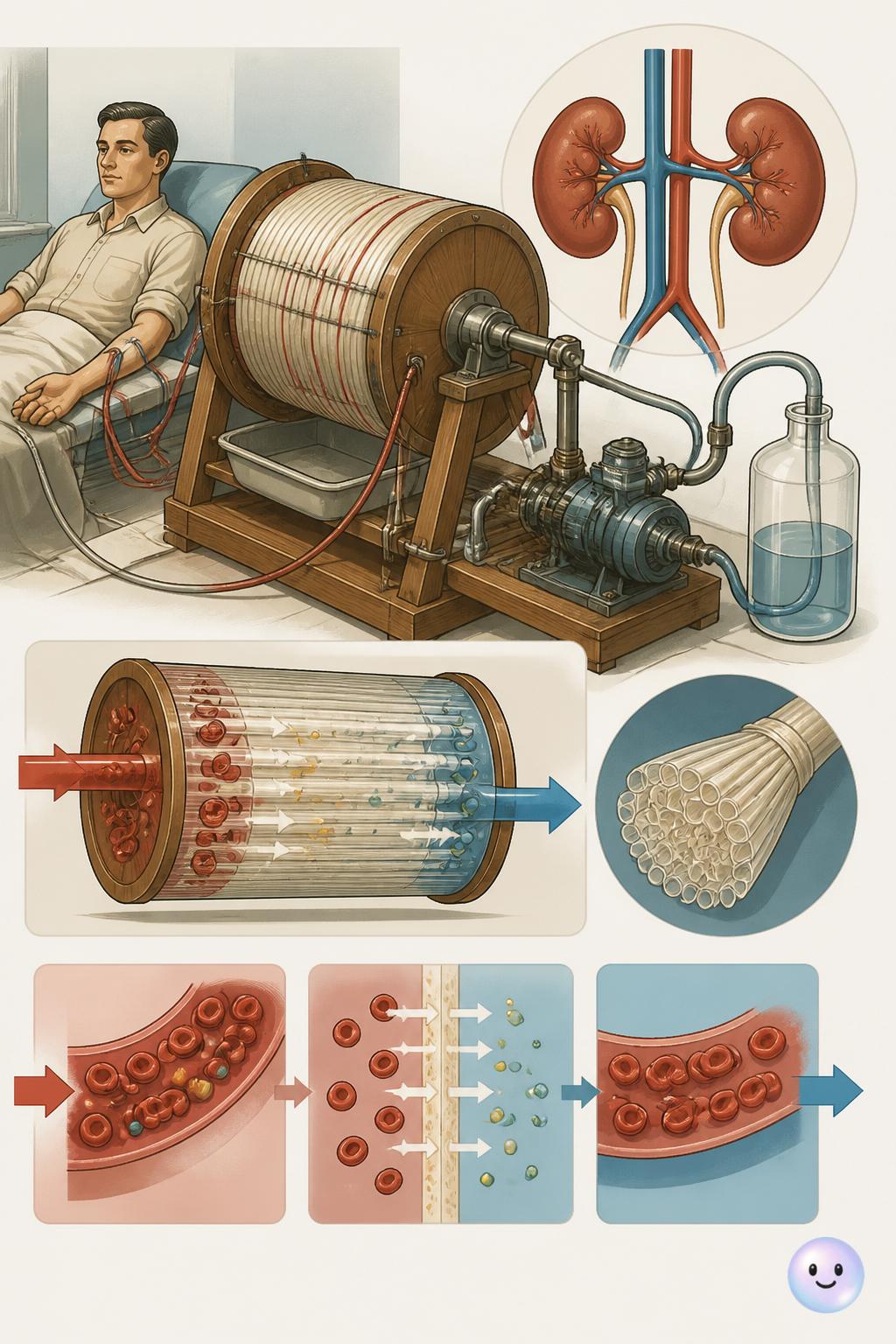
artiteacher During World War II, a Dutch doctor built the first working artificial kidney using sausage casings and a sewing machine.
The third kidney: During a kidney transplant, surgeons usually leave the two old, non-functioning kidneys inside and add the third new kidney in the pelvis.
What everyday kitchen and household item did Dr. Willem Kolff use to filter blood in his first dialysis machine?
Where do surgeons usually place a transplanted kidney inside the recipient's body?
What happens to a patient's original, non-functioning kidneys during a standard kidney transplant?
Which surgeon won a Nobel Prize in 1990 for leading the team that performed the first successful kidney transplant?
In which country did Dr. Willem Kolff invent the first working artificial kidney machine during World War II?
In what year was the first successful human kidney transplant performed between identical twins?
Why did ancient Egyptian embalmers leave kidneys inside mummies instead of placing them in jars?
What cutting-edge technology are modern scientists researching to create custom, transplantable kidneys?