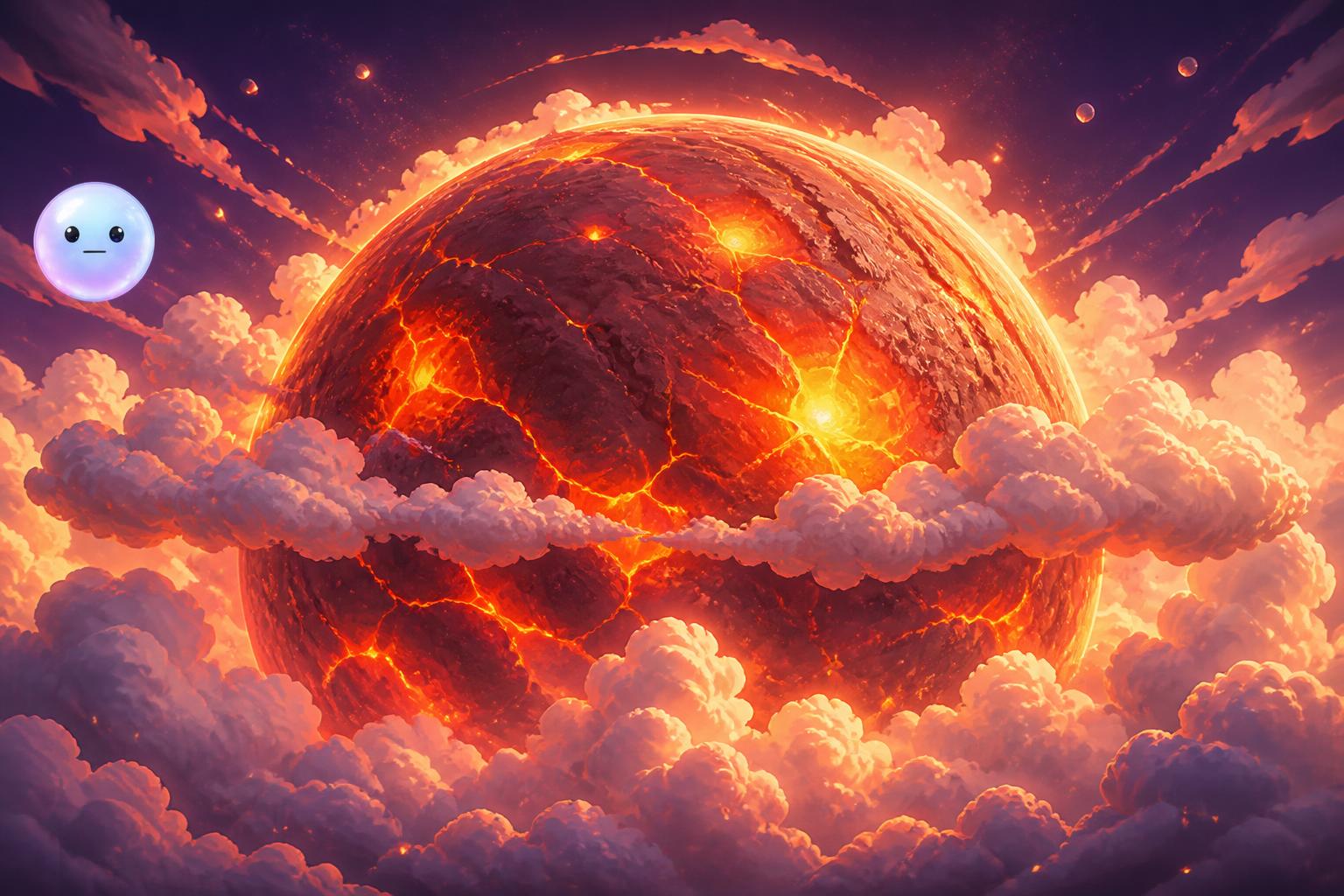
The impossible atmosphere of TOI-561 b
Sunscreen made of sand
The ocean of fire
The detective work of Webb

play_review Cosmic Sunscreen of TOI-561 b
Reflective clouds of rock are shining so bright, Bouncing back three-quarters of the starlight.
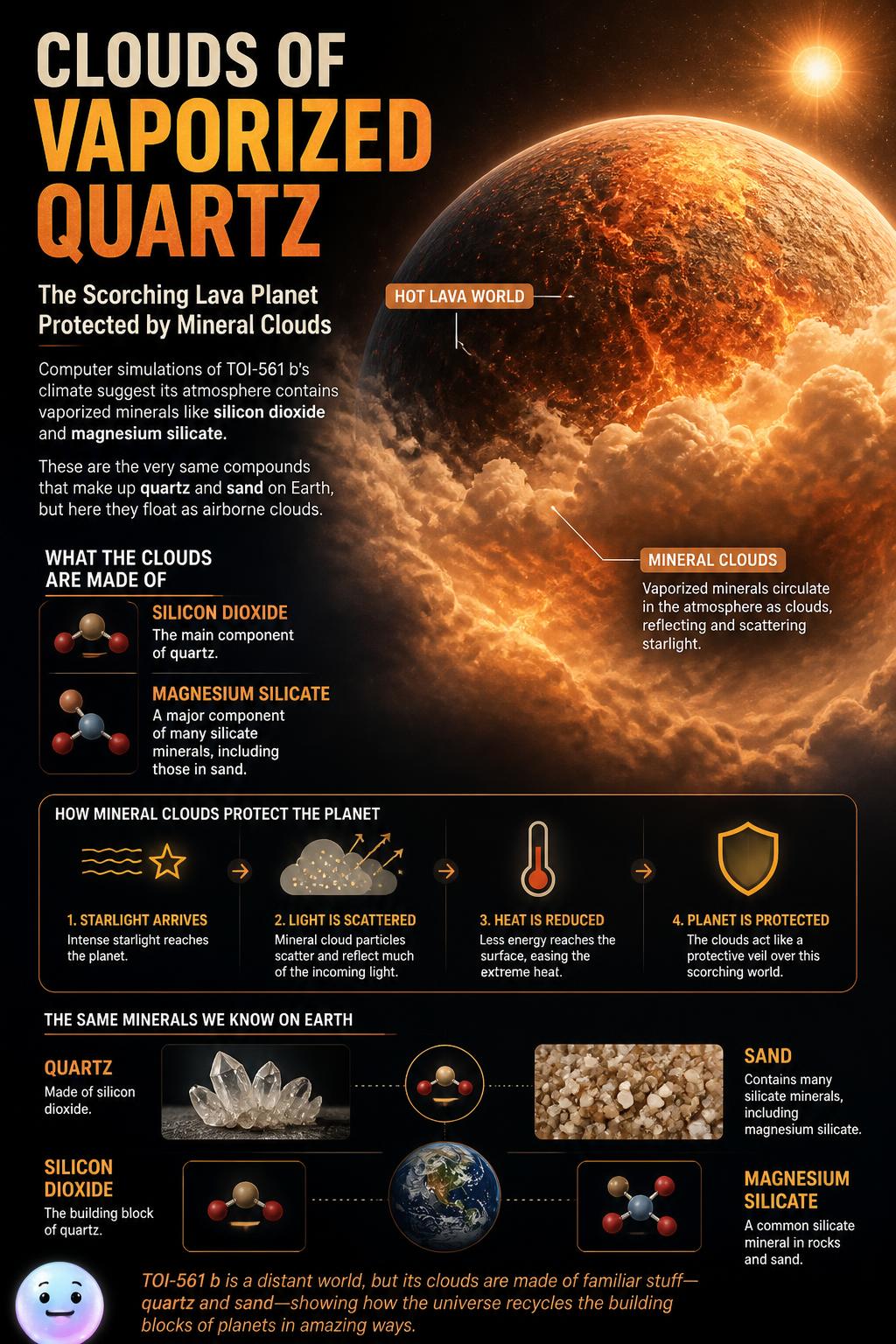
play_review Vaporized silicon dioxide and magnesium silicate, the very same minerals that make up quartz, float in TOI-561 b's atmosphere.
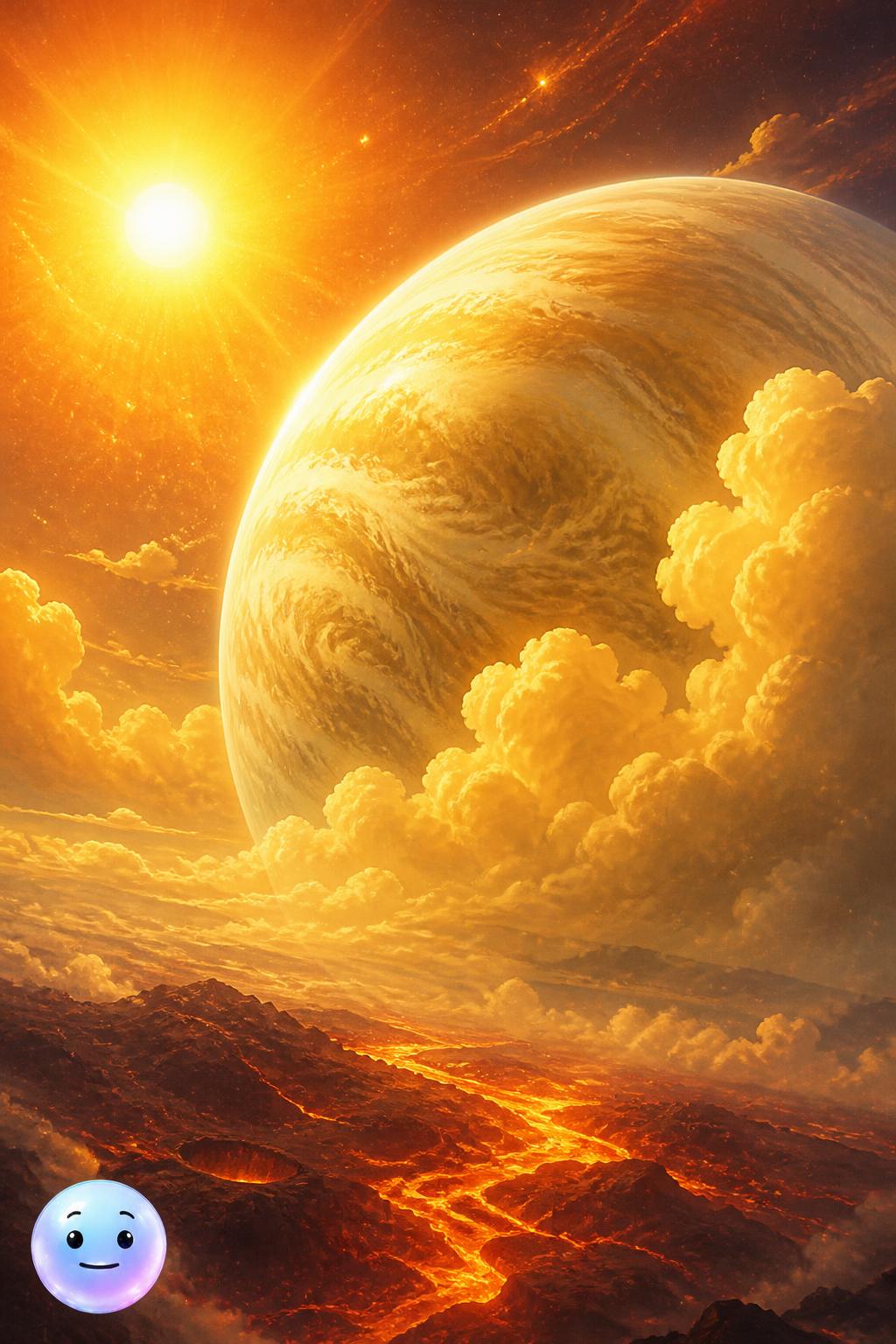
play_review Astronomers calculated the reflectivity of TOI-561 b by tracking its orbital brightness.
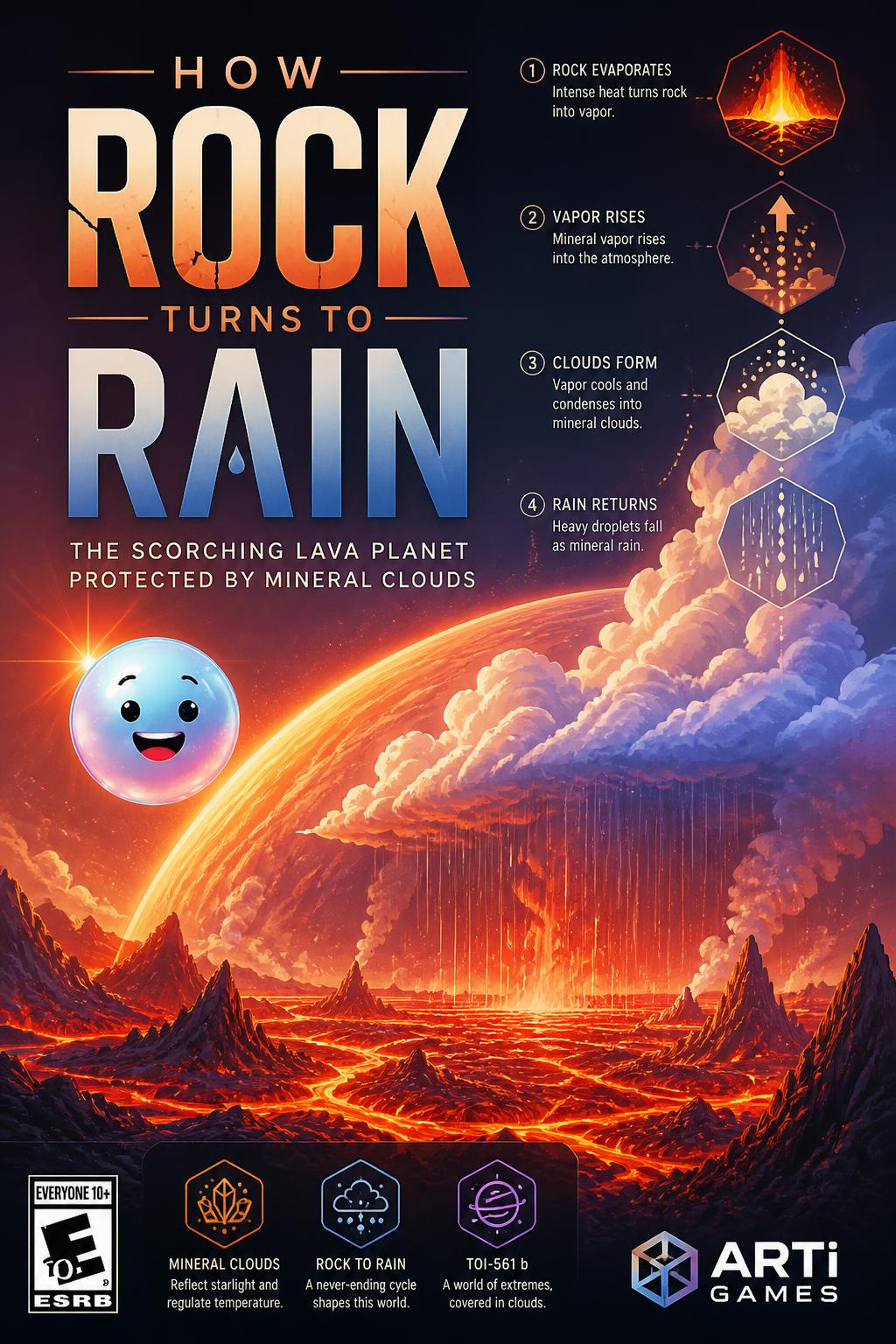
play_review Drag mineral stones into the lava to learn how rock turns into rain.
Glassy skies: The clouds on TOI-561 b are made of vaporized quartz, meaning it essentially has clouds made of liquid sand!
Any of a large group of minerals containing silicon and oxygen. In 2026, Webb observed vaporized grains of this compound reflecting starlight on exoplanet TOI-561 b.
What are the clouds on the dayside of TOI-561 b primarily thought to be made of?
Which common Earth material shares its chemical formula (SiO2) with the mineral clouds of TOI-561 b?
Which planet in our solar system has a similarly high reflectivity due to its thick cloud layer?
What happens when rock vapor rises into the cooler upper layers of TOI-561 b's atmosphere?
What analogy do astronomers use to describe the protective role of TOI-561 b's mineral clouds?
How do the silicate clouds on TOI-561 b help protect its atmosphere from being destroyed?