
BETA
Even with only 238 kilobases of DNA, not every gene in Sukunaarchaeum is understood. Researchers discovered several 'hypothetical proteins'—genes that do not match any known sequence in global databases. These mysterious proteins might hold the secret to how it interacts with and extracts resources from its host.
futura Life stripped to its core
A tiny life form, Sukunaarchaeum mirabile, It blurs the line, Between a cell and a virus.
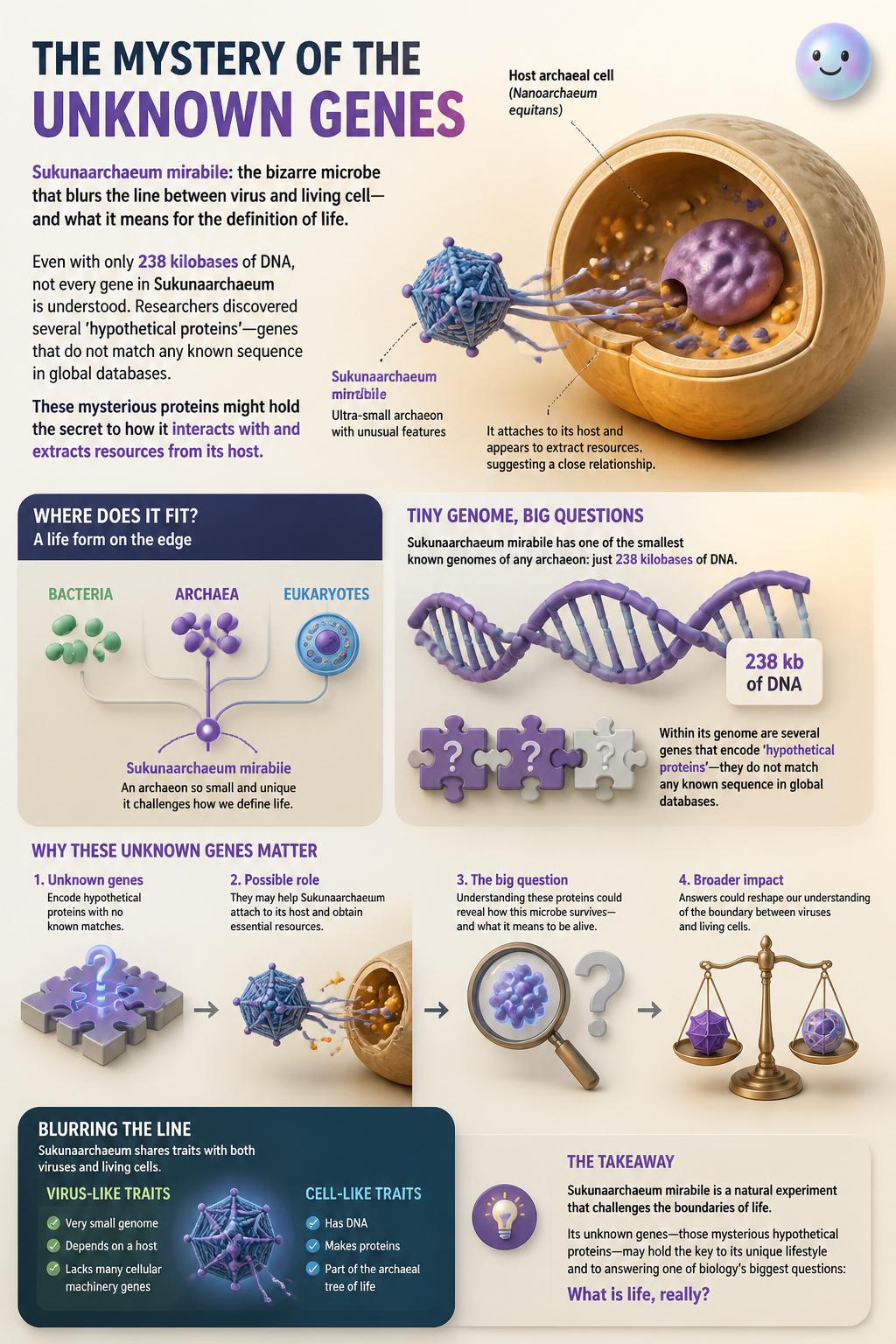
futura A fraction of the microbe's tiny genome consists of mysterious genes that scientists cannot identify.
Cellular minimalism: Sukunaarchaeum has zero metabolic pathways, meaning it cannot process energy or nutrients on its own, making it a complete metabolic parasite.
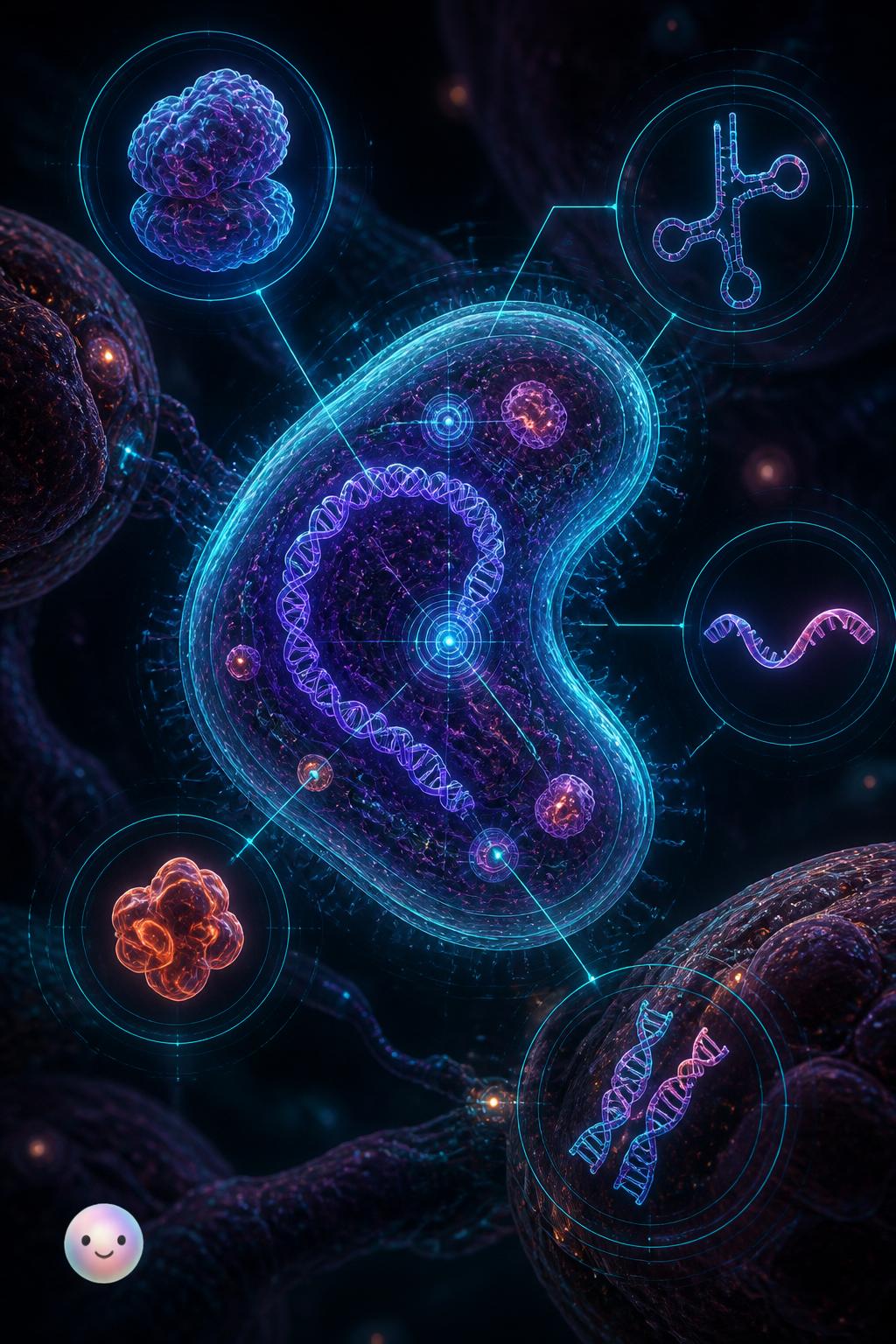
futura Despite its tiny genome, the microbe retains the exact tools needed to read and copy its own DNA.
What is the main functional bias of the remaining genes in the Sukunaarchaeum genome?
What term describes an organism like Sukunaarchaeum that is entirely dependent on a host for survival?
What crucial biological process is Sukunaarchaeum mirabile completely unable to perform on its own?
Which cellular structures does Sukunaarchaeum possess that allow it to make its own proteins?