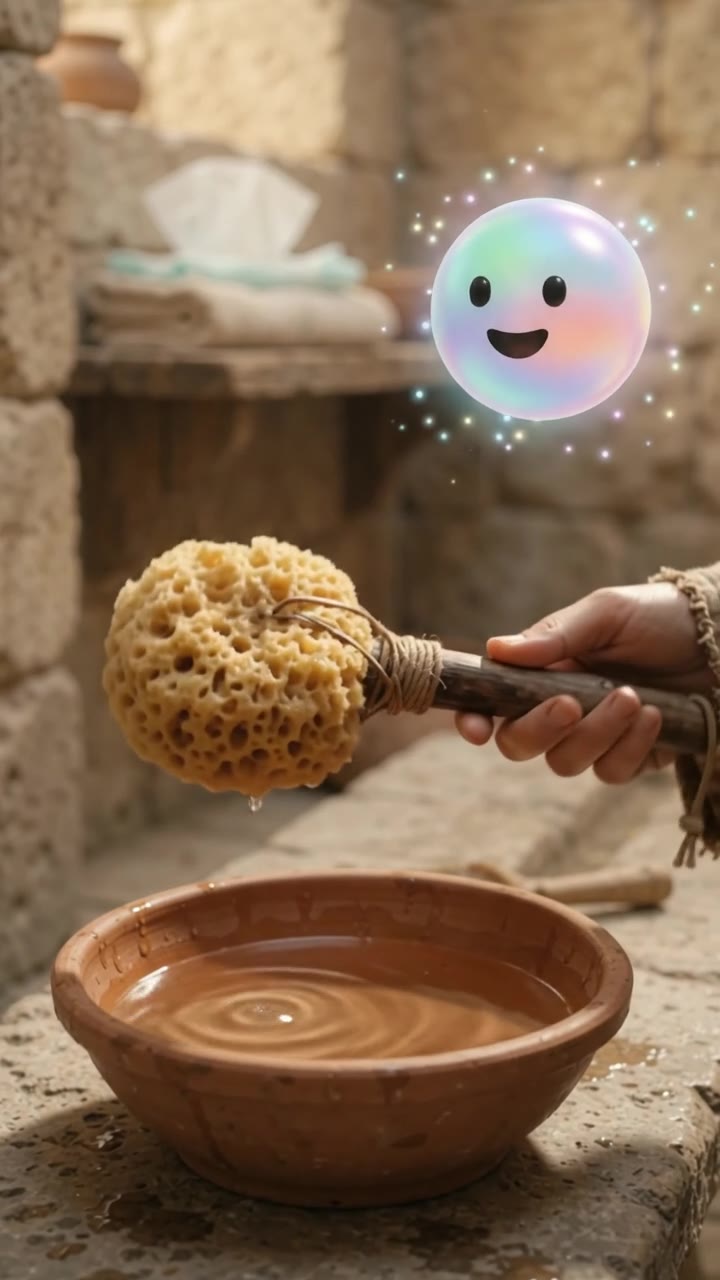
The Roman Tersorium: Ancient Rome's Shared Sponge
In public latrines across ancient Rome, citizens used the tersorium, a shared sponge soaked in vinegar or salt water. While primarily for wiping, it highlights how communal and awkward ancient hygiene was before disposable options.
Ancient nose-wiping and awkward customs
The handkerchief era and courtly drama
The wartime birth of cellucotton
The modern era of tissue tech

futura The Roman tersorium was a shared toilet sponge, showing how communal and awkward ancient hygiene was before disposable options.
What did ancient Romans soak the communal tersorium sponge in to sanitize it between uses?
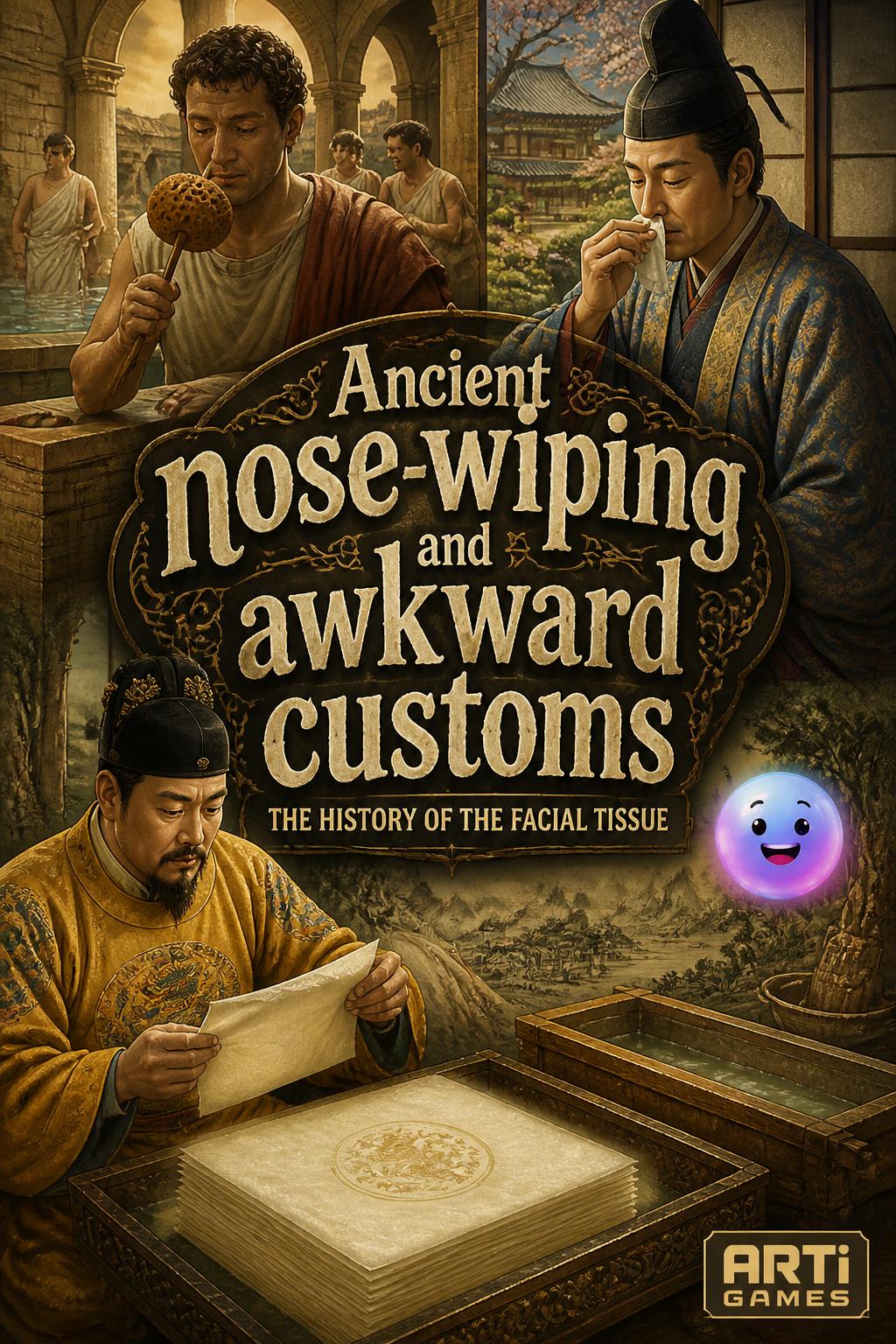
futura Drag wipes to catch sneezes and explore the awkward history of nose-wiping customs.
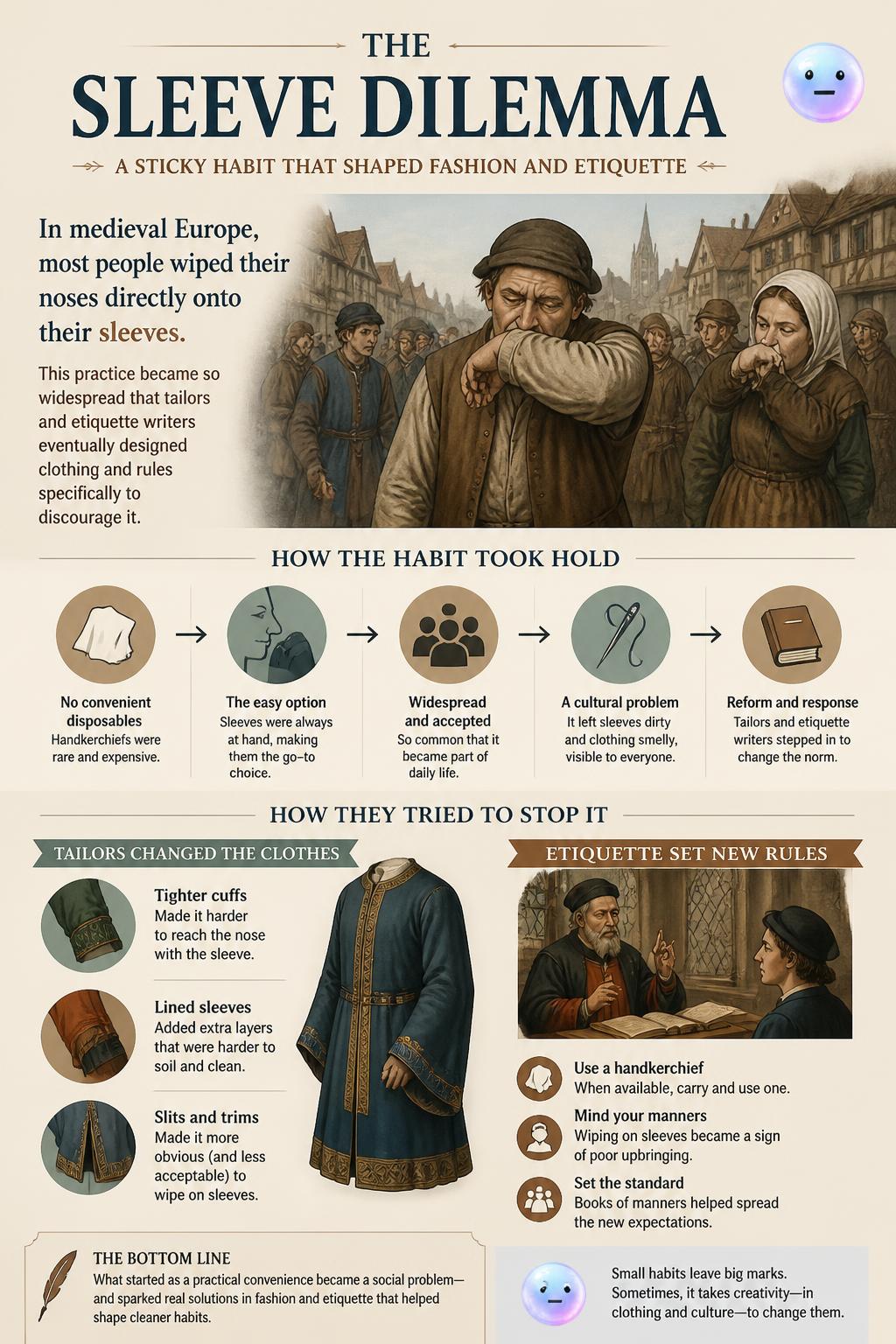
futura Medieval Europeans commonly wiped their noses on their sleeves, prompting tailors and etiquette writers to design clothing and rules to stop the habit.
Which famous medieval etiquette handbook advised against wiping one's nose on their sleeve?
During which century did the Chinese imperial court first record using soft, perfumed hygiene paper?
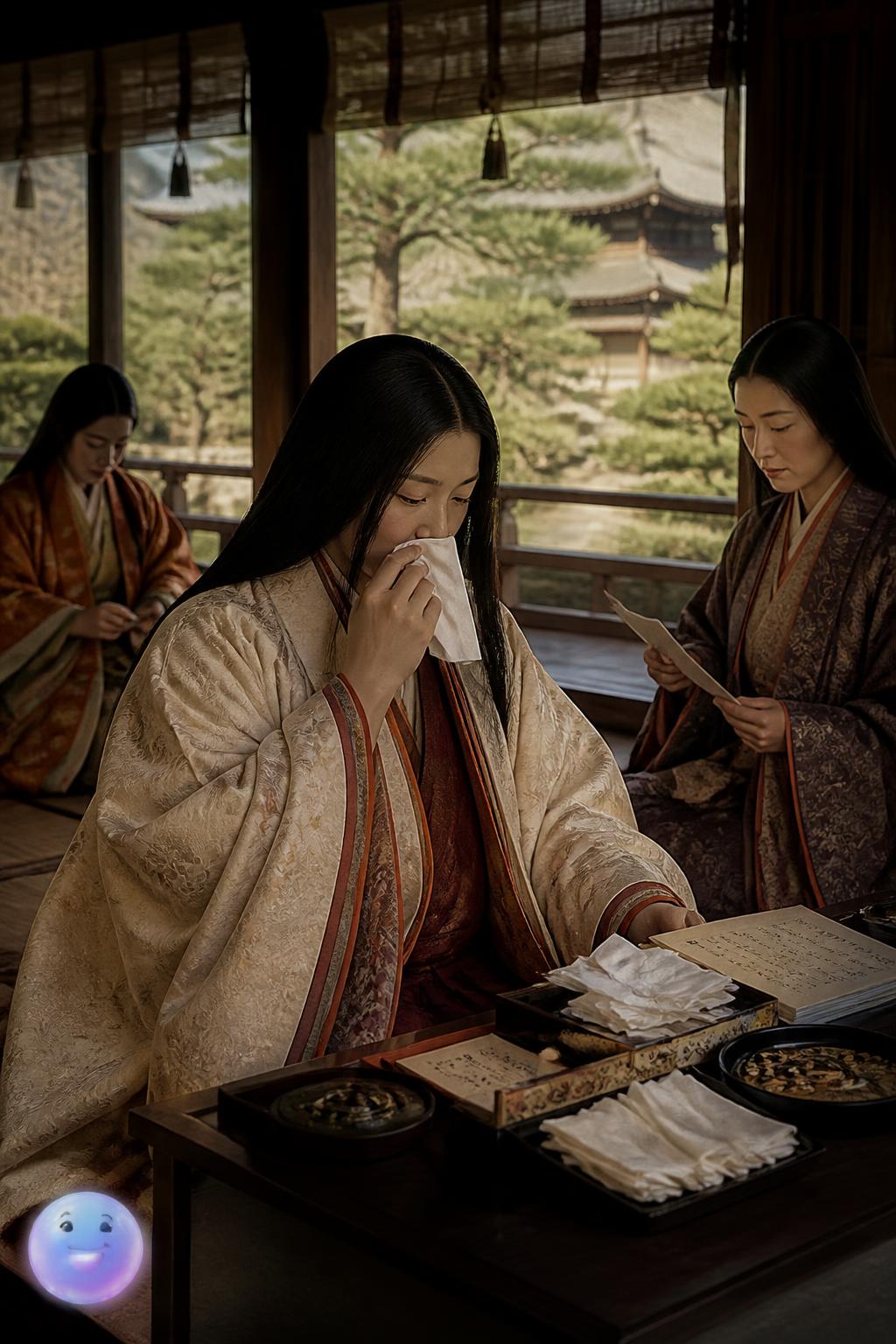
futura Heian Japanese nobles used disposable mulberry paper tissues while Europeans used their sleeves.
What was the specific name of the Japanese paper used by Heian-era nobles for nose-blowing?
Ancient Roman sponges: In ancient Rome, public latrines featured a single, shared sponge on a stick that sat in a bucket of salty vinegar water between uses.
futura The Chinese Emperor's Nose-Wiping Paper
The Chinese Emperor's paper was soft, sweet, and perfumed for the royal family.
Which Chinese dynasty first mass-produced soft, perfumed paper sheets for the imperial family's personal use?
A cloth used in ancient Rome for wiping sweat from the face. Ancient Romans used this linen for perspiration but cleared nasal mucus using their bare fingers.