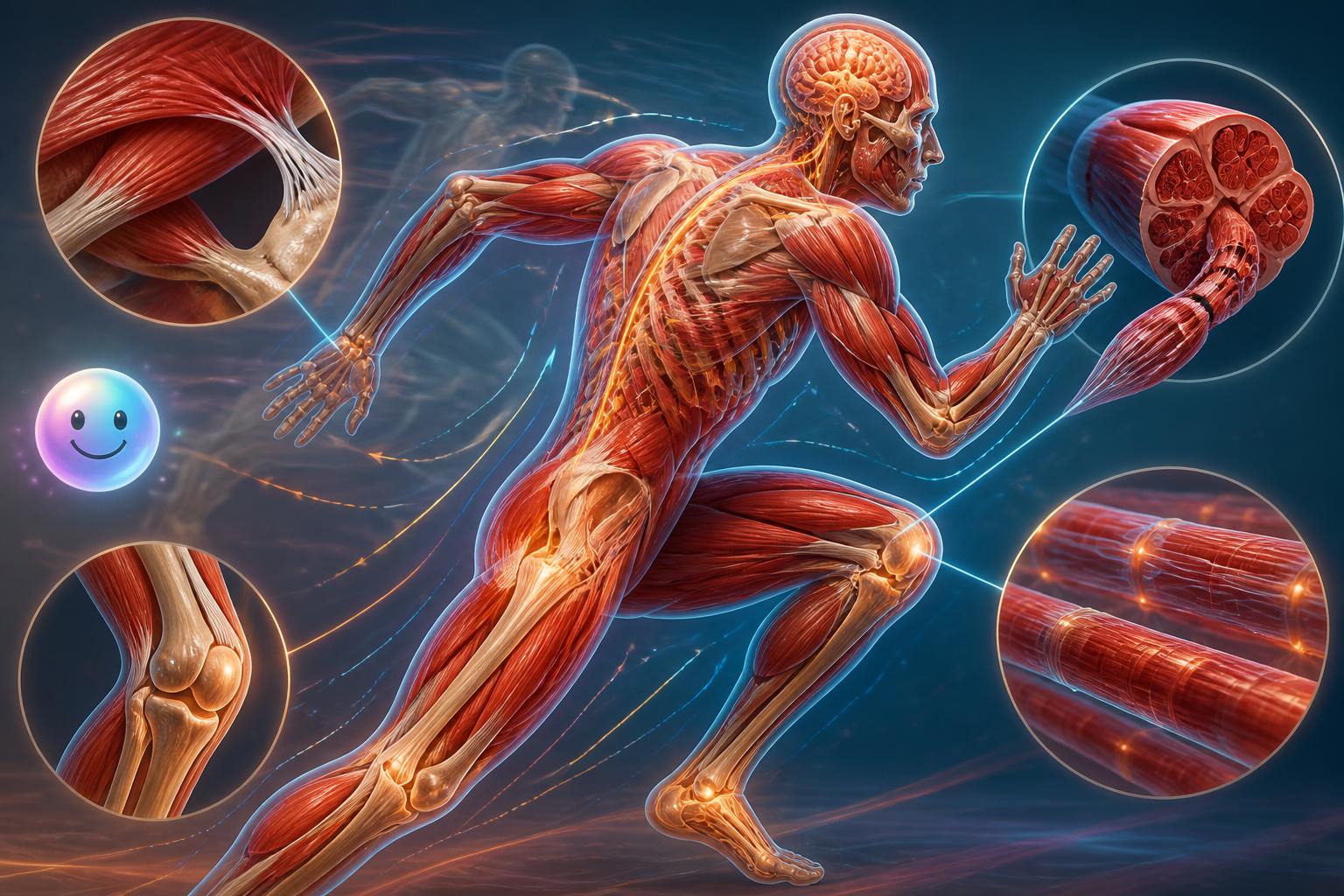
Most annoying muscle cramp?
The body's three engines
Levers, lines, and brain signals
Fueling the fire
Weird, wild, and ancient muscles
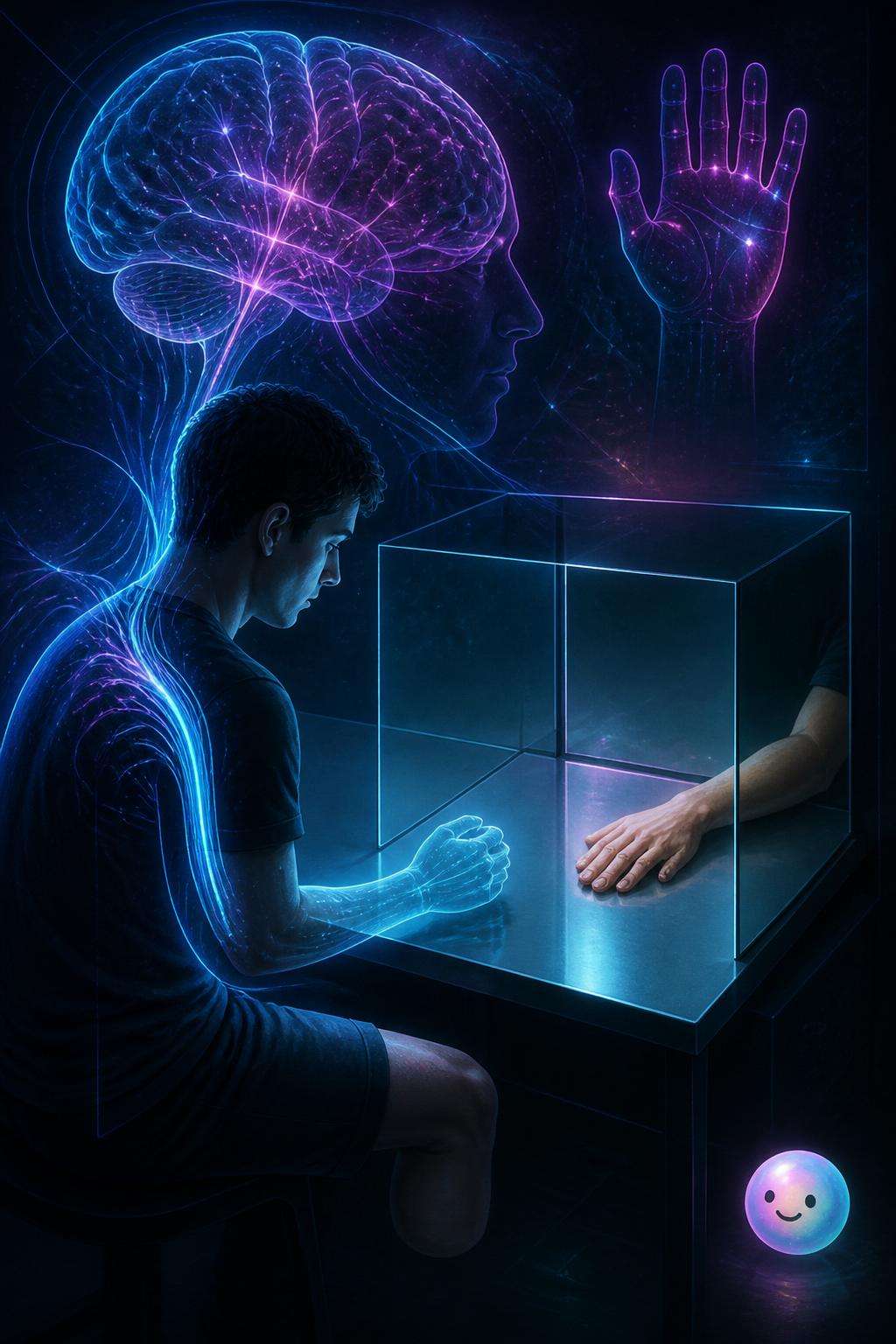
artiteacher Since muscles only pull, they work in opposing pairs where one contracts while the other relaxes.
artiteacher Made of tough collagen, tendons transmit the force of muscle contractions directly to your bones.
artiteacher Muscles shorten to pull on bony levers, using joints as fulcrums to create large, sweeping movements.
artiteacher Motor neurons release a chemical called acetylcholine, triggering an electrical wave that prompts muscle cells to contract.
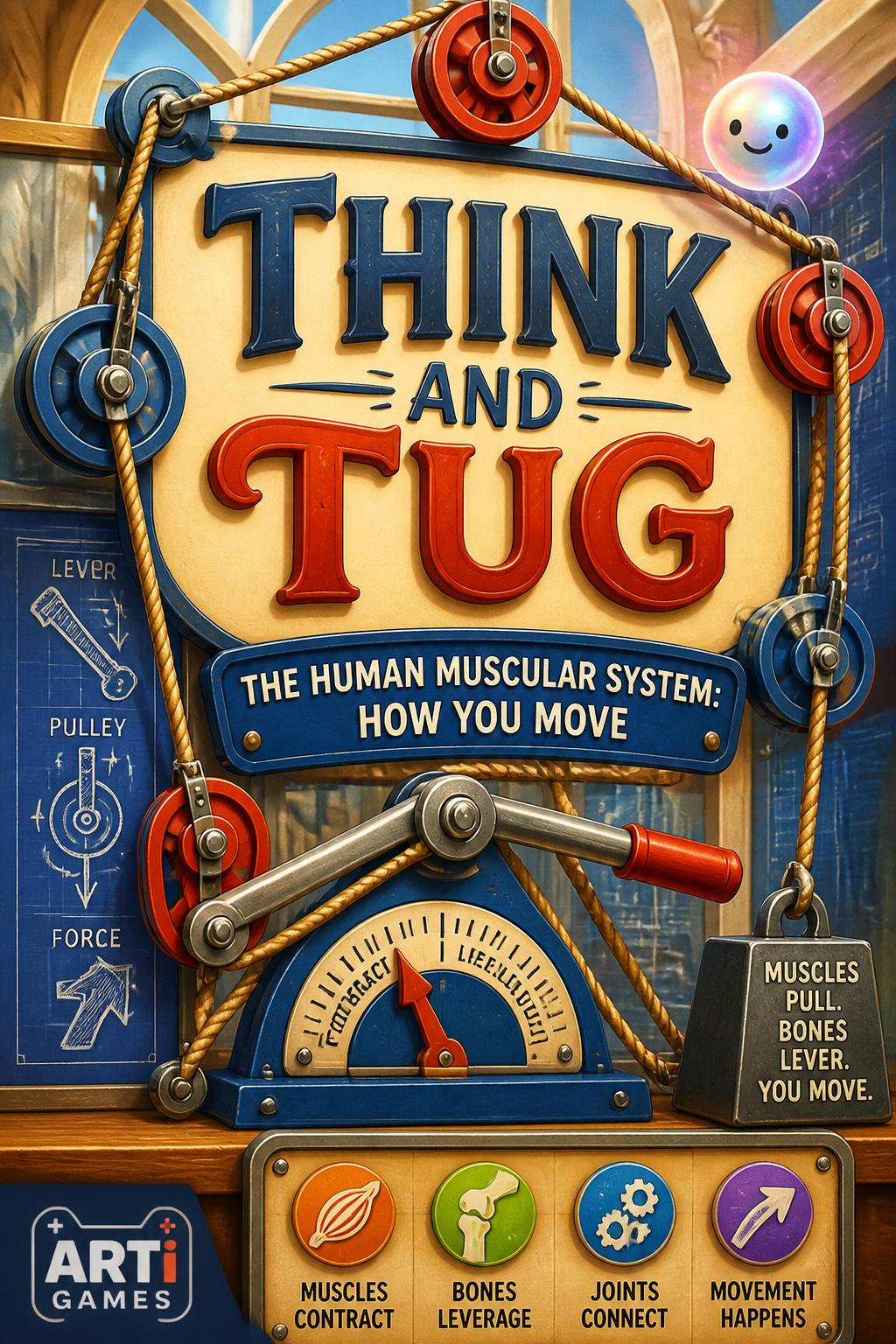
artiteacher Tug the contracting muscles to learn how opposing pairs pull your bones.
artiteacher Levers, lines, and brain signals
Muscles only pull, they never push away, Working in pairs to get us through the day.
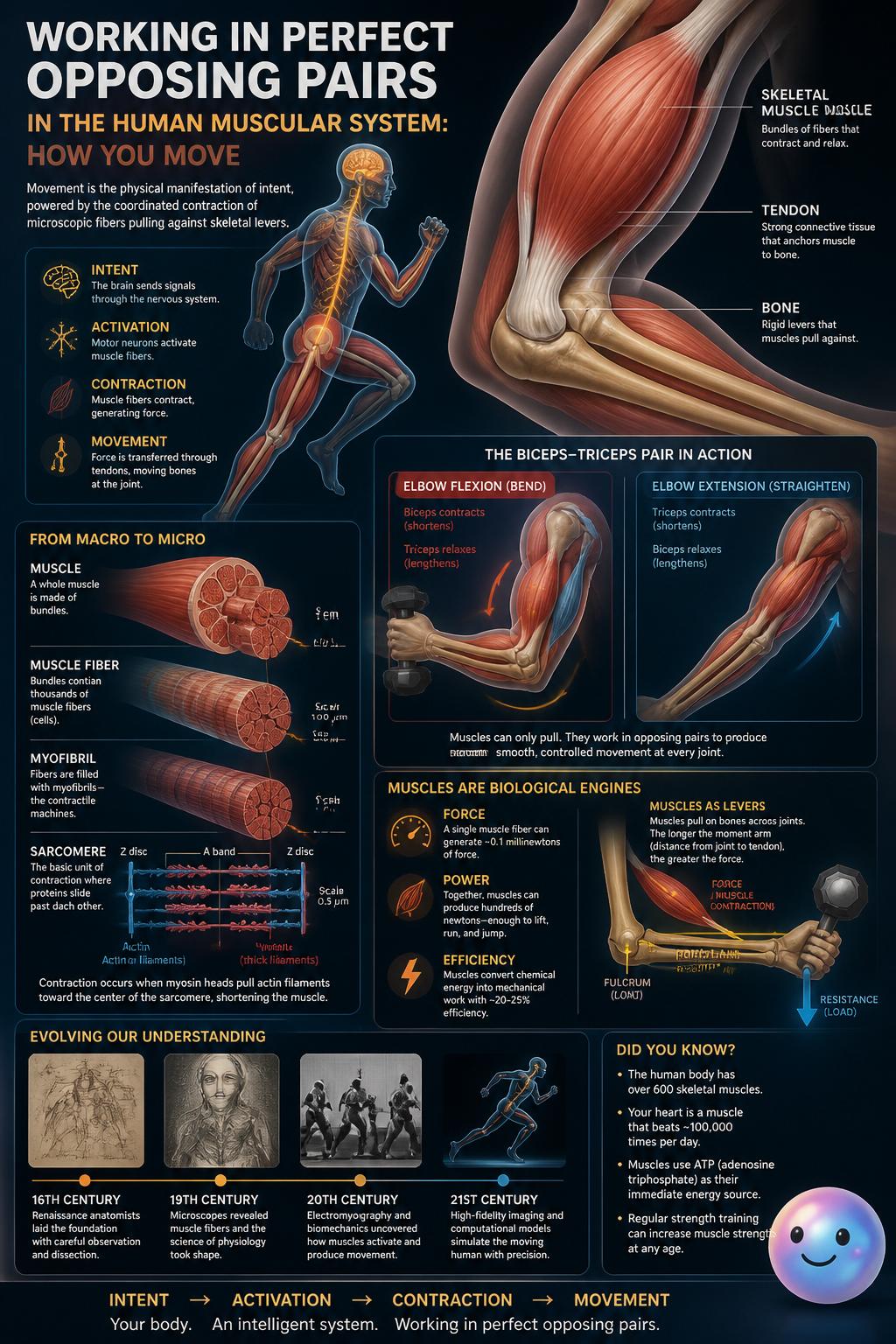
artiteacher To move joints in two directions, muscles must work in coordinated, opposing teams.
Achilles tendon power: The Achilles tendon can withstand loads up to twelve times a person's body weight during running.
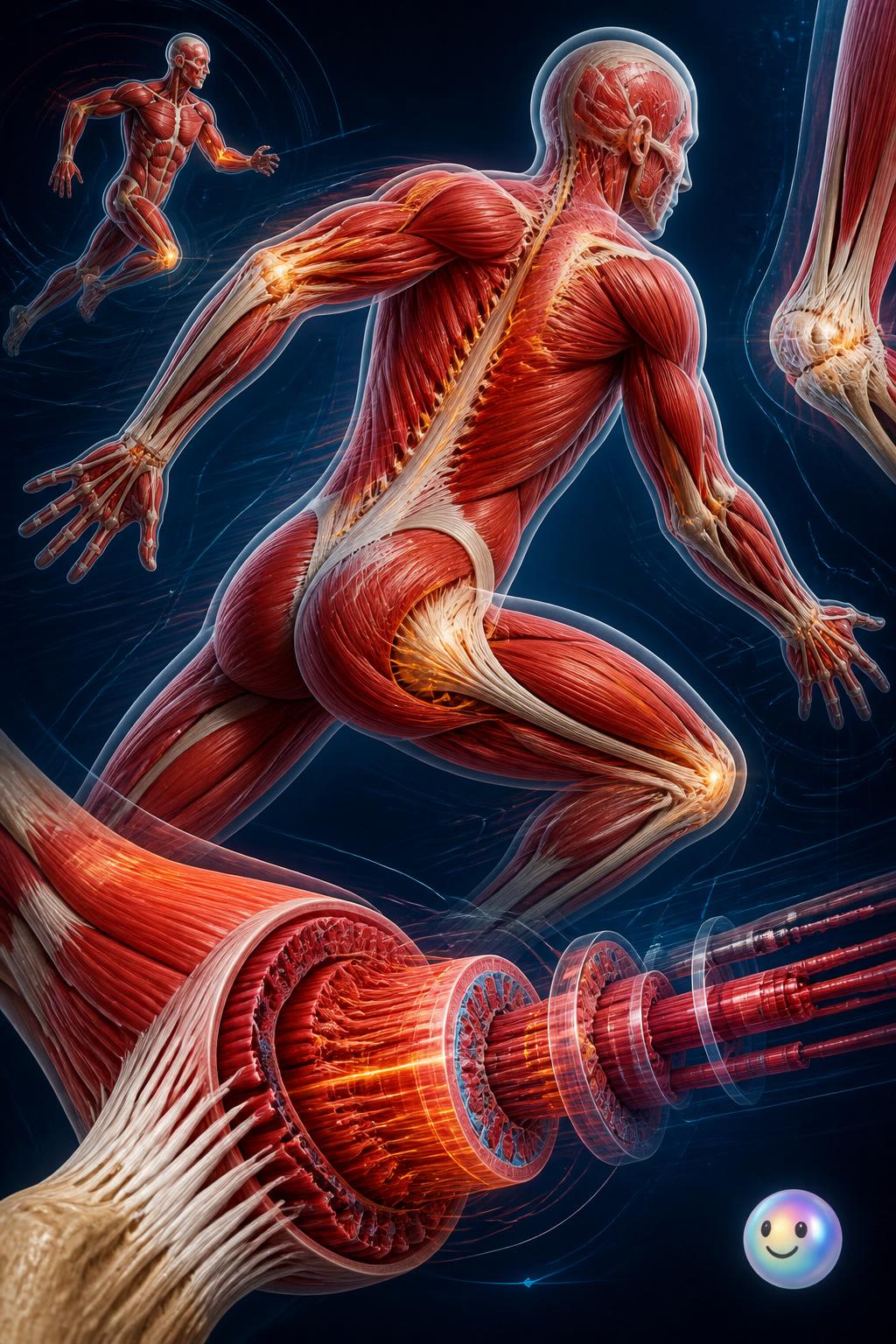
artiteacher Tendons are incredibly strong, fibrous bands of connective tissue that anchor muscles to bones.
A functional unit consisting of a motor neuron and all the muscle fibers it innervates. Sir Charles Sherrington first introduced this concept of neuromuscular control in 1925.
What type of physical lever system is most common in the human body, where the muscle force is applied between the joint and the load?
Because muscles can only pull and never push, how do they typically work to move limbs?
Which chemical neurotransmitter is released by motor neurons to signal a muscle to contract?
Which muscle acts as the opposing partner (antagonist) when the biceps muscle contracts to bend the elbow?
What tough, fibrous connective tissue attaches skeletal muscles directly to bones?
Which tendon in the human body is the thickest and strongest, capable of supporting immense loads?
What is the name of the specialized connection point where a motor neuron meets a muscle fiber?