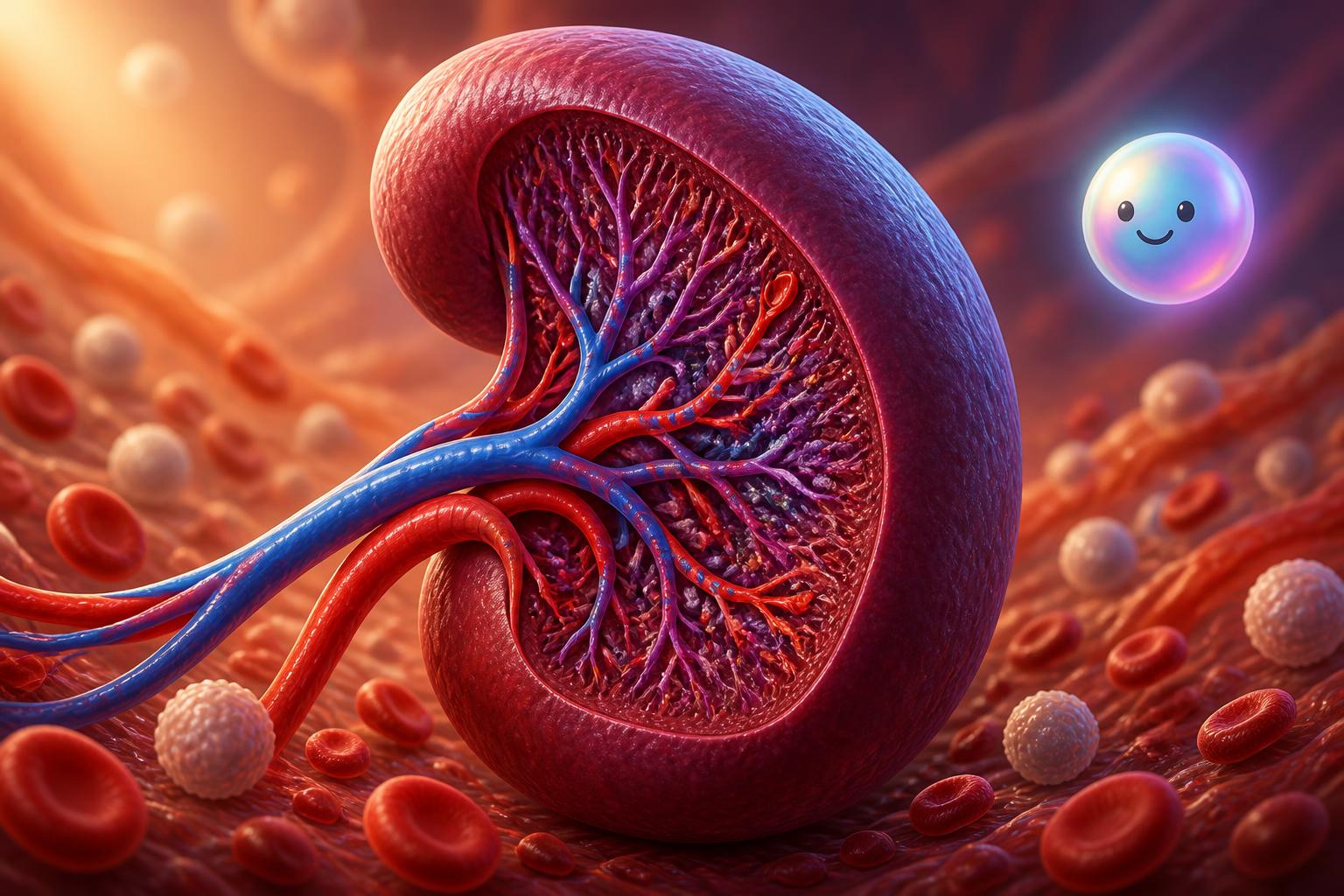
What happens to B-cells in the white pulp after they recognize a foreign invader?
The body's ultimate recycling center
The immune system's command center
The spleen across history and nature
Life without a spleen

artiteacher The spleen stores one-third of your platelets, releasing them to clot blood and stop bleeding.
artiteacher The spleen contains red and white zones, where white blood cells identify and attack invading pathogens.
artiteacher In the spleen's white pulp, B cells multiply and release antibodies that tag invaders for destruction.
artiteacher Specialized spleen cells trap slippery bacteria with sugar coats to protect our bloodstream from deadly infections.

artiteacher Swipe away old red cells to learn how the spleen filters your blood.
artiteacher The immune system's command center
Squeeze on through, squeeze on through, Only the flexible make it through.
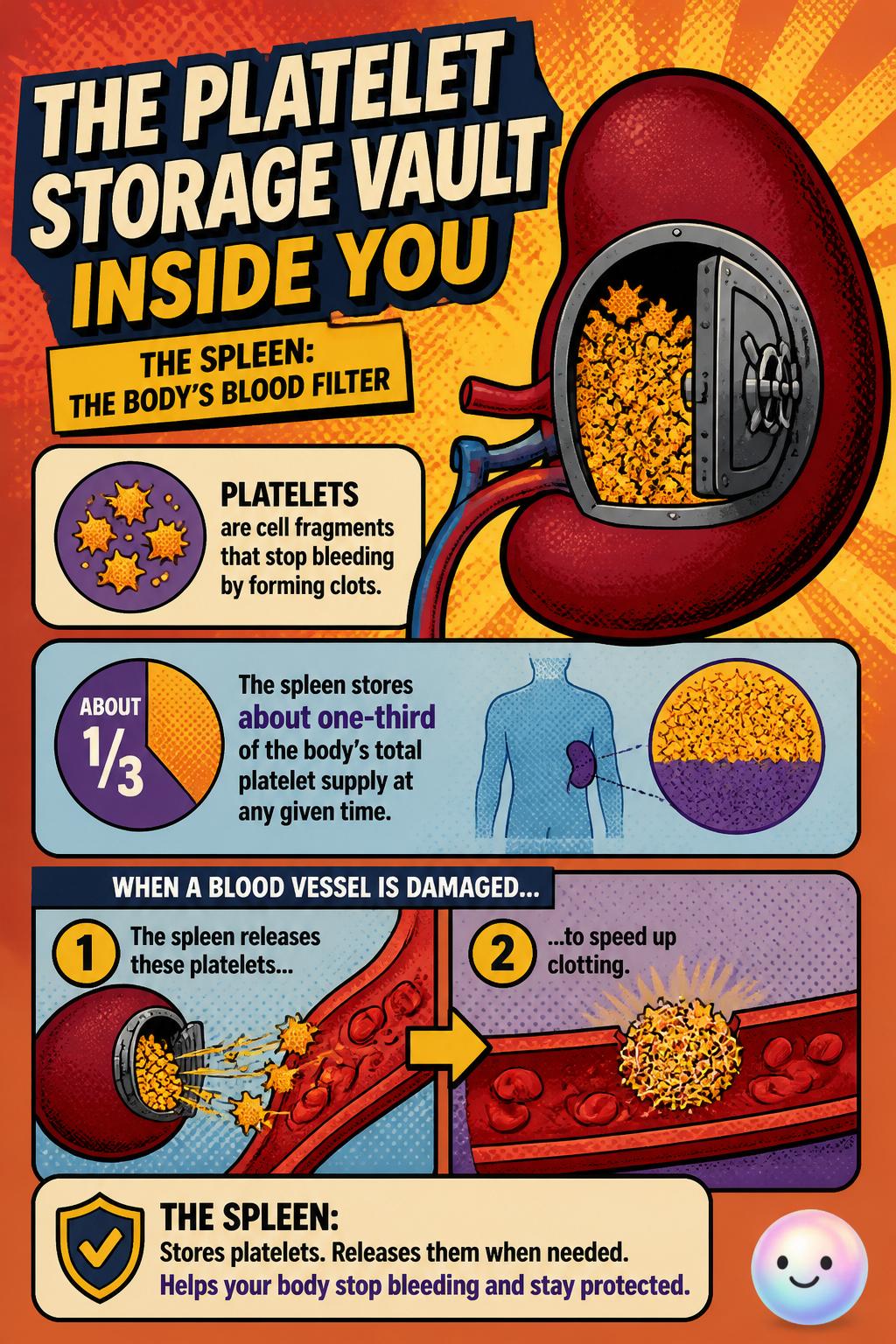
artiteacher The spleen stores a massive reserve of platelets, which are essential for blood clotting and healing wounds.
Platelet storage: The spleen stores one-third of your body's platelets, releasing them instantly to help clot wounds.
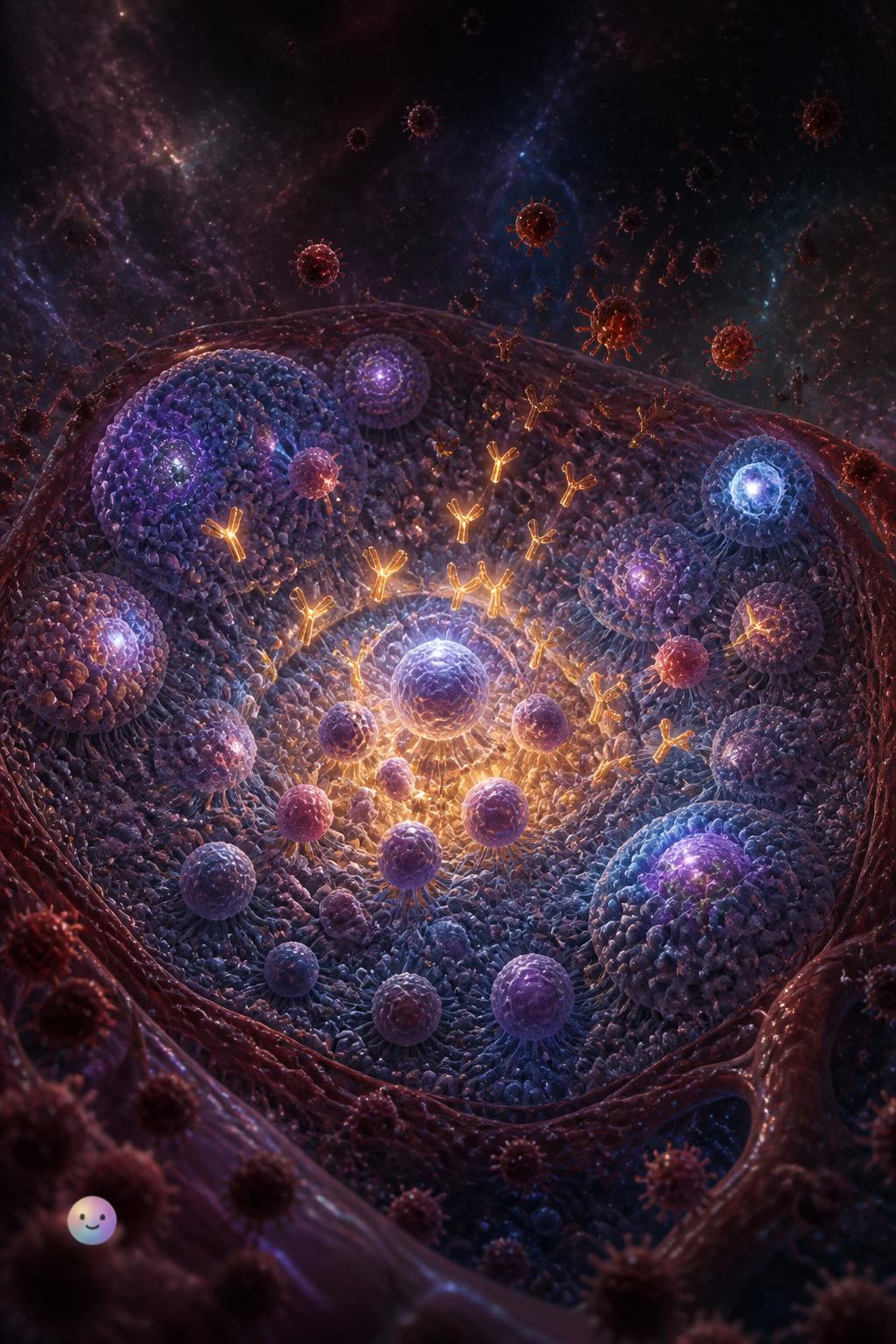
artiteacher The spleen's white pulp is a major production site for antibodies that target specific foreign invaders.
The lymphoid tissue of the spleen that houses lymphocytes and initiates immune responses against blood-borne pathogens. This splenic tissue makes up approximately twenty percent of the organ's total weight in a healthy adult.
What is the name of the area in the white pulp where B-cells actively multiply?
What happens to B-cells in the white pulp after they recognize a foreign invader?
What are the cell fragments stored in the spleen that stop bleeding by forming clots?