
How Kingfishers Inspired Quieter Bullet Trains
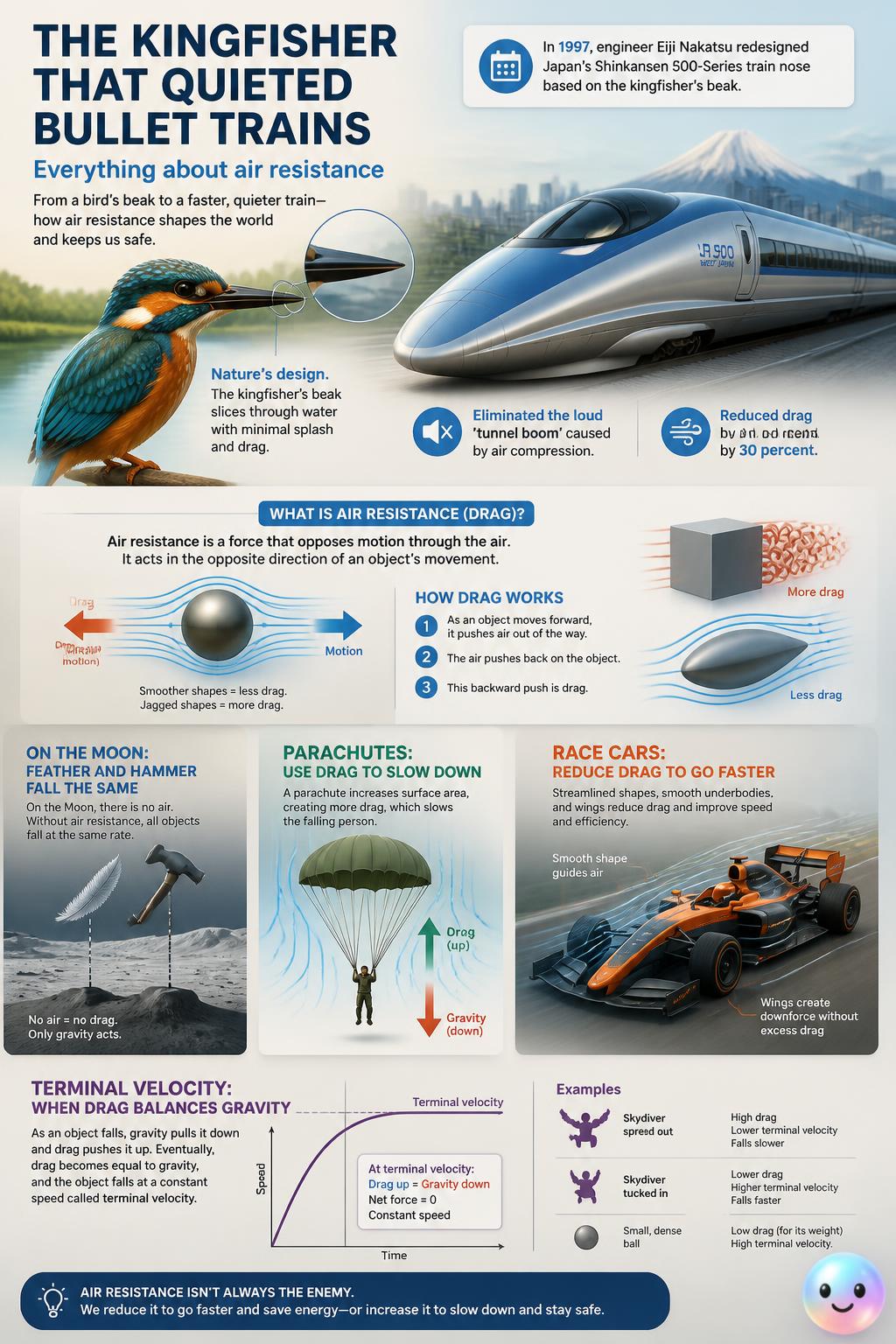
In 1997, engineer Eiji Nakatsu redesigned Japan's Shinkansen 500-Series train nose based on the kingfisher's beak. This aerodynamic shape eliminated the loud 'tunnel boom' caused by air compression, while reducing drag by 30 percent.
Chapter 1
The great fall: gravity versus air
Chapter 2
Terminal velocity: the speed limit of falling
Chapter 3
Catching the wind: the art of the parachute
Chapter 4
Slicing the sky: cheating drag on the ground
Ch 4 · Slicing the sky: cheating drag on the ground


BETA
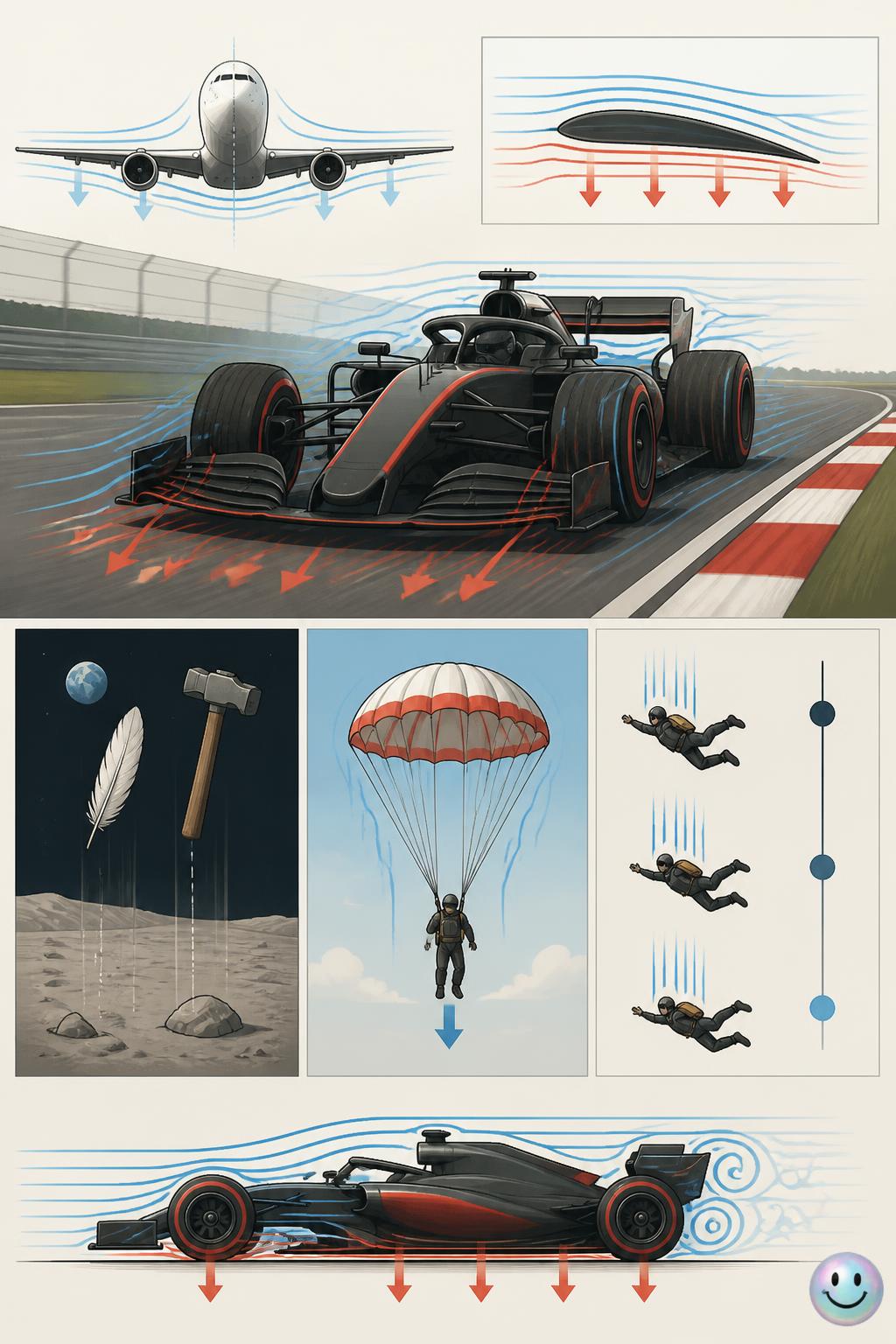
artiteacher Deploy parachutes and tilt wings to discover how air resistance controls terminal velocity.
Fun Fact
Kingfisher train: The nose of Japan's Shinkansen bullet train was modeled after a kingfisher's beak to stop loud sonic booms when entering tunnels.
Glossary
streamlining (noun)
The shaping of an object to reduce aerodynamic drag as it moves through a fluid. In 1997, the streamlined ThrustSSC became the first land vehicle to break the sound barrier.
The shaping of an object to reduce aerodynamic drag as it moves through a fluid. In 1997, the streamlined ThrustSSC became the first land vehicle to break the sound barrier.
Quiz
Which bird's beak inspired the aerodynamic redesign of Japan's Shinkansen bullet train?
Quiz
What is the name of the system in Formula 1 that flattens the rear wing to reduce drag?
Quiz
Which natural shape is considered the most aerodynamic, with a drag coefficient of 0.04?