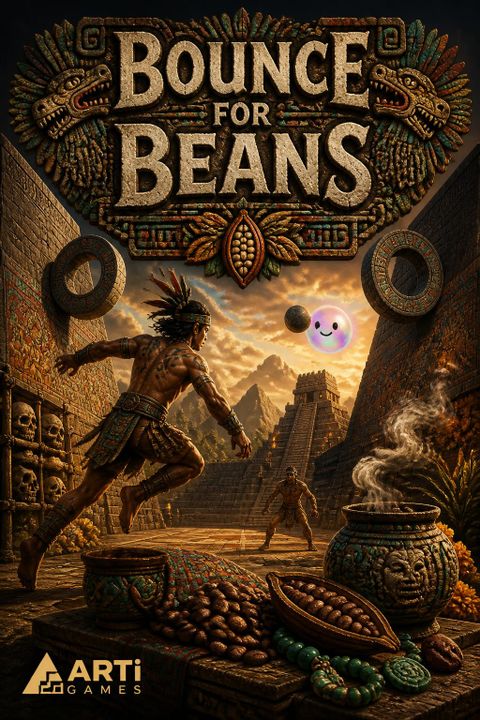
Bounce for Beans
Bounce the rubber ball off your hips to discover how cacao beans served as money.
The currency of cacao
The high stakes of the ballgame
Mesoamerican science and engineering
Gods, myths, and the underworld
misslily Maya and Aztec ballgames maintained cosmic balance, using courts symbolizing the underworld and balls representing the sun.
misslily Wearing heavy padding, players could only use their hips, elbows, and knees to strike the ball.

misslily Bounce the rubber ball off your hips to discover how cacao beans served as money.
misslily The Olmecs mixed latex and morning glory juice to make bouncy, dangerous rubber balls.
misslily Chichen Itza carvings show decapitated ballplayers whose blood turned into snakes, symbolizing fertility and ultimate sacrifice.
misslily Mesoamerican Ballgame
Betting chocolate money on the game today (Oh, bet it all!) / Hit the rubber ball or throw your life away (Yeah, we're risking it all!)

misslily The Mesoamerican ballgame was a cosmic ritual representing the movement of the sun, moon, and stars.
Heavy rubber balls: The solid rubber balls used in Mesoamerican ballgames weighed up to 9 pounds, causing severe internal injuries or death on impact.

misslily The ballgame, known as pok-a-tok or ullamaliztli, required players to keep a heavy ball in motion without using hands or feet.
The act of offering something precious to a deity, especially through the ritual killing of a victim. At Chichen Itza, defeated athletes of the Mesoamerican sport were ritually decapitated to ensure agricultural fertility.
What protective gear did Mesoamerican ballplayers wear to survive the impact of the heavy ball?
What parts of the body were players allowed to use to strike the ball in the classic Mesoamerican ballgame?
What happened if a player managed to hit the ball through one of the stone rings on the court wall?
What modern sport still played in Mexico is a direct descendant of the ancient Mesoamerican ballgame?