Chapter 1
The brain's autopilot and why years vanish
Chapter 2
The oddball effect and the science of surprise
Chapter 3
The holiday paradox and the two minds of time
Chapter 4
Free falls and fear: can we see in slow motion?
Chapter 5
Stealing time back: how to live a longer life today
YOUR GOAL
Master of The mind's time machine
Ch 2 · The oddball effect and the science of surprise

artiteacher The Oddball Effect
When a brand-new wonder hits your brain— (Time slows down again!) Yeah, the oddball stretches the view— (Making a second feel like two!)
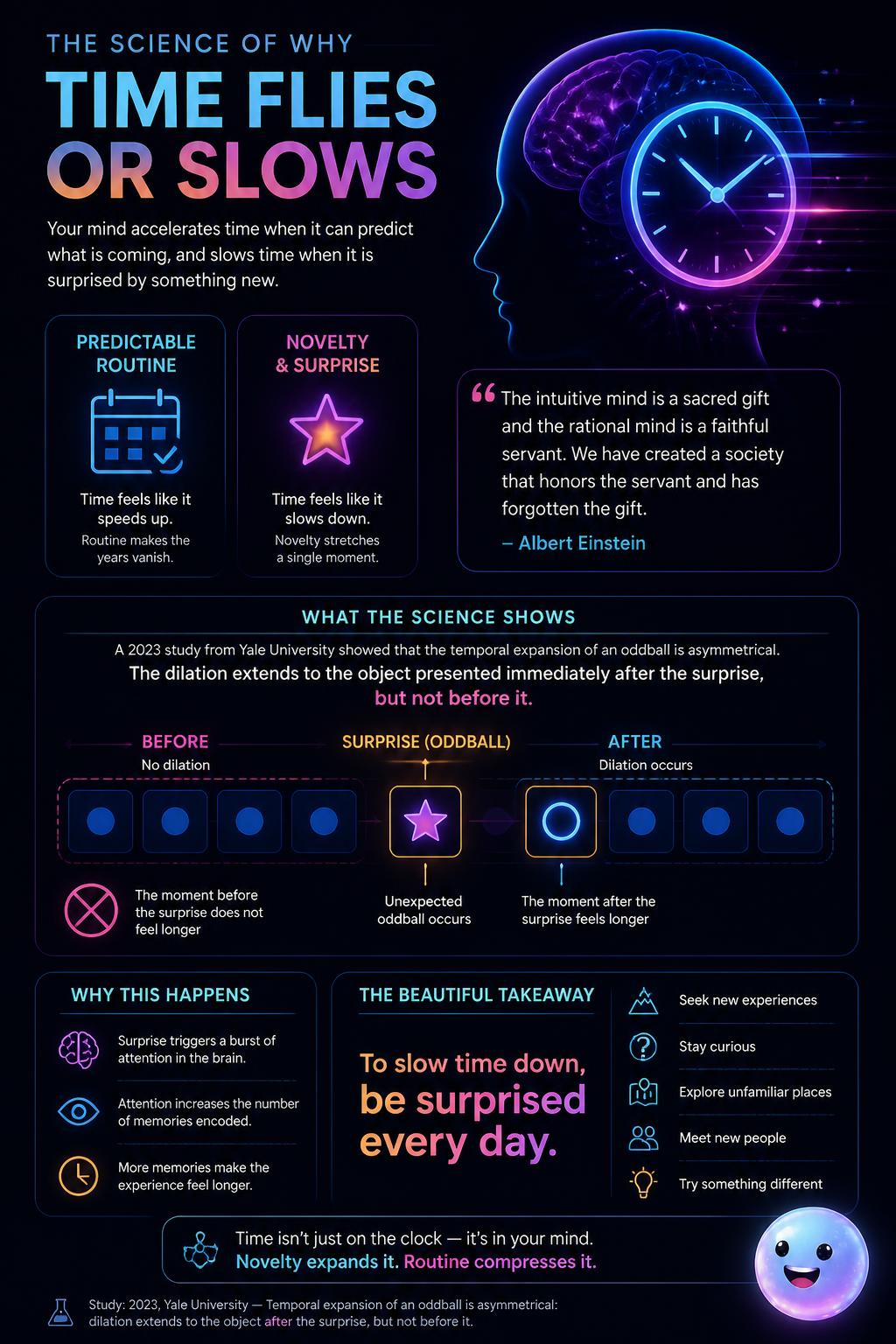
artiteacher In Yale's 2023 study, the asymmetrical post-oddball lingering effect dilates time for objects immediately after a surprise, but
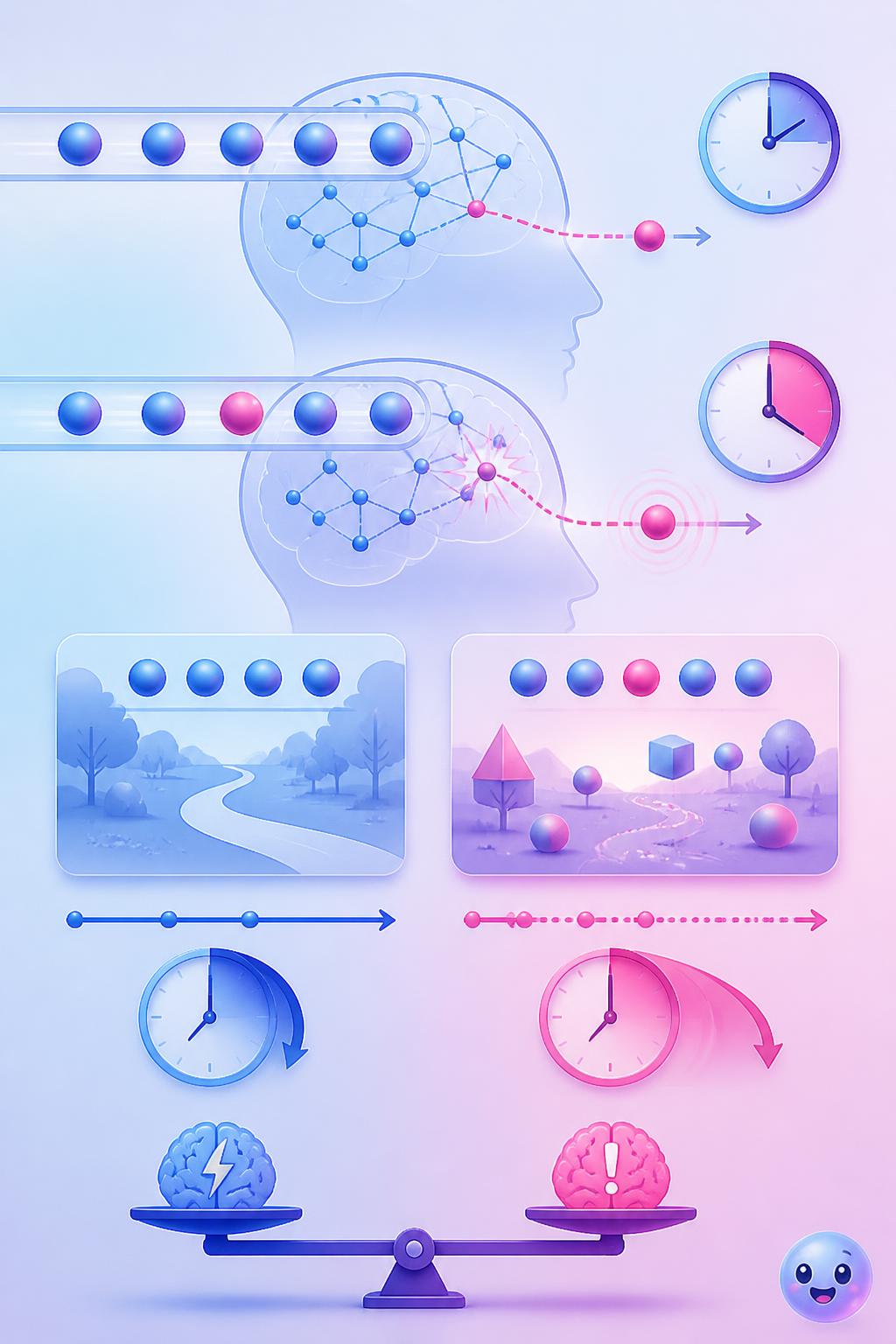
artiteacher A diagram shows how a surprise oddball stretches a timeline compared to routine events.
Fun Fact
Pupil time dilation: When you spot a surprising object, your brain triggers pupil dilation to gather more visual information, which directly correlates with stretched time perception.
Glossary
oddball effect (noun)
A psychological phenomenon where an unexpected stimulus in a repetitive sequence is perceived as lasting longer. In 2004, scientist Peter Tse demonstrated this using repeated shoe images followed by a single flower.
A psychological phenomenon where an unexpected stimulus in a repetitive sequence is perceived as lasting longer. In 2004, scientist Peter Tse demonstrated this using repeated shoe images followed by a single flower.
Quiz
According to a 2023 Yale study, how does the oddball effect affect adjacent stimuli?
Quiz
What happens to our pupils when we encounter a highly salient or surprising 'oddball' stimulus?
Quiz
By what approximate percentage did early studies report that oddball stimuli dilated perceived time?
Quiz
What is the term for the brain's calculation of the difference between expected and actual sensory inputs?
Quiz
Which deep brain structure releases norepinephrine and triggers pupil dilation during a surprise?
Quiz
Why does the first presentation of an image in a sequence often feel longer than the subsequent ones?
Quiz
Which cognitive theory suggests the brain actively minimizes energy use by anticipating repetitive sensory inputs?