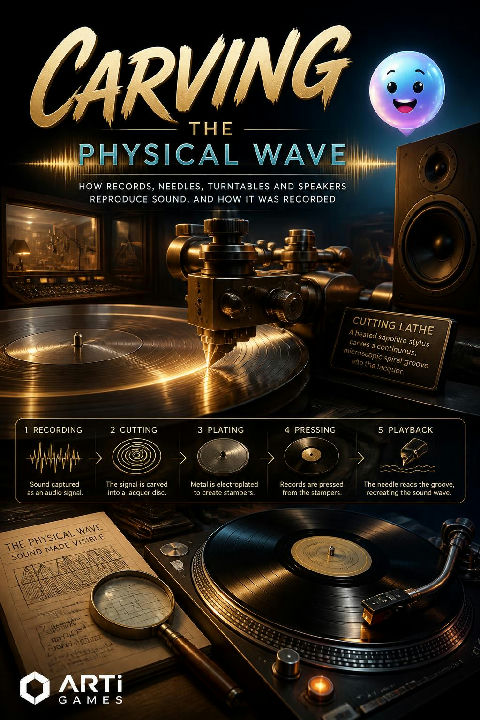
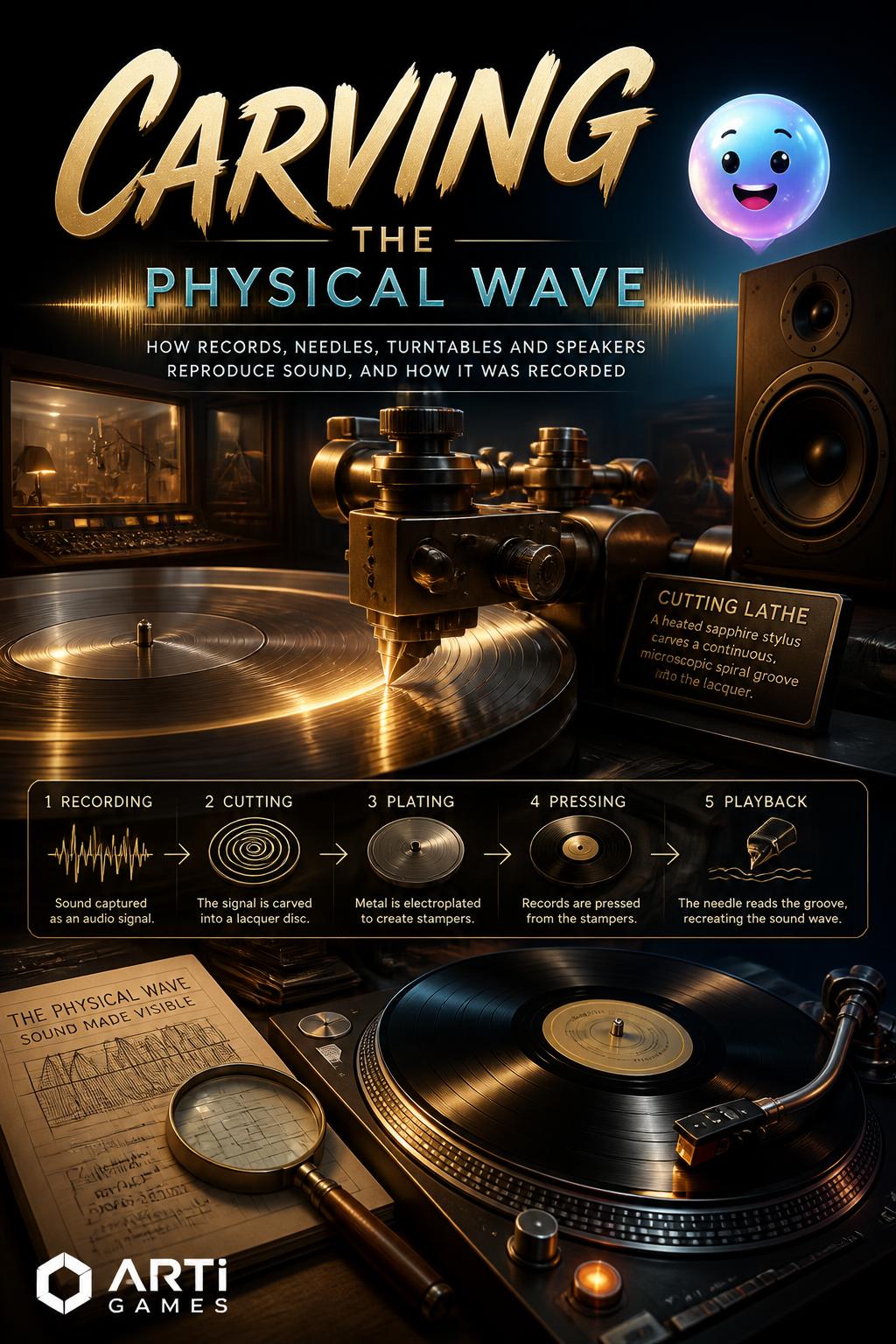
The groove's secret code
The microscopic explorer
The great frequency trick
Making the air dance

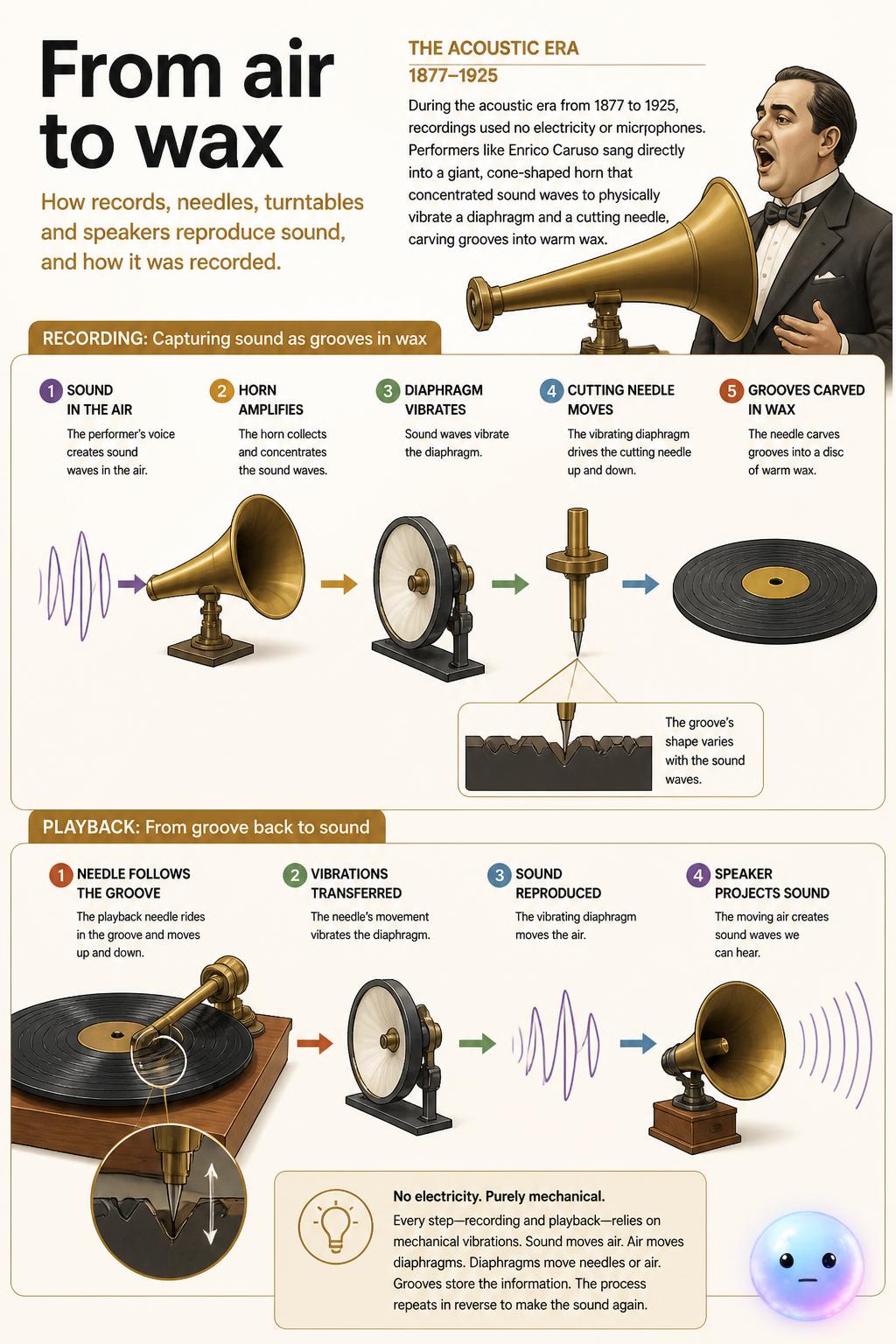
gus From 1877 to 1925, acoustic recordings used giant cone-shaped horns, vibrating diaphragms, and needles to capture music without electricity or microphones.
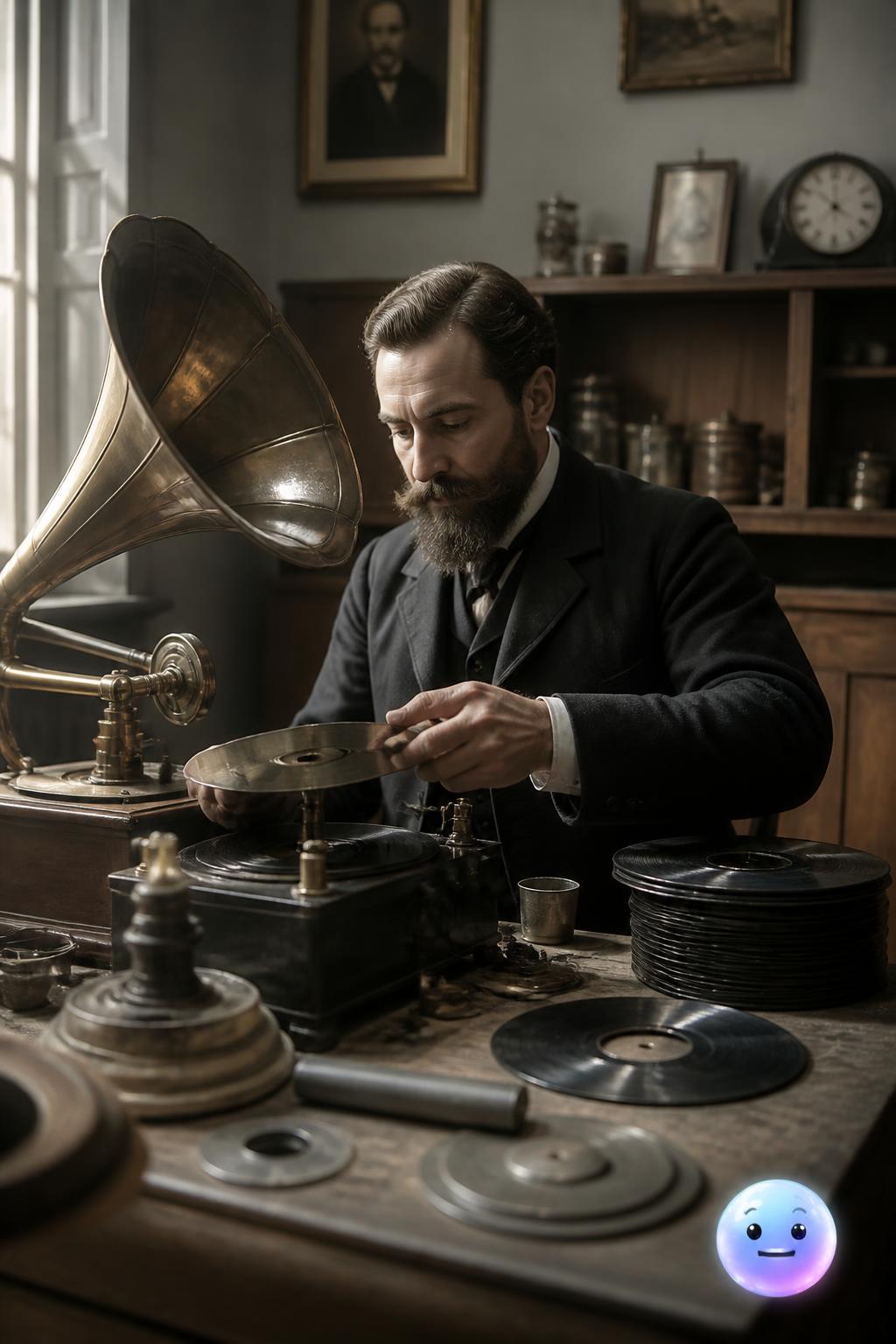
Oldest recorded voice: In 1860, Édouard-Léon Scott de Martinville recorded a human voice singing 'Au clair de la lune' on soot-covered paper, 17 years before Edison's phonograph.
A needlelike device used to play back sound from the grooves of a phonograph record. The stylus vibrates within microscopic vinyl channels to translate physical bumps back into acoustic waves.
In what year did Thomas Edison invent the phonograph, the first device capable of both recording and playing back sound?
During the acoustic recording era, which physical object was used to gather and concentrate sound waves before they reached the recording needle?
Who patented the gramophone in 1887, introducing the flat disc record format to the world?
Before vinyl was introduced in 1948, what brittle material made from beetle resin and slate dust was used to make flat records?
What is the primary purpose of heating the cutting stylus during the process of mastering a record?
What material is typically used for the cutting stylus on a modern record-cutting lathe due to its extreme hardness and ability to be heated?
How do modern stereo vinyl records manage to play two separate channels of audio (left and right) from a single groove?