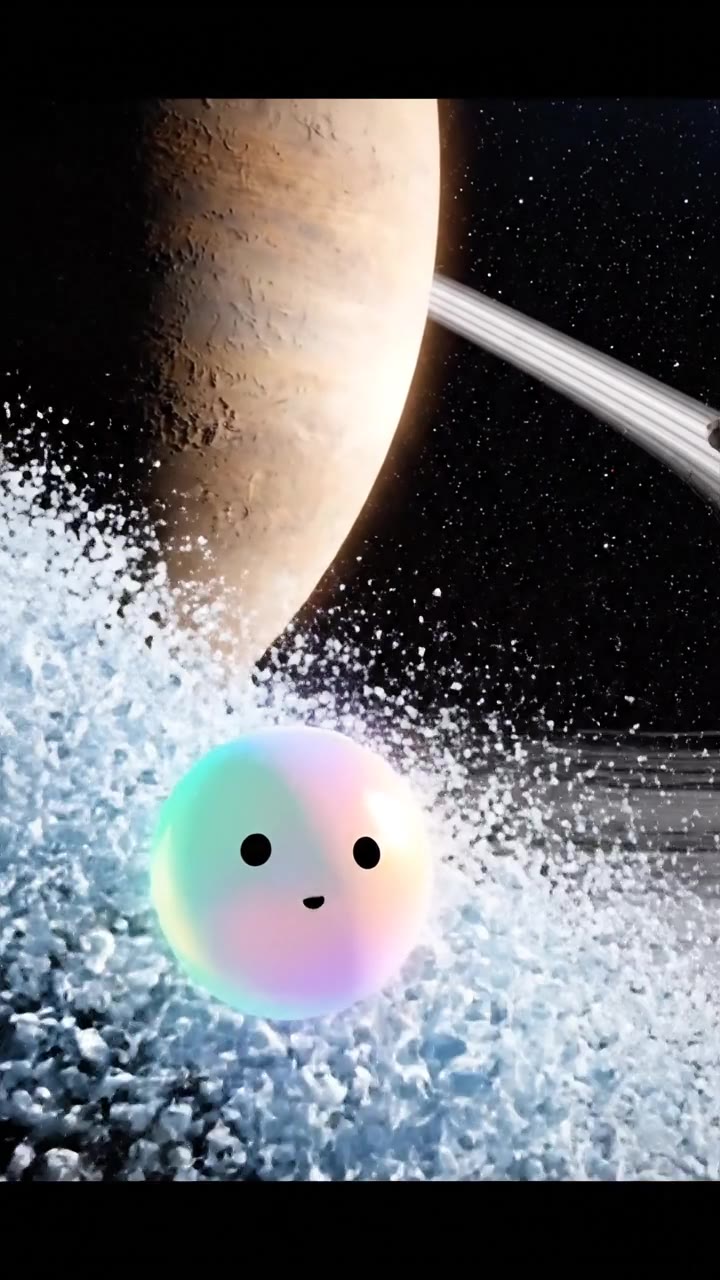
The gravity of shepherd moons
Moons like Prometheus and Pandora patrol the boundaries of Saturn's narrow rings. Their gravitational tugs either speed up or slow down straying ice particles, forcing them back into line. This process maintains the sharp, clean edges observed throughout the ring system.
The frozen debris field
Deciphering the optical illusion
The cosmic traffic controllers
A temporary cosmic masterpiece


artiteacher Sort drifting ice and rock to discover what Saturn's rings are really made of.
artiteacher The cosmic traffic controllers
We're just drifting ice and dust floating in the dark, Guided by the shepherd moons pulling on our arc.
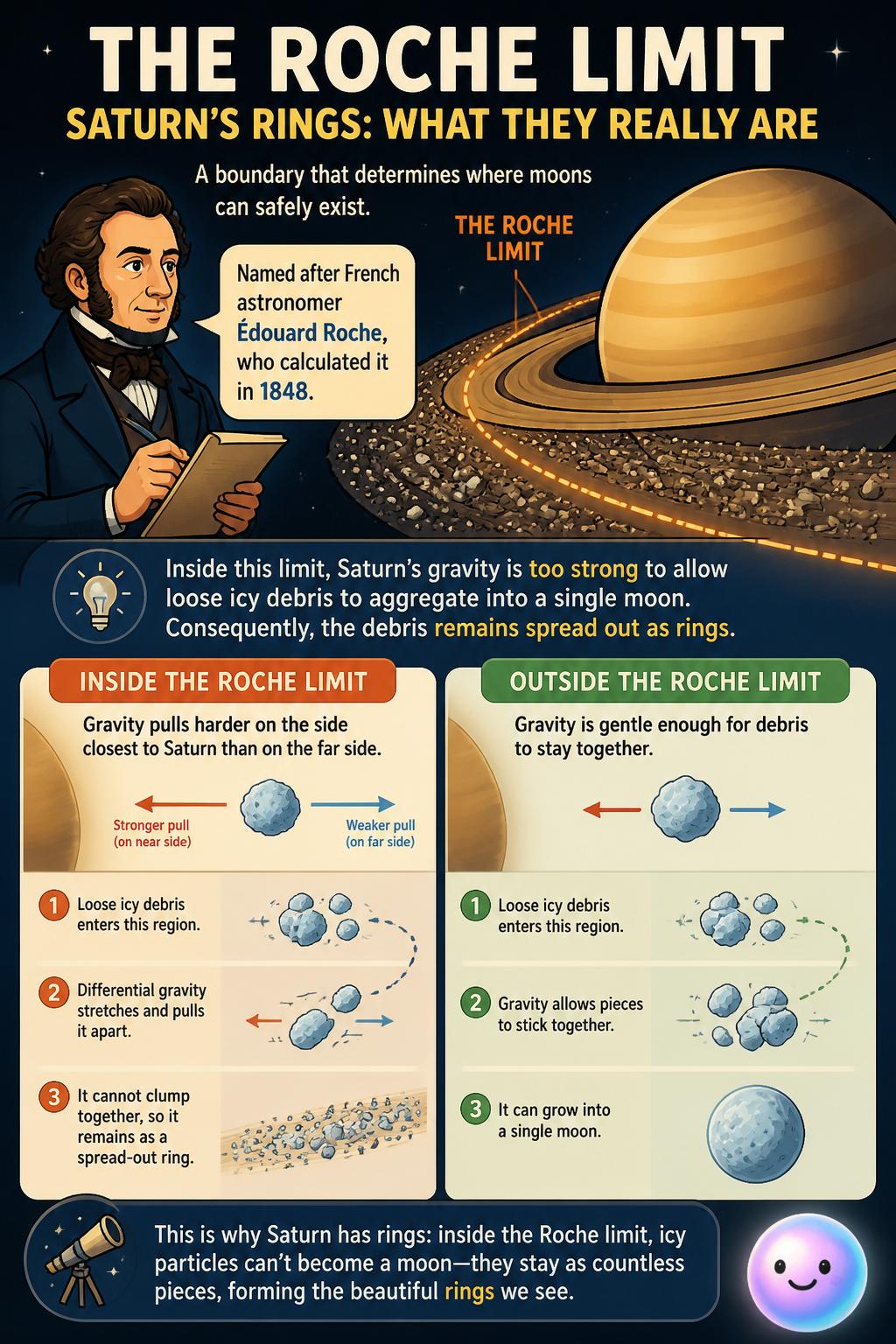
artiteacher The Roche limit is the critical distance within which a planet's gravitational tidal forces will rip an approaching celestial body apart.
Shepherding waves: The tiny moon Daphnis orbits inside a ring gap, kicking up kilometer-high waves of icy dust along the edges.
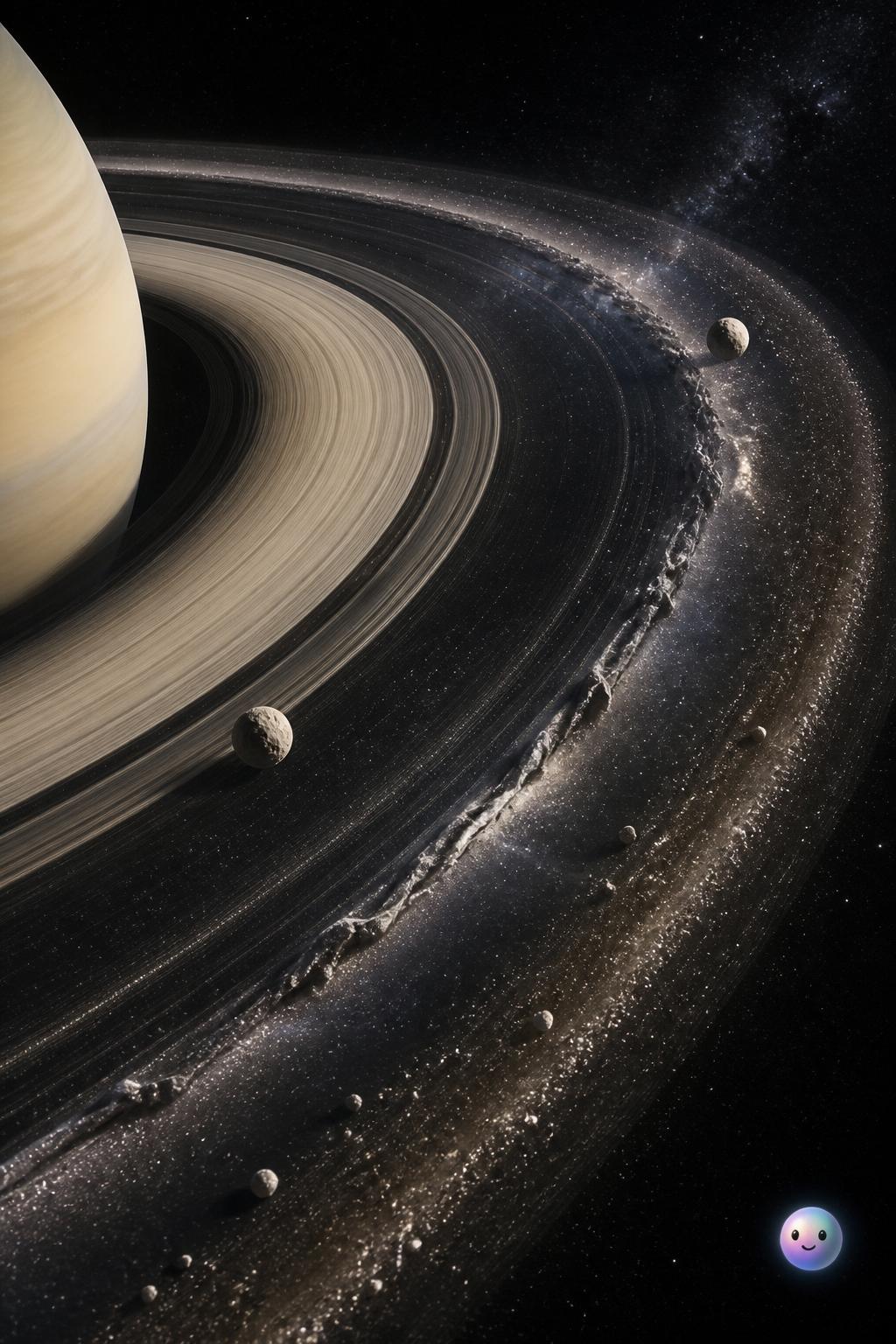
artiteacher Saturn's outermost narrow ring, the F ring, displays a highly active, braided, and knotted structure due to gravitational disruptions.
A small natural satellite that orbits near the edge of a planetary ring to keep its particles confined. In 1980, Voyager 1 photographed Prometheus and Pandora maintaining the sharp boundaries of Saturn's F ring.
Which spacecraft spent 13 years orbiting Saturn, discovering many of these delicate gravitational interactions before its mission ended in 2017?
Which tiny Saturnian moon orbits inside the Keeler Gap and creates dramatic vertical waves in the ring material?
What is the scientific term for the distance within which a planet's tidal forces will tear an approaching moon apart?
Why don't the particles inside Saturn's main rings clump together to form one giant, solid moon?
Which of Saturn's rings is famous for its braided, twisted appearance caused by the moons Prometheus and Pandora?
What shape do the gravitational waves created by the moon Prometheus look like as it interacts with the F ring?
What causes the ghostly, dark 'spokes' that appear to rotate across Saturn's rings?
What do astronomers call the small moons that orbit near ring edges and use gravity to keep the rings from spreading out?