Do you trust eco-friendly gear over chemicals?
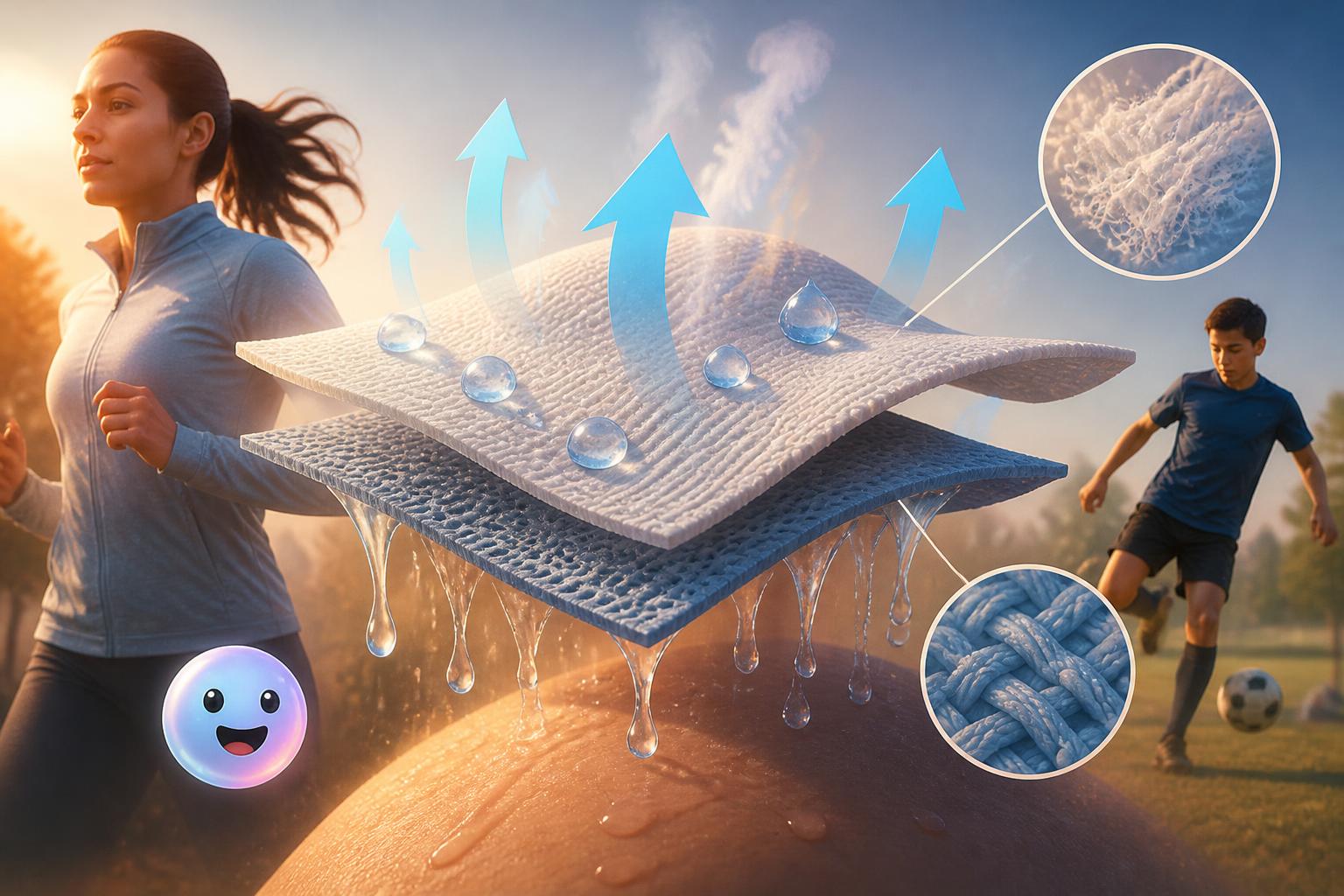
The battle against sweat and moisture
Staying dry in the heaviest storms
Keeping cool with space-age science
Borrowing high-tech secrets from nature
Squeezing out speed and aerodynamics

adidas A DWR chemical treatment creates microscopic needles on the fabric surface. These structures increase surface tension, forcing water droplets to bead up and slide off.
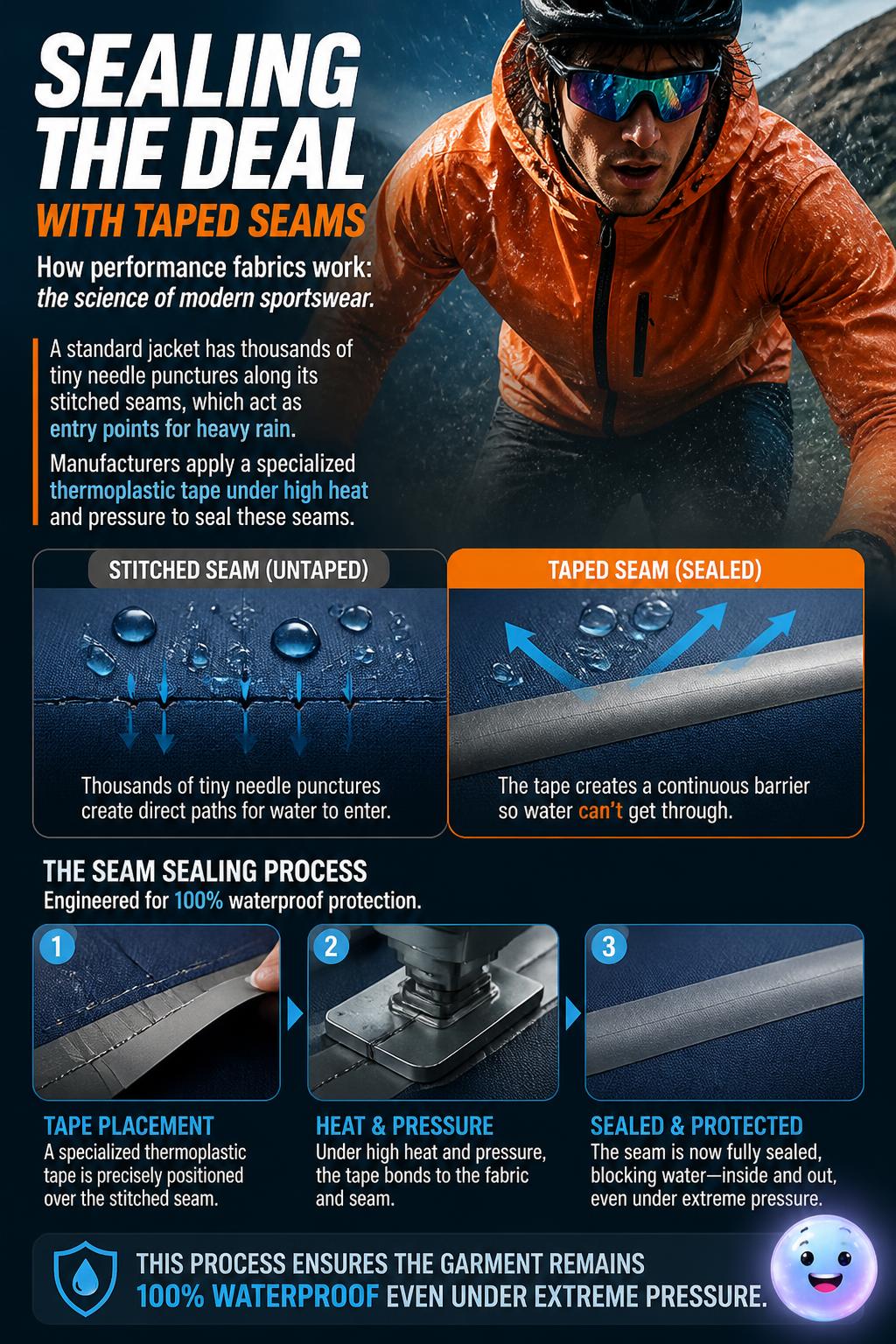
adidas Sewing needles leave thousands of tiny holes that let rainwater leak inside. Factory machines apply thermoplastic tape under high heat and pressure to block every drop.
adidas Invented in 1969, Gore-Tex contains nine billion pores per square inch. These microscopic holes block large rain droplets while letting tiny sweat vapor molecules escape.

adidas Blast sportswear with wind and rain to discover how stormproof fabrics keep athletes dry.
adidas Stormproof Performance Fabrics
Billions of microscopic pores block the heavy rain but let your steam escape
Tiny pores: A Gore-Tex membrane has over nine billion pores per square inch, each far too small for liquid water but huge for vapor.
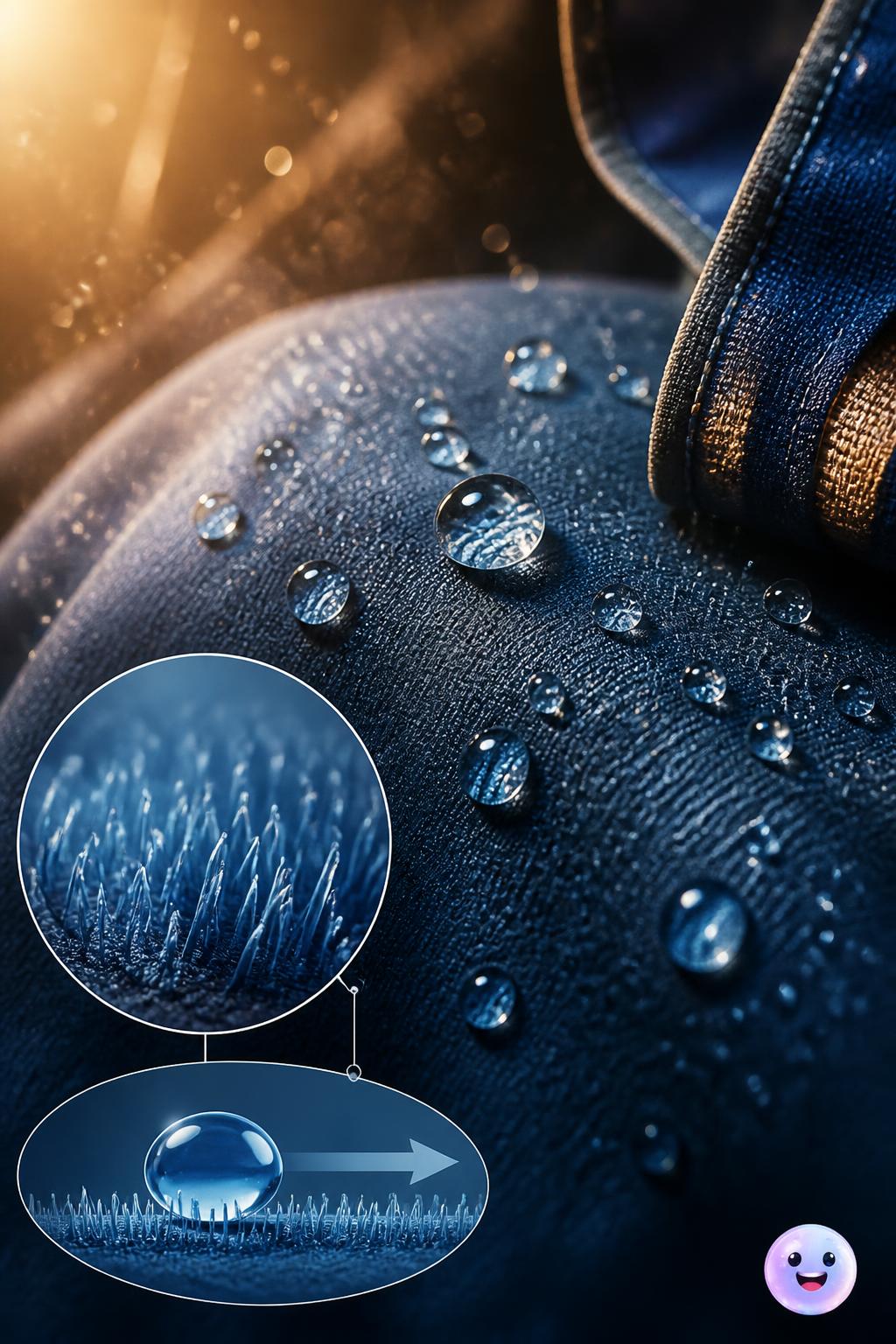
adidas Spherical water droplets slide off the glowing surface of a treated outdoor jacket
A thin, pliable sheet or layer of material that acts as a barrier or boundary. In 1969, Bob Gore invented a microporous ePTFE membrane, revolutionizing outerwear engineered to repel torrential downpours.
What alternative material is increasingly used in modern eco-friendly waterproof coatings?
How many microscopic pores are found in a single square inch of a Gore-Tex membrane?
A single pore in a waterproof membrane is how many times smaller than a water droplet?
Why do manufacturers apply thermoplastic tape under high heat to the seams of waterproof jackets?
What physical effect does a DWR coating increase on a jacket's surface to repel water?