Chapter 1
The engine room of the cell
Chapter 2
Finding your cruise control
Chapter 3
The magic of the slow-motion workout
Chapter 4
Upgrading your healthspan
YOUR GOAL
Master of The slow-motion superpower of zone 2 cardio
Ch 1 · The engine room of the cell
coach Mitochondria in Zone 2
Keep a steady pace, build a stronger base, watch cell engines grow.
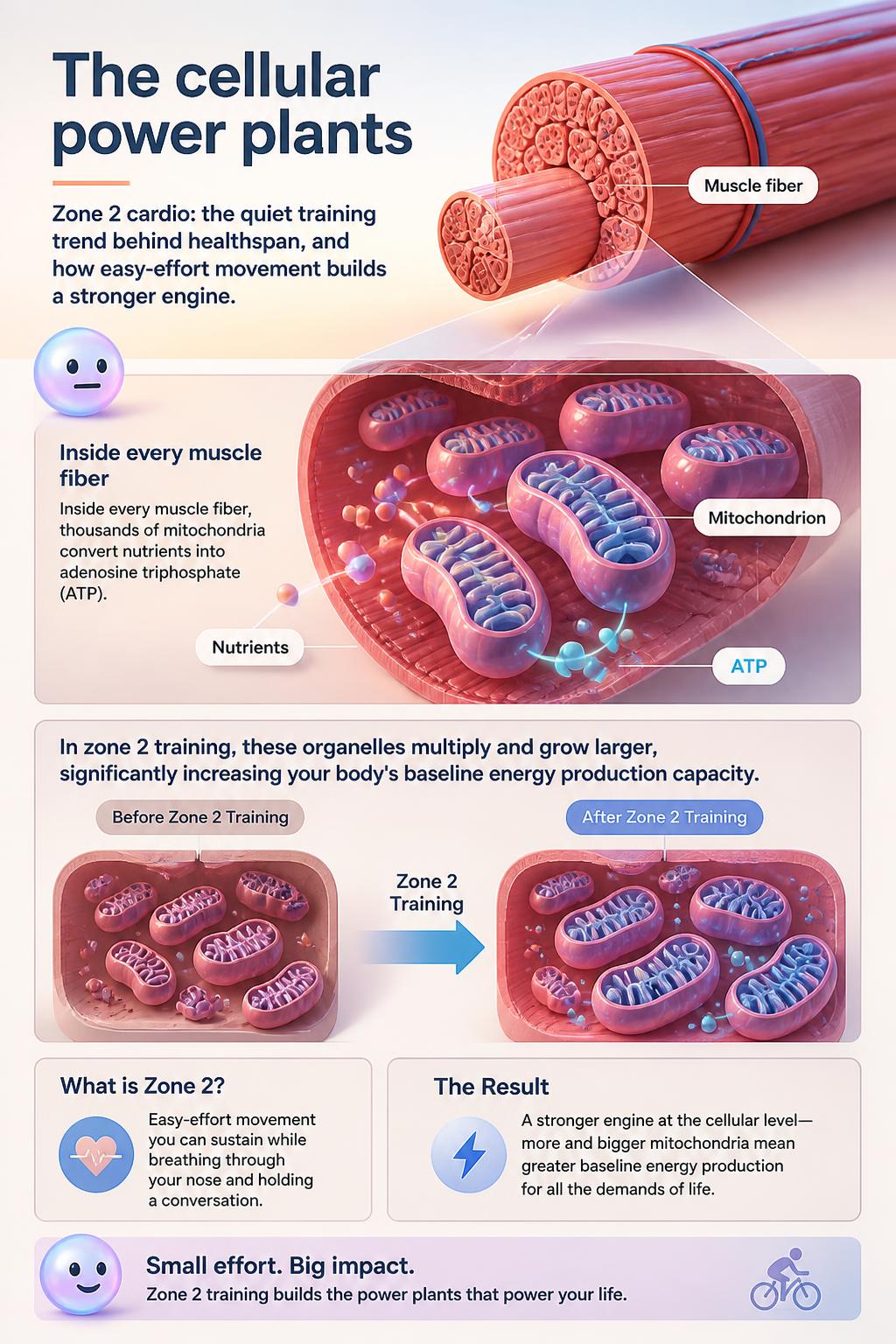
coach Thousands of muscle mitochondria convert nutrients into ATP, growing and multiplying during zone 2 training to expand your baseline energy capacity.
BETA
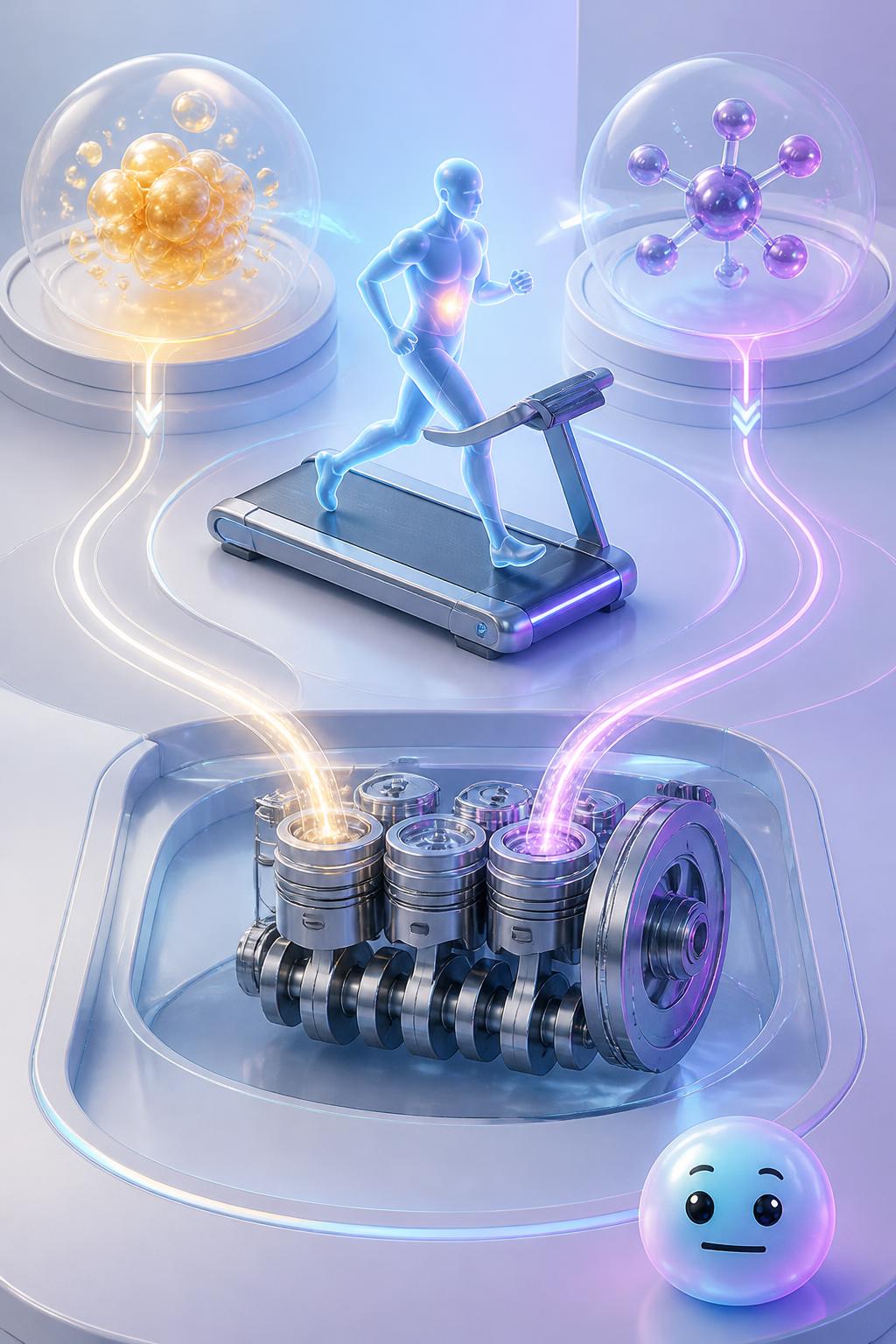
coach Balance your pace in the green zone to discover how easy-effort training boosts healthspan.
Fun Fact
Mitochondrial history: Mitochondria were once free-living bacteria that merged with other cells 1.5 billion years ago.
Glossary
mitochondria (plural noun)
Membrane-bound cell organelles that generate most of the chemical energy needed to power cellular reactions. Physiologist Iñigo San-Millán proved that easy aerobic training optimizes these organelles' capacity to burn fat.
Membrane-bound cell organelles that generate most of the chemical energy needed to power cellular reactions. Physiologist Iñigo San-Millán proved that easy aerobic training optimizes these organelles' capacity to burn fat.
Quiz
Which cellular organelle is responsible for generating aerobic energy and multiplies during zone 2 training?
Quiz
What is the name of the chemical energy currency produced by mitochondria during aerobic exercise?
Quiz
Approximately how many ATP molecules are produced from a single molecule of palmitate fat during aerobic oxidation?
Quiz
Which fuel source does the body prioritize during high-intensity anaerobic exercise as opposed to low-intensity zone 2?
Quiz
Which specific transporters are responsible for moving lactate into slow-twitch muscle fibers to be recycled as energy?
Quiz
In which type of muscle fibers does the recycling of lactate primarily take place during low-intensity exercise?
Quiz
What red, iron-rich protein binds oxygen in slow-twitch muscle fibers to keep them working continuously?