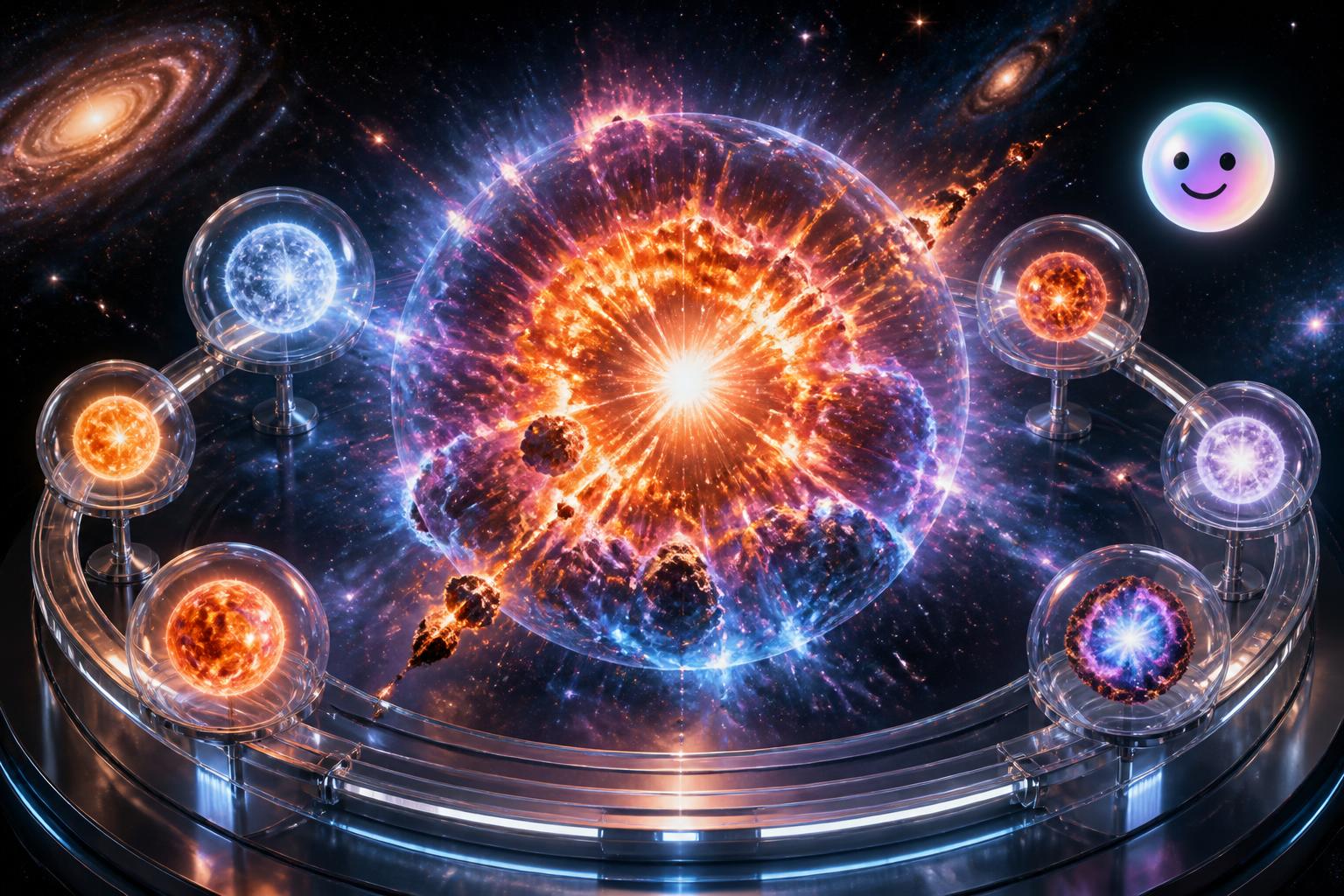
How stars end their lives
History written in the night sky
The cosmic recycling centers
The bizarre remnants left behind
YOUR GOAL
Master of The violent deaths of stars

artiteacher Supernova of 1054
In ten-fifty-four, a star exploded so bright it ruled the day!
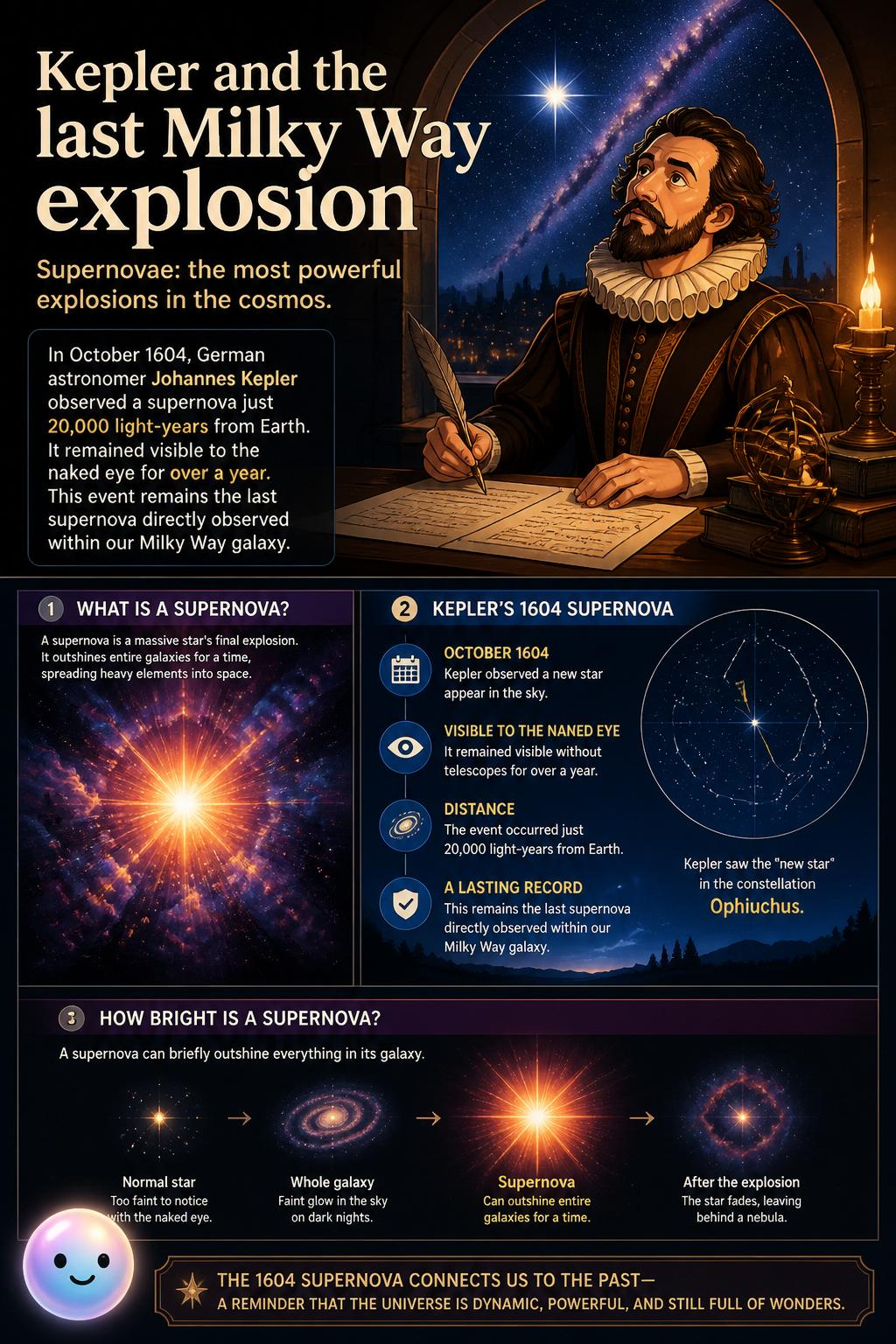
artiteacher Johannes Kepler observed the last supernova directly seen in our home galaxy in 1604.
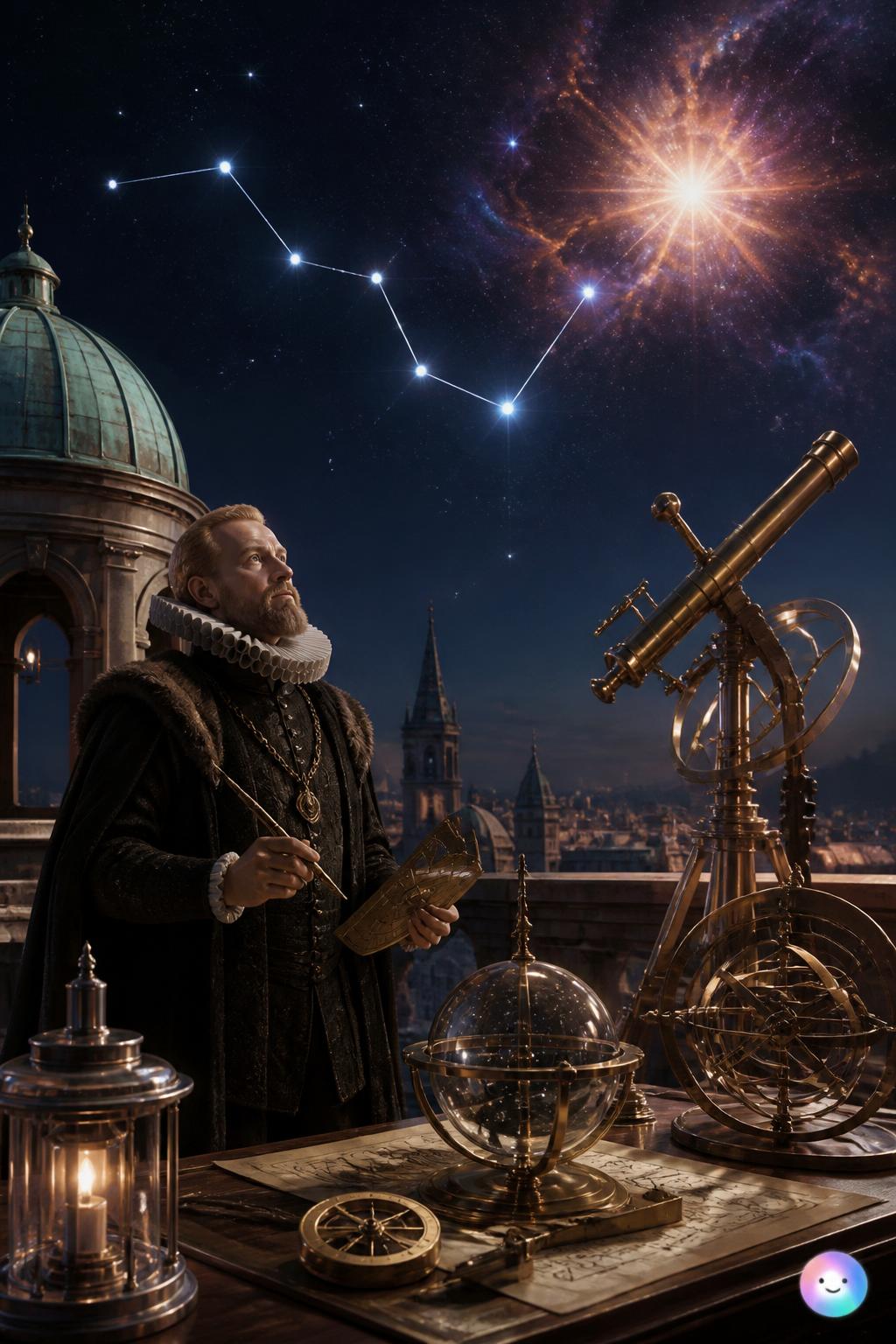
artiteacher In 1572, Danish astronomer Tycho Brahe observed a new star that challenged the ancient belief in an unchanging universe.
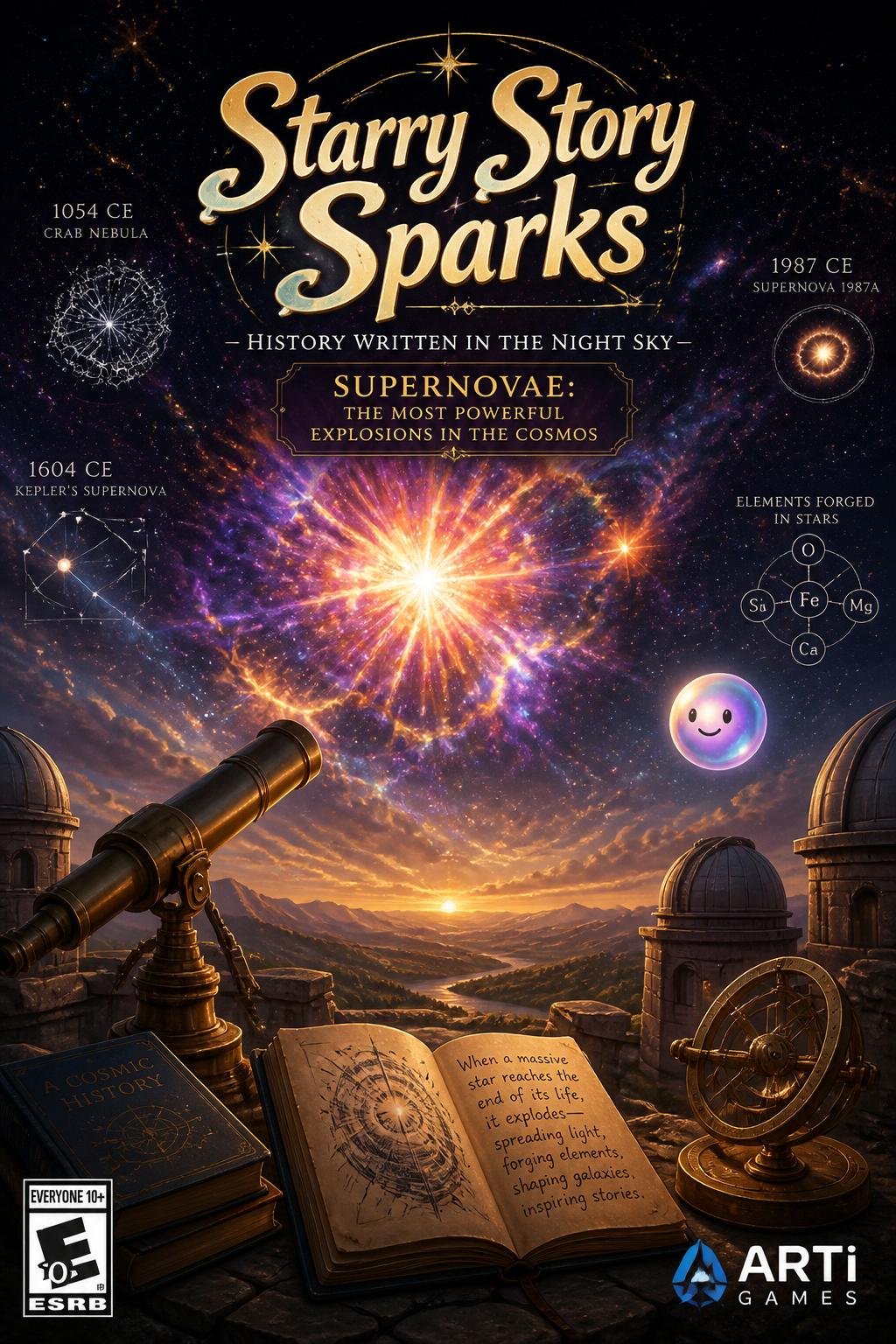
Daytime stars: The supernova of 1006 CE was so bright that people could read books at midnight just by its light.
A star that suddenly increases greatly in brightness because of a catastrophic explosion that ejects most of its mass. In 1054 CE, Chinese astronomers recorded a brilliant stellar explosion that created the Crab Nebula.
How did Tycho Brahe's observation of the 1572 supernova change scientific history?
Who observed the last supernova directly seen with the naked eye in our Milky Way galaxy in 1604?
Which modern astronomical object is the remnant of the famous 1054 CE supernova recorded by Chinese astronomers?
What term did ancient Chinese astronomers use to describe suddenly appearing supernovae?
In what year did astronomers detect neutrinos from a nearby supernova, confirming how stars collapse?
Approximately how many years has it been since a supernova was last observed inside our own Milky Way galaxy?