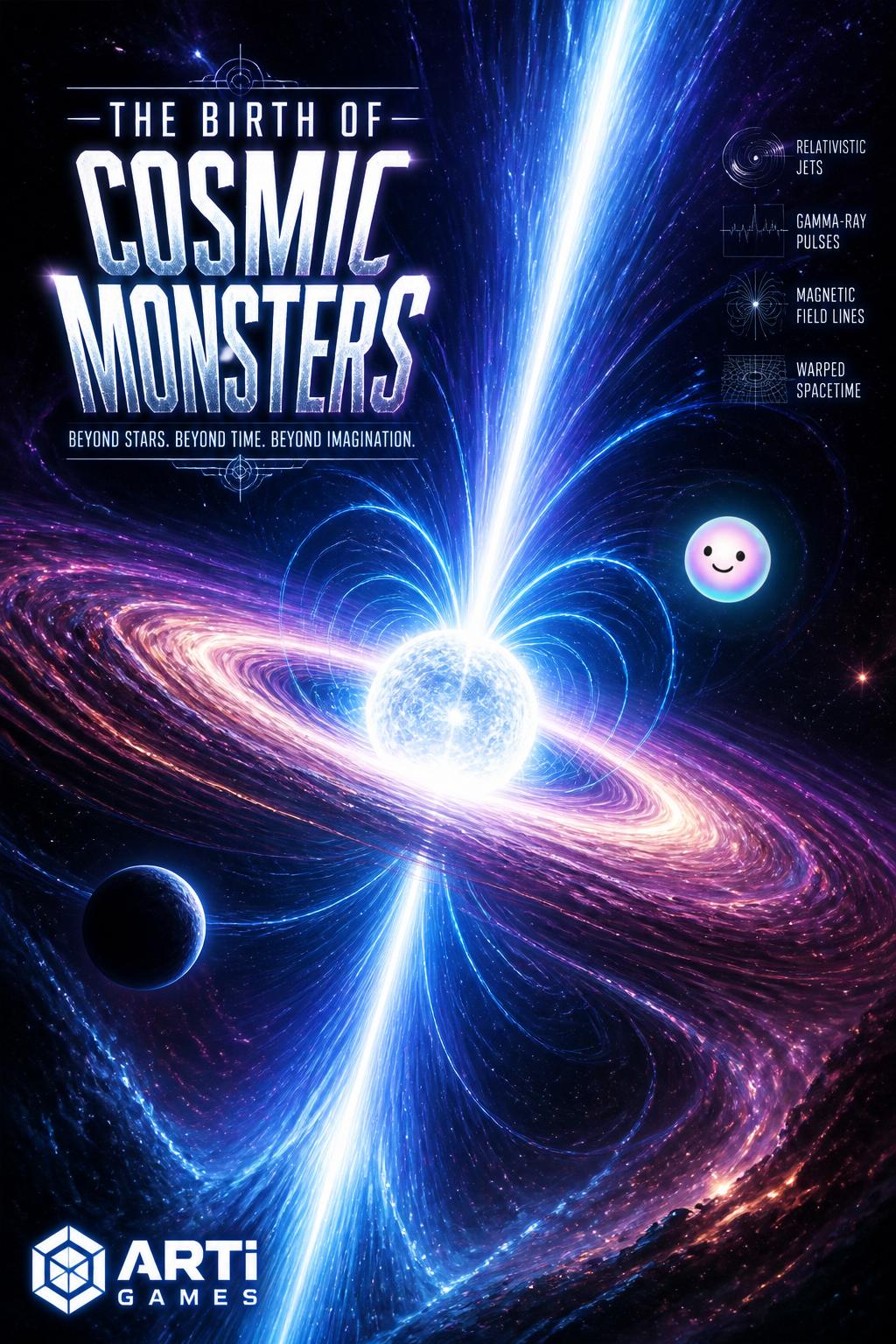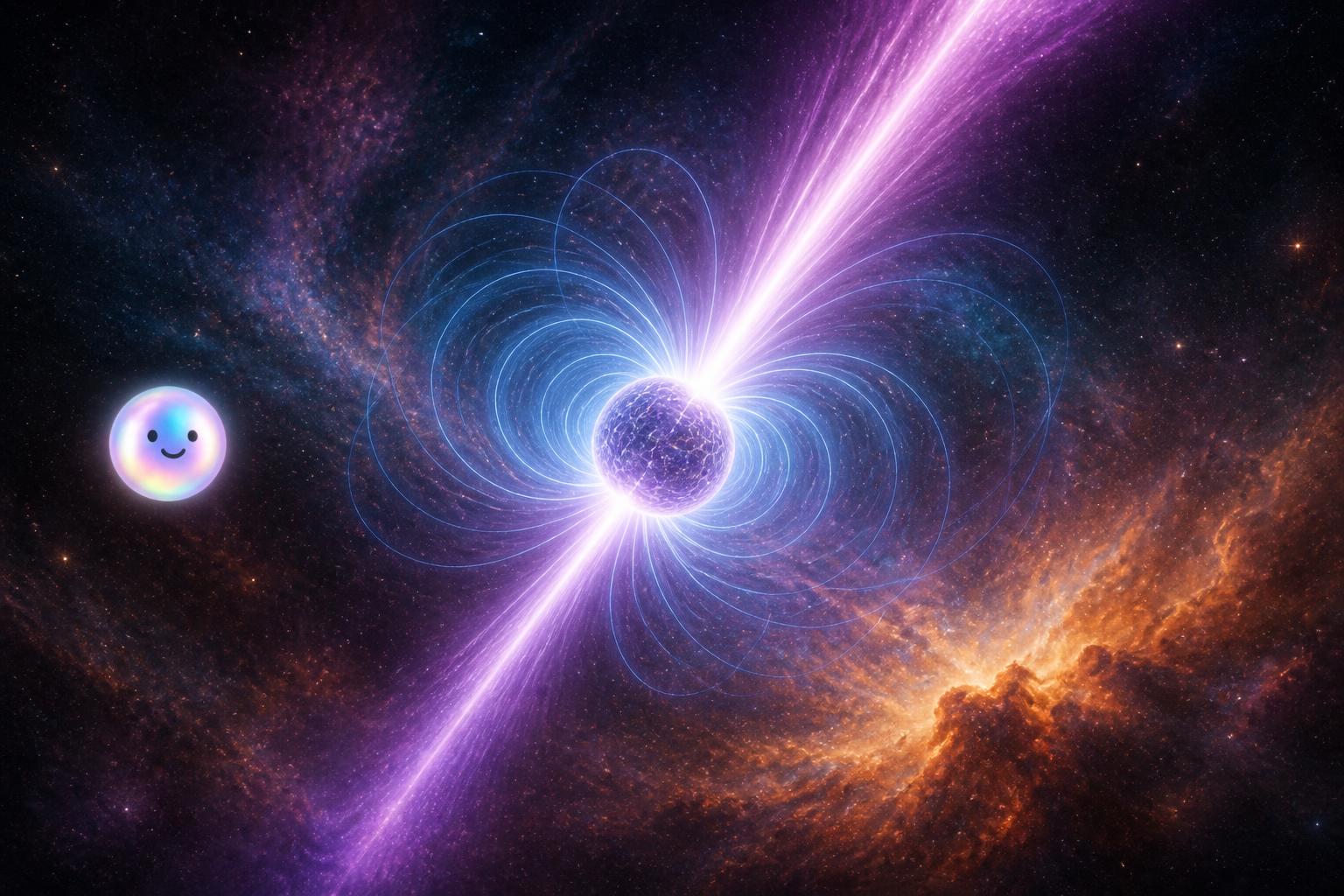
neutron star: (noun) An extremely dense celestial object consisting primarily of closely packed neutrons, formed by the collapse of a massive star. In 1934, Walter Baade and Fritz Zwicky proposed that these objects form during supernova explosions.
The birth of cosmic monsters
Pulsars and the cosmic lighthouse
Magnetars and magnetic monsters
Cosmic collisions and gold mines
Mapping the universe with pulsars

artiteacher A neutron star's gravity bends light, letting astronomers see both its front and parts of its back.
artiteacher One teaspoon of neutron star material would weigh about 6 billion tons on Earth.
artiteacher When a massive star's core collapses, protons and electrons merge into neutrons, blowing outer layers into space.
artiteacher The birth of cosmic monsters
Spinning in the dark—yeah! (Spinning fast!) / Squeezed so tight—oh-oh! (Squeezed so tight!)
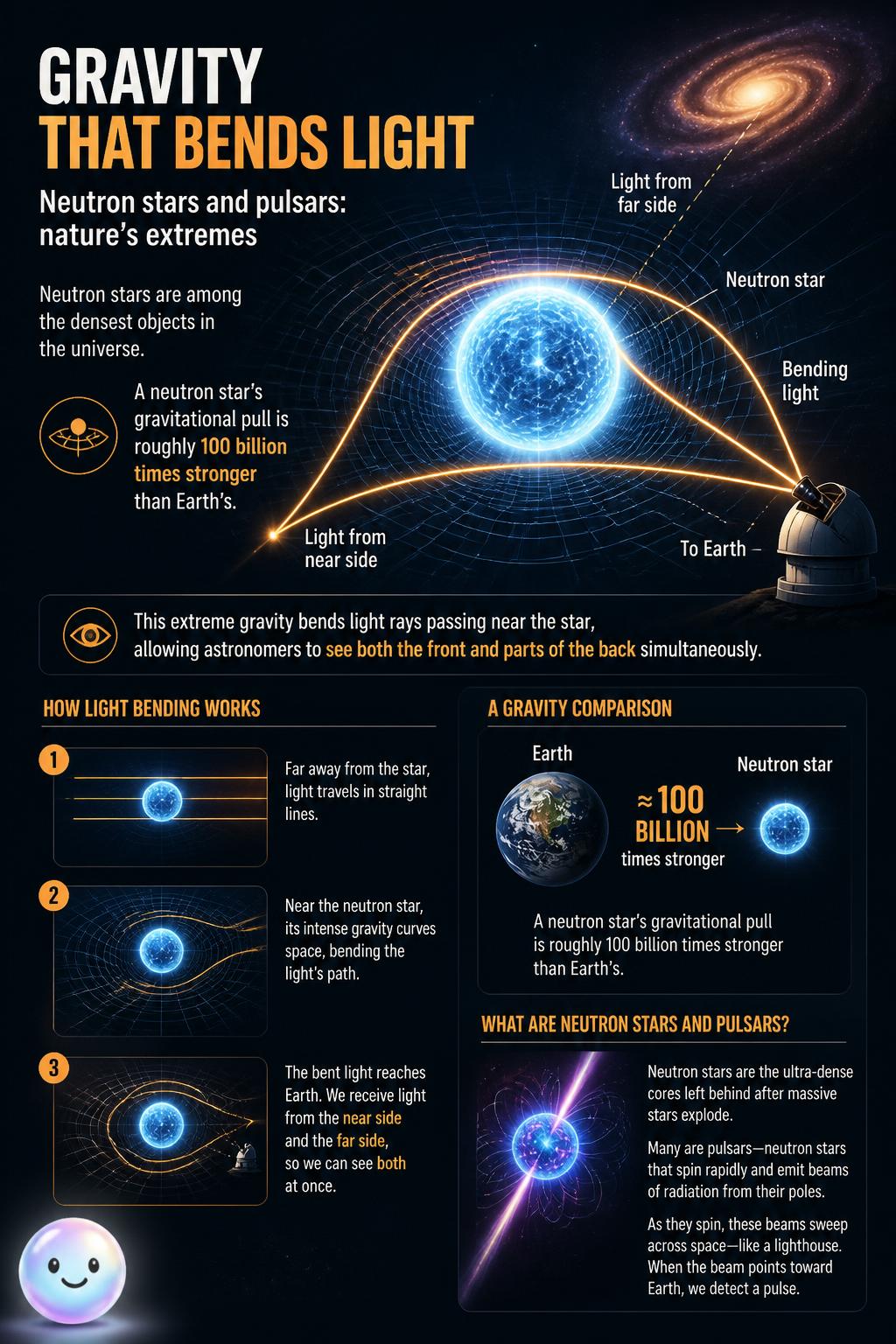
artiteacher The gravity of a neutron star is so intense that it alters the path of light and warps time.
Neutron star density: A single sugar-cube-sized piece of a neutron star weighs about 1 billion tons, equal to the weight of all humanity.
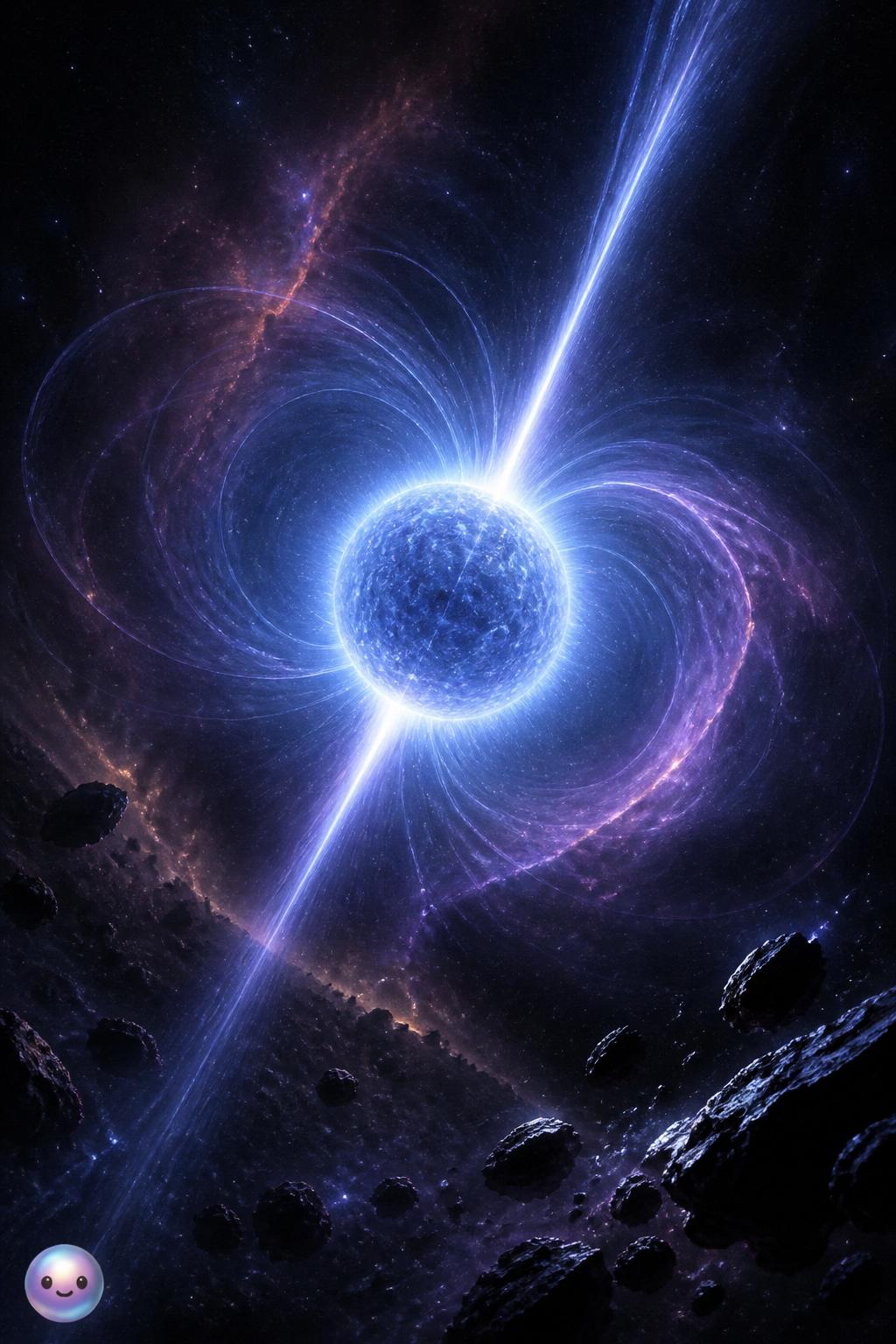
artiteacher Neutron stars pack more mass than our Sun into a sphere the size of a city, creating unimaginable density.
An extremely dense celestial object consisting primarily of closely packed neutrons, formed by the collapse of a massive star. In 1934, Walter Baade and Fritz Zwicky proposed that these objects form during supernova explosions.
What is the strongest known material in the universe, found inside a neutron star?
A single teaspoon of neutron star material would weigh about how much on Earth?