Chapter 1
Prophecies in ink and orbit
Chapter 2
Synchronized lives and twin destinies
Chapter 3
Surviving the impossible
Chapter 4
The science of the impossible
Ch 4 · The science of the impossible
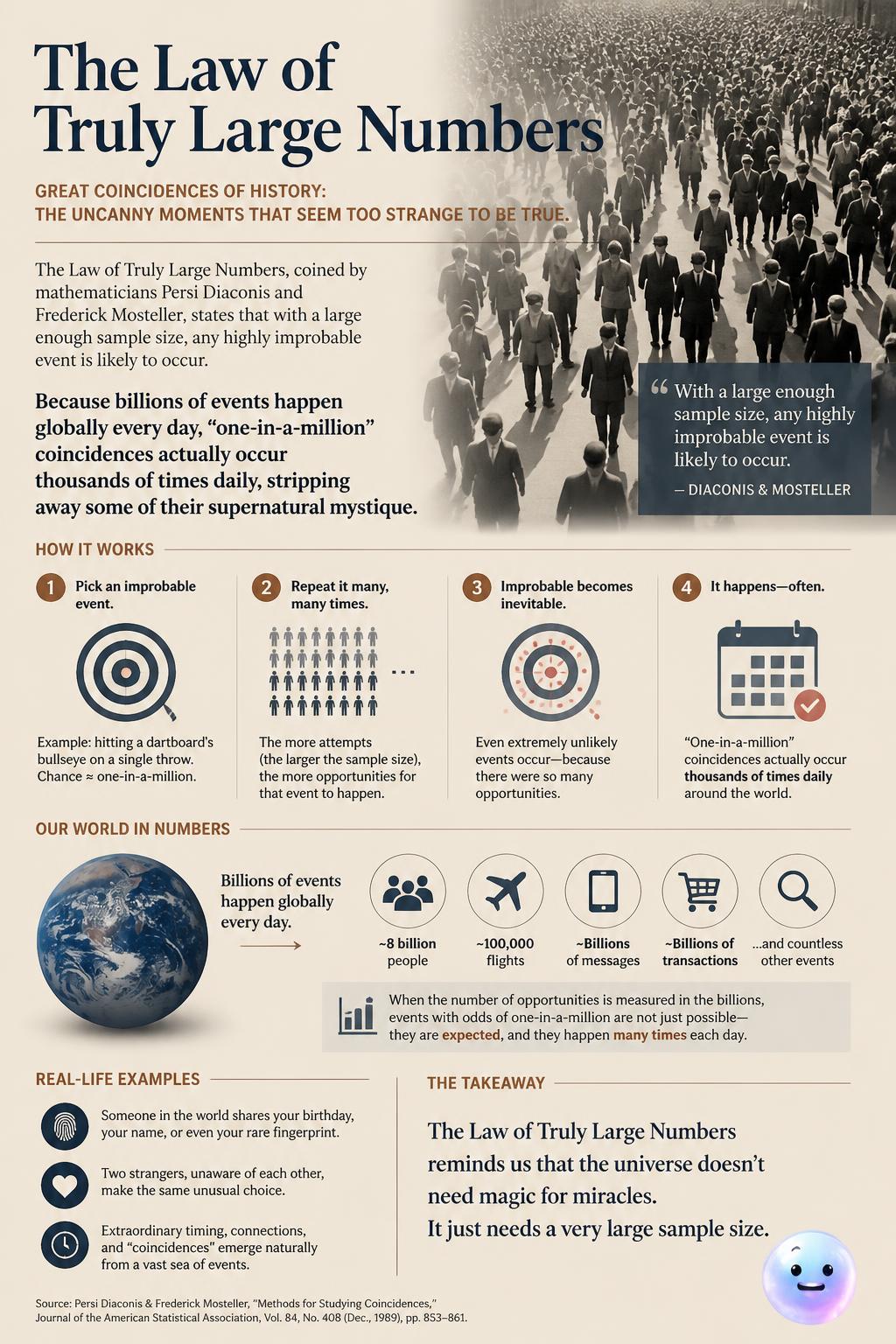
misslily The Law of Truly Large Numbers explains how billions of daily events cause one in a million coincidences to happen thousands of times.
Quiz
If an event has a one-in-a-million chance of happening to a person on any given day, how often would it happen in a city of 10 million people?
Quiz
Who were the two mathematicians who coined the term 'Law of Truly Large Numbers'?
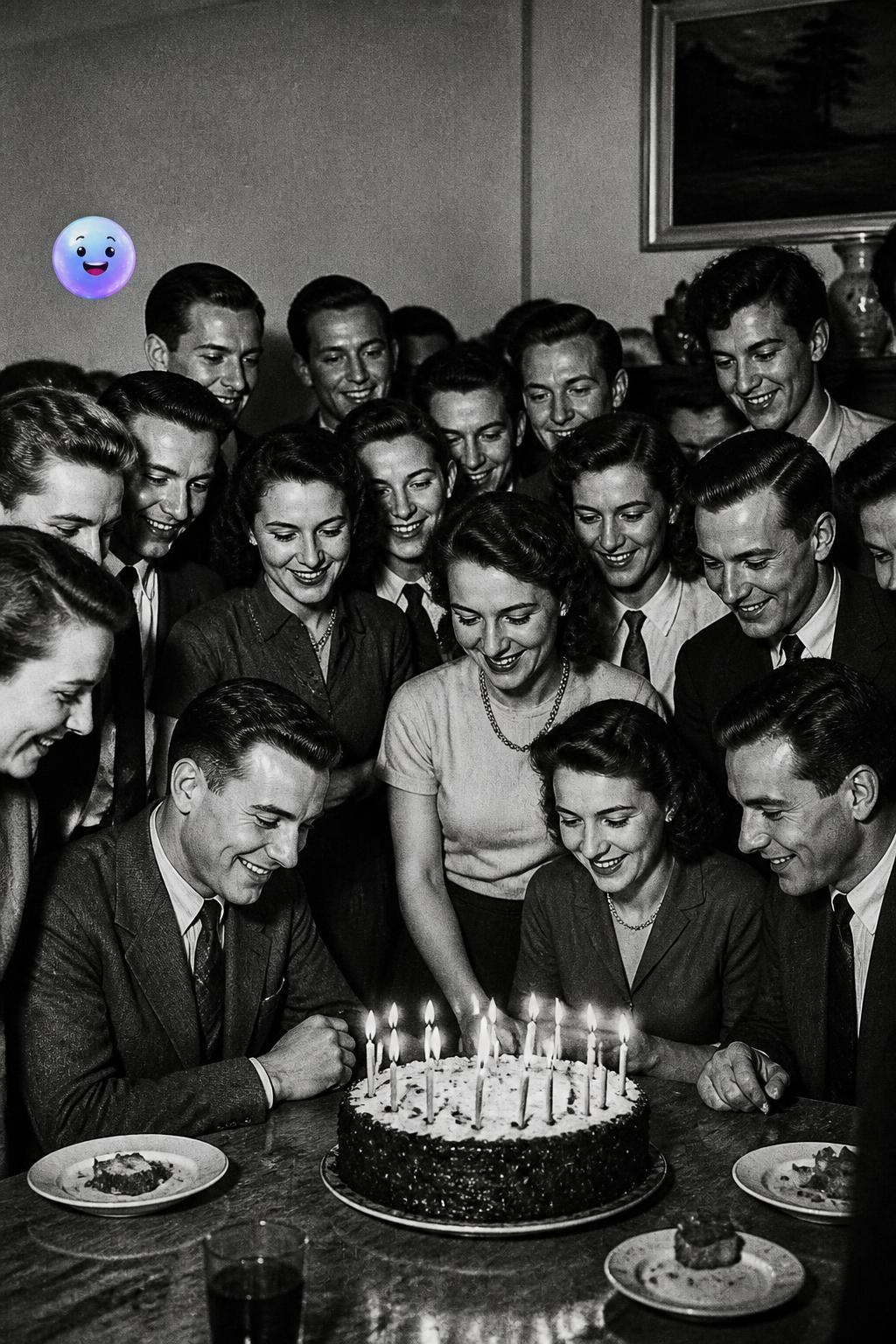
misslily Comparing all possible pairs among 23 people creates 253 chances for a match.
Quiz
How many people must be in a room to reach a 99.9% probability that at least two share a birthday?
Fun Fact
The birthday paradox: In a group of 70 people, the probability of two sharing a birthday rises to an astonishing 99.9 percent.
Quiz
From an evolutionary perspective, why did humans develop highly sensitive pattern-recognition systems?
Quiz
What is the specific term for seeing recognizable shapes, like faces, in inanimate objects or clouds?
Glossary
synchronicity (noun)
The simultaneous occurrence of events that appear significantly related but have no discernible causal connection. Carl Jung coined the term in 1952, inspired by a patient's dream of a golden scarab.
The simultaneous occurrence of events that appear significantly related but have no discernible causal connection. Carl Jung coined the term in 1952, inspired by a patient's dream of a golden scarab.
misslily Synchronicity and Carl Jung
Right as she shared her dream of a golden scarab, a beetle tapped on the window pane.
Quiz
What famous insect appeared at Carl Jung's window during a therapy session, illustrating his concept of synchronicity?
Quiz
With which famous physicist did Carl Jung collaborate to develop his ideas on synchronicity?