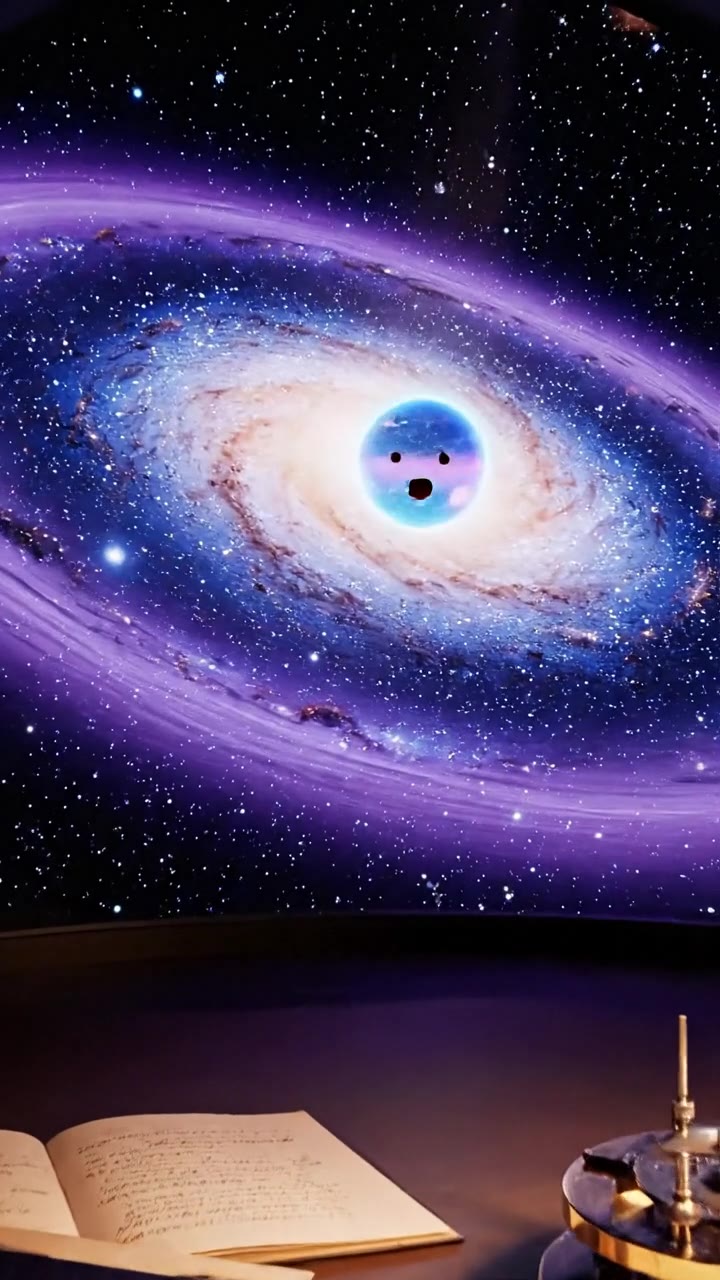
Vera Rubin and Spinning Galaxies: Dark Matter
In the 1970s, Rubin studied the Andromeda Galaxy and found stars at the edges moved just as fast as those near the center. This revolutionized physics, proving a massive invisible halo of dark matter surrounds every galaxy.
The missing puzzle piece of the universe
The ultimate shield against cosmic noise
Laboratories at the ends of the Earth
The high-tech traps for invisible prey

play_review Scientists hunt deep underground to detect the invisible dark matter Vera Rubin proved surrounds every galaxy.
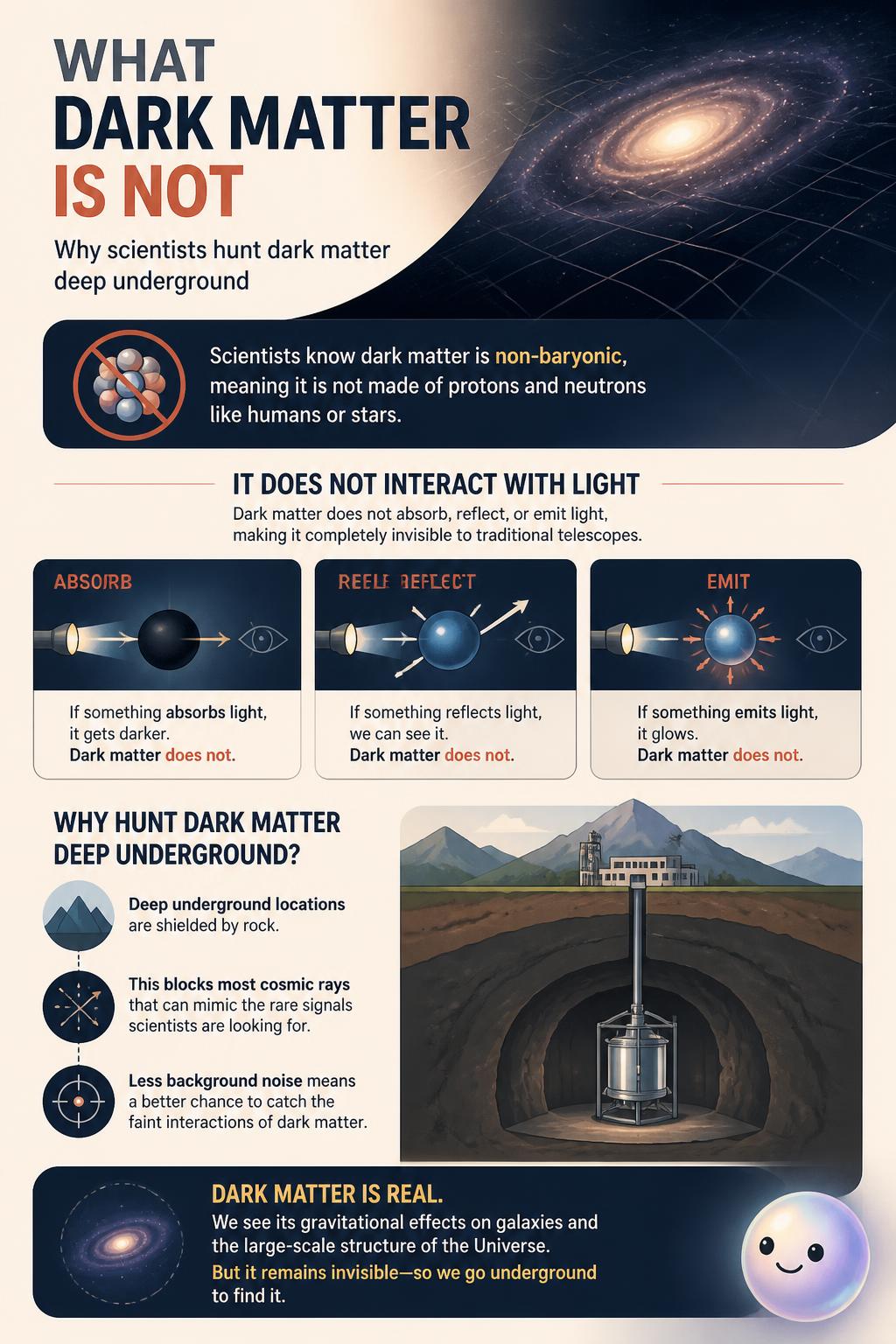
play_review Discover what dark matter is not. Watch this video to rule out common misconceptions and understand why scientists hunt for it deep underground.
play_review Discover why scientists go deep underground to hunt for dark matter, the mysterious invisible glue holding our cosmos together.
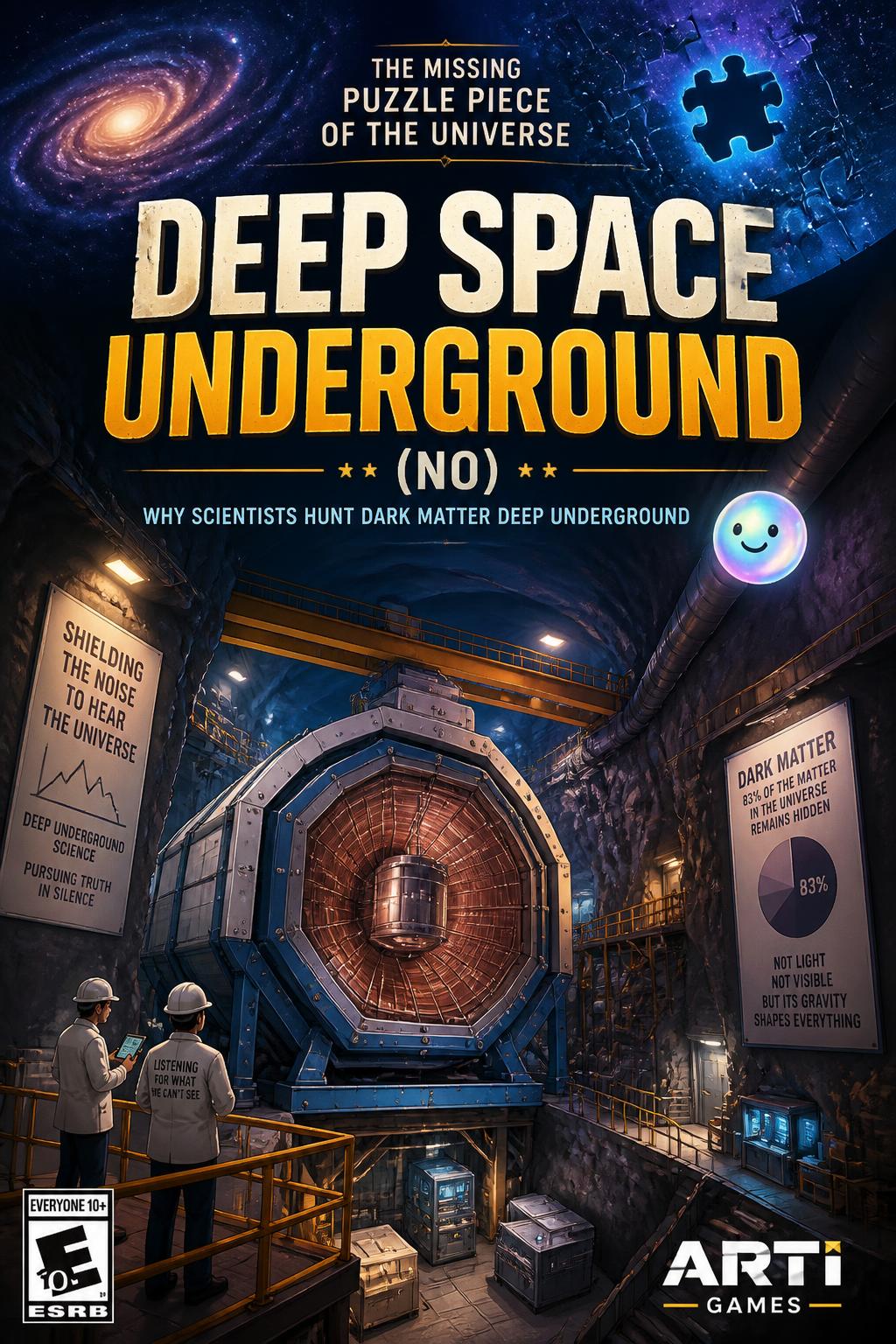
play_review Shield detectors from cosmic rays to discover why scientists hunt dark matter deep underground.
play_review Learn why scientists search for dark matter deep underground and discover the meaning behind the universe's five to one cosmic ratio in this video.
play_review Dark matter
Deep in the dark, deep in the dark / Waiting for a ghost to leave a spark.
Invisible mass: If you removed all dark matter from our Milky Way galaxy, our solar system would fly off into deep space because there wouldn't be enough gravity to hold us.
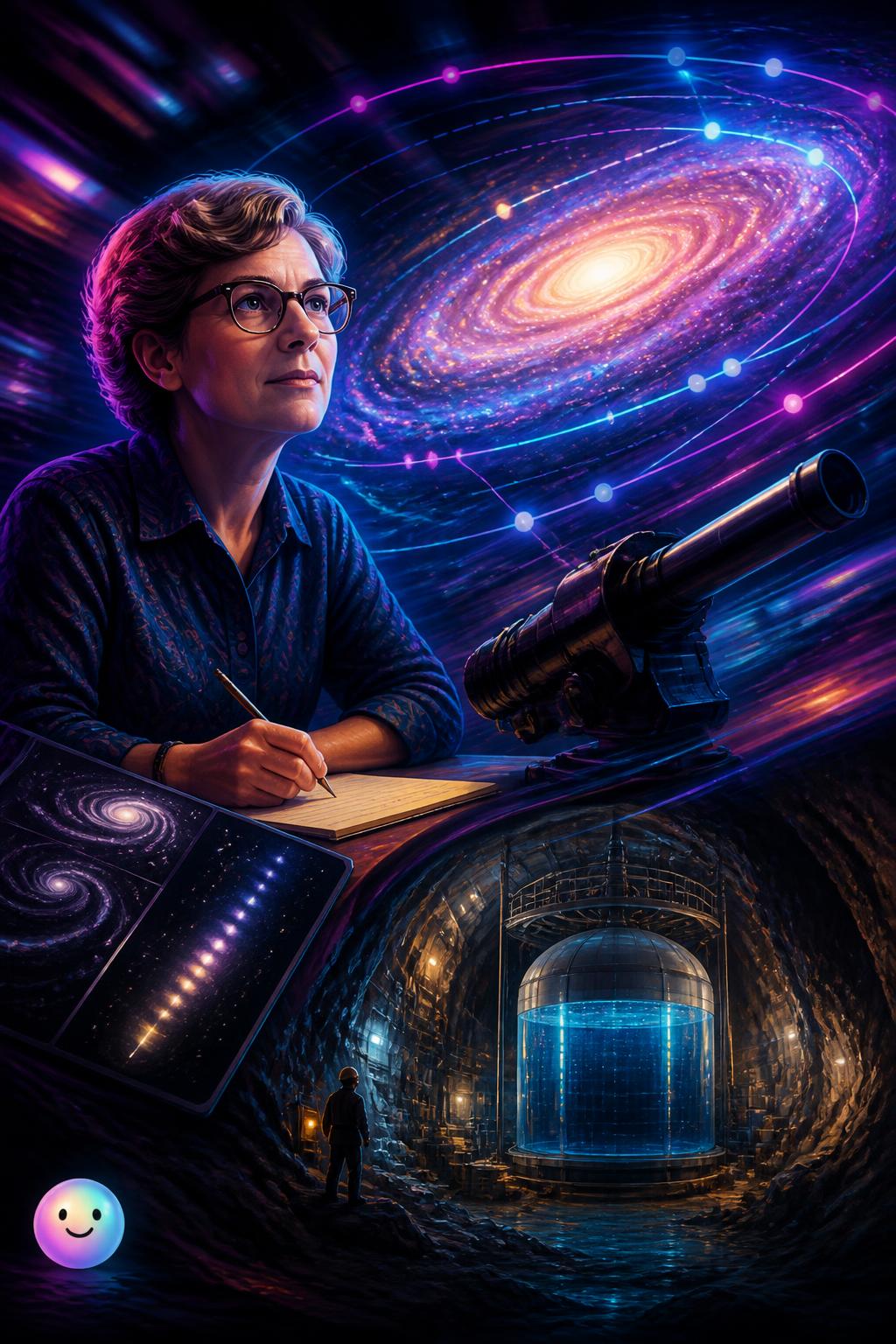
play_review Astronomer Vera Rubin proved dark matter's existence by measuring how fast outer stars orbit.
A hypothetical form of matter that does not absorb, reflect, or emit light, detectable only by its gravitational influence. In the 1970s, astronomer Vera Rubin provided robust evidence of this substance by studying galactic rotation curves.
What percentage of the universe's total mass and energy is made of normal matter like stars and planets?
Which galaxy did Vera Rubin famously analyze to show that outer stars orbit unexpectedly fast?
What is the term for normal matter made of protons and neutrons, which dark matter is NOT?
What makes up the largest portion (around 68%) of the universe's total energy and mass?
What force allows us to detect the presence of dark matter across the universe?
Which astronomer's 1970s study of galaxy rotation curves provided the first robust evidence for dark matter?
Who first used the term 'dark matter' in the 1930s to describe the missing mass in galaxy clusters?