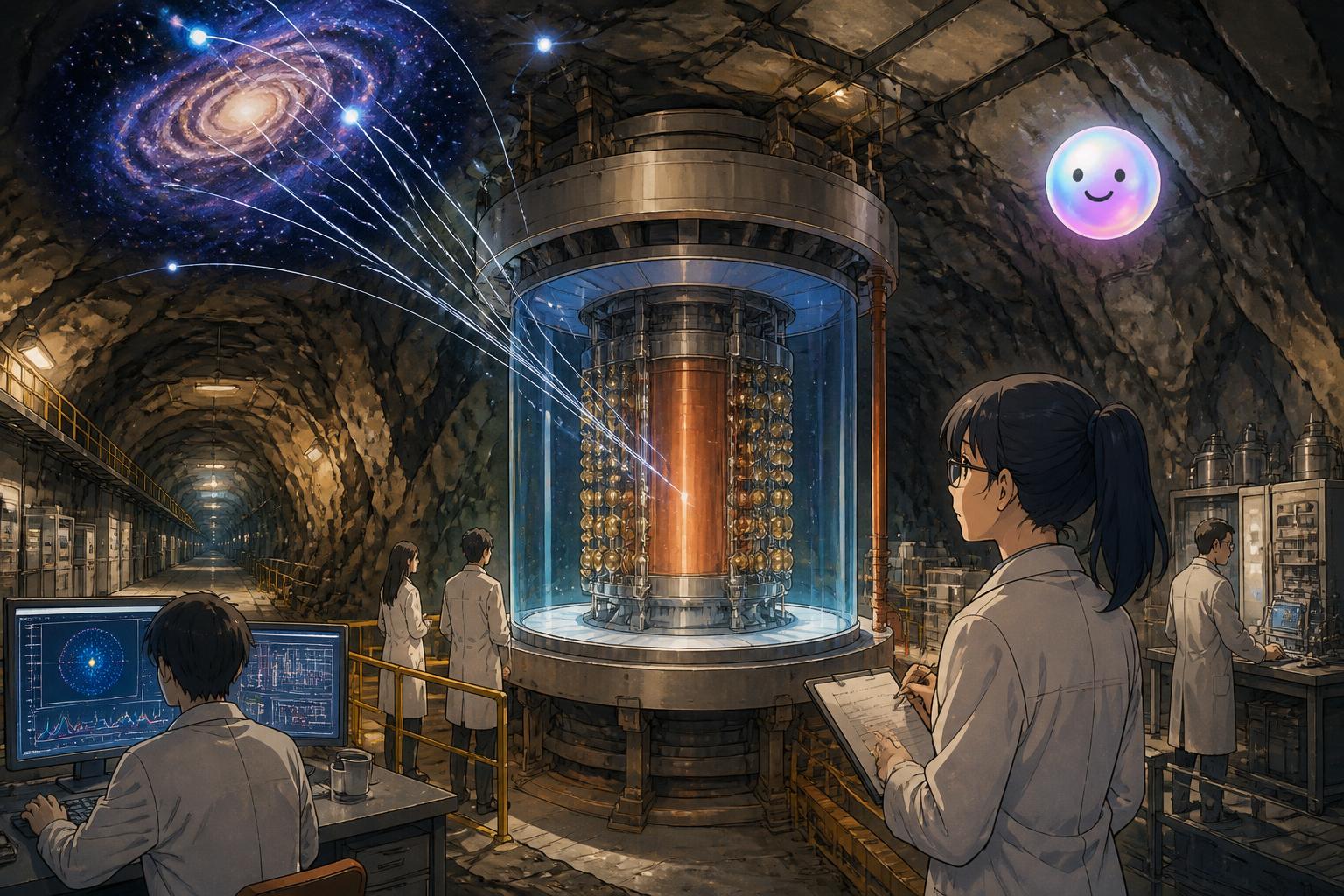
When Will We Find Dark Matter?
Discover how scientists hunt for invisible prey deep underground using high-tech traps. When do you think we will finally detect dark matter?
The missing puzzle piece of the universe
The ultimate shield against cosmic noise
Laboratories at the ends of the Earth
The high-tech traps for invisible prey

play_review Discover why scientists hunt for dark matter deep underground using the freezing crystals of the SuperCDMS experiment in this video.
play_review Discover how researchers use superheated bubbles in underground detectors to hunt for elusive dark matter particles in this educational video.
play_review Watch how scientists use liquid xenon in deep underground experiments to hunt for elusive dark matter.
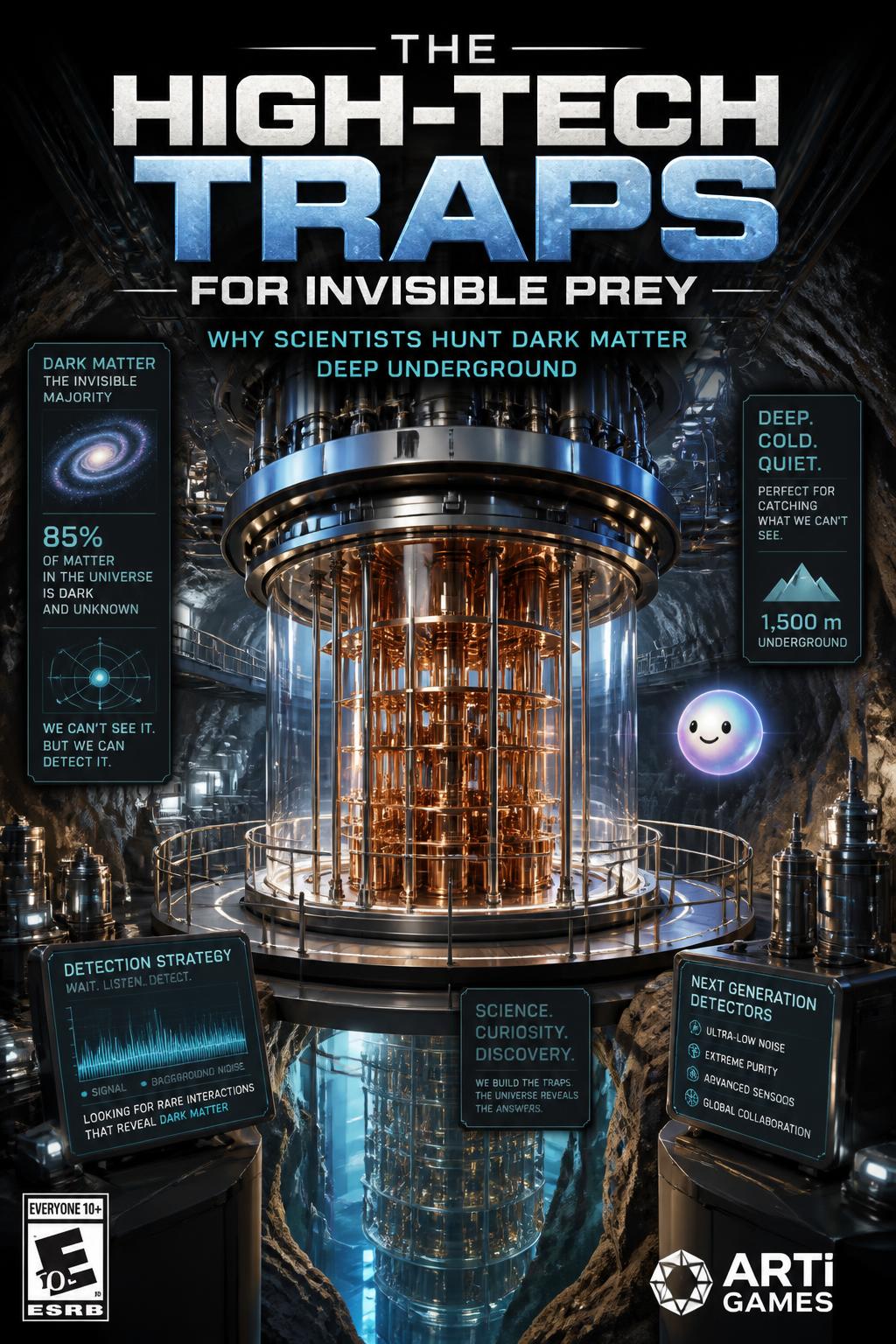
play_review Assemble high-tech underground traps to learn how scientists catch invisible dark matter.
play_review LUX-ZEPLIN Detector
A mile down in the cold (so cold!) Waiting for that ghost to show (yeah, let it show!) We watch the liquid xenon glow (watch it glow!)
play_review Explore the scientific impact of discovering dark matter and why researchers search for this mysterious substance deep underground in this video.
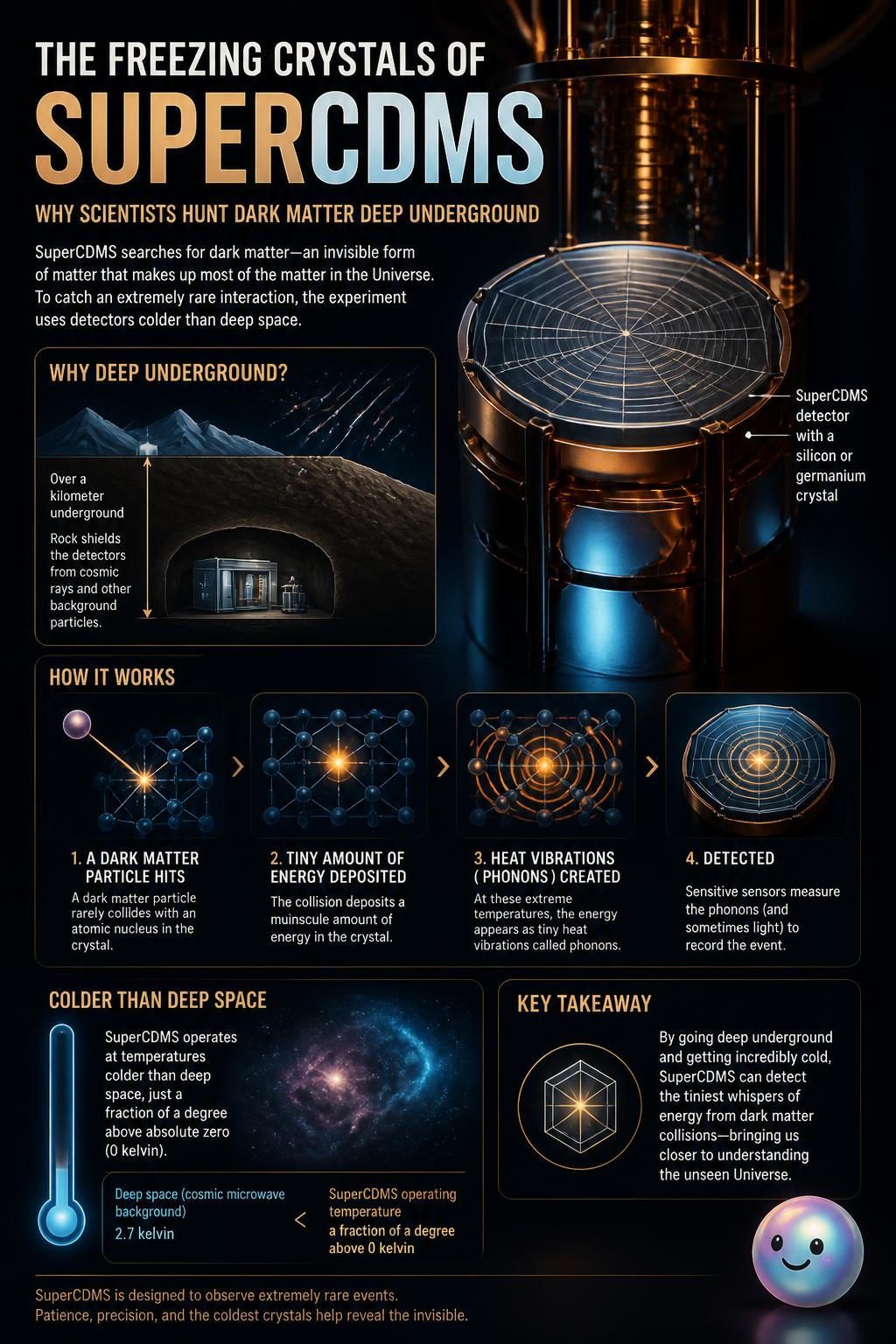
play_review Cryogenic detectors freeze Germanium crystals close to absolute zero to feel atomic vibrations.
Colder than space: Cryogenic dark matter detectors are cooled to temperatures colder than deep space to detect the tiniest atomic vibrations.
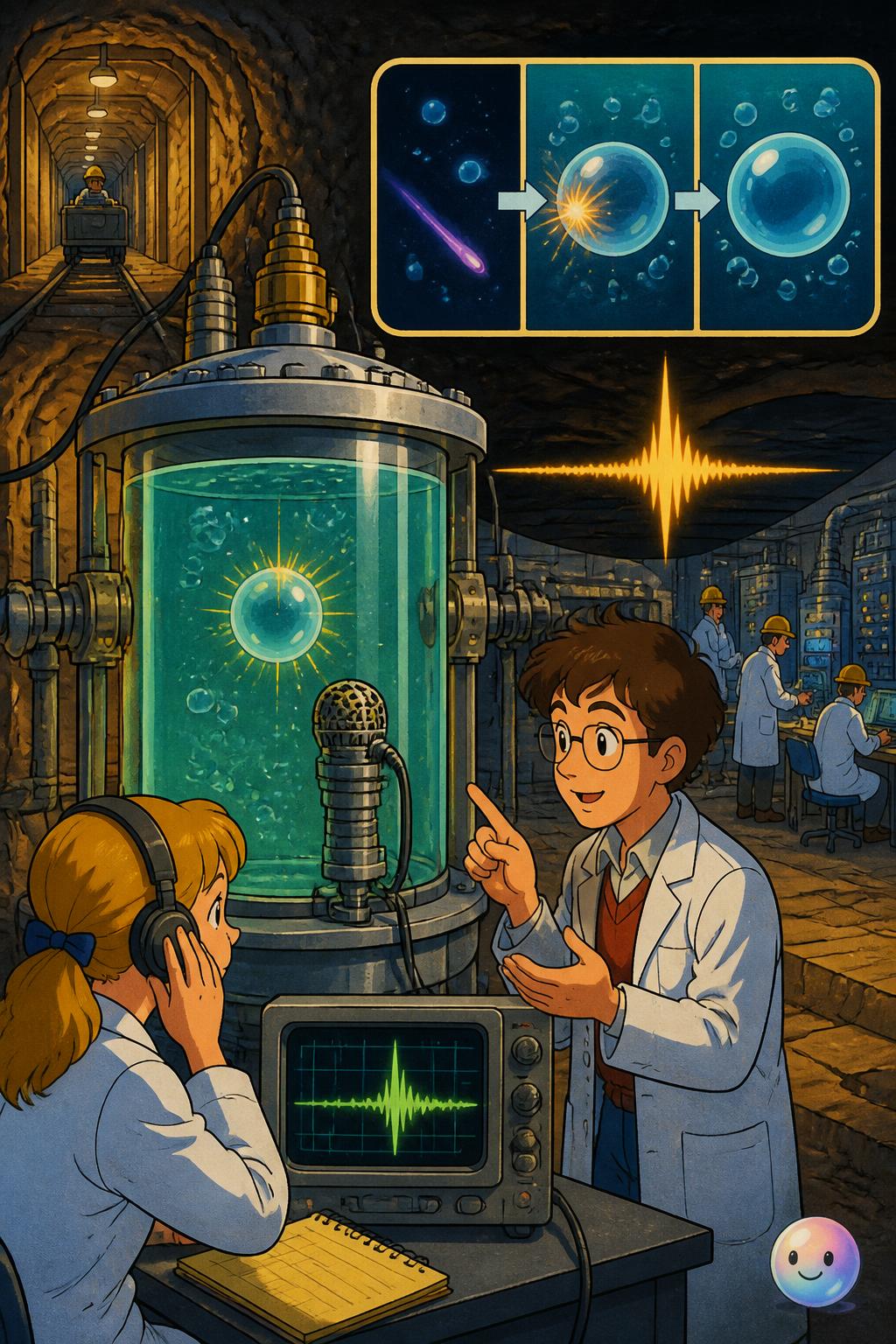
play_review Some detectors use unstable liquids that boil when hit by a single particle.
What two signals does a liquid xenon detector look for when a particle collides with an atom?
Which noble gas is commonly cooled to a liquid state to act as a target for dark matter?
How do PICO bubble chamber detectors identify a potential dark matter interaction?
Which element's crystals are commonly used alongside silicon in cryogenic dark matter detectors?
What are the tiny heat vibrations detected in ultra-cold crystals like those in SuperCDMS called?