The math of shrinking years
The power of first times
The brain's ticking clock
Reclaiming your days
How does a slower internal biological clock affect how we perceive the external world's time?
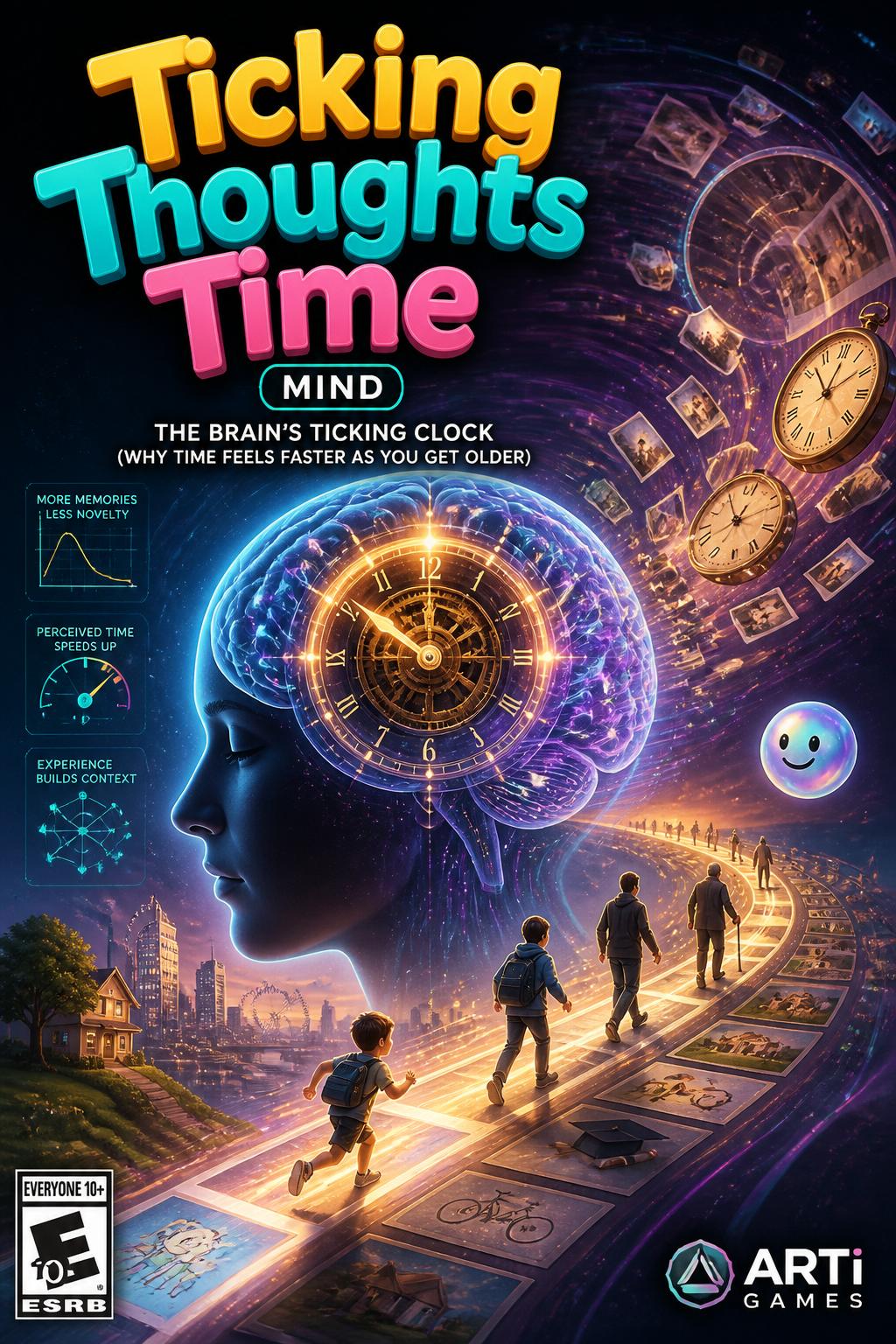
futura Stack unique memories on your timeline to discover why time feels faster as you age.
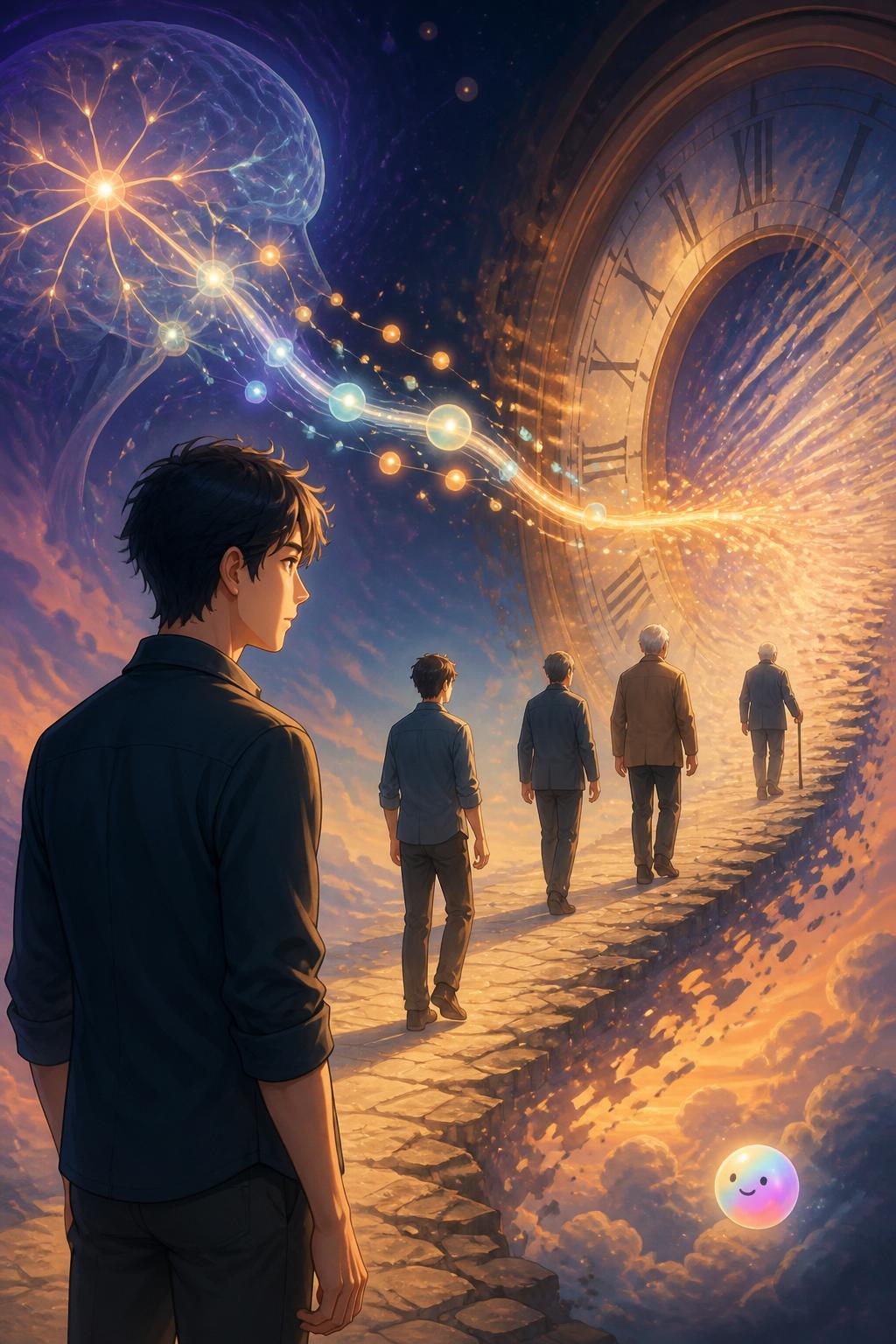
futura As we grow older, our brains produce less dopamine, a neurotransmitter that helps us track and anticipate intervals of time.
futura The Brain's Ticking Clock
Frames are dropping down, pathways getting long, time is speeding up!
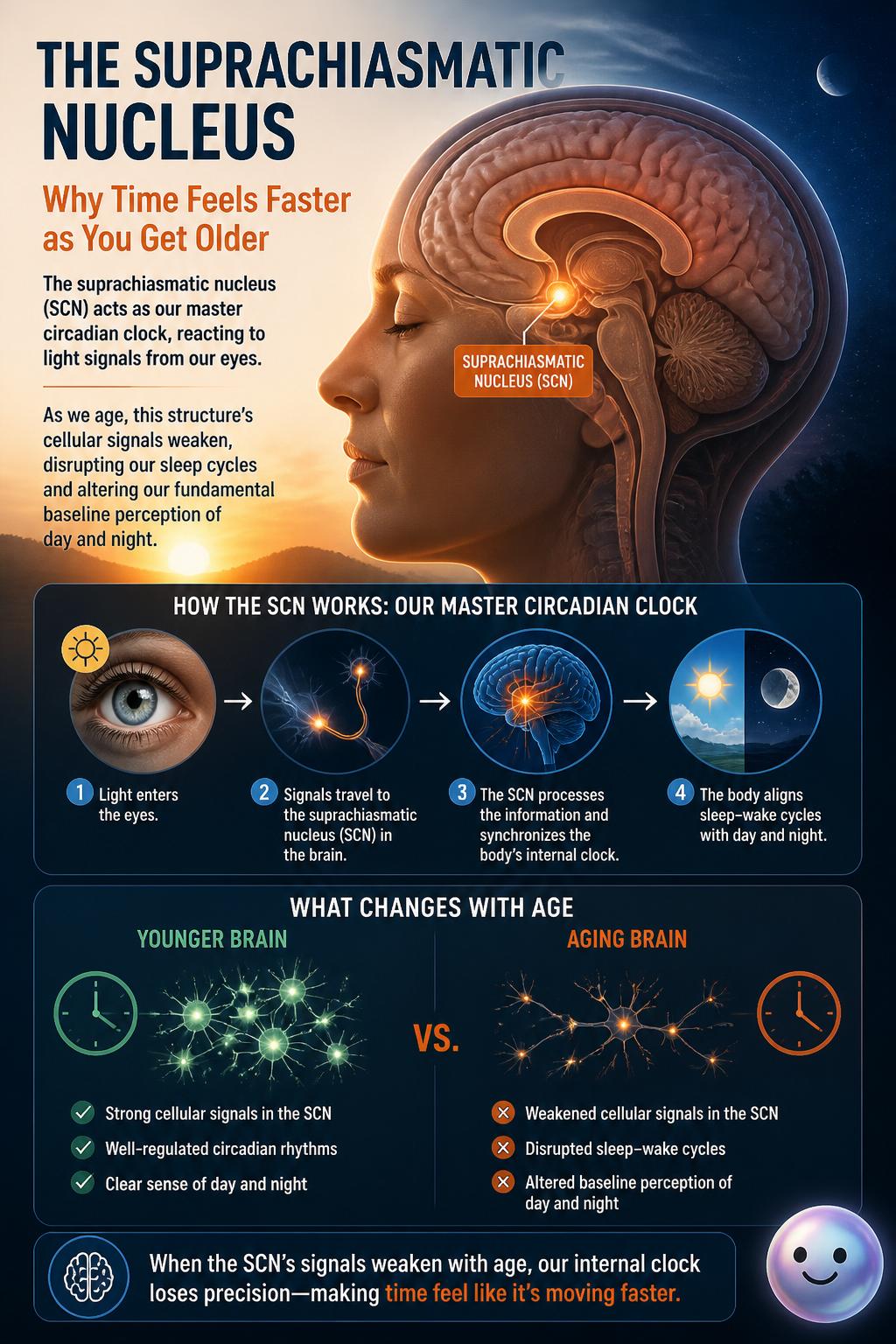
futura A tiny cluster of 20,000 neurons in the hypothalamus coordinates our daily sleep-wake cycle and changes as we age.
Fever time: When you have a high fever, your internal biological clock ticks so fast that 30 seconds of real time can feel like a whole minute.
Which neurotransmitter, responsible for reward and timing, decreases by about 10% per decade as we age?
A neurotransmitter in the brain that helps regulate movement, attention, learning, and emotional responses. Duke University neuroscientist Warren Meck discovered that the brain's internal pacemaker relies on this chemical.