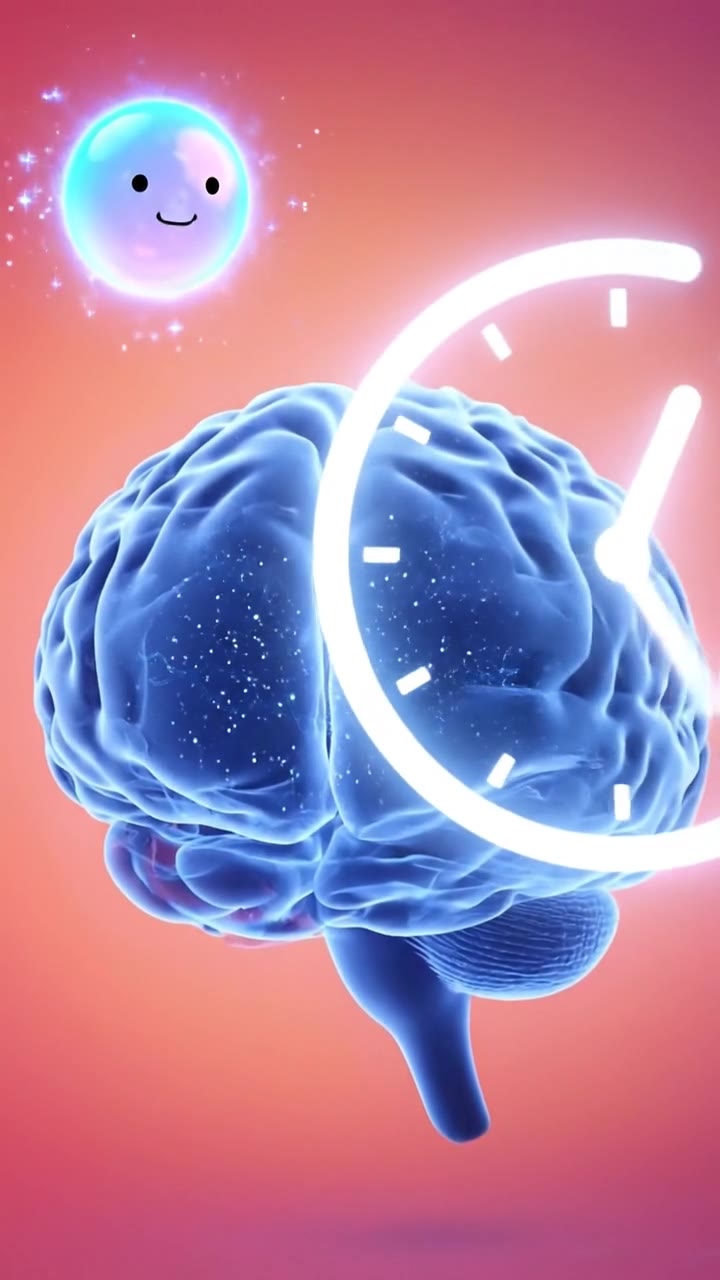
The proportional theory of time
The busy brain and memory making
Biological clocks and heartbeats
The cultural speedup of modern life

dash Proportional Time Theory
Why do the days fly so fast? (It's a shrinking fraction of your past, oh yeah!)
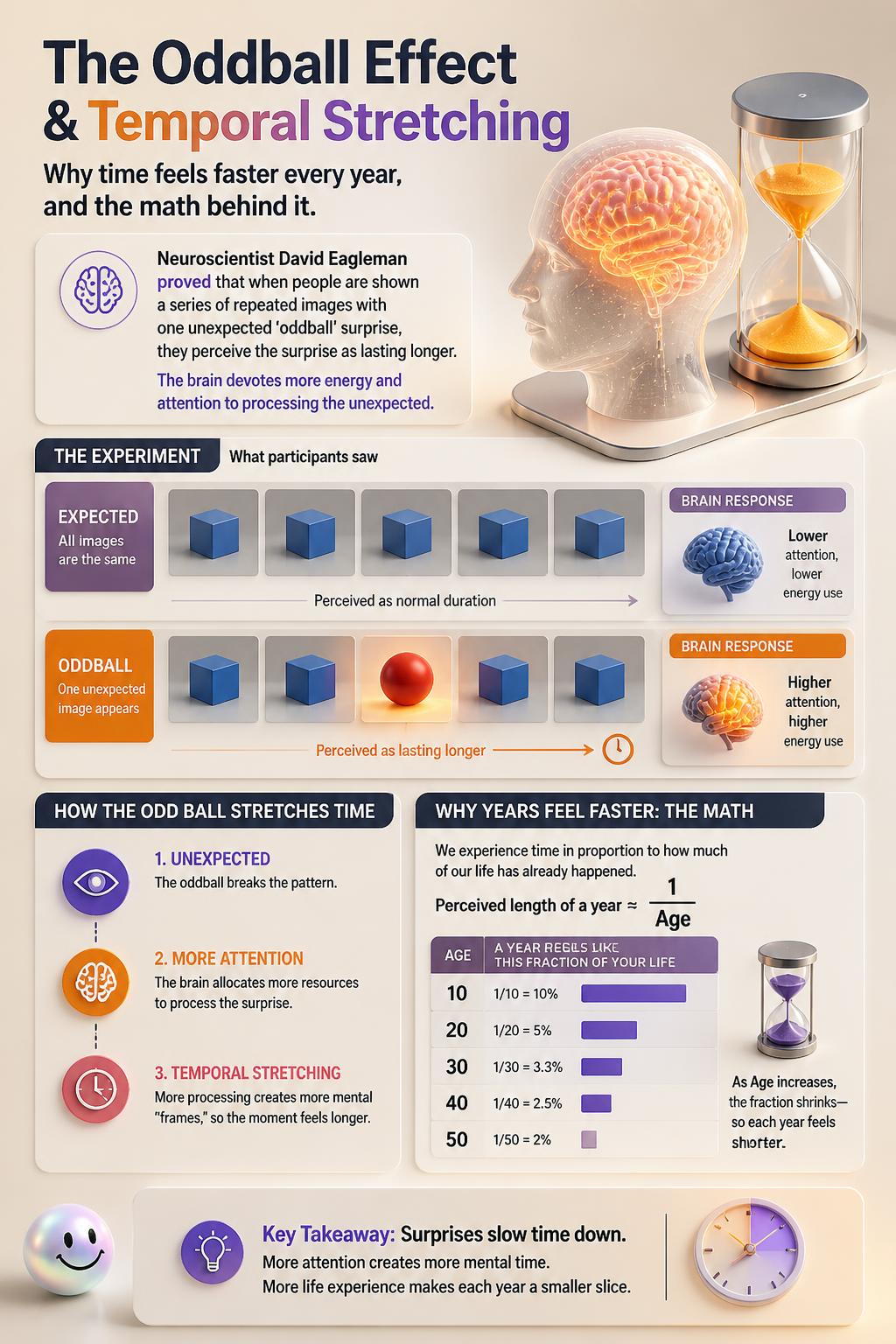
dash Unfamiliar or surprising sights temporarily slow down our brain's perception of time.
Brain energy: Your brain uses about 20% of your body's energy, and it actively conserves this energy by ignoring repetitive, predictable sights and sounds.
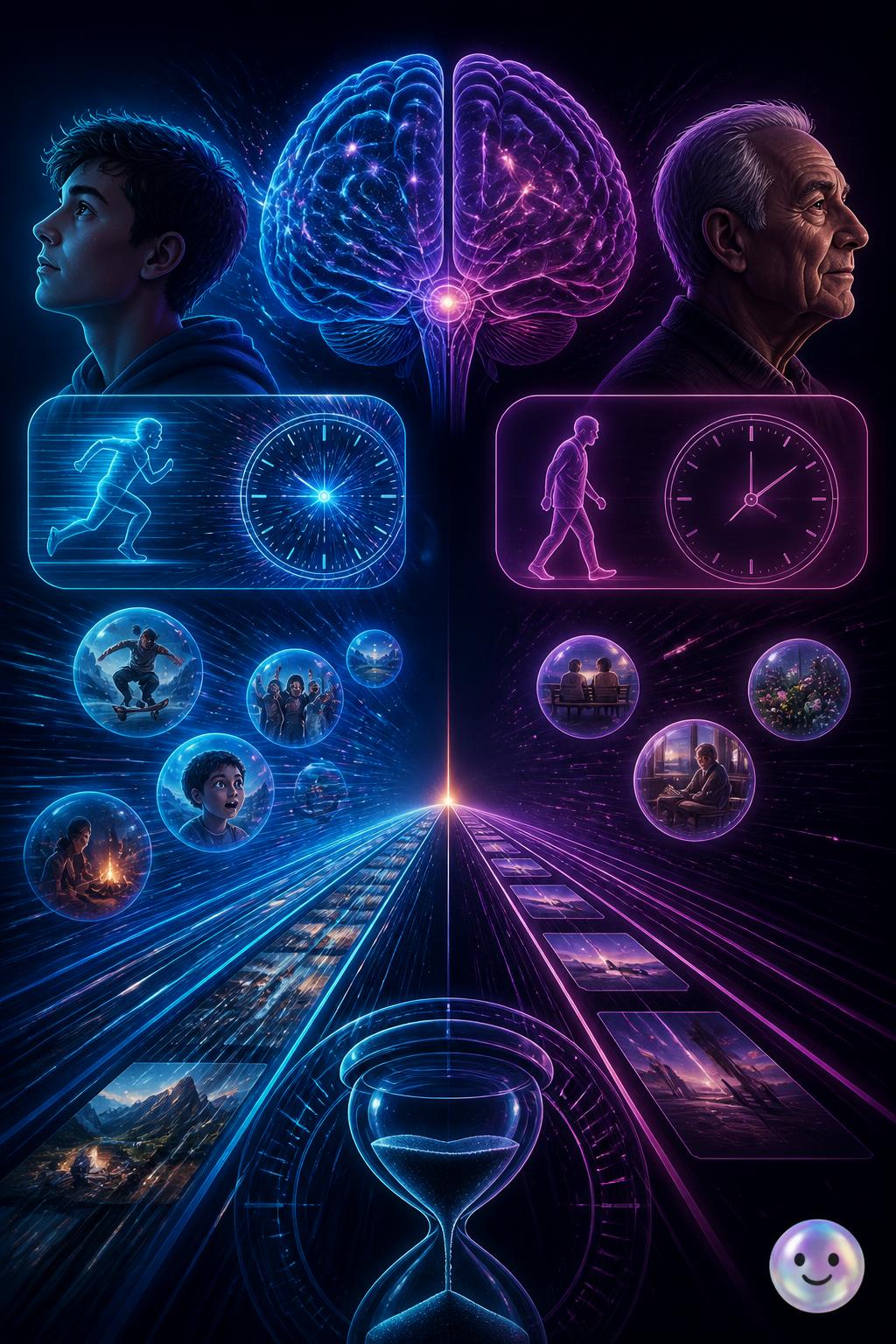
dash The chemical messenger dopamine acts as a metronome, regulating how fast we process time.
The quality of being new, original, or unusual. In 1890, William James wrote that unfamiliar events prompt the brain to encode highly detailed, lasting memories.
What is the psychological phenomenon where a surprising image or event seems to last longer than expected?
Which neurotransmitter acts as the brain's internal metronome, regulating our time perception?
Why does the human brain compress routine activities like daily commutes in retrospect?
When the human brain goes on autopilot during repetitive tasks, what happens to those memories?