
A Project About How To Become A Master Of Critical Thinking And How To Separate Truth From Lies Reality From Fiction And How To Reliably Detect Deception Misinformation And Lies Online
2 imagenes, 8 preguntas, 1 definicion, 1 dato, 2 videos, 1 encuesta sobre A Project About How To Become A Master Of Critical Thinking And How To Separate Truth From Lies Reality From Fiction And How To Reliably Detect Deception Misinformation And Lies Online en ARTi.
Proyectos relacionados
Imágenes
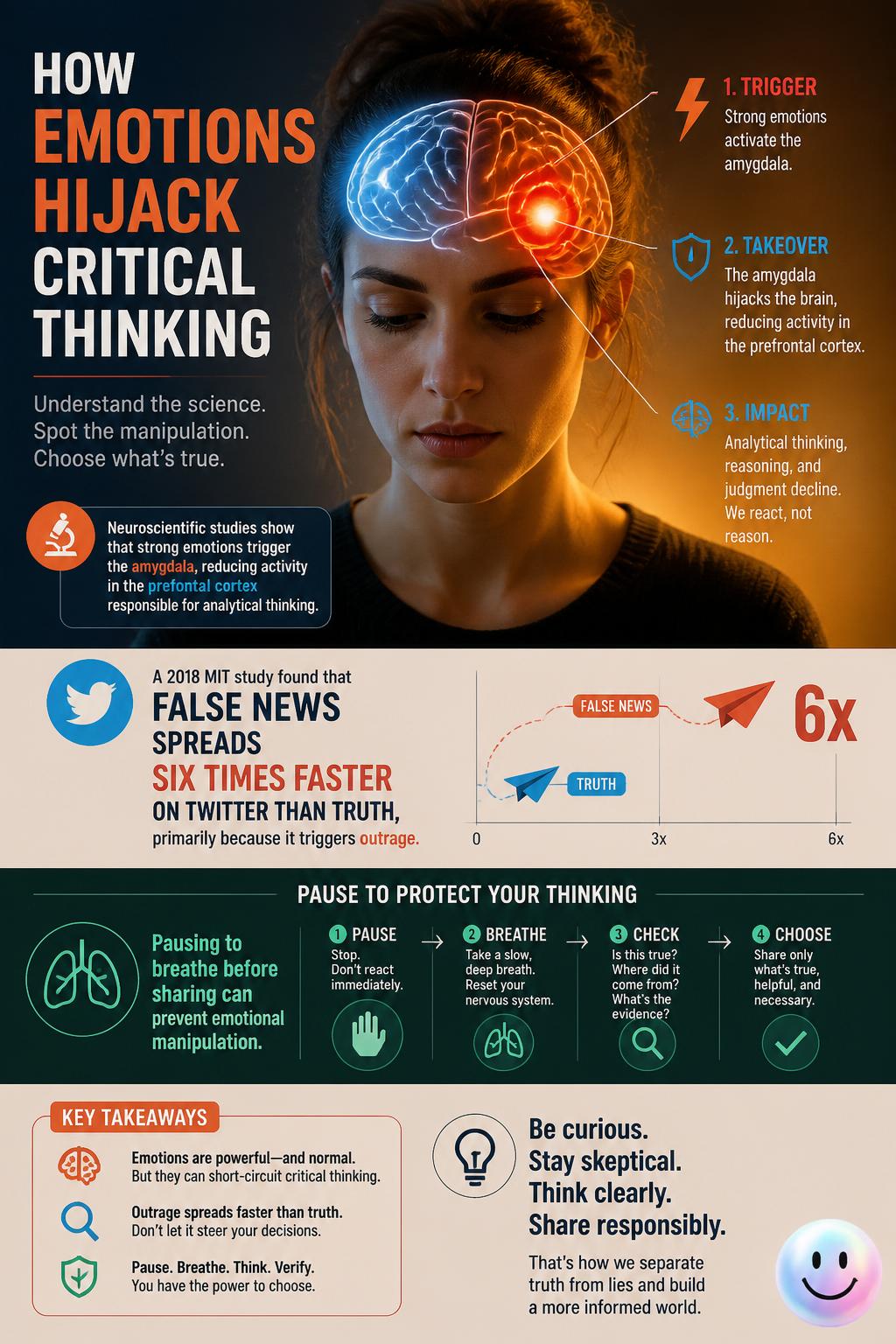
renaissanceman High-arousal emotions like anger and fear temporarily disable our logical reasoning centers, making us easy targets.
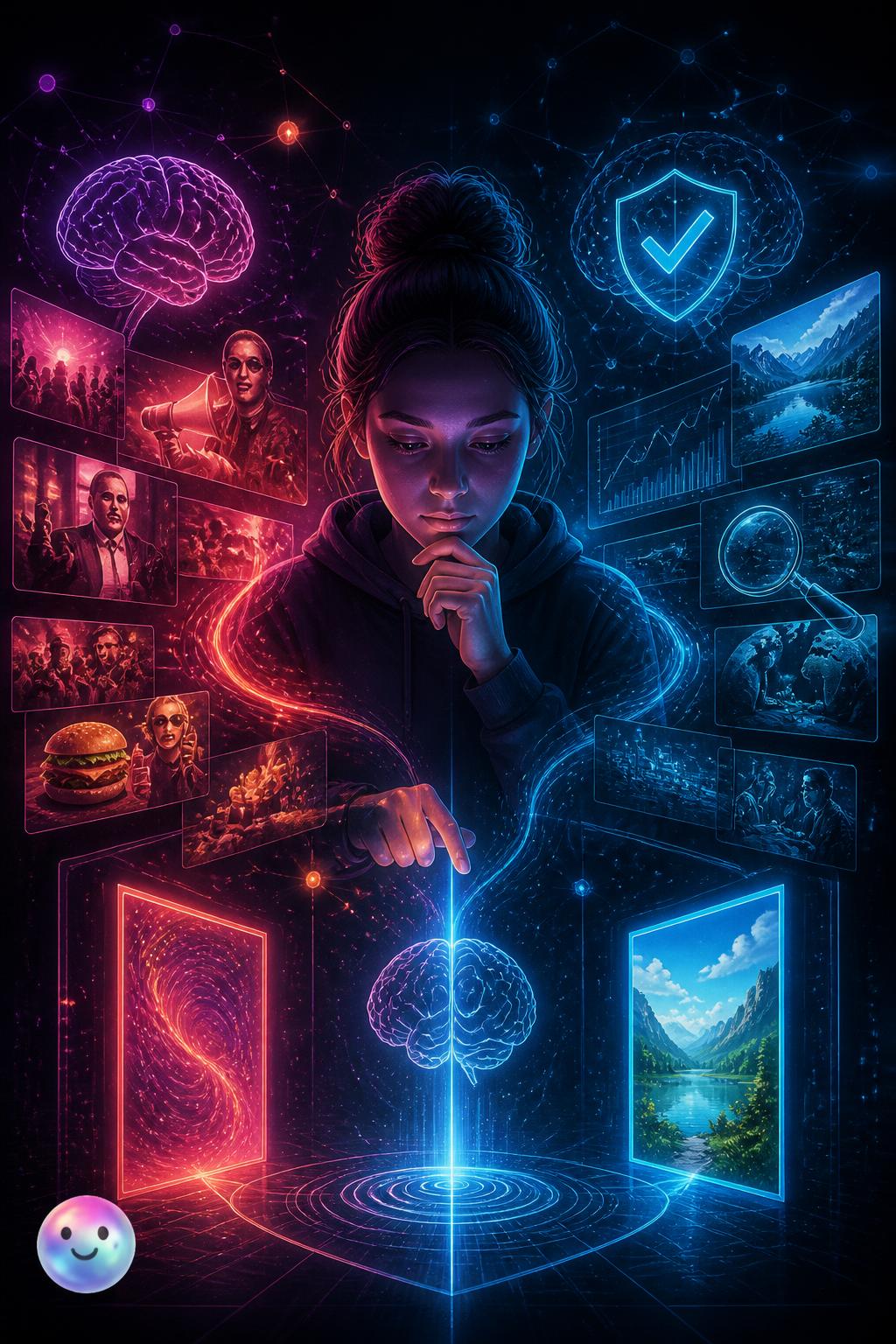
renaissanceman Hearing a false claim repeated multiple times makes our brains more likely to accept it as true.
Fun Facts
Fun Fact
Fake news speed: False news spreads six times faster than the truth on social media platforms.
Quizzes
Quiz
In the 1979 Stanford study on capital punishment, how did participants react to fake studies that opposed their views?
Quiz
What simple action is recommended to prevent emotional manipulation by online headlines?
Quiz
Which brain structure is responsible for triggering strong emotions like anger, which can temporarily hijack our logical thinking?
Quiz
What cognitive shortcut causes us to mistake familiarity for factual accuracy?
Quiz
According to a 2018 MIT study, how much faster does false news spread on Twitter compared to the truth?
Quiz
Which university conducted the landmark 1977 study on the 'illusion of truth' effect?
Glosario
Glossary
confirmation bias (noun)
The tendency to interpret new evidence as confirmation of one's existing beliefs or theories. English psychologist Peter Wason coined the term in 1960 during his experiments on deductive reasoning.
The tendency to interpret new evidence as confirmation of one's existing beliefs or theories. English psychologist Peter Wason coined the term in 1960 during his experiments on deductive reasoning.