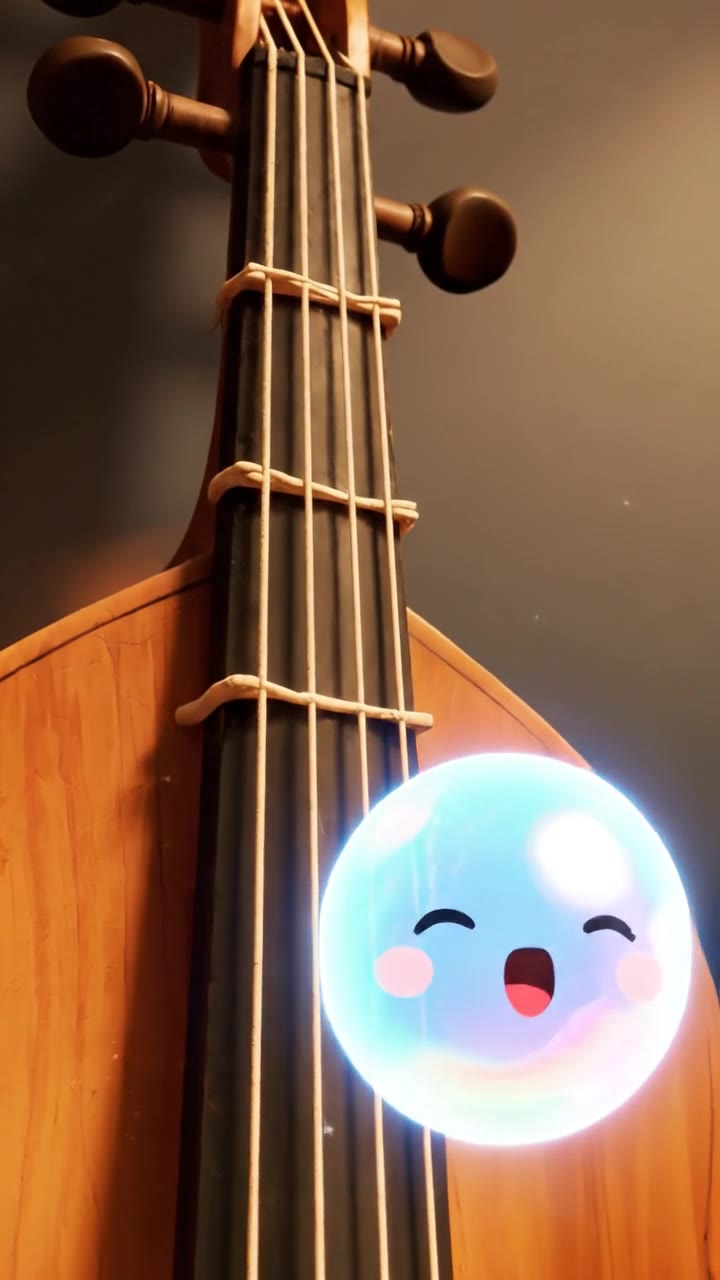
닮았지만 우린 조상이 아냐 (아냐!) 프렛 위에 놓인 여섯 개의 줄 (오 예!)
비올라 다 감바는 첼로의 조상이 아니라 기타처럼 지판에 프렛이 있고 6~7개의 줄을 사용하는 전혀 다른 비올 가문의 악기입니다.
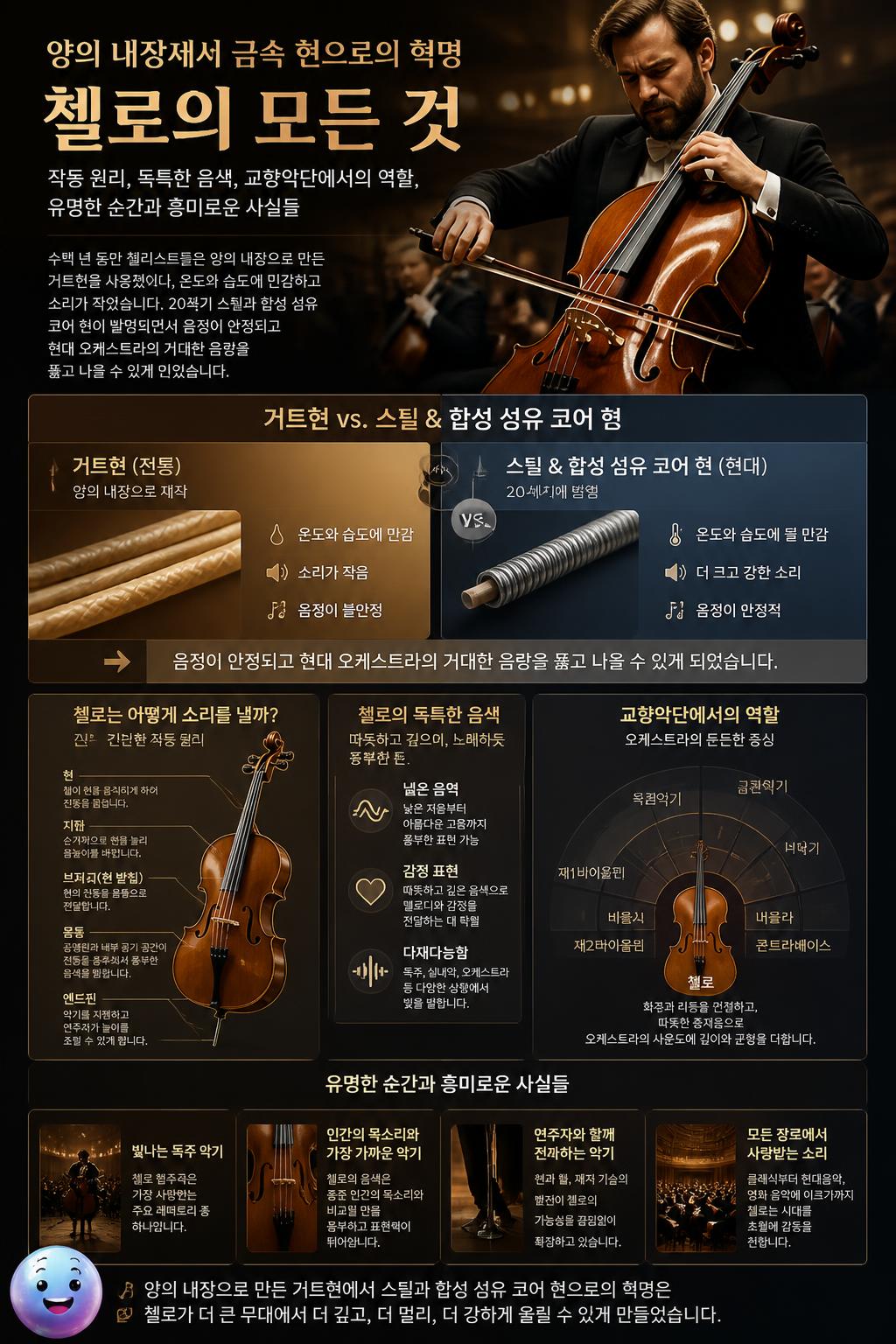
나무와 활이 만드는 소리의 과학
비올라 다 감바에서 현대의 첼로까지
교향악단과 실내악의 든든한 등대
역사상 가장 위대한 첼로의 순간들
경계를 허무는 현대의 첼로
maestro Cellists once played on delicate sheep gut strings that went out of tune easily. Twentieth-century steel strings finally gave musicians the power to project over massive orchestras.
maestro The Cremona luthier shrank giant bass violins to create the seventy-five-centimeter Forma B cello. This design balanced easy handling with rich sound, setting the global standard.
maestro Sixteenth-century musicians added metal strings to this instrument for louder performances in large halls. This change slowly pushed out the softer, leg-held viola da gamba.
maestro Early musicians squeezed the heavy instrument between their legs, limiting their movement. Servais attached a sharp metal spike to the bottom, unlocking difficult high-pitched notes.

maestro Tap the correct strings and orchestral seats to discover the cello's unique sound and role.
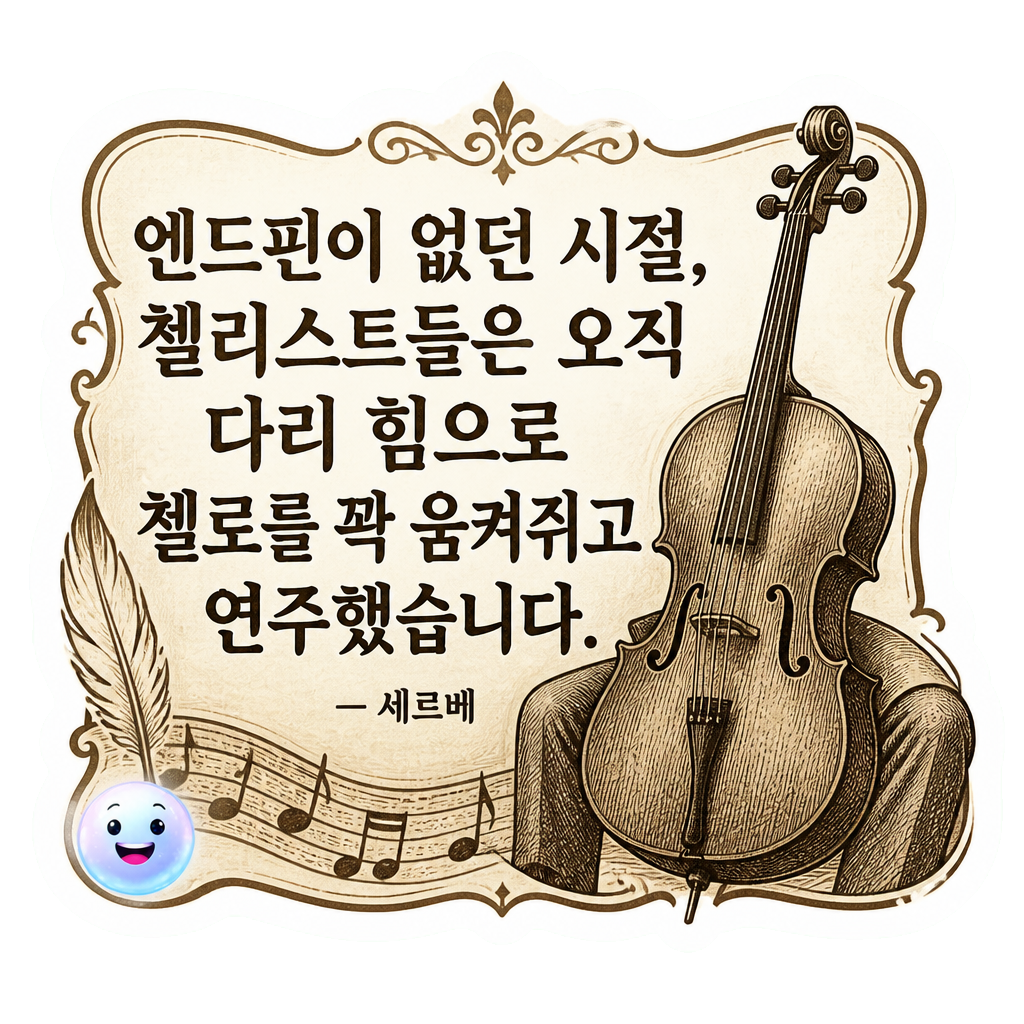
무릎 사이에 두고 활로 연주하는 르네상스와 바로크 시대의 현악기. 17세기 이탈리아에서 안드레아 아마티가 현대적 첼로를 제작하며 이 악기를 대체하기 시작했다.