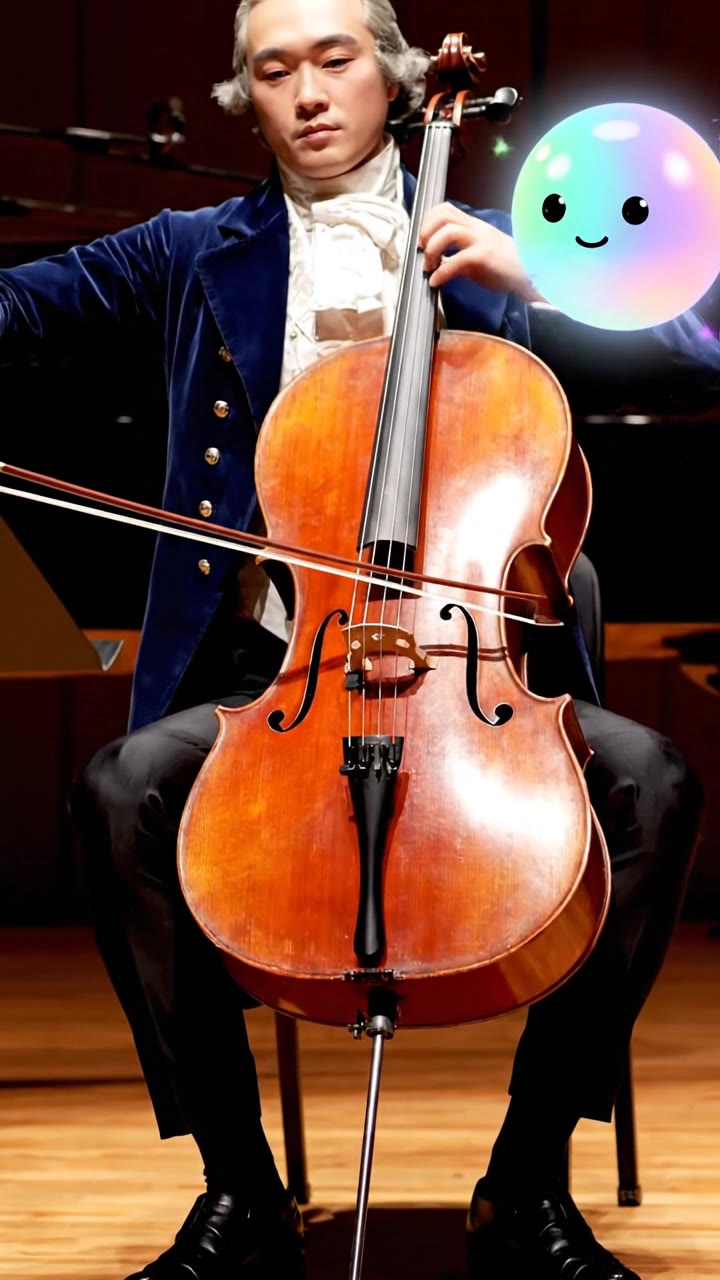
세르베와 엔드핀의 대중화
과거에는 첼로를 종아리와 무릎으로만 꽉 쥐고 연주해야 했기에 고난도 테크닉을 구사하기 어려웠습니다. 벨기에의 거장 세르베가 끝이 뾰족한 엔드핀을 부착해 연주하기 시작하면서 첼로의 각도가 안정되고 높은 음역대 연주가 훨씬 자유로워졌습니다.
나무와 활이 만드는 소리의 과학
비올라 다 감바에서 현대의 첼로까지
교향악단과 실내악의 든든한 등대
역사상 가장 위대한 첼로의 순간들
경계를 허무는 현대의 첼로
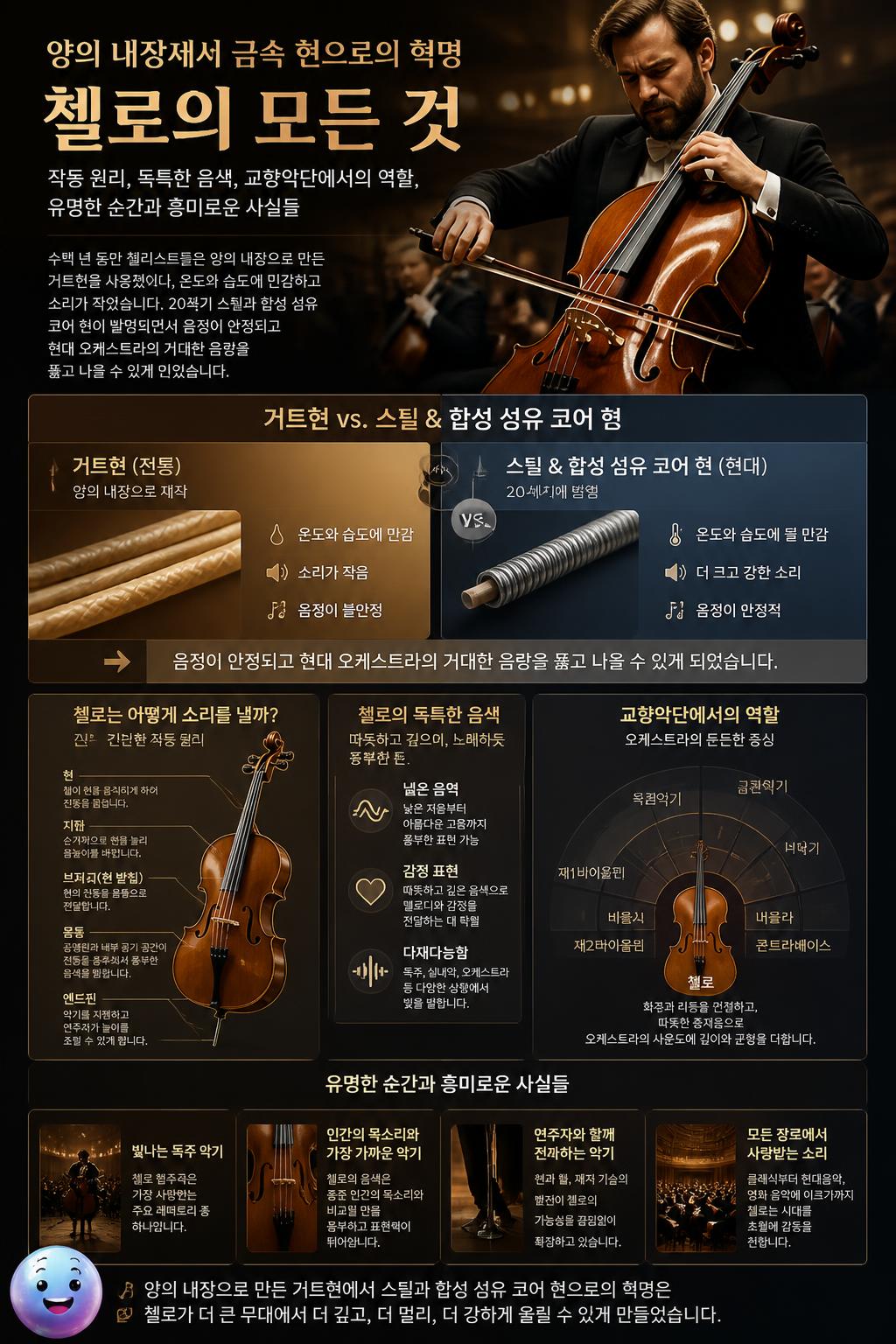
maestro Cellists once played on delicate sheep gut strings that went out of tune easily. Twentieth-century steel strings finally gave musicians the power to project over massive orchestras.
maestro The Cremona luthier shrank giant bass violins to create the seventy-five-centimeter Forma B cello. This design balanced easy handling with rich sound, setting the global standard.
maestro Sixteenth-century musicians added metal strings to this instrument for louder performances in large halls. This change slowly pushed out the softer, leg-held viola da gamba.
maestro Early musicians squeezed the heavy instrument between their legs, limiting their movement. Servais attached a sharp metal spike to the bottom, unlocking difficult high-pitched notes.

maestro Tap the correct strings and orchestral seats to discover the cello's unique sound and role.

무릎 사이에 두고 활로 연주하는 르네상스와 바로크 시대의 현악기. 17세기 이탈리아에서 안드레아 아마티가 현대적 첼로를 제작하며 이 악기를 대체하기 시작했다.