
BETA
YOUR GOAL
Master of The undersea internet cables
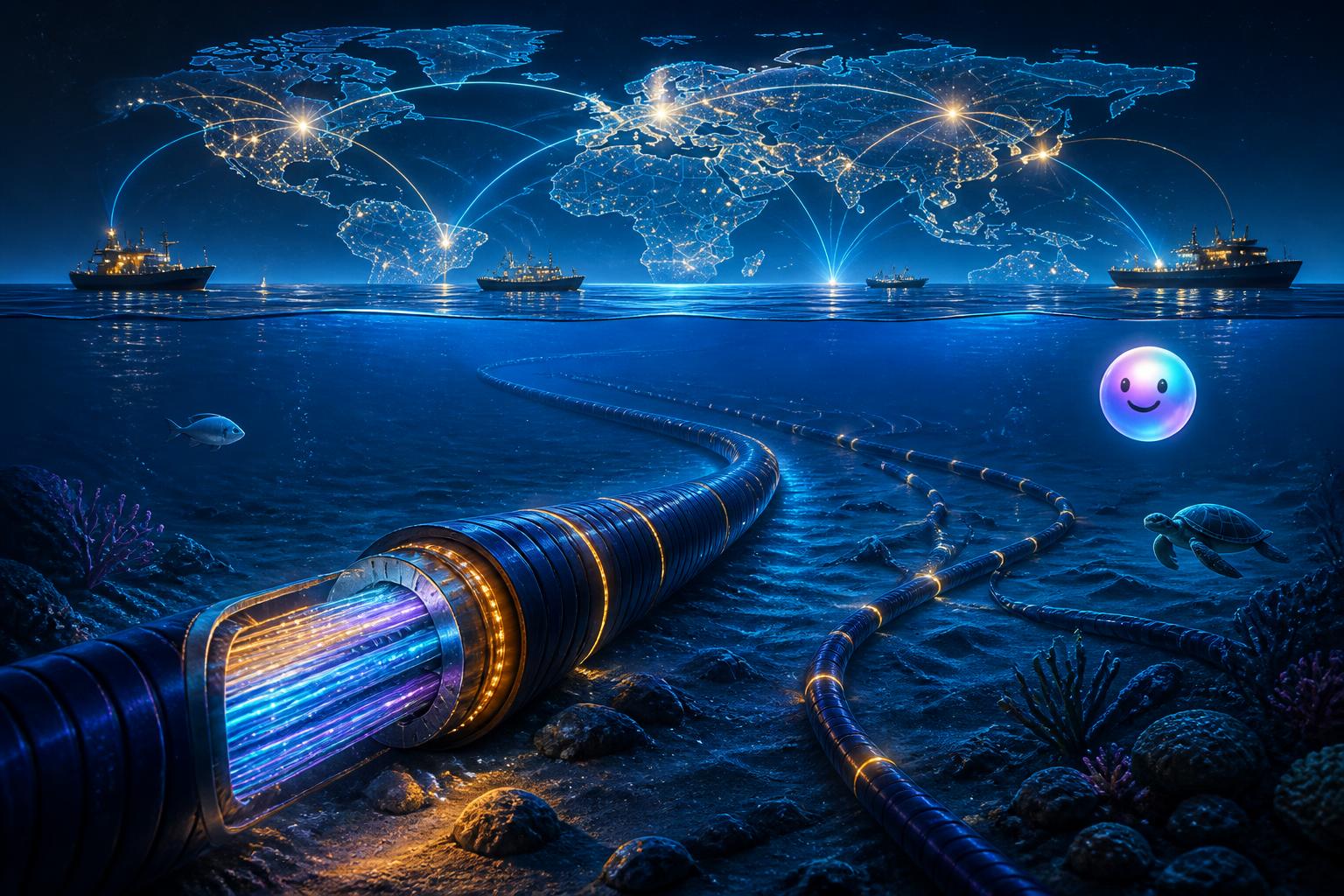
steve Route giant internet noodles across the ocean floor to discover how global data travels.
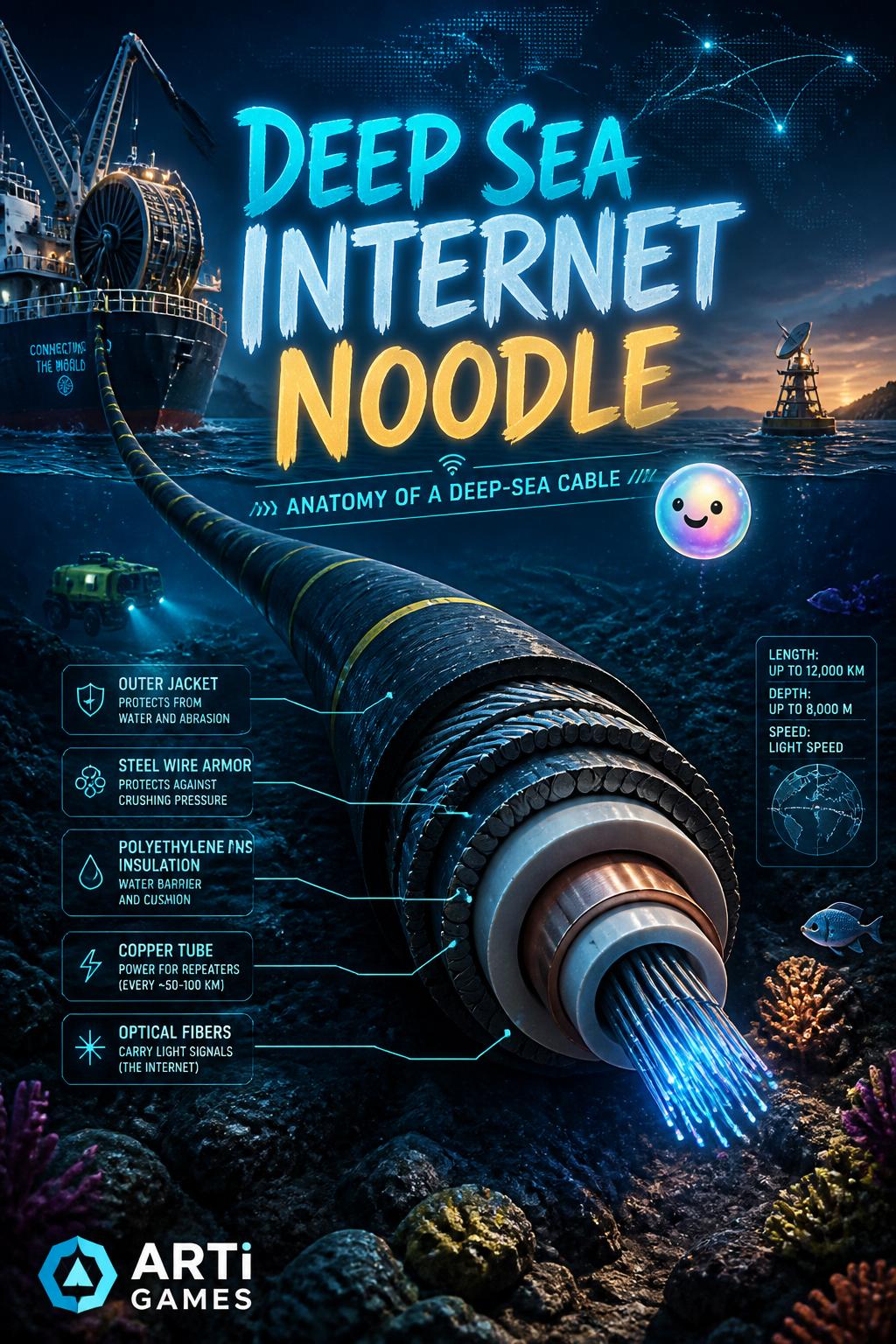
steve Undersea Internet Cables
All of our digital lives flowing through a garden hose under the ocean
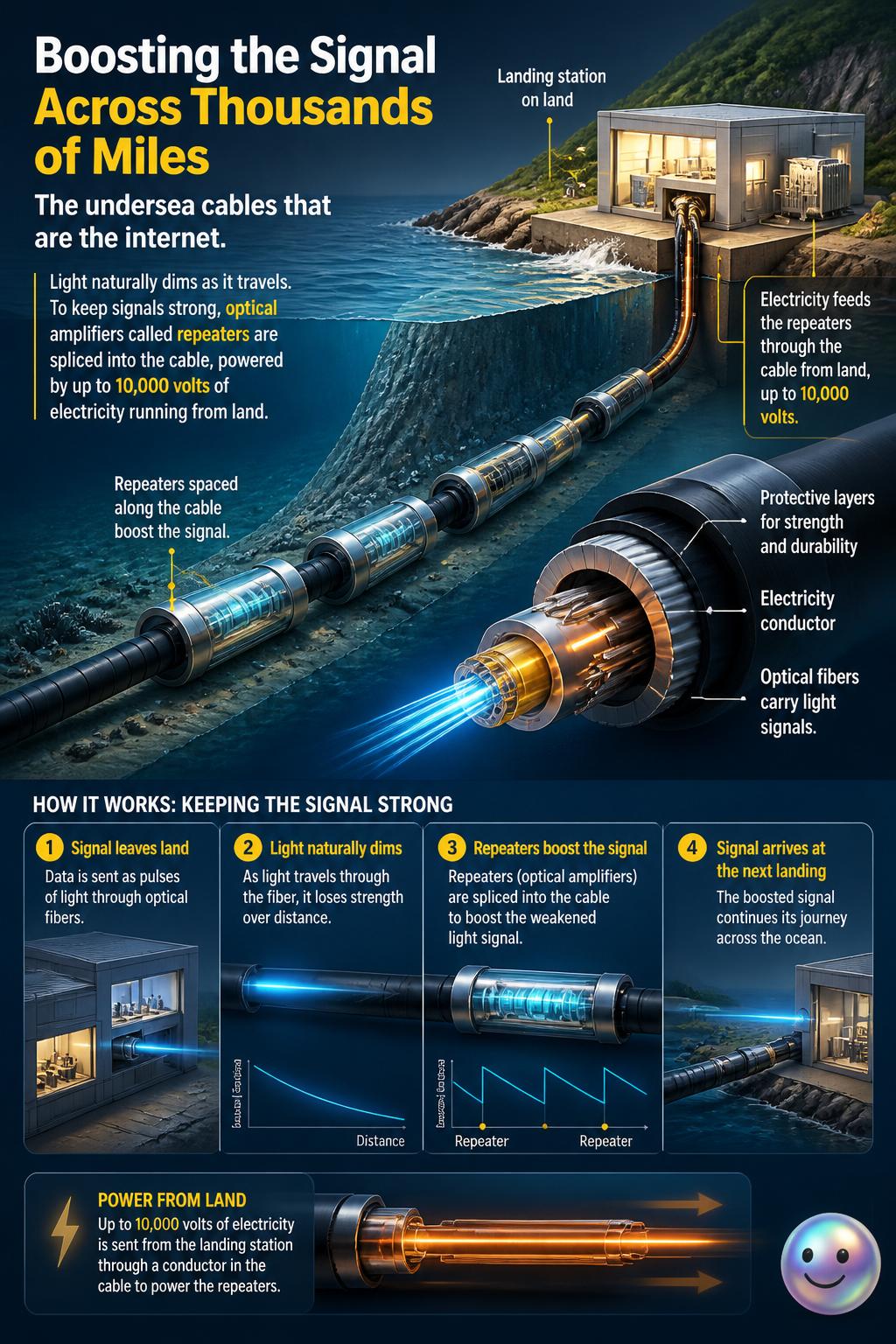
steve Underwater repeaters amplify fading light signals every 50 miles using high-voltage electricity sent through the cable.
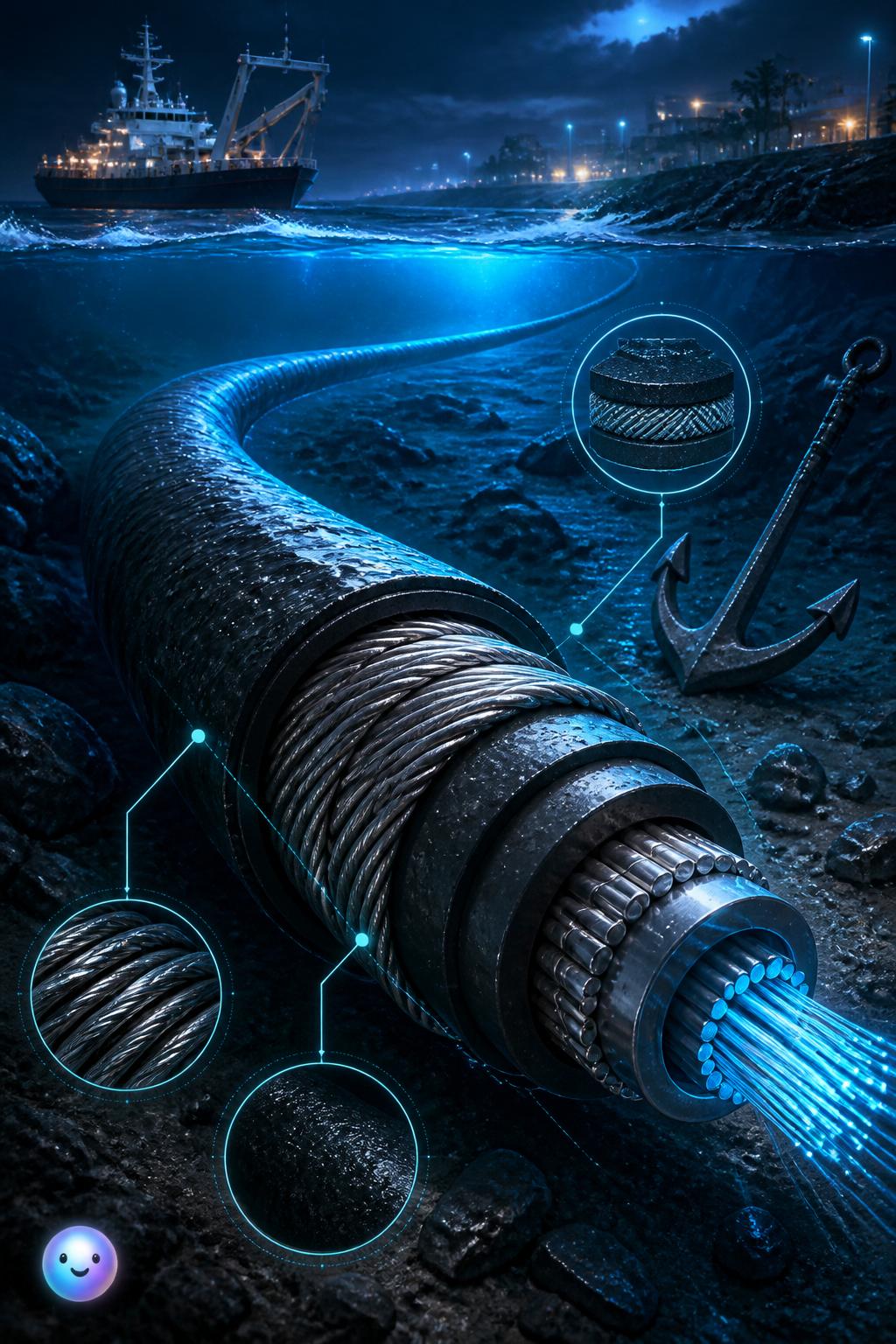
steve Layers of petroleum jelly, copper, steel, and plastic shield the delicate glass fibers from high pressure and water.
Cable thickness: Deep-sea cables are surprisingly thin, with most of the deep-ocean length being about the diameter of a standard garden hose.
What physical phenomenon allows light to travel long distances inside a fiber-optic cable without escaping?
Why do undersea cables require high-voltage electricity to run alongside the fiber-optic strands?
Approximately how fast does data travel through the fiber-optic glass of an undersea cable?
Which material is placed directly around the glass fibers in an undersea cable to prevent water damage?
Why are undersea cables near the shoreline much thicker than those in the deep ocean?