
Chemical messengers of the body
Hormones travel through the bloodstream as chemical messengers, but they only affect target cells equipped with matching receptors, functioning like a highly precise lock and key.
Chemical messengers of the body
The master controllers
Metabolism and energy
Stress and survival

artiteacher Chemical messengers of the body
A chemical messenger inside your flow, Finding the right lock to make your systems grow.
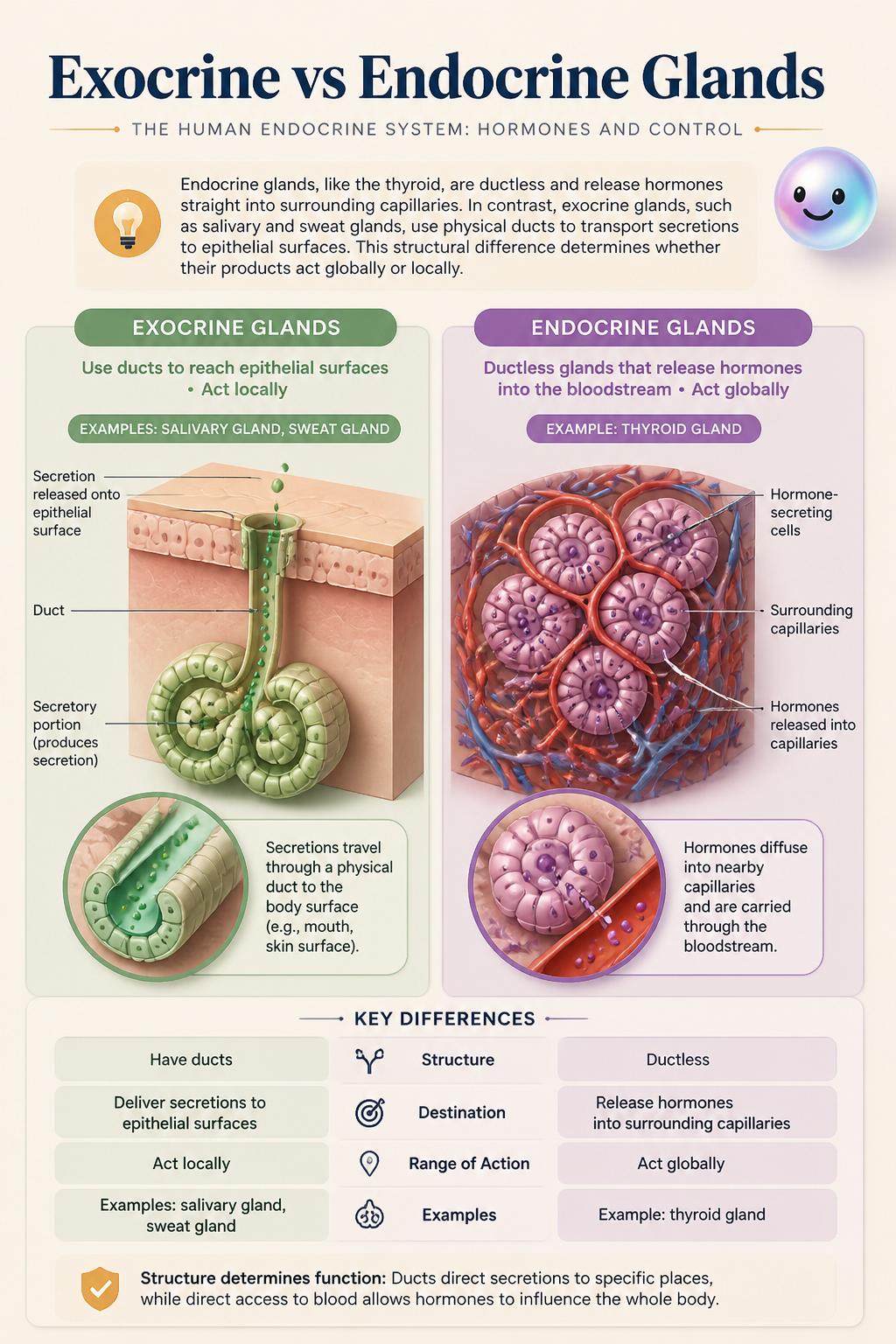
artiteacher Endocrine glands release chemical messengers directly into the blood, while exocrine glands use physical ducts to secrete substances outside the bloodstream.
Hormone naming history: The word hormone comes from the Greek 'hormon', which literally means 'to set in motion' or 'to excite'.
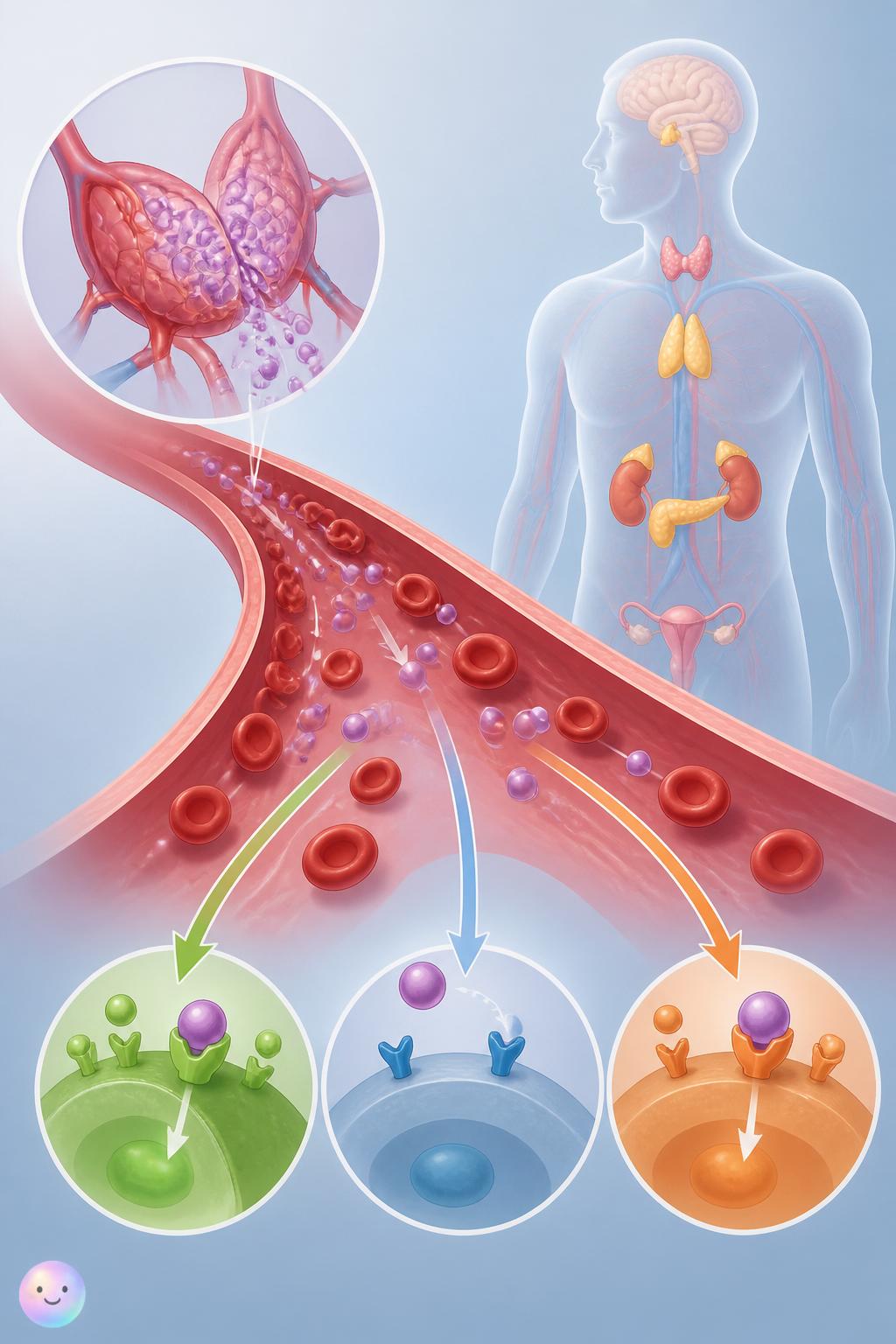
artiteacher Hormones travel everywhere through the circulatory system, but they only trigger responses in cells that possess matching receptors.
A regulatory substance produced in an organism and transported in tissue fluids to stimulate specific cells or tissues. English physiologist Ernest Starling coined the term in 1905 while describing these internal secretions.
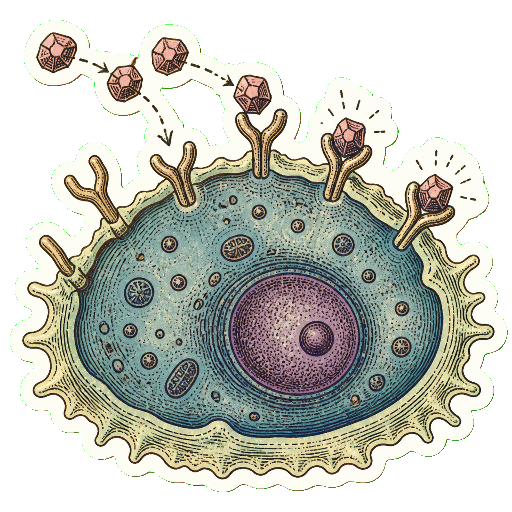
Who coined the term 'hormone' in 1905 from a Greek word meaning 'to excite' or 'to arouse'?
Which chemical messenger was the very first hormone discovered by scientists in 1902?
What is the primary method hormones use to travel to distant target organs in the human body?
In which country did healers extract active hormones from human urine as early as the 10th century?
What term describes the cellular structure that a hormone must bind with to trigger a response?
What physical property determines whether a hormone can pass directly through a cell membrane?
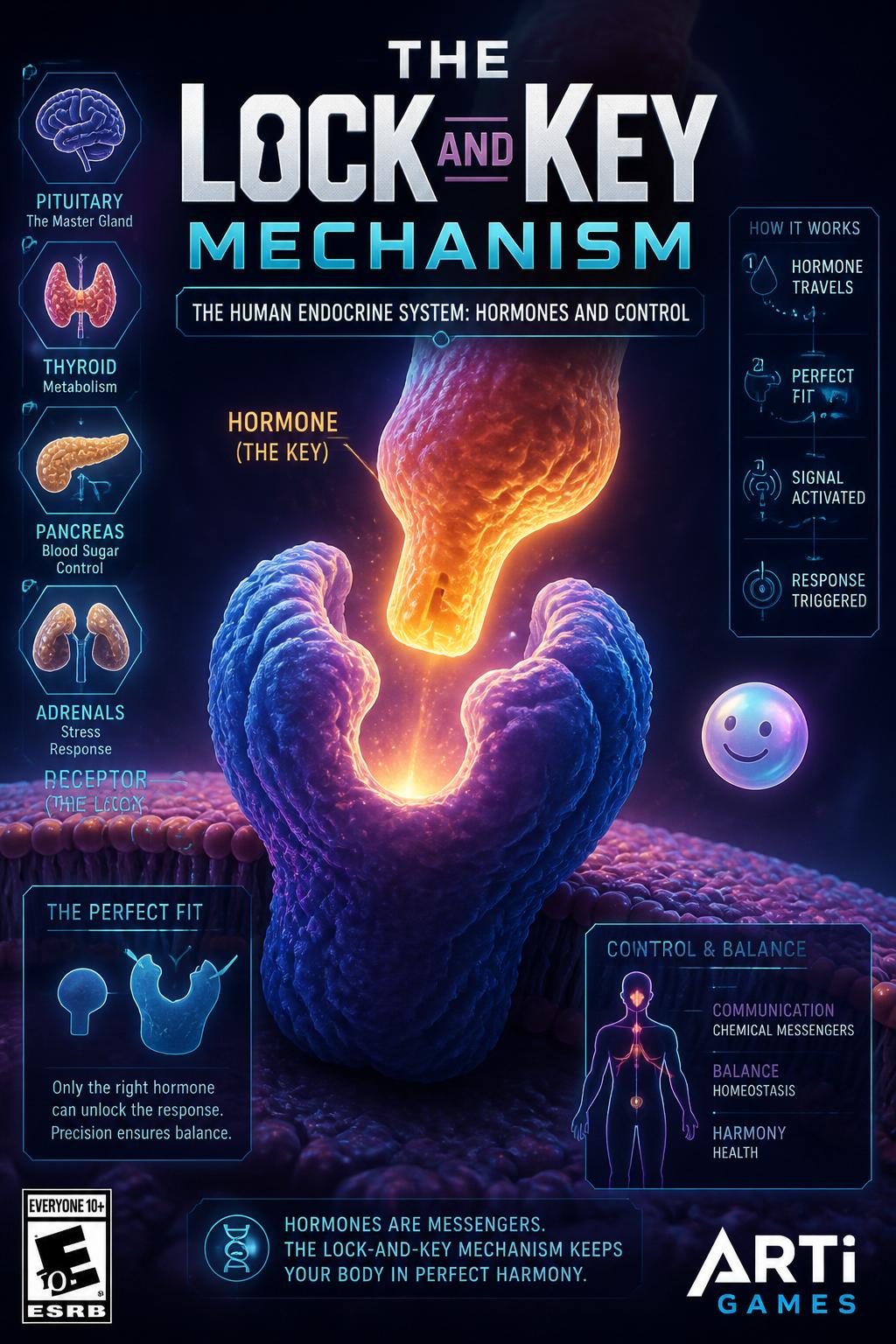
artiteacher Match hormone keys to cell locks to discover how the body sends targeted chemical messages.