chinampa: (noun) An artificial island built on a shallow lake bed for agricultural purposes. Aztec builders engineered these productive, raised plots to feed the growing population of Tenochtitlan.
The currency of cacao
The high stakes of the ballgame
Mesoamerican science and engineering
Gods, myths, and the underworld
misslily To master time, the Maya combined two calendars into a 52-year cycle for ceremonies and farming.
misslily Trade cacao cash, bounce rubber balls, and build temples to discover Maya and Aztec history.
misslily Aztecs built artificial garden islands from mud and reeds, growing crops to feed 200,000 people.
misslily Aztec doctors used volcanic glass blades sharper than modern steel scalpels to perform complex surgeries.
misslily Maya mathematicians used a shell symbol for zero to calculate highly accurate astronomical calendars.
misslily Mesoamerican science and engineering
We mix the morning glory with the tree sap (with the tree sap!) / Making heavy rubber bounce like crazy (bounce like crazy!)
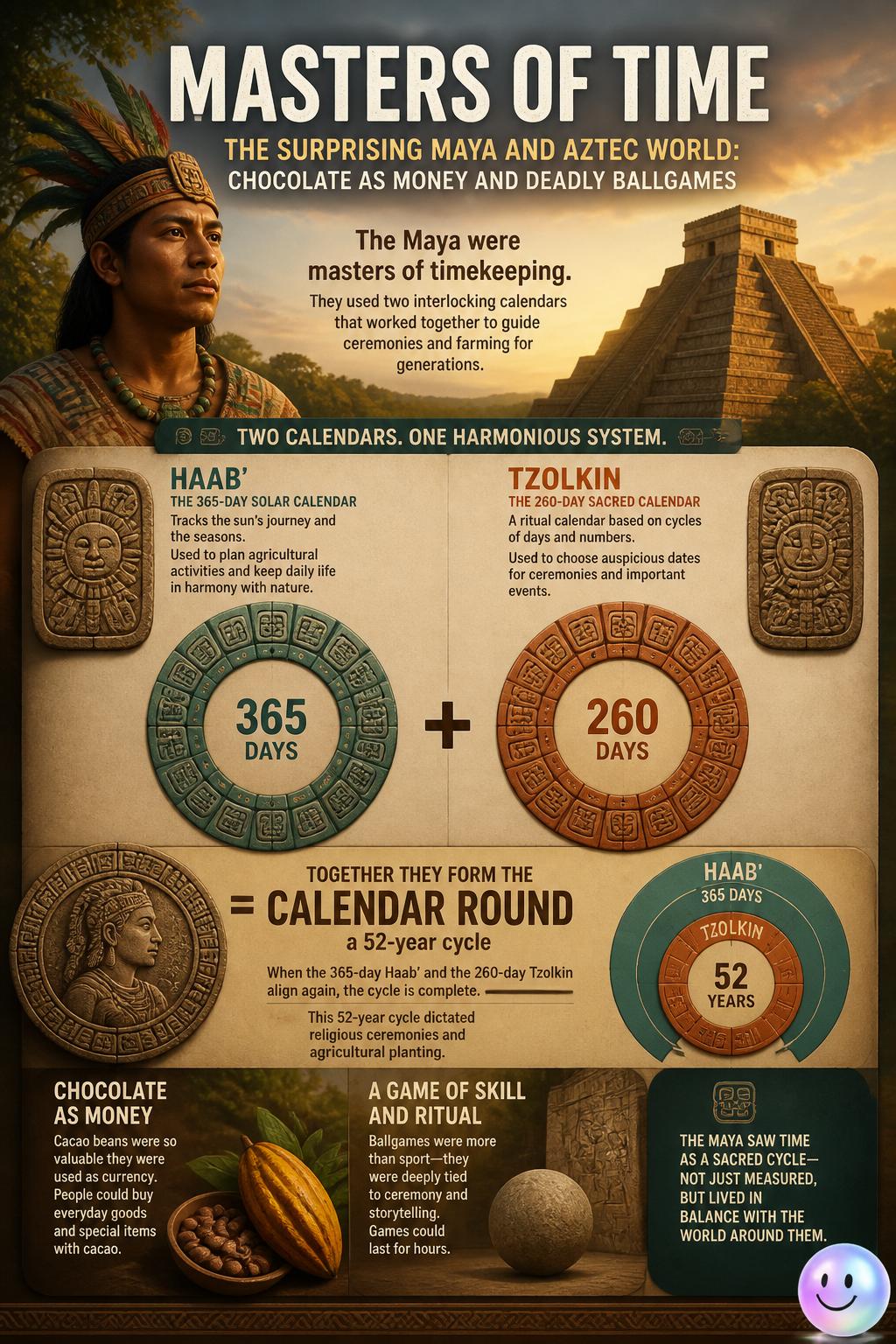
misslily Mesoamerican calendars were so precise they could track solar years, lunar cycles, and Venusian orbits with near-perfect accuracy.
Super-sharp obsidian: Aztec surgeons used obsidian blades that were so sharp they could cut between individual cells, leaving cleaner wounds than modern steel.
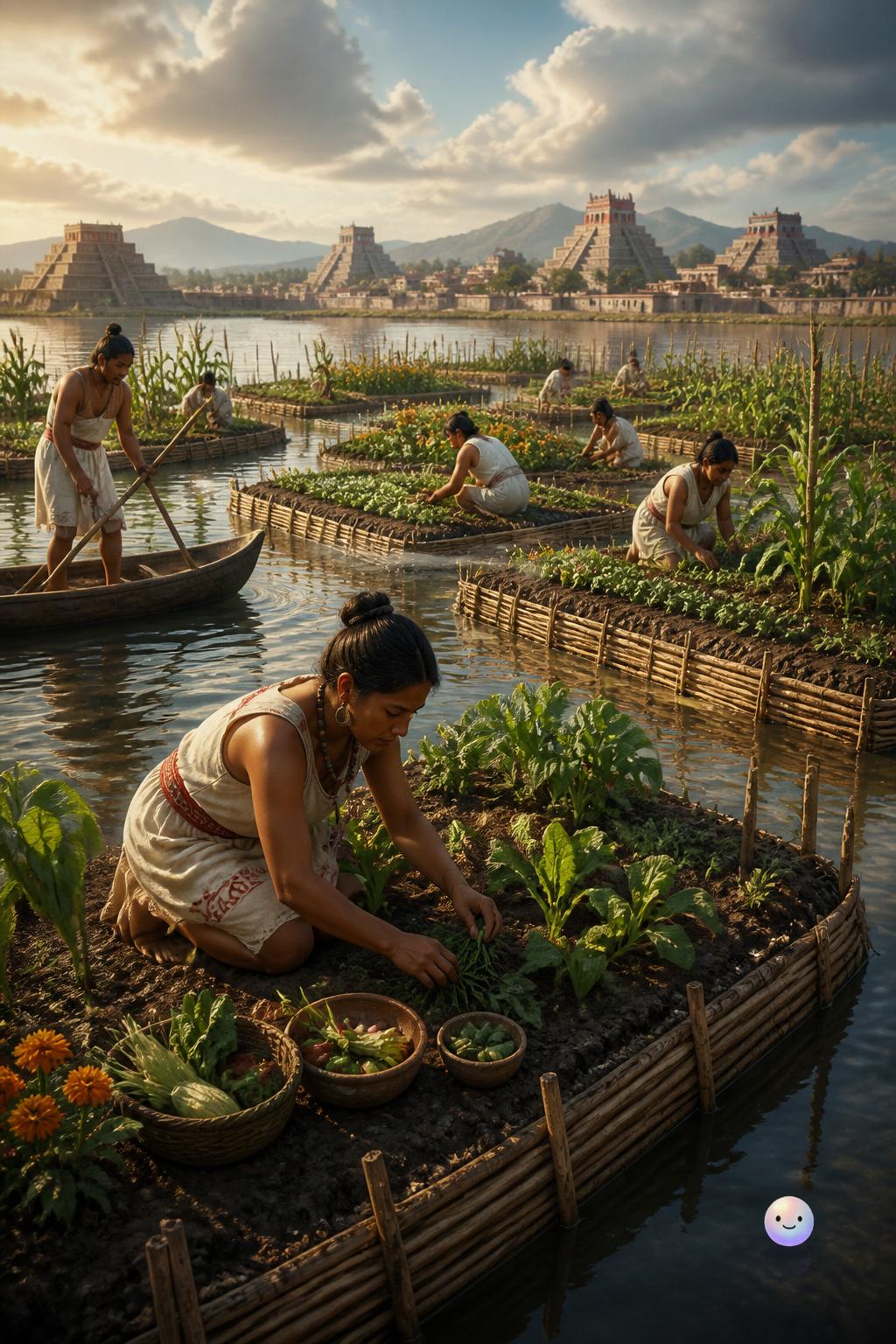
misslily The Aztecs expanded their island capital by building highly productive floating agricultural fields called chinampas.
An artificial island built on a shallow lake bed for agricultural purposes. Aztec builders engineered these productive, raised plots to feed the growing population of Tenochtitlan.
Would you prefer living on a floating garden or in a high-tech modern apartment?
What celestial body did the Maya track with extreme precision to align their temples?