
Write down a word, watch it go strange, stuck on the tip of
In a famous study at the University of Leeds, repeatedly writing a word like 'door' for sixty seconds triggered 'jamais vu' in 68 percent of participants, causing the familiar word to suddenly feel completely alien.
A glitch in the biological matrix
Ghosts, past lives, and a French philosopher
Meet the quirky cousins of déjà vu
Recreating the mystery inside the lab
beekind Patients with temporal lobe degeneration experience a continuous loop of their entire lives. This neurological condition makes every daily event feel like a repeated memory.
beekind Cognitive scientists explain presque vu, the weekly mental glitch where your brain accesses a concept's meaning but fails to retrieve the spoken word.
beekind In 2023, cognitive psychologists induced this opposite of déjà vu in lab tests. Participants repeatedly wrote the word door thirty times until it felt completely strange.
beekind Exhausted temporal lobes experience microscopic neural transmission delays that mimic past memories. Animated neural pathways illustrate how jet lag and high stress levels trigger sudden déjà vu.
beekind Cousins of Déjà Vu
Write down a word, watch it go strange, stuck on the tip of my tongue!
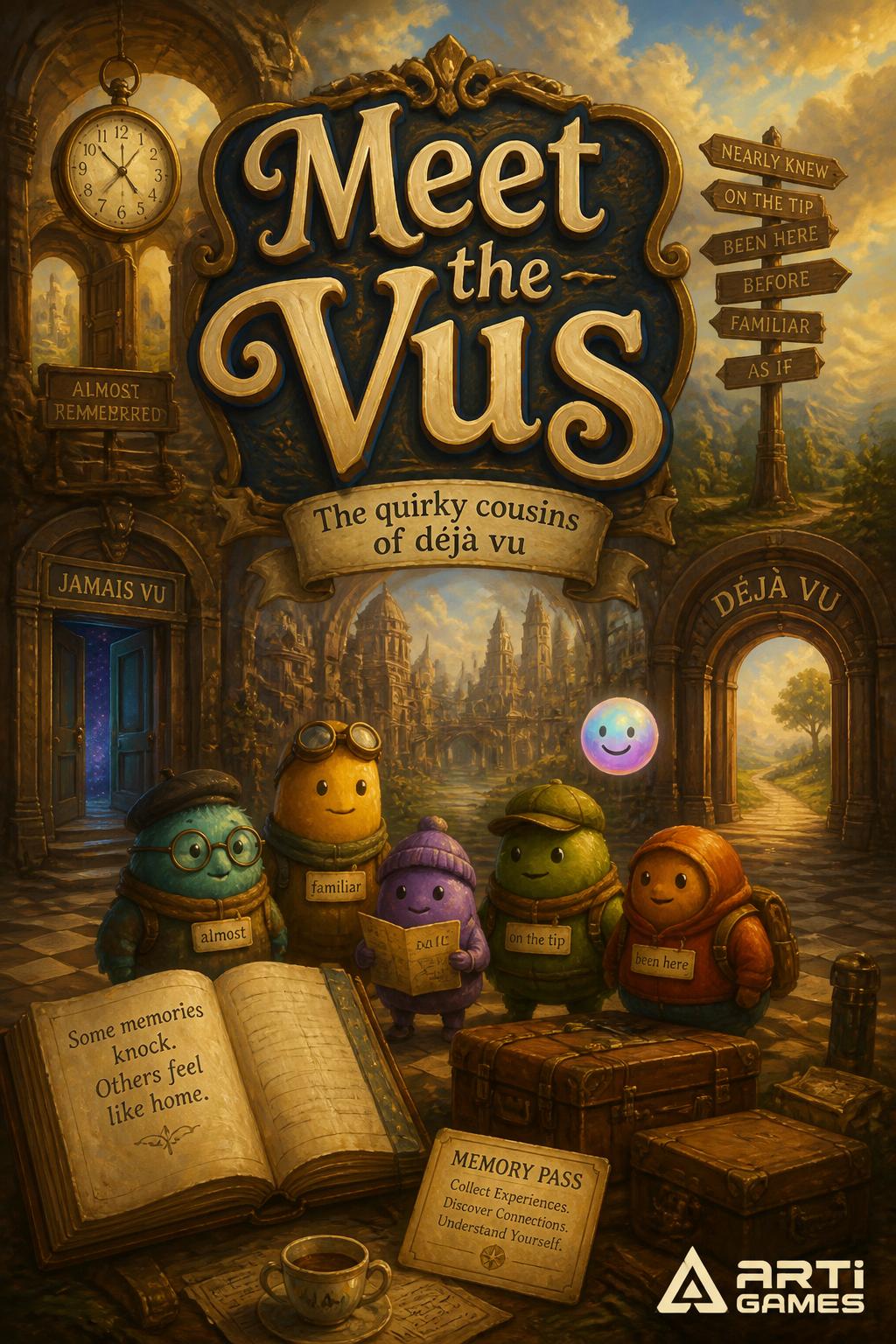
beekind Sort the Vus by their mental glitches to master the science behind déjà vu.
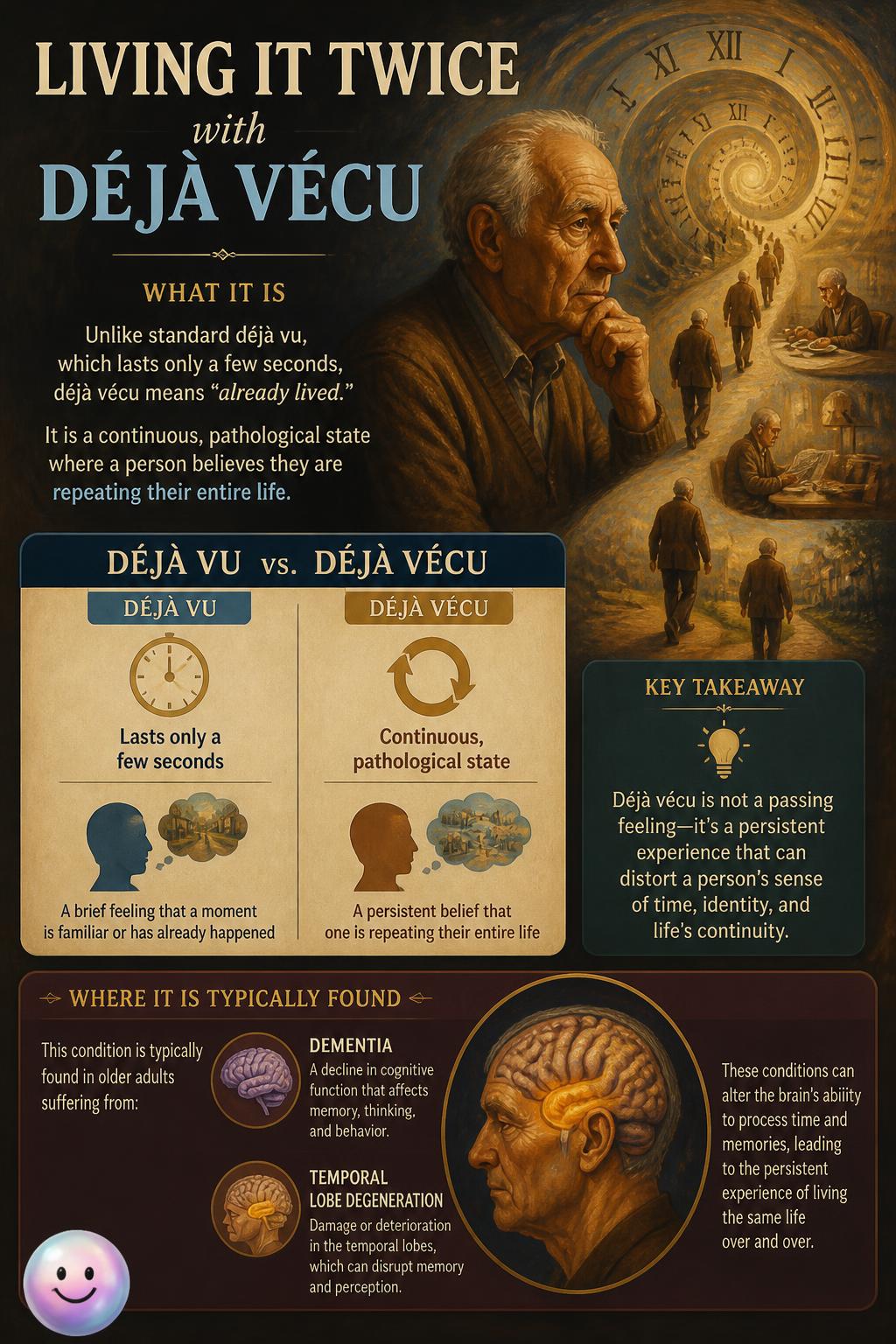
Word alienation: Repeating a simple word like 'door' for sixty seconds can trigger jamais vu, making the word feel completely made up.

What is the primary difference between a normal déjà vu experience and a hallucination?
What simple exercise can reliably trigger the feeling of "jamais vu" in a laboratory setting?
Which medical condition is most frequently associated with chronic, non-stop déjà vu?