
Erasmus Explaining Festina Lente Philosophy
The famous Dutch scholar wrote a massive essay explaining the meaning of the adage.
Chapter 1
The Roman imperial origins
Chapter 2
The Renaissance renaissance
Chapter 3
Flying tortoises and slow living
Ch 2 · The Renaissance renaissance

galleta The Renaissance Rebirth
Hurry up slowly, hurry up slowly, like a tortoise with a sail!
galleta Watch how italic type was developed for faster reading and learn about the historical concept of "Festina lente" in typography.
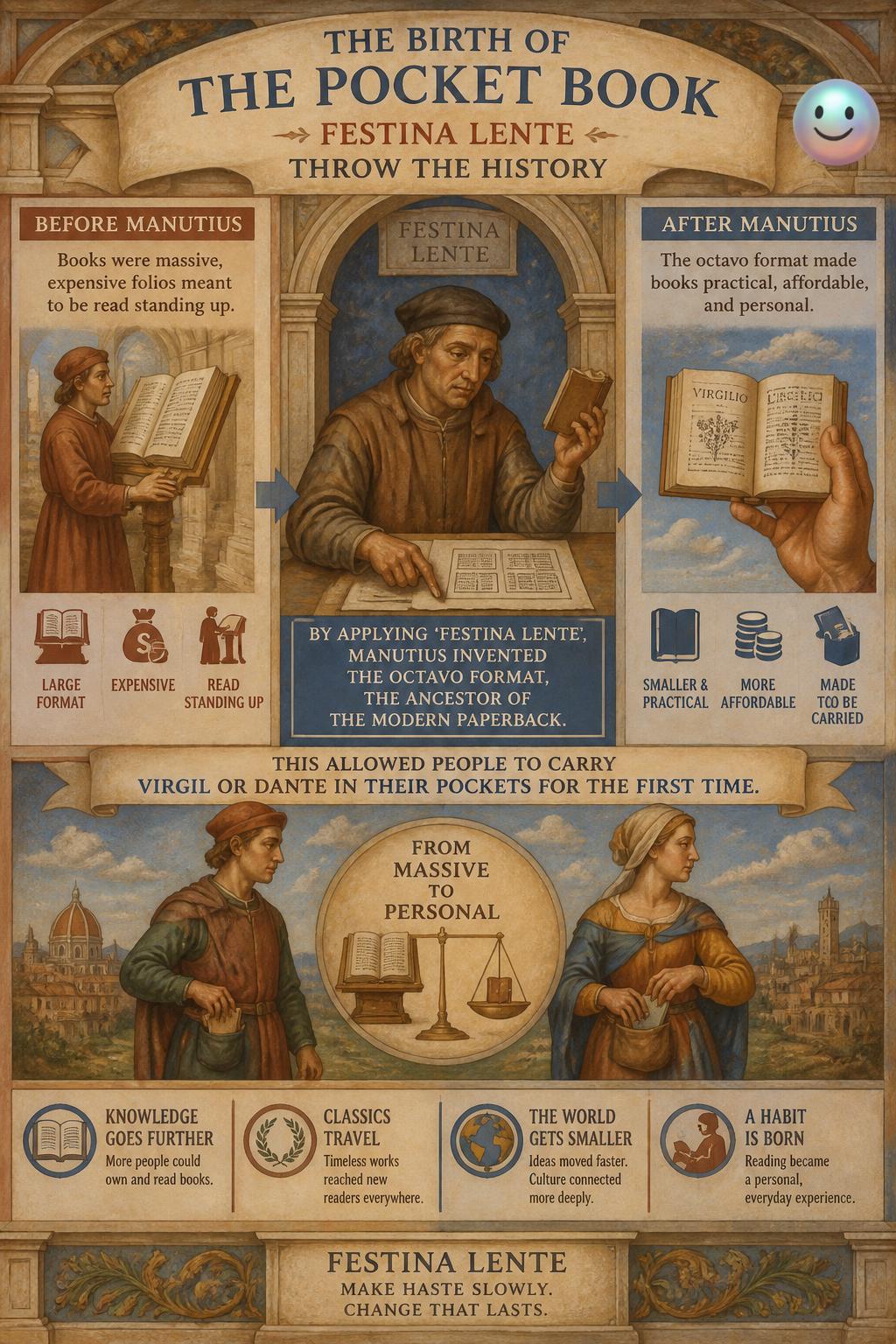
galleta Combining speed and care allowed publishers to mass-produce affordable, portable literature.
Fun Fact
Renaissance paperbacks: Aldus Manutius printed the first pocket-sized books in 1501, changing reading forever.
galleta The famous Dutch scholar wrote a massive essay explaining the meaning of the adage.
Glossary
printer's mark (noun)
A distinctive emblem or symbol used by a publisher to identify their work. In 1501, Venetian publisher Aldus Manutius adopted the dolphin and anchor to represent his industrious philosophy.
A distinctive emblem or symbol used by a publisher to identify their work. In 1501, Venetian publisher Aldus Manutius adopted the dolphin and anchor to represent his industrious philosophy.
BETA
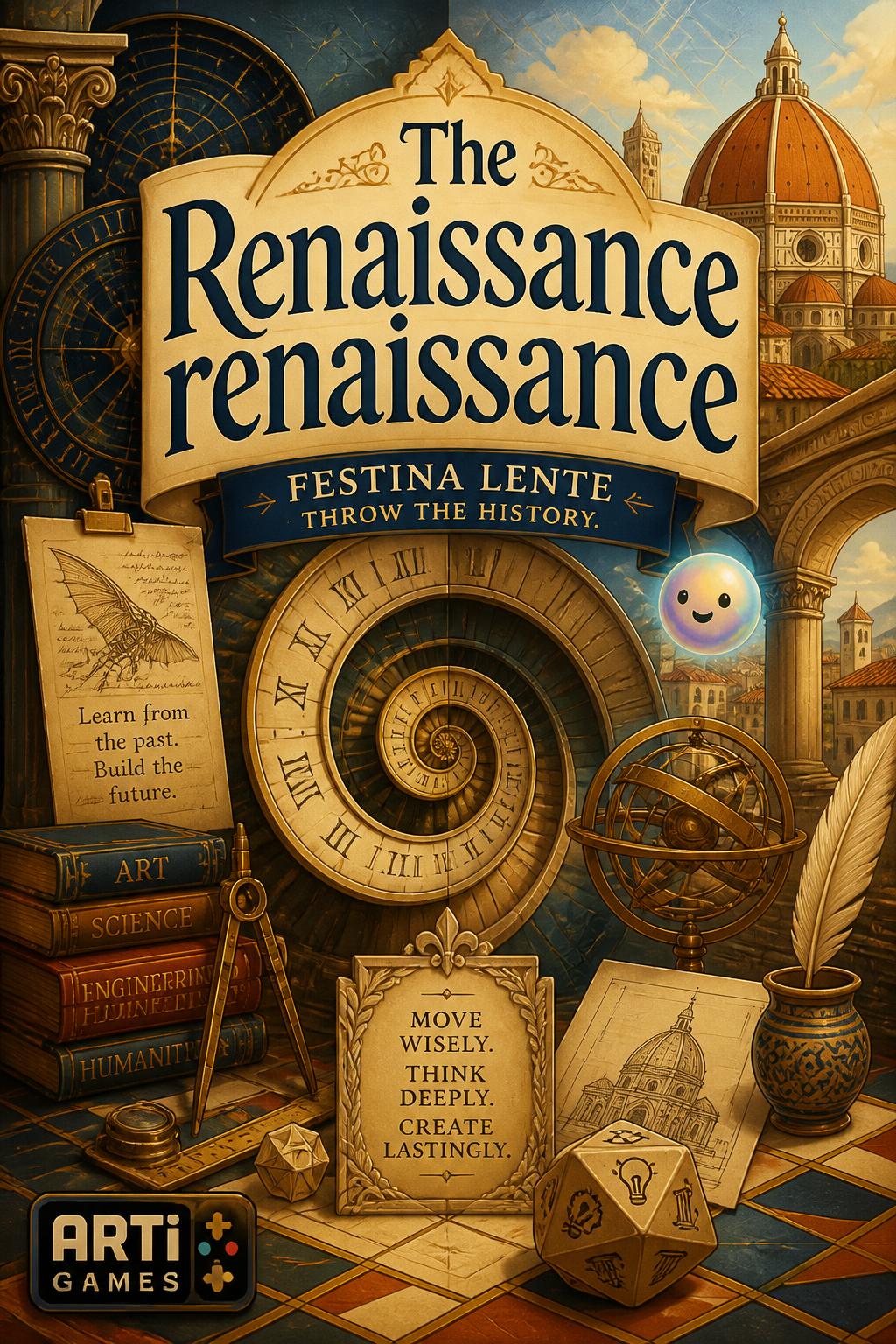
galleta Play an educational game exploring the concept of 'Festina lente' through the history of the Renaissance.
galleta Discover the history of "Festina lente" and the influential printer who used this motto to spread the written word in this educational video.
galleta By applying festina lente, Manutius invented the octavo format, letting people carry books in their pockets.
galleta In 1508, Erasmus explained festina lente, calling it a royal maxim worthy of every monument.
Quiz
Which Venetian printer adopted the dolphin and anchor as his official logo in 1501?
Quiz
Which Dutch scholar wrote a famous 1508 essay analyzing the phrase 'festina lente'?