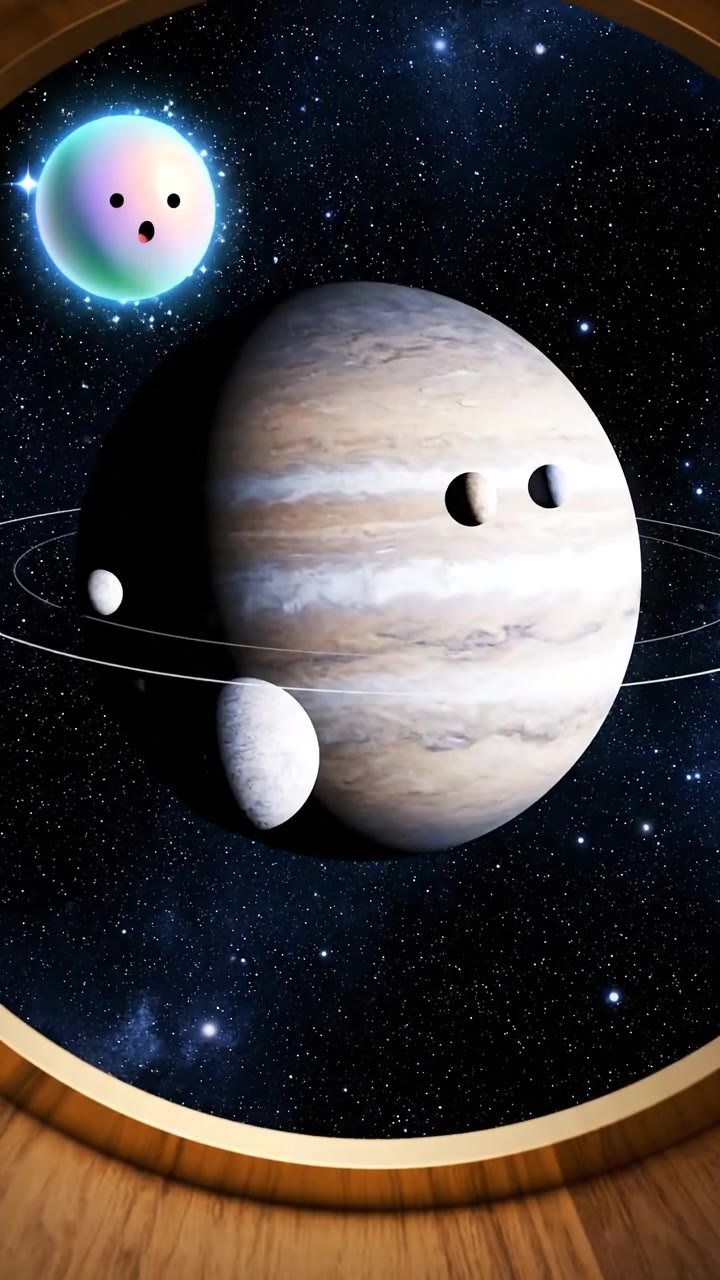
Galileo turns to the skies
In autumn 1609, Italian scientist Galileo Galilei built an improved telescope with 3x and later 30x magnification. By January 1610, he discovered Jupiter's four largest moons, proving that not everything in the universe revolved around the Earth.
The birth of looking closer
Bending and bouncing light
Beyond the visible rainbow
Leaving Earth behind
The global eyes of tomorrow
artiteacher Using a telescope he improved in 1609, Galileo discovered Jupiter's moons, proving not everything revolves around Earth.
artiteacher In 1608, Dutch spectacle maker Hans Lippershey designed a telescope by aligning convex and concave lenses.
artiteacher The birth of looking closer
Two tiny lenses of glass and the edge of the world is right in front of our eyes.

artiteacher Isaac Newton invented the reflecting telescope in 1668 to solve color distortion caused by lenses.
Early glass lenses: Early telescopes used green-tinted glass meant for spectacles, which made stars look blurry and surrounded by colorful rainbow halos.

artiteacher Galileo Galilei modified the spyglass in 1609 to observe the Moon and moons of Jupiter.
An optical instrument designed to make distant objects appear nearer by using lenses or curved mirrors. Dutch spectacle-maker Hans Lippershey filed the first patent for this magnifying device in October 1608.
In what year did Galileo Galilei first point his improved telescope at the night sky?
The Leviathan of Parsonstown, built in Ireland in 1845, was famous for being what?
Which country did Hans Lippershey live and work in when he invented his spyglass?
What optical problem did Isaac Newton solve by using a mirror instead of a lens?
